Award-Winning High School Chemistry Tutors
serving New Haven, CT
High School Chemistry
Tutors in New Haven
Private 1-on-1 tutoring, weekly live classes for academic support, test prep & enrichment, practice tests and diagnostics, and more to elevate grades and test scores.
Based on 3.4M Learner Ratings
UniversitiesSchools & Universities
DeliveredHours Delivered
ProficiencyGrowth in Proficiency
Who needs tutoring?
No obligation. Takes ~1 minute.
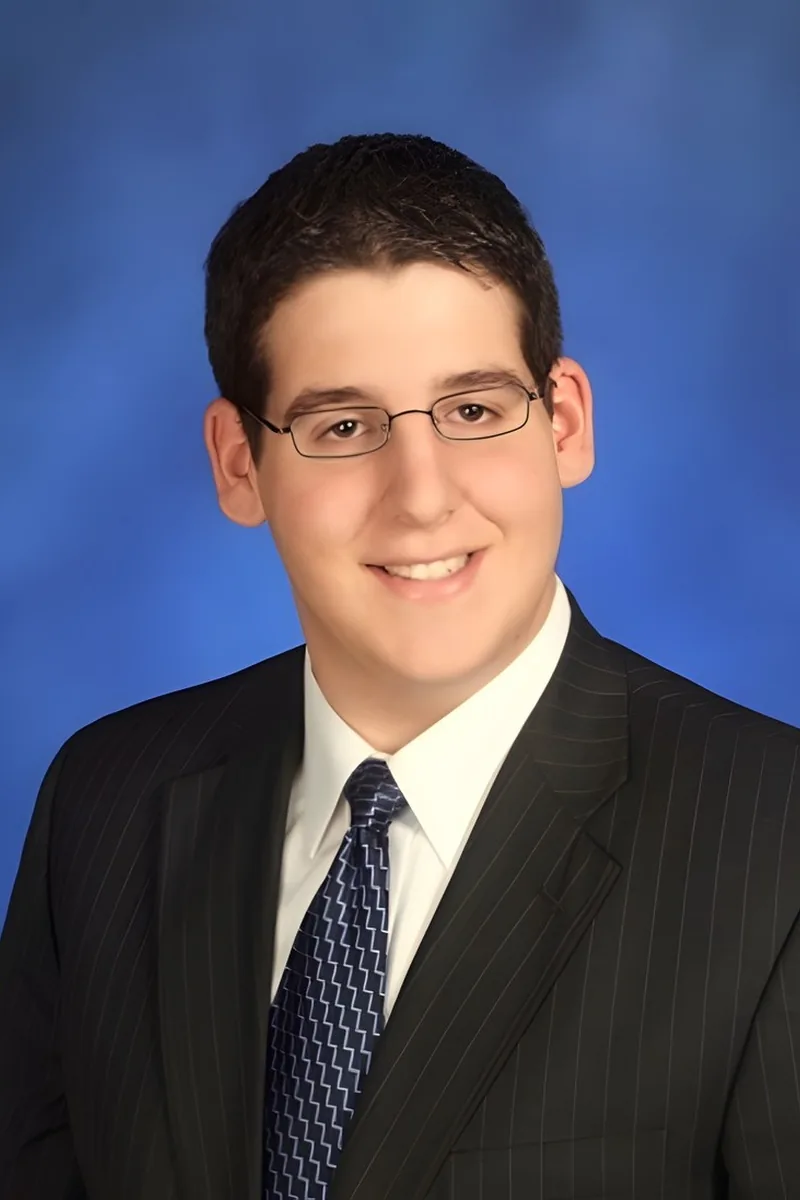
The mole concept trips up more high school chemistry students than almost anything else, and Ethan has a knack for demystifying it with concrete analogies before layering on the math. He also brings strong quantitative skills — a 36 ACT and coursework in calculus and statistics — which means dimensional analysis and unit conversions get taught precisely, not hand-waved.

Chemistry clicks when students understand the "why" behind the rules — why electronegativity drives bond polarity, or why certain reactions are spontaneous while others aren't. Tessa, a Yale math and history double major, brings that same explanatory instinct to stoichiometry, equilibrium, and thermochemistry, connecting each concept to the underlying logic rather than asking students to memorize formulas in isolation.
Balancing equations and stoichiometry problems come down to tracking atoms and units — something Max breaks into repeatable steps so the logic clicks before the math even starts. As a Yale economics student with a 5.0 tutoring rating, he brings the same quantitative rigor to mole conversions and equilibrium calculations that he applies to his own coursework.
I am a PhD student in Inorganic Chemistry at Yale University. I've been spreading my love of chemistry for the past several years as a TA for general chemistry, and I'm excited to share my passion with you! Prior to Yale, I got my B.S. in chemistry from Caltech, where I also served as a TA for both general chemistry lab and advanced inorganic chemistry. Outside of teaching and research, I enjoy fencing, reading, and playing piano.
I am a senior at the University of New Haven working on a B.S. in Forensic Science-Biology with a Pre-Medical designation who hopes to go to medical school in the future. I am most passionate about biology and chemistry but have a strong personal interest in history, especially topics overlooked in the past study of history. To me, learning is a life long process and leads to the development of a well-rounded individual. Seeing understanding of a difficult topic and creating enthusiasm for learning is what draws me to tutoring.
Coaching his school's Chemistry Olympiad team gave Richard a feel for where students get tripped up on competition-level problems — and that same instinct applies when he's walking someone through nomenclature, electron configurations, or balancing redox reactions at the high school level. His economics studies at the University of Chicago might seem unrelated, but the quantitative rigor carries over, and his hundreds of hours teaching chemistry to students ranging from elementary schoolers to Olympiad competitors means the fundamentals are deeply ingrained.
Balancing equations, predicting reaction types, working through stoichiometry — high school chemistry clicks once students see the logic connecting these pieces. Chantel's molecular biology degree means she understands chemical principles at a deeper level and can explain concepts like mole ratios or electron configurations in ways that actually make sense. She's patient enough to walk through the same problem three different ways until the right approach lands.
That first encounter with mole conversions or balancing redox reactions can feel like learning a new language, and Lily approaches it that way — teaching students the grammar of chemistry so they can solve problems they haven't seen before. Her own science training means she can connect high school topics like periodic trends and bonding to real applications that make the material stick.
Ten years of tutoring science while progressing through medical school and now a surgical residency application means Patrick has never stopped using chemistry — from pharmacokinetics to anesthesia gas behavior, concepts like equilibrium, gas laws, and acid-base chemistry show up in his clinical work constantly. He teaches high school students to think about what's happening at the particle level first, then translate that picture into the math, which makes topics like stoichiometry and reaction predictions feel less like arbitrary procedures.
Sabine earned her B.S. in Chemistry, which means she doesn't just know the formulas — she understands the molecular-level logic behind gas laws, thermochemistry, and chemical bonding well enough to explain it multiple ways until it clicks. Her approach zeroes in on connecting the periodic table's patterns to what students actually see in problems, so predicting products or working through enthalpy calculations starts to feel intuitive. Rated 5.0 by her students.
General chemistry was the first subject Alec taught as a TA at Cornell, running problem-solving sessions where students worked through stoichiometry, equilibrium, and acid-base reactions in real time. That hands-on teaching background means he knows exactly where high schoolers get tripped up — whether it's balancing redox equations or making sense of periodic trends. Rated 4.8 by students.
Three science bachelor's degrees — including one specifically in chemistry — mean Sung has spent serious time with everything from electron orbitals to thermochemistry, not just at the introductory level but across multiple disciplinary angles. He digs into the "why" behind concepts like periodic trends and reaction energetics so students can reason through unfamiliar problems on exams instead of relying on memorized shortcuts. Rated 5.0 by students.
Balancing redox reactions, predicting molecular geometry, and navigating stoichiometry all require a different kind of thinking than most students have used before. Lauren minors in chemistry at Duke and uses that depth to explain *why* electron configurations drive periodic trends or *why* a reaction favors products — not just how to get the right answer on a worksheet. She's rated 4.8 across her subjects.
Three-plus years of classroom instruction in advanced chemistry means Sugi has seen exactly where high school students get stuck — balancing redox equations, applying Le Chatelier's principle, or connecting molecular geometry to polarity. She teaches the underlying logic of each topic so students build real problem-solving skills, and her biochemistry training at Rice keeps the material grounded in real-world applications.
Balancing redox reactions, predicting products, and navigating the mole concept are the places where most high school chemistry students get stuck. Noel's college-prep teaching background means he's seen these sticking points up close and tackles them by walking through the reasoning step by step rather than handing students a shortcut to memorize.
Most high school chemistry students hit a wall somewhere around mole conversions or balancing redox reactions — the point where the subject stops feeling like science and starts feeling like math. Jessica approaches those sticking points by explaining the underlying logic first, then layering on the calculations. Her background in medicine keeps her grounded in why this chemistry actually matters.
Most high school Chemistry struggles come down to one thing: the periodic table is supposed to be a cheat sheet, but nobody taught students how to read it. Sharan connects trends like electronegativity and atomic radius to actual behavior in reactions, so predicting whether a bond is ionic or covalent stops being a guessing game. She's earned a 5.0 rating tutoring science subjects alongside her premed studies at Cornell.
Working daily with CRISPR-Cas9 and other biochemical tools in a Yale research lab, Matthew sees chemistry in action — the thermodynamics of enzyme reactions, the pH sensitivity of buffer systems, the molecular interactions that make or break an experiment. That hands-on context sharpens how he teaches high school topics like equilibrium, gas laws, and nomenclature, because he can point to exactly where each concept shows up beyond the textbook.
Balancing chemical equations, predicting products, and navigating the mole concept are the exact places where high school chemistry students tend to stall out. Ethan's science-heavy courseload at WashU keeps him sharp on these fundamentals, and he walks through each problem type with enough patience to make sure the reasoning — not just the answer — actually lands.
Stoichiometry, equilibrium, and acid-base reactions make more sense when a student can see where they lead. Bidyut ties high school chemistry concepts to biomedical applications he's encountered at Johns Hopkins, turning mole calculations and reaction balancing into something more tangible than textbook exercises.
Balancing equations and stoichiometry are mechanical once you see the logic, but topics like equilibrium, thermodynamics, and acid-base chemistry require real conceptual understanding. Annie tackles these through her engineering lens, connecting abstract chemical principles to tangible applications — like how reaction kinetics govern drug delivery systems she studies in her biomedical program at Cornell.
Devon's pre-med track at Vanderbilt means she's taken chemistry well beyond the high school level, and that deeper exposure sharpens how she explains topics like molecular geometry, intermolecular forces, and the logic behind predicting reaction products. She emphasizes understanding the patterns on the periodic table so students can reason through unfamiliar problems instead of treating each one as a brand-new challenge.
Testimonials
Because the right High School Chemistry tutor makes all the difference.
Average Session Rating – Based on 3.4M Learner Ratings
Nearby High School Chemistry Tutors
Other New Haven Tutors
Related Science Tutors in New Haven
Frequently Asked Questions
High school chemistry requires balancing abstract molecular concepts with practical problem-solving. Students often struggle with balancing chemical equations, understanding stoichiometry, and visualizing how atoms and molecules interact at scales they can't see. Many also find unit conversions challenging and struggle to connect theoretical concepts to real-world applications—like why a reaction happens or what it means chemically. Personalized tutoring helps bridge these gaps by breaking down complex ideas and showing how chemistry applies to everyday situations.
Beyond classroom instruction, chemistry labs require understanding the scientific method, proper technique, and the ability to interpret experimental results. Tutors can help you prepare for labs by explaining the underlying chemistry, guide you through data analysis, and help you understand what your results mean. This deeper comprehension makes lab work less intimidating and helps you develop strong scientific reasoning skills that extend beyond just getting the right answer.
Understanding is far more important than pure memorization in chemistry. While you'll need to know some key formulas and concepts, chemistry is fundamentally about recognizing patterns and applying principles to new situations. A tutor can help you build that conceptual foundation so you understand *why* reactions occur and how to approach unfamiliar problems, rather than just memorizing facts. This approach not only improves your grades but makes chemistry feel less overwhelming.
During an initial session, a tutor will assess your current understanding of chemistry concepts, identify specific areas where you're struggling, and learn about your learning style. They might discuss what you're currently studying in class, review recent tests or assignments, and ask about your goals—whether that's improving your overall grade, preparing for the AP exam, or mastering a particular unit. This personalized approach ensures that tutoring is tailored to your needs from day one.
Chemistry involves visualizing things at the molecular level—atoms bonding, electrons orbiting, reactions occurring—which many students find difficult. Expert tutors use multiple strategies to make these abstractions concrete: drawing molecular structures, using models or analogies, working through step-by-step mechanisms, and connecting concepts to observable phenomena. When you can visualize what's actually happening in a reaction, balancing equations and predicting outcomes becomes much clearer.
Look for tutors with strong chemistry backgrounds—ideally someone who studied chemistry in college or has significant experience teaching or tutoring the subject. They should understand the high school chemistry curriculum and be able to explain concepts clearly, not just know the material themselves. Varsity Tutors connects you with expert tutors who can teach chemistry in a way that makes sense to you, whether you're struggling with fundamentals or aiming for advanced placement.
Unit conversions require understanding both the math and the chemistry—you need to know which conversion factors to use and why. Many students memorize the process without grasping the logic, which leads to mistakes on unfamiliar problems. A tutor can teach you the systematic approach to conversions, help you understand dimensional analysis, and build your confidence so you can tackle any unit conversion problem. With practice and clear explanations, this skill becomes straightforward.
Many students notice improvements within a few sessions once they understand the underlying concepts better. If you're working toward a specific goal—like improving a test score or mastering a particular unit—your tutor can create a focused plan with realistic timelines. Consistent practice combined with personalized instruction typically leads to noticeable gains in understanding and grades within 4-6 weeks, though this varies based on where you're starting and how frequently you meet.
Let’s find your perfect tutor
Answer a few quick questions. We’ll recommend the right plan and match you with a top 5% tutor.