Award-Winning Chemistry Tutors
serving Aurora, CO
Chemistry
Tutors in Aurora
Private 1-on-1 tutoring, weekly live classes for academic support, test prep & enrichment, practice tests and diagnostics, and more to elevate grades and test scores.
Based on 3.4M Learner Ratings
UniversitiesSchools & Universities
DeliveredHours Delivered
ProficiencyGrowth in Proficiency
Who needs tutoring?
No obligation. Takes ~1 minute.

From balancing redox equations to predicting molecular geometry, chemistry rewards students who understand the "why" behind each rule. Colton studied chemistry extensively through his biomedical engineering program at UVA and brings that applied perspective — connecting abstract concepts like thermodynamics and equilibrium to real systems students can visualize. Rated 4.7 by students.
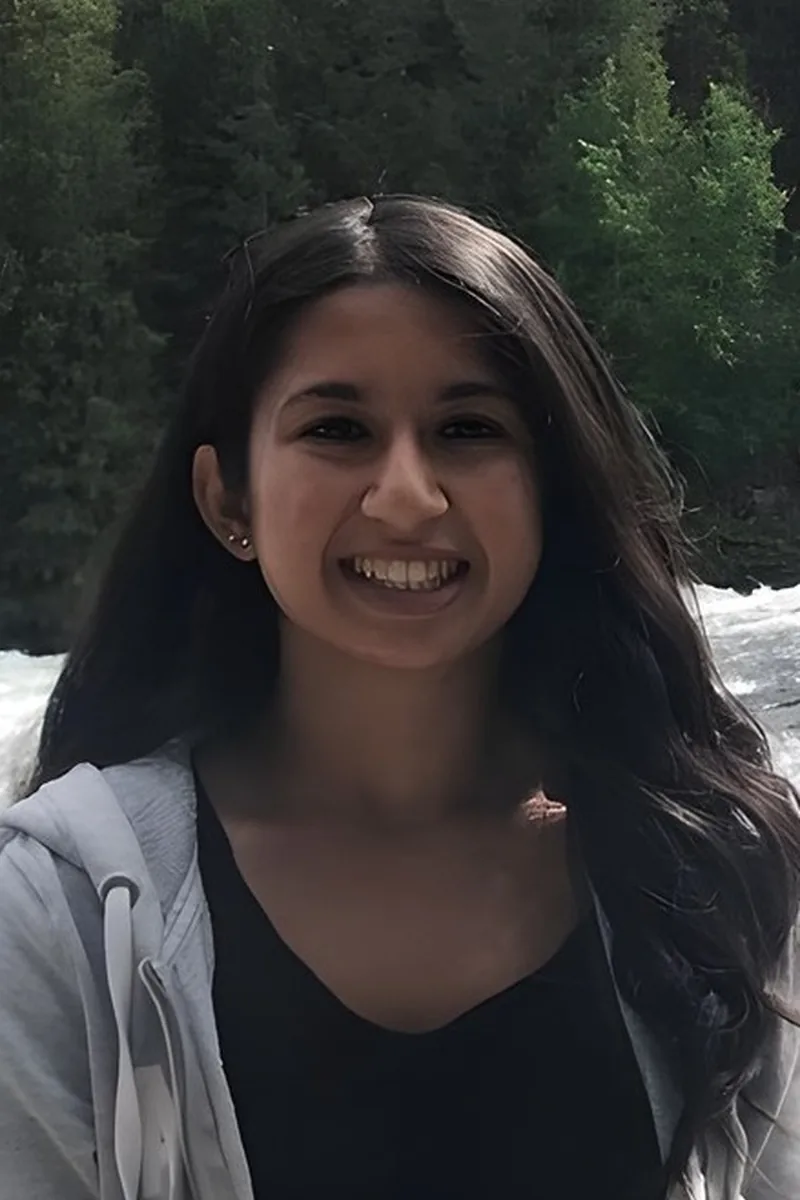
I am a student at the Georgia Institute of Technology studying Chemical Engineering. For the past several years, I have worked with students extensively. Through hosting events for younger kids to learn about STEM and for older teens to practice empathetic design, I know the importance of teaching students in ways that engage them rather than frustrate them, which I apply to my teaching. I have tutored high school students in a drop-in resource center in various subjects including math of all levels, chemistry, and English, making me adequately equipped in a variety of topics. I have also tutored several students long-term. Establishing relationships with students and exploring their unique learning styles is my favorite part of tutoring. I prioritize helping students discover HOW to learn in a manner that is the most effective for them, so they can begin to use those skills on their own throughout their education. Learning is a lifelong skill that requires practice for improvement; I strive to help my students gain confidence in their ability to learn.
I am a graduate of Trinity University with a B.S. in biology and a minor in spanish. I am available for tutoring in math and science courses, as well as beginner spanish and ACT prep. In my tutoring experience, I have primarily worked with high school students in science and math courses, and have really enjoyed the opportunity to encourage enthusiasm for their classes during these sessions. I work to help my students understand the material at a conceptual level so that they can build upon what they have learned in the future, and also focus on organization in problem-solving methods. Outside of tutoring, I study physical therapy at UCD and spend my free time running and hiking with friends.
Studying engineering physics at Colorado School of Mines means Jude works with chemistry's core ideas — electron behavior, energy transfer, thermodynamic systems — as daily tools rather than abstract textbook topics. He uses that physics-trained intuition to unpack why reactions happen at the molecular level, particularly when students struggle with concepts like orbital theory, bond energies, or enthalpy changes that sit right at the chemistry-physics boundary. Rated 4.9 by students.
Balancing equations and stoichiometry are just the entry point — where chemistry gets interesting is understanding why reactions happen, from electronegativity trends to thermodynamic favorability. Graham is double-majoring in chemistry and astrophysics at CU Boulder with a 4.0 GPA, so he can connect abstract concepts like orbital hybridization and molecular geometry to real physical intuition. Rated 5.0 by students.
I am a graduate of the University of Colorado at Boulder. I received my Bachelor of Arts in Biochemistry as well as MCD (Molecular, Cellular, and Developmental) Biology while minoring in Chemistry in 2015. I love exploring all of the cool things that this world has to offer. By dabbling in a little of everything I can set my sights on what really holds my attention. My primary interests lie in the sciences, where learning what makes our world turn drives my passion for knowledge.
I am a problem solver, and I love to help solve other's problems when they need it. I also love taking tests, and I hope that my excitement will translate to better scores for you!
I am a graduate of Arizona State University. I received my two Bachelors of Science degrees in Biological Sciences (Animal Physiology and Behavior) and Political Sciences with a certificate in Civic Education. Since graduating, I have started working with the Denver Math Fellows helping close the opportunity gap for high need students by providing small group math instruction. I find the most excitement in tutoring middle school math and science, Algebra I, and General Biology. I find that for most students what makes any subject hard is being unable to use what you already know and not knowing how to tackle the subject. I want to help students by giving them multiple access points and allowing them to access whatever content they desire at their current level. I believe the most important way to help students learn in is to relate content to their current interests and future goals. In my spare time, I enjoy reading non-fiction about technology and neurobiology, hiking, watching sports (mainly football and basketball) and listening to jazz and classical music.
I am not working, I can often be found outside soaking up the Colorado sun with my dog Syd.
A neuroscience degree with a chemistry minor means Matt didn't just take general chemistry — he built on it through organic, analytical, and biochemistry courses that kept reinforcing core principles like equilibrium, thermodynamics, and molecular bonding. He unpacks abstract concepts like Le Chatelier's principle or orbital hybridization using concrete examples that make the logic click rather than feel arbitrary.
Balancing equations and understanding the mole concept are often the first real hurdles in chemistry, and Paula unpacks both by tying them to tangible, everyday examples. She scored a 1520 SAT and 32 ACT, reflecting the kind of cross-disciplinary thinking that makes abstract chemistry topics more accessible.
Stoichiometry, equilibrium, and thermodynamics all click faster when you can see the math underneath them — and JF's math and computer science background at Stanford means that quantitative backbone comes naturally. He breaks down problems like limiting reagent calculations and ICE tables into logical steps that make the numbers feel intuitive rather than overwhelming.
From stoichiometry and equilibrium to thermodynamics and acid-base chemistry, Josef approaches each topic by tying it back to observable phenomena he encountered in Cornell's research labs. He scored in the 99th percentile on the MCAT's Chemical and Physical Foundations section, which required exactly the kind of rapid, conceptual chemistry reasoning he now teaches.
Michael started tutoring Regents-level chemistry during college and later taught chemistry concepts as part of Kaplan's MCAT prep course, so he's broken down everything from stoichiometry to acid-base equilibria for students at very different levels. His biology and medical background means he naturally ties chemical principles to how they show up in living systems — useful for students who want to understand the 'why' behind reactions. He graduated summa cum laude from Yeshiva College.
Stoichiometry and mole conversions trip up most chemistry students because they look like pure math divorced from anything real. Caroline connects these calculations to tangible examples — like how much reactant a chemical plant actually needs — drawing on her years working at an ExxonMobil refinery. That industrial context makes balancing equations and predicting yields feel purposeful.
Balancing equations and memorizing solubility rules only gets a student so far — real chemistry understanding means seeing why ionic compounds dissolve or how electron configurations predict reactivity. Viraj connects these ideas back to the periodic table's structure, giving students a mental map they can use on any problem from mole conversions to acid-base titrations.
Stoichiometry, equilibrium, and thermodynamics all click faster when a student sees how they connect to real systems — and Kate's environmental engineering background means she can tie every chemistry concept to tangible processes like water treatment or combustion reactions. She breaks down dimensional analysis and reaction balancing into repeatable steps that build genuine confidence on exams.
Balancing equations and unit conversions might seem straightforward, but chemistry gets genuinely tricky once gas laws, equilibrium expressions, and acid-base calculations enter the picture. James majored in chemistry at Harvard and has tutored students across general and organic chem, so he knows how to connect early concepts like mole ratios to the more complex problems they enable later. That forward-looking approach keeps students from having to re-learn fundamentals mid-semester.
The periodic table isn't just a chart to memorize — it's a map that predicts bonding behavior, reactivity, and molecular geometry if you know how to read it. Matthew teaches chemistry through that lens, connecting electron configuration to the "why" behind everything from Lewis structures to acid-base reactions. His biochemistry research at Yale keeps these ideas grounded in real applications.
Stoichiometry, electron configurations, acid-base equilibria — chemistry has a reputation for feeling like a new language. Perry approaches it that way, teaching students the underlying grammar of moles, bonding, and reaction types so that problem-solving becomes intuitive rather than formulaic.
Understanding stoichiometry or molecular geometry becomes much easier when a student can visualize what's happening at the atomic level, not just balance numbers on a page. Emily's computational biology work at Cornell keeps her deeply engaged with chemical principles, and she brings that perspective to topics from bonding and Lewis structures through acid-base equilibria.
Testimonials
Because the right Chemistry tutor makes all the difference.
Average Session Rating – Based on 3.4M Learner Ratings
Practice Chemistry
Free practice tests, flashcards, and AI tutoring for Chemistry
Nearby Chemistry Tutors
Other Aurora Tutors
Related Science Tutors in Aurora
Frequently Asked Questions
Varsity Tutors matches Aurora students with expert Chemistry tutors for 1-on-1 instruction. We pair each student with a tutor based on their specific needs, learning style, and goals.
Whether you need homework help, exam prep, or want to get ahead, our Chemistry tutors are ready to help.
Common challenges include gaps from earlier material, difficulty with specific concepts, and trouble applying learning to new problems. These issues can snowball quickly in Chemistry.
A tutor identifies where you're stuck, fills in gaps, and provides targeted practice. The 1-on-1 format means you get help exactly where you need it.
Tutors work with your student's actual coursework—homework assignments, class notes, and upcoming tests. This keeps tutoring directly relevant to what's happening in the classroom.
When you share information about your student's school and curriculum, we can match you with a tutor who has relevant experience.
All tutors complete background checks, credential verification, and teaching evaluation. Many of our Chemistry tutors hold advanced degrees or have years of teaching experience.
You can review tutor profiles to find someone with the right background for your student's level and needs.
Many students see improved grades within a few weeks, along with better understanding of Chemistry concepts and more confidence tackling challenging material.
Tutors track progress and adjust their approach to ensure continued improvement.
Most students benefit from 1-2 sessions per week. More frequent sessions help if your student is significantly behind or has an important exam coming up.
Your tutor can recommend a schedule based on your student's specific situation and goals.
Tutoring is purchased in packages of hours, with rates varying by tutor experience. Varsity Tutors offers several options to fit different budgets and needs.
You can discuss pricing during your consultation to find what works best.
Your tutor will assess where your student is, discuss goals, and start working on priority areas. Most students bring current homework or upcoming test material to focus on.
By the end, you'll have a clear sense of how the tutor can help and a plan for moving forward.
Let’s find your perfect tutor
Answer a few quick questions. We’ll recommend the right plan and match you with a top 5% tutor.