Award-Winning Calculus Tutors
serving Aurora, CO
Calculus
Tutors in Aurora
Private 1-on-1 tutoring, weekly live classes for academic support, test prep & enrichment, practice tests and diagnostics, and more to elevate grades and test scores.
Based on 3.4M Learner Ratings
UniversitiesSchools & Universities
DeliveredHours Delivered
ProficiencyGrowth in Proficiency
Who needs tutoring?
No obligation. Takes ~1 minute.
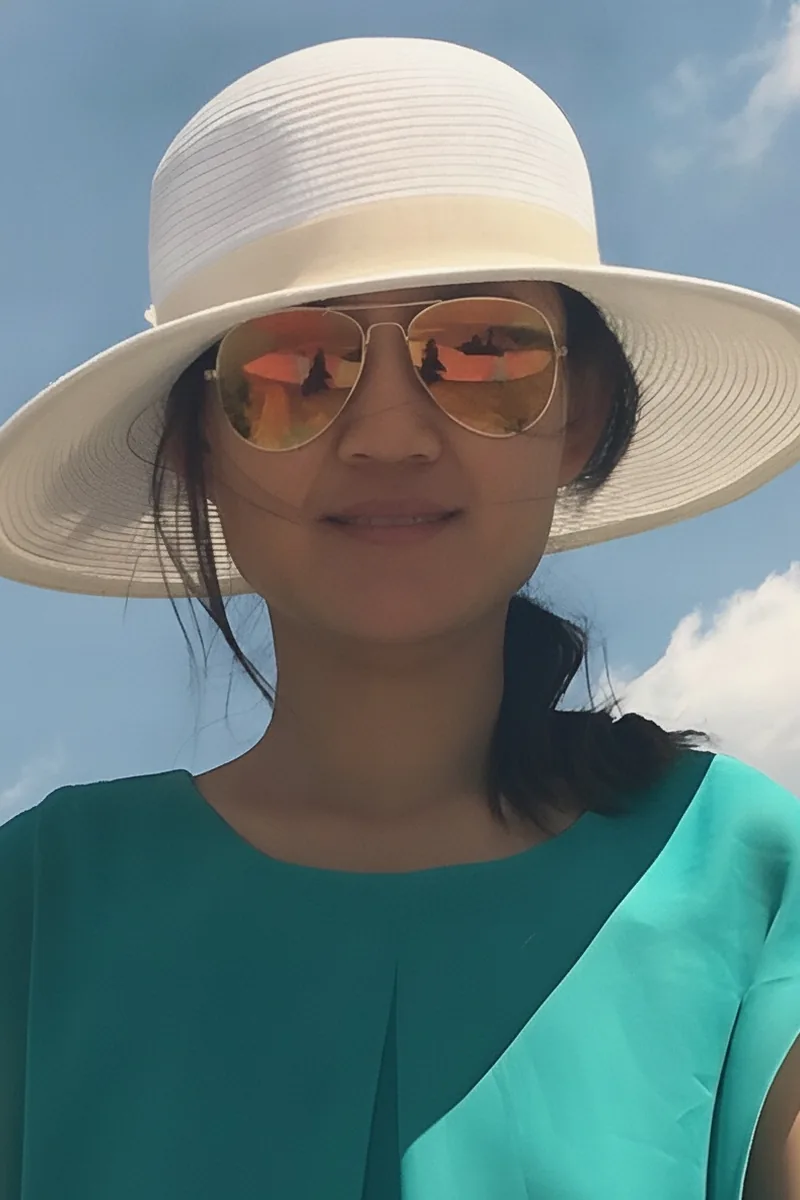
Tina earned both an MD and a PhD from a top Chinese university, which meant years of applied calculus — from modeling pharmacokinetics to analyzing rates of change in biological systems. She connects concepts like derivatives and integrals to real-world applications that make the abstract feel concrete.
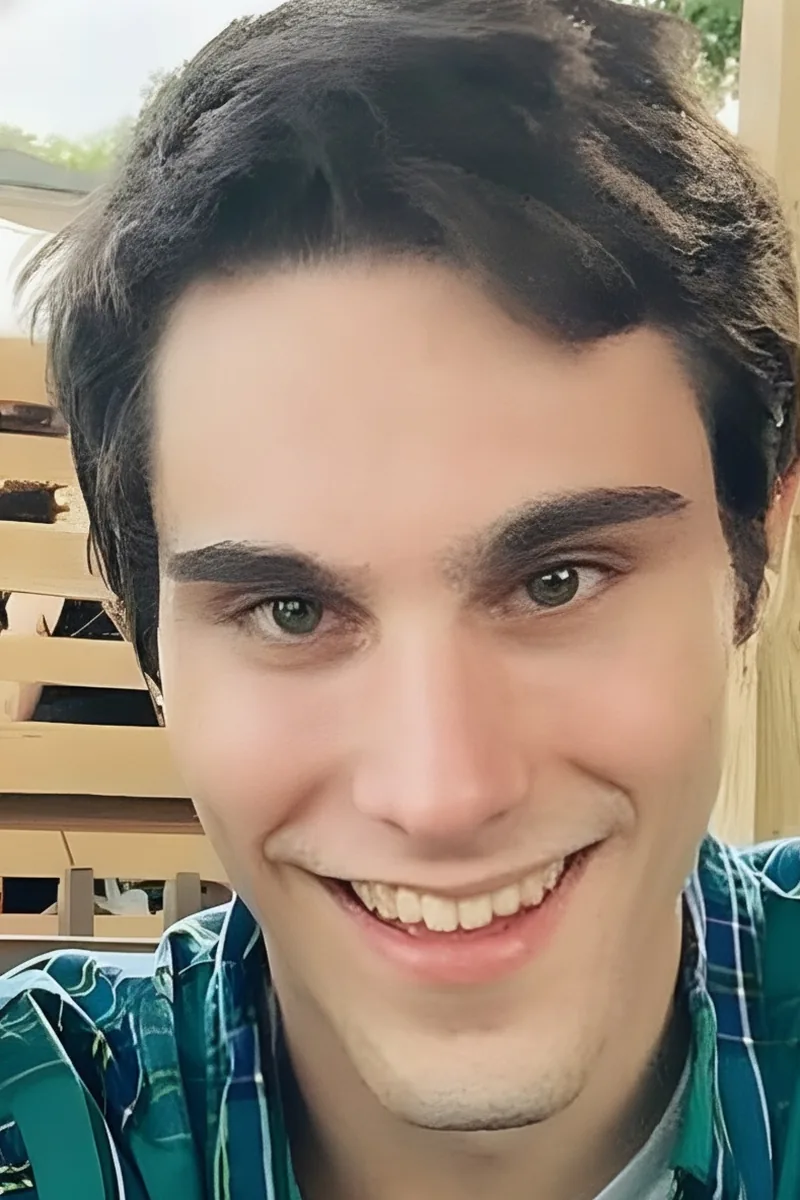
Colton's biomedical engineering coursework at UVA was calculus-intensive from day one, covering everything from integration techniques to differential equations applied to biological systems. He unpacks concepts like the chain rule and Riemann sums by tying them to real problems — modeling drug concentrations, rates of change in physical systems — so the abstractions have something concrete to anchor to.
I am a student at the Georgia Institute of Technology studying Chemical Engineering. For the past several years, I have worked with students extensively. Through hosting events for younger kids to learn about STEM and for older teens to practice empathetic design, I know the importance of teaching students in ways that engage them rather than frustrate them, which I apply to my teaching. I have tutored high school students in a drop-in resource center in various subjects including math of all levels, chemistry, and English, making me adequately equipped in a variety of topics. I have also tutored several students long-term. Establishing relationships with students and exploring their unique learning styles is my favorite part of tutoring. I prioritize helping students discover HOW to learn in a manner that is the most effective for them, so they can begin to use those skills on their own throughout their education. Learning is a lifelong skill that requires practice for improvement; I strive to help my students gain confidence in their ability to learn.
An astronomy major lives in calculus — orbital mechanics, stellar luminosity models, and gravitational field equations all depend on derivatives and integrals doing real physical work. Rohith learned the material through those applications first, which means he teaches concepts like related rates and integration techniques by connecting them to systems where the math actually describes something moving, changing, or decaying. That science-native perspective makes the abstract machinery of calculus feel grounded.
Biology coursework at Trinity meant Michelle worked through calculus in its natural habitat — modeling population growth, enzyme kinetics, and the rate equations that describe how living systems change over time. That science-first experience lets her teach derivatives and integrals as tools with a purpose, connecting each rule to the kind of problem where it actually gets used. Rated 4.8 by students.
Limits, derivatives, and integrals each layer on top of the last, so a shaky grasp of one concept quietly undermines everything that follows. Anthony's mechanical engineering background means he's applied calculus to real systems — velocity curves, optimization problems, differential equations for heat transfer — and he brings that fluency to every session. Students working through AP or college-level calc get someone who can explain both the theory and the point of it.
Philosophy trains you to follow an argument step by step, holding each logical move accountable before accepting the conclusion — which turns out to be exactly what early calculus demands when you're unpacking why a limit converges or how a derivative emerges from first principles. Eric's three bachelor's degrees include philosophy, and his 1560 SAT confirms the quantitative chops to back up that analytical rigor. He approaches problems like epsilon-delta proofs and the chain rule as logical arguments to be understood, not formulas to be memorized.
Philosophy trains you to follow an argument step by step and spot exactly where the logic breaks — which is precisely what Erinrose's Carleton College philosophy degree brings to early calculus, where students often lose the thread between a limit definition and what a derivative actually represents. Her teaching background spans high school through university, and she applies that same careful, sequential reasoning to unpacking notation and connecting each calculus concept to the one before it.
Brown's math program doesn't let you coast past calculus — Zofia's BS in Mathematics means she's worked through the full sequence from single-variable through multivariable and into the analysis courses that formalize why theorems like the Fundamental Theorem of Calculus actually hold. That depth lets her teach integration techniques and series convergence with the kind of precision that turns a shaky understanding into a reliable one, whether the student is in AP Calc or a college-level course.
Cornell's animal sciences curriculum put Jasmyn through the full calculus sequence — growth rate modeling, nutrient absorption curves, and the kind of applied integration problems that make abstract rules feel purposeful. Her master's work in animal nutrition deepened that quantitative fluency, particularly around optimization and rate-of-change analysis in biological systems. She teaches calculus by connecting each concept to a concrete problem worth solving.
Tara's degrees are in anthropology and museum studies, so she's straightforward that calculus is far from her academic home turf. That said, her experience tutoring math across multiple levels — from elementary arithmetic through algebra — means she can support students navigating the early conceptual hurdles, particularly understanding what a limit represents or how slope evolves into a derivative, by connecting new ideas back to the algebraic reasoning students already have.
History and philosophy of science training at the undergraduate level means Lacey has studied how calculus was actually invented — the debates between Newton and Leibniz, the conceptual leaps behind infinitesimals — which gives her a unusual angle for explaining why limits and derivatives work the way they do. Her Classics MA adds the kind of close, careful reasoning that makes unpacking dense notation feel more like translating a difficult passage than grinding through formulas. Rated 4.8 by students.
Teaching high school math and holding a Master's in Education means Alicia knows exactly where students tend to stumble when algebraic thinking gives way to calculus — the moment a slope becomes a rate of change, or a summation becomes an integral. She leans on that classroom instinct to slow down at the right moments, making sure the conceptual shift lands before moving on to computation.
Biochemistry and MCD Biology at CU Boulder meant Oliver didn't just take calculus — he used it, applying derivatives to enzyme kinetics, reaction rates, and concentration gradients across his coursework. That science-embedded experience lets him teach concepts like the chain rule or integration by connecting each technique to problems where the math actually describes something tangible. Rated 5.0 by students.
Neuroscience coursework at CU Boulder put Brockton through calculus in its most applied form — modeling action potentials, analyzing rates of neural signal decay, and interpreting how biological systems change over time. His training as a learning assistant, where he completed a dedicated pedagogy course, sharpened how he breaks down derivatives and integration techniques so the reasoning lands, not just the steps.
Every concept in Christian's mechanical engineering program — from stress analysis to fluid dynamics — runs on calculus, so derivatives, integrals, and their applications are part of his daily work. He unpacks topics like the chain rule, related rates, and Riemann sums by tying each one to a physical situation that makes the math intuitive. Students working through either AB or BC material get someone who genuinely lives in this math.
Studying neuroscience means Melissa didn't just take calculus — she used it, working through the math behind action potential models, synaptic transmission rates, and the curves that describe how neurons fire and fatigue. That hands-on exposure to derivatives and integrals in biological contexts gives her a practical vocabulary for explaining what these tools actually do. Her 1430 SAT confirms the quantitative chops to back it up.
Paul's 1570 SAT confirms he's sharp with quantitative reasoning, and his deep math teaching roster — running from pre-algebra through trigonometry, pre-calculus, and calculus — means he's walked the entire path students take before hitting their first derivative. He tackles calculus by connecting new ideas back to the algebra and trig students already know, making the chain rule or integration by substitution feel like natural extensions rather than alien procedures.
Sociology trains you to think in rates and trends — how populations shift, how inequality compounds over time — and that's surprisingly close to what calculus formalizes with derivatives and integrals. Lena uses that quantitative-social-science lens, along with the analytical chops behind her 1470 SAT, to make concepts like rates of change and area under a curve feel intuitive rather than purely mechanical. Rated 5.0 by students.
Studying both Applied Mathematics and Engineering Physics at Colorado School of Mines means Jude uses calculus daily — from solving differential equations in mechanics to modeling wave behavior and thermodynamic systems. That constant exposure gives him a fluency with integration techniques, series convergence, and multivariable concepts that comes from actually needing them, not just learning them for an exam. His 36 ACT composite and 4.9 rating back up the depth he brings to the subject.
Having completed AP Calculus AB in high school, Heidi knows exactly where students tend to get stuck — the conceptual leap from limits to derivatives, and from derivatives to integrals. She teaches the chain rule, related rates, and area-under-the-curve problems by connecting each new idea back to the graphical intuition behind it.
Emma's elementary education degree isn't a calculus credential, and she's honest about that — this is the outer edge of her math tutoring range. That said, her 31 ACT composite shows solid quantitative ability, and her teaching training means she knows how to slow down and rebuild a concept like limits or basic derivatives from the ground up when a student's intuition hasn't caught up to the notation yet.
Hotel administration at Cornell's business school isn't just hospitality — Cory's coursework included the quantitative side of revenue management, where derivatives drive pricing optimization and integrals model cumulative demand over time. That real-world grounding in how calculus powers business decisions gives him a practical hook for teaching concepts that otherwise feel purely abstract. Rated 4.8 by students.
Seth's academic training is in philosophy and theology, not mathematics, so he's upfront that calculus is outside his primary expertise. That said, philosophy sharpens the kind of rigorous logical thinking that makes limit definitions and epsilon-delta proofs click, and his experience tutoring math means he can support students working through foundational calculus concepts with patience and structured reasoning.
As a philosophy major and licensed teacher, Paige brings something underrated to calculus: the ability to slow down and interrogate *why* a rule works, not just *how* to apply it. That Socratic instinct is especially useful when students hit conceptual walls around limits and the definition of the derivative, where mechanical steps fail without genuine understanding. Her 5.0 rating and experience tutoring math across multiple levels back up the approach.
Engineering Physics at Colorado School of Mines doesn't just use calculus — it lives inside it, from deriving equations of motion to solving boundary value problems in thermodynamics and electromagnetism. Cody has worked through the full sequence including multivariable and vector calculus in contexts where getting the math wrong means the physics falls apart, so he teaches each concept with an engineer's insistence on knowing what every term actually represents.
Biological sciences at Arizona State meant Marcus encountered calculus through the lens of animal physiology — modeling growth rates, analyzing how physiological variables change over time, and interpreting the curves that describe real biological processes. His current work providing small-group math instruction through Denver Math Fellows keeps him sharp on building algebraic fluency into calculus readiness, so he knows exactly where students tend to stumble on the bridge from pre-calc to derivatives.
Having a master's in applied statistics means Ed has spent serious time with the calculus that underpins it — integration for probability distributions, derivatives for maximum likelihood estimation, and the chain rule woven through regression modeling. That graduate-level fluency lets him teach calculus as a toolkit with clear purpose, connecting each technique to problems where the math is doing real analytical work.
Studying astrophysics and chemistry at CU Boulder, Graham lives in calculus — applying integration techniques to model energy distributions and using differential equations to describe how physical systems evolve. He unpacks topics like the chain rule, related rates, and series convergence by tying each one to a concrete problem so the reasoning sticks.
I am a undergraduate student who is willing to help other students in subjects that they may be experiencing difficulties in.
Public health nutrition research is surprisingly calculus-heavy — modeling nutrient absorption rates, analyzing dose-response curves, and interpreting the area under pharmacokinetic concentration graphs all require fluency with derivatives and integrals. Hannah's master's work in that field means she can ground abstract calculus rules in tangible scenarios where rates of change describe how the body actually processes what goes into it. Rated 5.0 by students.
Limits, derivatives, and integrals each build on the one before, so a shaky grasp of early concepts compounds fast. Brenna's actuarial science training meant applying calculus to real probability and financial models daily, and she brings that concreteness into sessions — connecting the chain rule or integration by parts to problems that actually mean something.
Environmental biology coursework puts calculus to work in real ecological contexts — modeling population dynamics with differential equations, calculating rates of nutrient cycling, and analyzing growth curves that don't behave linearly. Rosemary's biology degree means she learned derivatives and integrals as tools for describing how natural systems change, which gives her a practical vocabulary for explaining what these concepts actually do. Her 32 ACT composite confirms the quantitative chops to back it up.
An English degree doesn't scream calculus, and Carson is honest about that — this isn't his deepest subject. That said, his tutoring spans pre-algebra through pre-calculus, so he knows the algebraic scaffolding that early calculus leans on and can walk through the conceptual shift from slope between two points to instantaneous rate of change.
Jalonna studied math through Calculus II during her biochemistry program, so she's comfortable walking through limits, derivatives, and integration techniques from recent experience. She's especially good at connecting calculus concepts back to the algebra and trig skills students sometimes forget they need. If a student is struggling with chain rule or u-substitution, she can pinpoint exactly where the gap is.
Environmental studies with a biology concentration meant Katie's coursework included the calculus that underpins population modeling, nutrient cycling rates, and ecological growth curves — so she's worked with derivatives and integrals in contexts where they describe how natural systems actually change. She teaches early calculus concepts by connecting them back to those tangible rate-of-change problems, making the abstraction feel less arbitrary.
Limits, continuity, differentiation, integration — calculus layers concept on top of concept, and one shaky link can make everything downstream feel impossible. Austin digs into each idea with the analytical mindset he's built studying computer science at the University of Kansas, where calculus underpins much of his coursework. He's particularly effective at unpacking problems like optimization and area between curves, connecting the graphical intuition to the algebraic mechanics.
Physics majors don't just take calculus — they live in it, using derivatives to describe motion and integrals to compute work, energy, and flux across every course they take. Evan's physics degree means he can teach concepts like the chain rule or integration by parts through the physical problems they were invented to solve, giving each technique a reason to exist beyond the textbook. Rated 5.0 by students.
Annie's studying education at CU Boulder, and while Spanish is her primary academic focus, her math tutoring background runs through algebra and pre-algebra — the building blocks that make or break a student's transition into calculus. She's particularly good at slowing down around the conceptual shifts, like what's actually happening when a secant line becomes a tangent, so the leap from algebra to calculus feels less like a cliff. Rated 5.0 by students.
Sarah's graduate work in public health and epidemiology relies on calculus constantly — modeling disease spread rates, interpreting survival curves, and understanding how changing variables affect population-level outcomes all require fluency with derivatives and integrals. That applied background means she teaches the concepts through real data problems where rates of change carry tangible meaning, not just symbolic manipulation on a worksheet.
Testimonials
Because the right Calculus tutor makes all the difference.
Average Session Rating – Based on 3.4M Learner Ratings
Nearby Calculus Tutors
Other Aurora Tutors
Related Math Tutors in Aurora
Frequently Asked Questions
Varsity Tutors matches Aurora students with expert Calculus tutors for 1-on-1 instruction. We pair each student with a tutor based on their specific needs, learning style, and goals.
Whether you need homework help, exam prep, or want to get ahead, our Calculus tutors are ready to help.
Common challenges include gaps from earlier material, difficulty with specific concepts, and trouble applying learning to new problems. These issues can snowball quickly in Calculus.
A tutor identifies where you're stuck, fills in gaps, and provides targeted practice. The 1-on-1 format means you get help exactly where you need it.
Tutors work with your student's actual coursework—homework assignments, class notes, and upcoming tests. This keeps tutoring directly relevant to what's happening in the classroom.
When you share information about your student's school and curriculum, we can match you with a tutor who has relevant experience.
All tutors complete background checks, credential verification, and teaching evaluation. Many of our Calculus tutors hold advanced degrees or have years of teaching experience.
You can review tutor profiles to find someone with the right background for your student's level and needs.
Many students see improved grades within a few weeks, along with better understanding of Calculus concepts and more confidence tackling challenging material.
Tutors track progress and adjust their approach to ensure continued improvement.
Most students benefit from 1-2 sessions per week. More frequent sessions help if your student is significantly behind or has an important exam coming up.
Your tutor can recommend a schedule based on your student's specific situation and goals.
Tutoring is purchased in packages of hours, with rates varying by tutor experience. Varsity Tutors offers several options to fit different budgets and needs.
You can discuss pricing during your consultation to find what works best.
Your tutor will assess where your student is, discuss goals, and start working on priority areas. Most students bring current homework or upcoming test material to focus on.
By the end, you'll have a clear sense of how the tutor can help and a plan for moving forward.
Let’s find your perfect tutor
Answer a few quick questions. We’ll recommend the right plan and match you with a top 5% tutor.