Award-Winning Pre-Calculus Tutors
serving Aurora, CO
Pre-Calculus
Tutors in Aurora
Private 1-on-1 tutoring, weekly live classes for academic support, test prep & enrichment, practice tests and diagnostics, and more to elevate grades and test scores.
Based on 3.4M Learner Ratings
UniversitiesSchools & Universities
DeliveredHours Delivered
ProficiencyGrowth in Proficiency
Who needs tutoring?
No obligation. Takes ~1 minute.
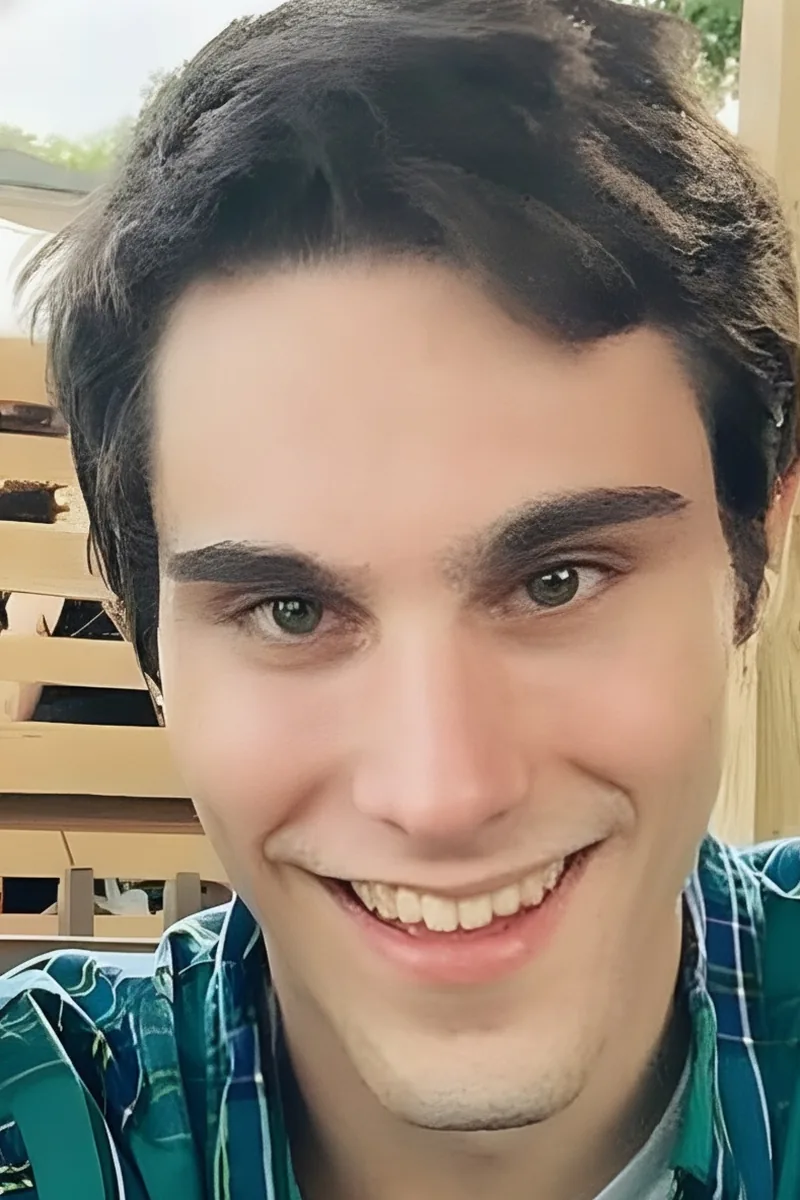
Biomedical engineering at UVA meant Colton spent four years where pre-calculus material — trigonometric modeling, exponential decay, function composition — wasn't a standalone course but the daily language of signal processing and biomechanics problems. He teaches the course as a bridge-builder, connecting each new concept back to the algebra students already own and forward to the calculus they're about to encounter. His 32 ACT and 4.7 rating reflect a practical, engineering-minded approach to the subject.
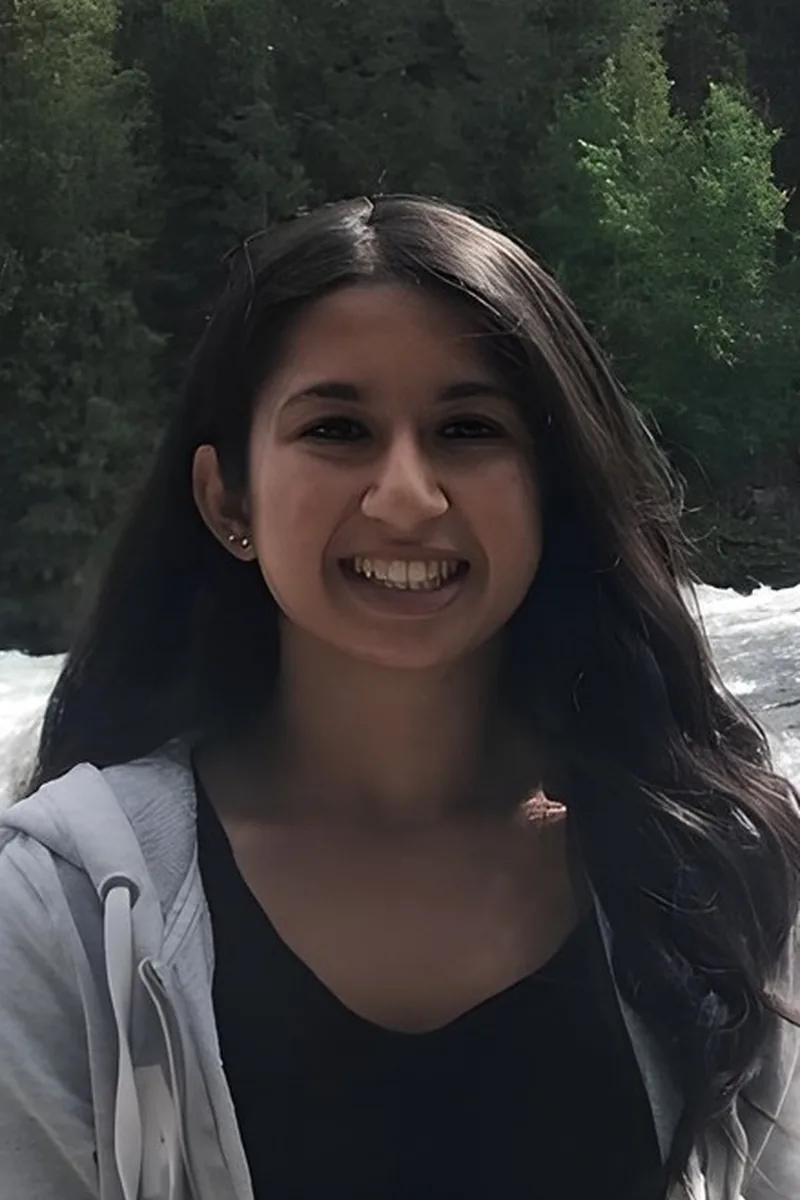
I am a student at the Georgia Institute of Technology studying Chemical Engineering. For the past several years, I have worked with students extensively. Through hosting events for younger kids to learn about STEM and for older teens to practice empathetic design, I know the importance of teaching students in ways that engage them rather than frustrate them, which I apply to my teaching. I have tutored high school students in a drop-in resource center in various subjects including math of all levels, chemistry, and English, making me adequately equipped in a variety of topics. I have also tutored several students long-term. Establishing relationships with students and exploring their unique learning styles is my favorite part of tutoring. I prioritize helping students discover HOW to learn in a manner that is the most effective for them, so they can begin to use those skills on their own throughout their education. Learning is a lifelong skill that requires practice for improvement; I strive to help my students gain confidence in their ability to learn.
Pre-calc is where math pivots from computation to conceptual thinking — suddenly students need to analyze function behavior, understand transformations, and reason about limits informally. Zofia's approach zeroes in on building that analytical shift, especially around trigonometric functions and their graphs, so that calculus feels like a natural continuation rather than a cliff.
The jump from algebra to pre-calculus often trips students up at a specific point — when equations stop being things you solve and start being objects you transform, compose, and invert. Paul's deep math background across the full algebra-to-calculus pipeline means he can pinpoint exactly where that conceptual shift is breaking down and rebuild the reasoning behind it. His 1570 SAT confirms the quantitative sharpness he brings to topics like rational functions and sequence behavior.
The jump into pre-calculus can feel overwhelming when trigonometric identities, polar coordinates, and limits all land at once. As a mechanical engineering student, Christian uses these tools constantly in his coursework and can show exactly how each concept feeds into the bigger mathematical picture. He's particularly effective at demystifying function transformations and the unit circle.
Engineering physics at Colorado School of Mines means Jude encounters pre-calculus concepts like parametric equations, polar coordinates, and composite functions not as textbook abstractions but as the working language of wave mechanics and circuit analysis. He teaches through rapid back-and-forth questioning — almost Socratic — so students discover the structure inside a problem before being handed a formula. His 36 ACT and 4.9 rating reflect a tutor who's still deep in the material himself.
An engineering physics degree from Colorado School of Mines means Cody didn't just pass through pre-calculus — he pressure-tested every concept in it across semesters of wave mechanics, circuit analysis, and multivariable problem sets. He's especially sharp on the topics that trip students up at the bridge between algebra and calculus: trigonometric identities, function transformations, and the intuition behind logarithmic and exponential behavior. His 1440 SAT and teaching range from pre-algebra through calculus 3 reflect someone who genuinely understands the full arc these concepts fit into.
Environmental biology trained Rosemary to think in functions — population models that grow exponentially, nutrient cycles that behave logarithmically, seasonal patterns described by sinusoidal curves. She brings that applied mindset to pre-calculus, connecting graph transformations and function families to the real-world systems they were built to describe. Her 32 ACT confirms solid quantitative instincts across the board.
Four years running Drake University's Math Lab meant Brenna spent every day translating pre-calculus stumbling blocks — rational functions, trig identities, sequences — into language that clicked for students across dozens of different majors. Her actuarial science degree trained her to think in terms of models and risk curves, so she teaches topics like exponential and logarithmic functions by showing how they actually behave rather than just how to manipulate them on paper. That modeling instinct carries through to graphing transformations, where she gets students reading function behavior instead of memorizing shift rules.
An English degree might seem like an unlikely path into pre-calculus tutoring, but Carson's broad math teaching range — from pre-algebra through calculus — means he's walked students through every stage of the algebraic-to-functional thinking progression and knows exactly where the stumbling blocks hide. He's especially sharp at demystifying the shift from manipulating equations to interpreting how entire function families behave, the conceptual leap that trips up most students between algebra and calculus.
Everything in Pre-Calculus — trigonometric identities, polar coordinates, rational functions — exists to set up the ideas students will need in calculus and beyond. Evan studied physics in college, which means he spent years relying on exactly these tools and can explain why each one matters instead of presenting them as disconnected topics. He's especially sharp at demystifying trig graphs and unit circle reasoning.
A philosophy major at Princeton with a certificate in Statistics and Machine Learning, Julie approaches pre-calculus proofs and function analysis with the logical rigor her coursework demands — she's especially sharp at breaking down the 'why' behind trigonometric identities and limit intuition before students hit calculus. She teaches across the full math ladder from elementary through Calculus II, so she knows exactly which algebraic instincts need to be solid and which conceptual leaps trip students up at the pre-calc stage. Rated 4.9 with a 1570 SAT.
The leap into pre-calculus often stalls around trigonometric identities, limits intuition, or the shift from polynomial to rational and logarithmic functions. Gianna's perfect SAT Math score and Princeton coursework mean she sees these topics not as isolated chapters but as the toolkit students will rely on in calculus. She connects each concept forward so students understand why they're learning it, not just how to get through the homework.
The jump to pre-calculus often trips students up at trigonometric identities and the shift from algebraic to function-based thinking. Ellie's biomedical engineering coursework at Yale runs on these exact tools — polar coordinates, parametric equations, and limits all show up in her daily problem sets. Rated 5.0 by students, she connects each pre-calc concept to the bigger mathematical picture so the material actually sticks.
Competition math throughout high school taught Tracy to see pre-calculus topics like sequences, series, and trigonometric manipulations as puzzles with elegant internal logic — not just procedural hurdles before calculus. Her triple economics degree means she also knows how these tools land in practice, since exponential models and rate-of-change reasoning show up constantly in economic analysis. A 36 ACT and 4.9 rating confirm she delivers on both the conceptual and practical sides.
Most pre-calculus courses throw the unit circle, rational functions, and logarithmic properties at students in rapid succession without showing the thread connecting them — Kathleen's math degree from Washington University means she sees that thread clearly and teaches accordingly. She's especially sharp at bridging the gap between algebraic mechanics students already trust and the functional thinking calculus will demand, building each new concept as a natural extension rather than a separate topic to memorize. Her 35 ACT and 1550 SAT confirm the quantitative depth behind her approach.
Cognitive science at Penn blends psychology, philosophy, and a surprising amount of mathematical modeling — Samantha's coursework has kept her actively working with the function families, transformations, and analytical reasoning that define pre-calculus. She's especially sharp at bridging the gap between algebraic mechanics and the conceptual shift pre-calc demands, like understanding why a rational function behaves near its asymptotes or how composite functions layer operations in a specific order. Her 1460 SAT reflects the quantitative grounding behind that clarity.
The leap from trig identities to limits can feel abrupt if the underlying logic of functions isn't solid. Pranav tackles Pre-Calculus by connecting topics like rational functions, polar coordinates, and sequences back to the graphical intuition students already have. As a Biomedical Engineering student at Johns Hopkins, he uses these tools daily and can show students why each concept matters beyond the textbook.
A PhD in statistics and a biomedical engineering degree mean Sam has spent years where pre-calculus isn't a course — it's the scaffolding holding together regression models, signal processing, and experimental design. He digs into the transition points that trip students up most, like moving from polynomial arithmetic to analyzing rational function behavior or connecting trig identities to their geometric origins. Rated 4.9 by students.
Until age 16, Viktor saw math as mindless formula memorization — then a series of great teachers revealed the deeper logic underneath, and he ended up majoring in mathematics at UChicago. That conversion story shapes how he teaches pre-calculus: he digs into *why* the unit circle works or what a logarithm actually means, so students build real understanding instead of a formula sheet they'll forget by finals. His 1600 SAT and 35 ACT confirm the mathematical fluency behind that approach.
Mechanical engineering at the undergraduate level means Andrea spent semesters grinding through the exact transition pre-calculus prepares students for — mastering polar coordinates, parametric equations, and trigonometric identities before they became essential tools in dynamics and thermodynamics courses. She teaches that material as someone who knows precisely where each concept resurfaces, breaking down topics like composite functions and rational expressions by connecting them to the engineering problems they eventually power. Her 32 ACT and 4.8 rating reflect consistent results across a wide range of students.
Phillips Exeter's math program is built around problem sets that force students to derive concepts before seeing formal definitions — and that training shaped how Violet teaches pre-calculus topics like rational functions, sequences, and the behavior of composite expressions. Her BS in Mathematics from Brown means she's carried these ideas through multivariable calculus and beyond, so she can pinpoint exactly where a pre-calc concept is headed and why mastering it now saves real pain later. Her 1550 SAT confirms the quantitative sharpness behind that long-view approach.
A year as a course assistant in Harvard's math department teaching introductory calculus gave Richard a sharp sense of exactly which pre-calculus skills — polynomial end behavior, composite functions, rate-of-change intuition — students need locked down before day one of calc. He teaches those topics with that forward view, connecting each piece to where it's actually headed so nothing feels like busywork. His 36 ACT and 1600 SAT confirm the quantitative range behind that perspective.
Testimonials
Because the right Pre-Calculus tutor makes all the difference.
Average Session Rating – Based on 3.4M Learner Ratings
Practice Pre-Calculus
Free practice tests, flashcards, and AI tutoring for Pre-Calculus
Nearby Pre-Calculus Tutors
Other Aurora Tutors
Related Math Tutors in Aurora
Frequently Asked Questions
Varsity Tutors matches Aurora students with expert Pre-Calculus tutors for 1-on-1 instruction. We pair each student with a tutor based on their specific needs, learning style, and goals.
Whether you need homework help, exam prep, or want to get ahead, our Pre-Calculus tutors are ready to help.
Common challenges include gaps from earlier material, difficulty with specific concepts, and trouble applying learning to new problems. These issues can snowball quickly in Pre-Calculus.
A tutor identifies where you're stuck, fills in gaps, and provides targeted practice. The 1-on-1 format means you get help exactly where you need it.
Tutors work with your student's actual coursework—homework assignments, class notes, and upcoming tests. This keeps tutoring directly relevant to what's happening in the classroom.
When you share information about your student's school and curriculum, we can match you with a tutor who has relevant experience.
All tutors complete background checks, credential verification, and teaching evaluation. Many of our Pre-Calculus tutors hold advanced degrees or have years of teaching experience.
You can review tutor profiles to find someone with the right background for your student's level and needs.
Many students see improved grades within a few weeks, along with better understanding of Pre-Calculus concepts and more confidence tackling challenging material.
Tutors track progress and adjust their approach to ensure continued improvement.
Most students benefit from 1-2 sessions per week. More frequent sessions help if your student is significantly behind or has an important exam coming up.
Your tutor can recommend a schedule based on your student's specific situation and goals.
Tutoring is purchased in packages of hours, with rates varying by tutor experience. Varsity Tutors offers several options to fit different budgets and needs.
You can discuss pricing during your consultation to find what works best.
Your tutor will assess where your student is, discuss goals, and start working on priority areas. Most students bring current homework or upcoming test material to focus on.
By the end, you'll have a clear sense of how the tutor can help and a plan for moving forward.
Let’s find your perfect tutor
Answer a few quick questions. We’ll recommend the right plan and match you with a top 5% tutor.