Award-Winning Chemistry Tutors
serving Colorado Springs, CO
Award-Winning
Chemistry
Tutors in Colorado Springs
Private 1-on-1 tutoring, weekly live classes for academic support, test prep & enrichment, practice tests and diagnostics, and more to elevate grades and test scores.
Based on 3.4M Learner Ratings
UniversitiesSchools & Universities
DeliveredHours Delivered
ProficiencyGrowth in Proficiency
Who needs tutoring?
No obligation. Takes ~1 minute.
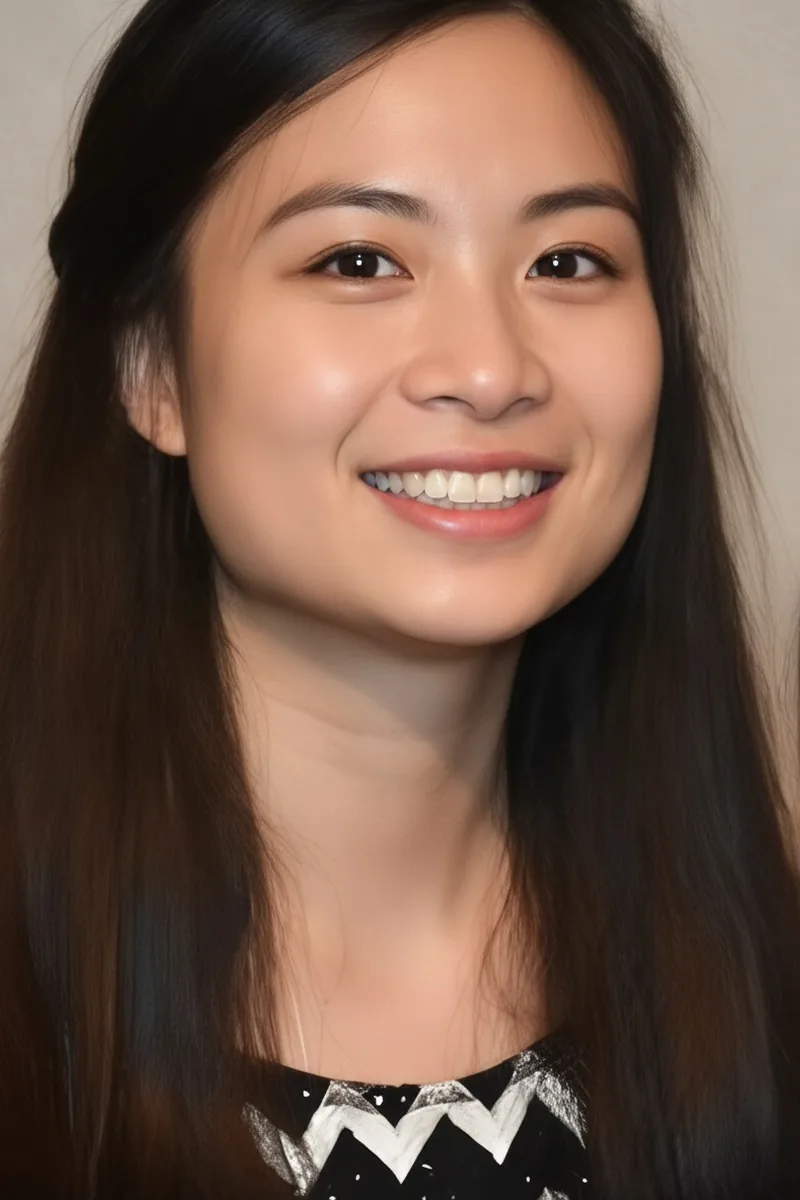
Stoichiometry, electron configurations, thermodynamics — Chemistry asks students to think at the atomic level while solving problems that feel like math puzzles. Michelle spent four years at Rice immersed in chemistry coursework as a biochemistry major and now applies that knowledge daily in medical school, so she can explain not just how to balance equations but why the underlying principles matter.

Mechanical engineering at Harvard means Christopher lives in the overlap between chemistry and physics — material properties, thermodynamics, and reaction energetics show up constantly in his coursework. He breaks down topics like bonding, gas laws, and enthalpy calculations by tying them to tangible engineering problems, which gives abstract concepts a concrete anchor. Rated 4.8 by students.
Balancing equations and unit conversions might seem straightforward, but chemistry gets genuinely tricky once gas laws, equilibrium expressions, and acid-base calculations enter the picture. James majored in chemistry at Harvard and has tutored students across general and organic chem, so he knows how to connect early concepts like mole ratios to the more complex problems they enable later. That forward-looking approach keeps students from having to re-learn fundamentals mid-semester.
Political science might seem far from chemistry, but Asta's 35 ACT — including the Science section — required quick, accurate reasoning through data-heavy passages on reaction rates, gas behavior, and experimental design. She applies that same structured, analytical approach to breaking down chemistry problems like dimensional analysis and mole conversions, making the logic behind each step visible. Rated 5.0 by students.
A chemistry degree gives Sung the depth to teach everything from stoichiometry and equilibrium to organic reaction mechanisms and thermodynamics at the college level. He treats problem sets as opportunities to trace the reasoning behind each step — balancing equations, for instance, becomes an exercise in conservation laws rather than trial and error. Rated 5.0 by students.
Stoichiometry, electron configurations, and equilibrium calculations all demand a specific kind of careful, step-by-step reasoning. As a pre-med biomedical engineering student at Yale, Ellie uses chemistry constantly — from biochemistry coursework to her research in the School of Medicine. She's particularly good at teaching students to set up dimensional analysis and reaction problems methodically so they stop making the small errors that tank exam scores.
Premed coursework demands a deep understanding of chemistry, from thermodynamics and equilibrium to acid-base reactions and electrochemistry. Nishad tackles these topics by linking abstract concepts to tangible applications — explaining buffer systems through blood pH regulation, or teaching reaction kinetics through enzyme behavior.
Stoichiometry, equilibrium, and acid-base reactions all require a kind of disciplined reasoning that Jessica developed through years of medical training, where chemistry underpins everything from pharmacology to metabolic pathways. She breaks down each problem type into a clear sequence of decisions rather than a wall of formulas to memorize.
Stoichiometry and equilibrium tend to be the two places where chemistry students lose their footing, often because the underlying logic gets buried under conversion steps. Yu tackles these topics by making students narrate what's happening at the molecular level before touching any math. Her education training at Harvard sharpened her ability to pinpoint exactly where a concept breaks down for each learner.
A summa cum laude biochemistry degree from Rice plus years of medical school coursework gave Sugi deep fluency across general chemistry — from stoichiometry and equilibrium through electrochemistry and coordination compounds. She teaches the reasoning behind each concept so students can tackle unfamiliar problems, not just reproduce memorized steps. Rated 5.0 by students.
Stoichiometry, equilibrium, and thermodynamics all click faster when a student sees how they connect to real systems — and Kate's environmental engineering background means she can tie every chemistry concept to tangible processes like water treatment or combustion reactions. She breaks down dimensional analysis and reaction balancing into repeatable steps that build genuine confidence on exams.
Stoichiometry, electron configurations, acid-base equilibria — chemistry has a reputation for feeling like a new language. Perry approaches it that way, teaching students the underlying grammar of moles, bonding, and reaction types so that problem-solving becomes intuitive rather than formulaic.
Testimonials
Because the right Chemistry tutor makes all the difference.
Average Session Rating – Based on 3.4M Learner Ratings
Practice Chemistry
Free practice tests, flashcards, and AI tutoring for Chemistry
Nearby Chemistry Tutors
Other Colorado Springs Tutors
Related Science Tutors in Colorado Springs
Frequently Asked Questions
Many students struggle with balancing chemical equations, understanding stoichiometry, and visualizing molecular structures and bonding at the atomic level. Beyond memorization, chemistry requires connecting abstract concepts like electron configuration and equilibrium to real-world applications—which is where personalized tutoring makes a real difference. A tutor can break down these challenging topics step-by-step and help you build genuine understanding rather than just memorizing formulas.
Your first session is about understanding your specific needs—whether you're struggling with a particular unit, preparing for the AP Chemistry exam, or building foundational skills. A tutor will assess your current level, identify knowledge gaps, and create a personalized plan tailored to your learning style. You'll leave with clarity on what to focus on next and concrete strategies for tackling chemistry concepts more effectively.
Absolutely. Tutoring strengthens both your understanding of the scientific method and your ability to interpret experimental results. A tutor can help you design experiments, understand the reasoning behind procedures, predict outcomes, and troubleshoot when results don't match expectations. This deeper comprehension makes lab work less intimidating and helps you connect theory to hands-on practice.
Unit conversions and dimensional analysis are foundational skills that unlock stoichiometry, gas laws, and molarity calculations. A tutor can teach you to think about conversions as a logical process rather than a trick to memorize, helping you build confidence with moles, grams, liters, and complex multi-step problems. With consistent practice and clear explanations, this skill becomes second nature.
Chemistry involves invisible processes—electrons orbiting nuclei, molecules bonding, reactions occurring at the atomic level—that are hard to picture. Expert tutors use multiple strategies like molecular models, diagrams, analogies, and interactive explanations to make these abstractions concrete and memorable. When you can visualize what's happening, balancing equations, predicting reactions, and understanding equilibrium become much clearer.
Yes. AP Chemistry requires mastery of complex topics like thermodynamics, kinetics, equilibrium, and electrochemistry, plus strong problem-solving skills under time pressure. Tutoring helps you build deep conceptual understanding, practice AP-style questions, identify weak areas, and develop test-taking strategies. Many students find that personalized guidance transforms their confidence and performance on the exam.
Not at all—chemistry is about understanding the "why" behind reactions and properties. While you'll learn some key information, the real skill is applying chemistry principles to solve new problems and predict outcomes. A tutor focuses on building your scientific reasoning and conceptual foundation so you can tackle unfamiliar problems with confidence, rather than relying on rote memorization.
Colorado Springs has diverse high schools and middle schools with varying chemistry curricula and teaching approaches. Personalized tutoring fills gaps in understanding, adapts to your school's specific expectations, and works around your schedule. Whether you attend a large district school or a smaller academy, connecting with an expert tutor ensures you get support tailored to your needs and goals.
Let’s find your perfect tutor
Answer a few quick questions. We’ll recommend the right plan and match you with a top 5% tutor.