Award-Winning Science Tutors
serving San Francisco, CA
Science
Tutors in San Francisco
Private 1-on-1 tutoring, weekly live classes for academic support, test prep & enrichment, practice tests and diagnostics, and more to elevate grades and test scores.
Based on 3.4M Learner Ratings
UniversitiesSchools & Universities
DeliveredHours Delivered
ProficiencyGrowth in Proficiency
Who needs tutoring?
No obligation. Takes ~1 minute.
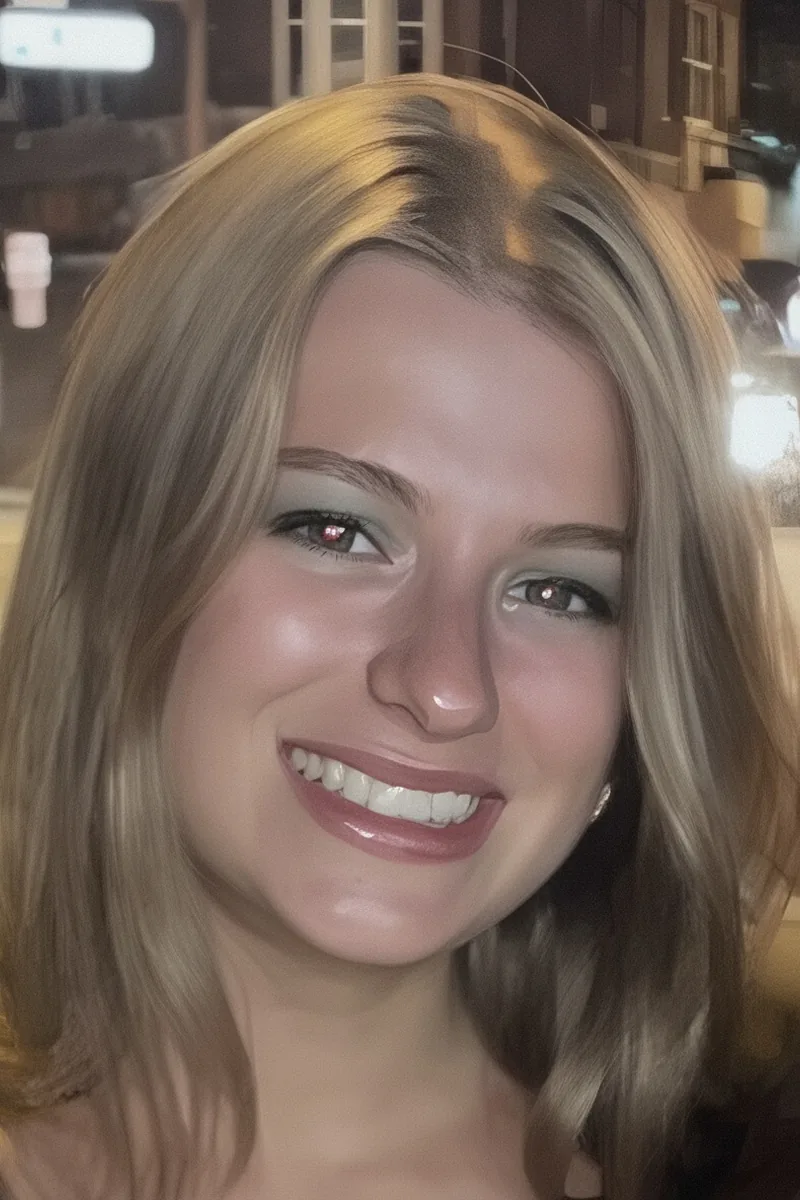
A neuroscience major at the University of Michigan, Megan digs into science topics — cells, ecosystems, the scientific method — with the same curiosity she brings to her own research coursework. She teaches students to read diagrams carefully, form hypotheses, and explain their reasoning in complete thoughts rather than guessing at multiple-choice answers.

Between a Caltech degree spanning economics and computer science, coursework that ranged from AP Chemistry to physics and engineering, and a 1580 SAT, Brian has unusually deep firsthand experience with the scientific disciplines most tutors only teach from a textbook. He's especially strong on the quantitative backbone of science — setting up equations from word problems, interpreting data sets, and connecting mathematical models to physical phenomena like thermodynamics or mechanics.
A Harvard English lit degree might not scream science, but Ema's five years of math tutoring — covering everything from basic measurement to pre-calculus — means she's comfortable with the quantitative backbone of science: unit conversions, graphing data, and working through formulas. Her 33 ACT confirms she can handle cross-disciplinary reasoning, and her instinct for breaking word problems into manageable steps carries over naturally to interpreting experiments and explaining results.
From balancing chemical equations to solving kinematics problems, Jackie covers a wide range of science topics — she earned 5s on both AP Chemistry and AP Physics C exams and scored a 35 on the ACT Science section. Her approach treats science reasoning as a skill: reading data tables, interpreting graphs, and connecting experimental results back to underlying concepts.
Sean's 1480 SAT required him to tear through data interpretation and evidence-based reasoning questions at speed — the same skills students need when they're asked to read a graph, evaluate an experimental setup, or explain why a control group matters. His communication studies background also means he can teach students to articulate scientific reasoning clearly, which is often the difference between a student who understands a concept and one who can actually demonstrate that understanding on a test or lab report.
Christina's computer science degree required deep coursework across biology, chemistry, and physics — giving her the cross-disciplinary fluency to explain everything from cell respiration to Newton's laws in terms students actually remember. She breaks scientific concepts into logical steps, treating each problem like debugging code: identify what you know, isolate what's confusing, and build toward the answer systematically.
A bio-psychology major on the pre-med track, Aaron lives in the sciences daily — from cellular biology to organic chemistry to neuroscience. He breaks down scientific concepts by connecting them to real-world examples, making abstract processes like enzyme kinetics or chemical equilibrium feel tangible. His 32 ACT composite also means he knows how to translate deep content knowledge into test-ready problem solving.
A sociology major at Yale spends a surprising amount of time with research methods — designing surveys, interpreting statistical outputs, and evaluating whether evidence actually supports a claim — and Katrina brings that training to science material where students need the same skills to work through experiments and data tables. Her 32 ACT confirms she can handle the quantitative side, and her instinct for asking "what does this result actually tell us?" pushes students past surface-level memorization.
Between AP scores in Physics, Biology, Chemistry, and Environmental Science — plus a biomedical engineering major at UCLA — Chris has an unusually broad science background. He's especially strong at connecting concepts across disciplines, like showing how the physics of fluid dynamics applies to circulatory systems or how chemistry drives cellular processes.
Currently pursuing an M.D., Timothy has spent years immersed in biology, chemistry, and physics through both his pre-med coursework and MCAT preparation — subjects that map directly onto the science concepts students encounter in middle and high school. He's particularly strong at breaking down life science topics like anatomy, cell function, and nutrition, then showing how chemistry and physics principles operate underneath them.
As a screenwriting major at USC, Kiersten spends her days building narratives from cause and effect — which is essentially what science asks students to do when tracing how one variable triggers a chain of outcomes in an experiment. She scored a 1550 on the SAT, confirming she can handle evidence-based reasoning and data interpretation, and her experience tutoring charter school juniors means she knows how to make dense material accessible without dumbing it down.
An English and French literature background might not scream science, but Carla's analytical training — close reading, building arguments from textual evidence, and identifying patterns across complex material — maps well onto interpreting data, understanding experimental write-ups, and explaining results clearly. She's particularly useful for students who can handle the concepts but struggle to articulate their reasoning in lab reports or written responses. Holds a 5.0 rating.
A law clerk for a federal judge has to sift through technical evidence — medical records, environmental data, forensic reports — and determine what it actually proves, which is the same critical evaluation science students need when interpreting experiments and drawing conclusions from data. Keith brings that evidence-weighing discipline to science tutoring, particularly when students struggle to connect observations to explanations or distinguish strong conclusions from weak ones. His UCLA political science training also emphasized research design and statistical reasoning, both of which underpin the scientific method.
Neurobiology sits at the intersection of chemistry, physics, and biology, so Daniel spent his undergraduate years bouncing between all three disciplines daily. That cross-training means he can explain cellular respiration in terms of energy transfer, or connect genetics to molecular chemistry, giving students a more intuitive grasp of how scientific concepts link together rather than treating each unit as isolated material.
Public policy coursework drills you in reading studies, questioning methodology, and interpreting data tables — exactly the skills Jennifer draws on when teaching science concepts like experimental design, variable control, and evidence-based conclusions. Her 4.9 rating across twenty subjects suggests she adapts quickly to whatever a student brings to the table, whether that's life science vocabulary or making sense of a graph in physical science.
A UCLA psychobiology degree is essentially a double dose of science — biology, chemistry, anatomy, and research methods all woven together. Shant unpacks scientific concepts by connecting them to real-world examples, whether that's explaining cellular respiration through energy metabolism or teaching the scientific method through actual experimental design. Students get someone who genuinely lives in the sciences, not someone teaching them as a side subject.
John's drama training at the BFA level actually builds a surprisingly useful science skill: reading a scenario closely, identifying what's really being asked, and constructing a clear, logical explanation under pressure. His 1580 SAT confirms he can handle data interpretation and evidence-based reasoning at a high level, and his editorial work at the Los Angeles Review of Books means he's especially sharp at helping students write lab reports and scientific explanations that are precise and well-organized.
Policy analysis at the PhD level is essentially the scientific method applied to real-world problems — Anna designs studies, controls for variables, and draws conclusions from messy data sets every day at Pardee RAND. That training makes her especially sharp at teaching students how to move from observation to hypothesis to evidence-based conclusion, which is the core skill underneath every science unit regardless of topic.
A cellular and molecular biology degree means Jerome spent years digging into everything from mitochondrial respiration to DNA replication — the kind of science that ties together chemistry, physics, and biology into one coherent picture. He breaks down complex processes like enzyme kinetics or cell signaling into step-by-step logic that students can actually reason through on exams.
Two years as an undergraduate teaching assistant for a developmental physiology course gave Raquel deep practice explaining concepts like cell signaling, organ system integration, and homeostasis to students encountering them for the first time. She also led biology tutoring through the Science National Honor Society in high school. That combination of college-level TA work and years of one-on-one sessions means she can adjust her explanations from introductory vocabulary all the way up to AP-level experimental design.
Andrew's English degree might not scream science, but his knack for breaking anything down to what he calls 'obvious-as-peanuts basics' works just as well for photosynthesis diagrams as it does for essay outlines — the core skill is teaching students to read dense material carefully and explain what's actually happening in their own words. He's especially handy when science assignments cross into writing territory: lab reports, short-answer explanations, and any question that asks students to support a claim with evidence. Rated 5.0 by students.
I am a graduate of Duke University with a degree in Health Policy and Education Policy. While at Duke University I was a student athlete, participated in the leadership of several clubs and service groups; as well as, working as a Math and Reading tutor. After graduation I spent a year pursing a business venture allotted to me through the Elevator Pitch Competition, my senior year of college, which I won in my category - Non-Profits. After that year, I joined the Teach for America Fellowship, where I fell in love with teaching. The Teach for America Fellowship is 2 years; however, after my first year due to the recognition and growth in my classroom I was invited to start a school. I spent 2 years at that school prior to getting married and moving to California, a few months ago, with my amazing, aerospace loving, husband.
Linda's education coursework at USC's Rossier School gives her practical strategies for teaching scientific vocabulary and concepts to students who find the material intimidating — she breaks dense terminology into manageable pieces using the same root-word techniques she applies in her Spanish and French tutoring. Her experience spans elementary through adult learners, so she adjusts how she explains topics like the states of matter or basic lab procedures depending on whether she's working with a fifth grader or a high schooler catching up on fundamentals.
Mitch's engineering degree means he didn't just study one science — he had to master physics, chemistry, and the math that ties them together, then apply all of it to real-world systems. That cross-training makes him especially effective at explaining how scientific principles like force, energy, and chemical reactions actually work together rather than treating each unit as its own island. Rated 5.0 by students.
Clinical oncology research at UCLA and a biology degree from LMU give John an unusually hands-on understanding of how science actually works — designing experiments, interpreting data, and connecting theory to observable results. He uses that lens to teach students the scientific method as a thinking tool, whether they're tackling a chemistry stoichiometry problem or analyzing results from a biology lab.
Having completed Stanford's neuroscience track — which spans biology, chemistry, and physics — Emily brings genuine cross-disciplinary comfort to science tutoring. She's especially effective at walking through experimental design and data interpretation, teaching students to think like researchers who ask "how do we know this?" instead of just accepting textbook claims.
Dorothy's English and education background might not scream science, but strong reading comprehension is half the battle when students face dense textbook passages, diagram-heavy worksheets, and word-problem-style lab questions. She zeroes in on teaching students to pull key information from scientific texts and translate what they read into clear, organized answers — a skill that carries across biology, earth science, and physical science alike.
Between her public health minor and pre-med preparation at UCLA, Nicole built a deep working knowledge of biology, chemistry, and physical science that she's reinforced through years of tutoring in each. She's especially skilled at teaching students how to connect abstract concepts — like energy transfer or cellular processes — to concrete, observable phenomena. Her experience teaching science in classrooms in the Philippines and Honduras also sharpened her ability to explain ideas without relying on jargon.
Linguistics training at NYU sharpened Naama's ability to break complex systems into patterns and rules — a skill that maps directly onto how science asks students to classify, predict, and explain natural phenomena. She's especially effective at helping students decode the dense vocabulary in science textbooks, since dissecting Latin and Greek roots is second nature to someone who studies language for a living. Her psychology coursework also means she can teach research design and the scientific method from firsthand experience.
A computer science degree builds the same logical scaffolding science demands — isolating variables, testing predictions systematically, and debugging an explanation when the results don't match the hypothesis. Milan applies that programmer's instinct for structured troubleshooting to science concepts, walking students through how to trace cause-and-effect in everything from chemical reactions to ecosystem dynamics. His English double major also means he can coach the writing-heavy side: lab reports, data explanations, and constructing claims from evidence.
Earning a bachelor's in earth sciences and pursuing a master's in geospatial technology at USC means Krista lives and breathes scientific thinking. She tackles everything from middle school life science to high school chemistry, emphasizing how to design experiments, interpret data, and explain results using precise scientific language.
Every core physics and engineering course in Alok's mechanical engineering program at UC Irvine required applying scientific reasoning — setting up experiments, analyzing data, and connecting observations to underlying principles. He translates that hands-on experience into clear explanations of topics like forces, energy, and motion that make abstract concepts tangible.
Studying philosophy at the graduate level means Ben spends his days doing exactly what science asks students to do — constructing arguments from evidence, testing whether conclusions actually follow from premises, and poking holes in reasoning that looks solid on the surface. His 33 ACT confirms he can handle the data interpretation and quantitative demands of science material, and his English background makes him especially useful when students need to write clear lab reports or explain experimental results in their own words.
A cellular and molecular biology degree means Janani can dig into science topics at the level students actually need — whether that's explaining mitosis for a freshman bio class or breaking down enzyme kinetics for an upper-level course. She connects abstract processes to concrete examples, like tracing how a single gene mutation cascades into a visible trait.
Studying visual and environmental studies means Tom spends his coursework at the intersection of observation and analysis — documenting how systems interact, interpreting what he sees, and building arguments from evidence, which is essentially the scientific method applied through a different lens. He's particularly strong at teaching students to read diagrams, pull meaning from visual data, and articulate their reasoning clearly, since those skills overlap heavily with his arts training. His 1560 SAT confirms the analytical horsepower behind the creative background.
I am a recent graduate of the University of Virginia living in Los Angeles. While at UVA, I earned a 3.95 GPA and graduated my major program with Highest Distinction. I have eight years of tutoring experience (including starting my own tutoring program) and have worked with students of all ages. I'm looking forward to helping people with their studies in any way I can.
Earning a B.S. in Biological and Physical Sciences from UCSB's Honors Program means Kevin didn't just take biology and physics — he integrated them, studying everything from cellular respiration to thermodynamics within a single curriculum. That cross-disciplinary background lets him explain how energy, matter, and living systems connect rather than treating each science class as its own silo. He's especially strong in biology and physics at both the high school and introductory college level.
A BFA in Theatre means Nina spent years learning to research unfamiliar worlds quickly and convincingly — period-accurate staging requires understanding everything from Newtonian mechanics to human physiology — and that cross-disciplinary curiosity carries over when she tutors science. Her 33 ACT confirms she can handle the data interpretation and reasoning that science coursework demands, and her instinct to make abstract ideas tangible (a skill every actor develops) means she's especially good at turning concepts like energy transfer or chemical reactions into something a student can visualize and explain back.
A double physics degree gives Gerardo the depth to tackle science topics ranging from Newtonian mechanics to energy conservation and wave behavior. He breaks down scientific reasoning into clear, logical steps — the same structured thinking he uses when connecting formulas to lab observations and real-world phenomena.
A neuroscience bachelor's and a pharmacology master's from Tulane give Helen unusual range across the sciences — she can walk through cellular respiration in biology, explain action potentials in physiology, or break down drug interactions in chemistry with equal fluency. That cross-disciplinary background means she connects concepts across fields instead of teaching each topic in isolation. Rated 5.0 by students.
Testimonials
Because the right Science tutor makes all the difference.
Average Session Rating – Based on 3.4M Learner Ratings
Practice Science
Free practice tests, flashcards, and AI tutoring for Science
Nearby Science Tutors
Other San Francisco Tutors
Related Science Tutors in San Francisco
Frequently Asked Questions
Many students struggle with connecting abstract concepts to real-world applications, especially in chemistry and physics where visualization is critical. Others find it difficult to balance memorization of facts with deeper conceptual understanding, or they lack confidence in lab skills and experimental design. Personalized tutoring helps address these gaps by breaking complex topics into manageable pieces and using targeted practice to build both conceptual mastery and practical skills.
In a typical San Francisco classroom with a 20:1 student-teacher ratio, teachers must pace lessons for the entire class, which means some students fall behind while others get bored. Personalized tutoring adapts to your learning speed and style—a tutor can spend extra time on photosynthesis if that's your sticking point, skip topics you've mastered, and use explanations that click for you. This targeted approach helps students build confidence and close knowledge gaps much faster than classroom instruction alone.
Yes. Varsity Tutors connects you with tutors who understand California's science standards and the specific curricula used across San Francisco's 17 school districts. Whether your student is working through NGSS-aligned middle school life science, high school biology, chemistry, or physics, tutors can align lessons with classroom materials, help with current assignments, and prepare for district assessments.
The first session is about understanding where your student is starting from. A tutor will ask diagnostic questions, review recent assignments or test results, and identify specific areas of confusion—whether that's cellular respiration, balancing chemical equations, or lab report writing. From there, the tutor creates a personalized plan to address gaps and build toward your student's goals, whether that's improving grades, preparing for an exam, or developing stronger lab skills.
Absolutely. Beyond explaining concepts, tutors can guide students through proper lab technique, help them design experiments, teach data analysis, and improve lab report writing—all critical skills in science. Personalized instruction allows tutors to work through real or simulated experiments with your student, answer questions in real-time, and provide feedback that strengthens both their understanding and their practical abilities.
Tutors can help students prepare for everything from unit tests and semester exams to AP exams and the science portions of standardized tests. They use practice problems, explain tricky concepts, teach test-taking strategies, and help students build the confidence to tackle unfamiliar questions. Focused, personalized prep is especially effective because tutors can target exactly what your student finds challenging rather than generic test prep.
Tutors work with students across all grade levels—from elementary science and middle school life science and earth science, through high school biology, chemistry, physics, and environmental science, to AP and honors courses. Whether your student needs help with foundational skills like the scientific method and basic biology, or advanced topics like organic chemistry and quantum mechanics, Varsity Tutors can connect you with a tutor who specializes in what your student needs.
Many students see noticeable improvement in understanding and confidence within 3-4 weeks of consistent tutoring, especially when targeting specific problem areas. Bigger shifts—like raising a grade from C to B or mastering a challenging unit—often take 2-3 months of regular sessions. The timeline depends on where your student is starting, how frequently you meet, and how actively they engage with practice between sessions.
Let’s find your perfect tutor
Answer a few quick questions. We’ll recommend the right plan and match you with a top 5% tutor.