Award-Winning AP Environmental Science Tutors
serving San Francisco, CA
AP Environmental Science
Tutors in San Francisco
Private 1-on-1 tutoring, weekly live classes for academic support, test prep & enrichment, practice tests and diagnostics, and more to elevate grades and test scores.
Based on 3.4M Learner Ratings
UniversitiesSchools & Universities
DeliveredHours Delivered
ProficiencyGrowth in Proficiency
Who needs tutoring?
No obligation. Takes ~1 minute.

Biomedical engineering trains you to think about how biological systems interact with their surroundings — and Huan brings that lens to APES topics like bioaccumulation, toxicology, and how pollutants move through food webs and water systems. His chemistry-focused coursework strengthens the quantitative side students often stumble on, from pH calculations in acid deposition problems to interpreting LD50 data on the free-response section. Rated 5.0 by students.
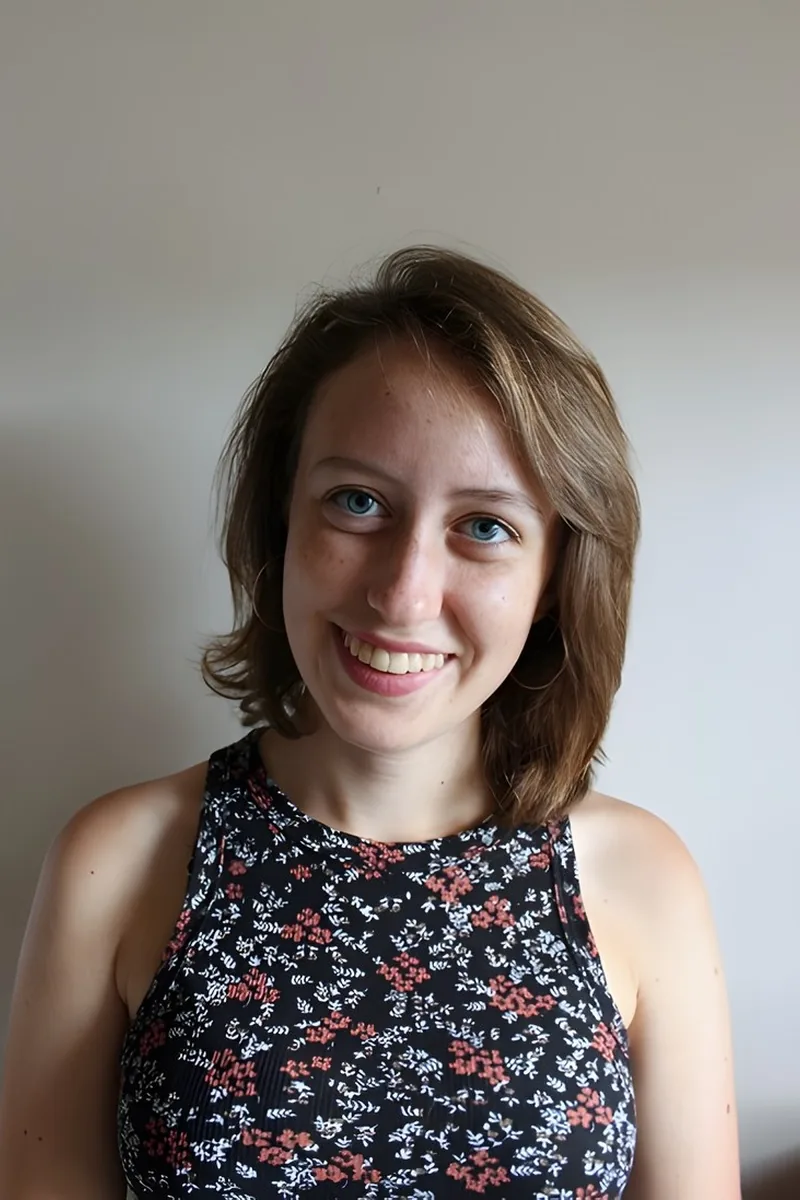
Sofia's ecology concentration at the University of Chicago means AP Environmental Science isn't a subject she just studied — it's her field. She unpacks FRQ-heavy topics like biogeochemical cycles, biodiversity loss, and energy resource tradeoffs with the depth of someone who does research in a neurobiology lab and thinks about ecosystems professionally. That firsthand scientific context makes the difference between memorizing vocabulary and actually understanding environmental systems.
Chemical engineering coursework at Princeton drills material and energy balances — tracking what flows in, what transforms, and what flows out — which maps directly onto APES topics like biogeochemical cycles, pollution transport, and energy resource calculations. Satya applies that systems-level thinking to the exam's quantitative questions, breaking down ecological footprint math and efficiency problems with an engineer's precision. A perfect 36 ACT score speaks to the data-interpretation and scientific reasoning skills the free-response section demands.
Ashley's dual degrees in the Science of Natural and Environmental Systems and Economics mirror exactly what APES demands — the ability to think across ecological principles and the human economic forces driving resource depletion, land use change, and pollution policy. She tackles topics like cost-benefit analysis of environmental regulations and the economics behind tragedy-of-the-commons scenarios with genuine subject fluency, not just textbook familiarity.
Business students learn to think in systems — supply chains, market feedback loops, cost-benefit trade-offs — and Myna applies that same framework to APES topics like resource depletion, environmental policy trade-offs, and the economic arguments embedded in free-response questions about sustainability. Her 34 ACT reflects sharp reading comprehension and data interpretation skills, which she channels into breaking down the graphs, experimental designs, and calculation problems that catch students off guard on exam day.
Having spent a year as a climate change researcher at the University of Helsinki — where she completed PhD-level atmospheric science coursework — Marika brings firsthand lab and field experience to AP Environmental Science. She digs into biogeochemical cycles, energy flow, and climate modeling with the depth the AP exam demands, connecting FRQ strategies to the actual science behind each topic.
Chemical and biomolecular engineering coursework covers thermodynamics, mass balances, and reaction kinetics — the same principles underlying APES topics like energy transfer through trophic levels, pollutant fate in water systems, and carbon cycle calculations. Akshaya uses that engineering lens to demystify the quantitative free-response problems where students need to set up unit conversions and efficiency calculations under time pressure. Rated 4.8 by students.
Primary care medicine means Kellyann sees the downstream effects of environmental problems daily — asthma exacerbated by air quality, waterborne pathogens, the health toll of industrial pollutants — which gives her a clinical lens on APES units covering pollution, toxicology, and human impact that pure ecology tutors often lack. She pairs that real-world perspective with nine years of science tutoring experience and a 4.9 rating, teaching students to trace environmental causes through biological systems the way a clinician would during a differential diagnosis.
Studying biological sciences means Liana is learning the underlying mechanisms — cellular respiration, nutrient cycling, population growth models — that APES questions are built on, rather than encountering them as isolated vocabulary terms. She breaks down topics like energy flow and species interactions using the same biological logic her college coursework demands, which pays off on free-response questions that ask students to explain processes rather than just name them. Rated 4.9 by students.
Biochemistry gives Don a molecular-level understanding of the processes APES only scratches the surface of — he can explain why dissolved oxygen drops downstream of a nutrient spill by walking through the actual chemistry of eutrophication and aerobic decomposition, not just labeling a diagram. That depth, plus a 35 ACT and 5.0 rating from students, makes him especially sharp on the exam's quantitative pieces like calculating biomass transfer between trophic levels or interpreting water quality data sets.
Geophysics sits at the intersection of earth systems and physical processes — so when Derrick teaches APES topics like plate tectonics, soil formation, or how geological activity shapes resource distribution, he's drawing on coursework that goes well beyond the AP curriculum. He also brings strong math and physics chops to the quantitative side of the exam, tackling energy budget calculations and atmospheric modeling problems that pure memorization won't solve. Rated 5.0 by students.
Computer science at UCLA might not scream environmental science, but David's training in modeling complex systems and analyzing large datasets maps directly onto APES topics like climate feedback loops, population modeling, and resource depletion calculations. He tackles the quantitative side of the exam — unit conversions, energy math, experimental design — with the algorithmic precision of a software engineer, which is exactly what the data-heavy free-response questions demand. Rated 4.8 by students.
Testimonials
Because the right AP Environmental Science tutor makes all the difference.
Average Session Rating – Based on 3.4M Learner Ratings
Practice AP Environmental Science
Free practice tests, flashcards, and AI tutoring for AP Environmental Science
Nearby AP Environmental Science Tutors
Other San Francisco Tutors
Related Science Tutors in San Francisco
Frequently Asked Questions
Score improvement depends on your starting point and commitment level. Students who work with tutors typically see gains of 1-2 points on the AP scale (which ranges from 1-5), though some improve more significantly. The key is identifying your specific weak areas—whether that's unit mastery, free-response writing, or exam pacing—and targeting those systematically.
Most students benefit from starting tutoring 3-4 months before the May exam, which gives enough time to review content, practice full-length tests, and refine test-taking strategies.
Students in San Francisco and beyond often struggle most with Unit 8 (Aquatic and Terrestrial Ecosystems), Unit 6 (Energy Resources and Consumption), and Unit 4 (Biogeochemical Cycles). These units require synthesizing complex systems and understanding interconnected processes—not just memorizing facts.
Free-response questions on these topics demand higher-level thinking and clear written explanations. A tutor can help you move beyond memorization to truly understanding how these systems work, which is what the AP exam tests.
The free-response section has three questions: two short-answer questions (3 points each) and one long essay (10 points). Success requires clear, concise writing and specific evidence. Many students lose points by being vague—the rubrics reward concrete examples and quantitative thinking.
A solid strategy includes: reading each question twice before answering, identifying exactly what's being asked, organizing your response with clear topic sentences, and using specific data or examples. Practice writing under timed conditions (about 20 minutes per question) helps you develop efficiency and clarity before test day.
You have 90 minutes for 80 multiple-choice questions—about 1 minute per question. Many students waste time overthinking easier questions or get stuck on difficult ones, leaving less time for sections they'd find easier. The key is strategic triage: quickly identify questions you can answer confidently, tackle medium-difficulty ones next, and come back to truly difficult questions if you have time.
Practice full-length exams under timed conditions helps you internalize this pacing. A tutor can review your practice tests to identify which question types slow you down and teach you patterns to recognize answers faster.
Varsity Tutors connects you with expert tutors who specialize in AP Environmental Science and understand the specific challenges San Francisco students face. When you get matched with a tutor, you can discuss your current score, target score, and which units need the most work—whether that's climate systems, human population dynamics, or environmental policy.
The best tutors combine deep subject knowledge with test strategy expertise, helping you understand content while also teaching the specific skills the AP exam rewards.
Ideally, start preparing 4-5 months before the May exam (around January). This timeline allows you to review all 8 units systematically, take multiple practice tests, identify weak areas, and build confidence. If you're starting later, even 6-8 weeks of focused tutoring can meaningfully improve your score, especially if your tutor targets your specific weaknesses.
Starting early also reduces test anxiety—you'll have time to practice under realistic conditions and refine your approach before the actual exam.
Practice tests serve two purposes: building endurance for the 3-hour exam and identifying content gaps. Take your first full-length practice test early (around January) to establish a baseline. Then take tests every 3-4 weeks to track improvement and adjust your study focus.
After each test, analyze your performance carefully: Did you miss certain question types? Did time pressure cause careless errors? Were you weak on specific units? A tutor can help you interpret these patterns and create a targeted study plan rather than just reviewing everything again.
Let’s find your perfect tutor
Answer a few quick questions. We’ll recommend the right plan and match you with a top 5% tutor.