Award-Winning AP US History Tutors
serving Concord, CA
AP US History
Tutors in Concord
Private 1-on-1 tutoring, weekly live classes for academic support, test prep & enrichment, practice tests and diagnostics, and more to elevate grades and test scores.
Based on 3.4M Learner Ratings
UniversitiesSchools & Universities
DeliveredHours Delivered
ProficiencyGrowth in Proficiency
Who needs tutoring?
No obligation. Takes ~1 minute.
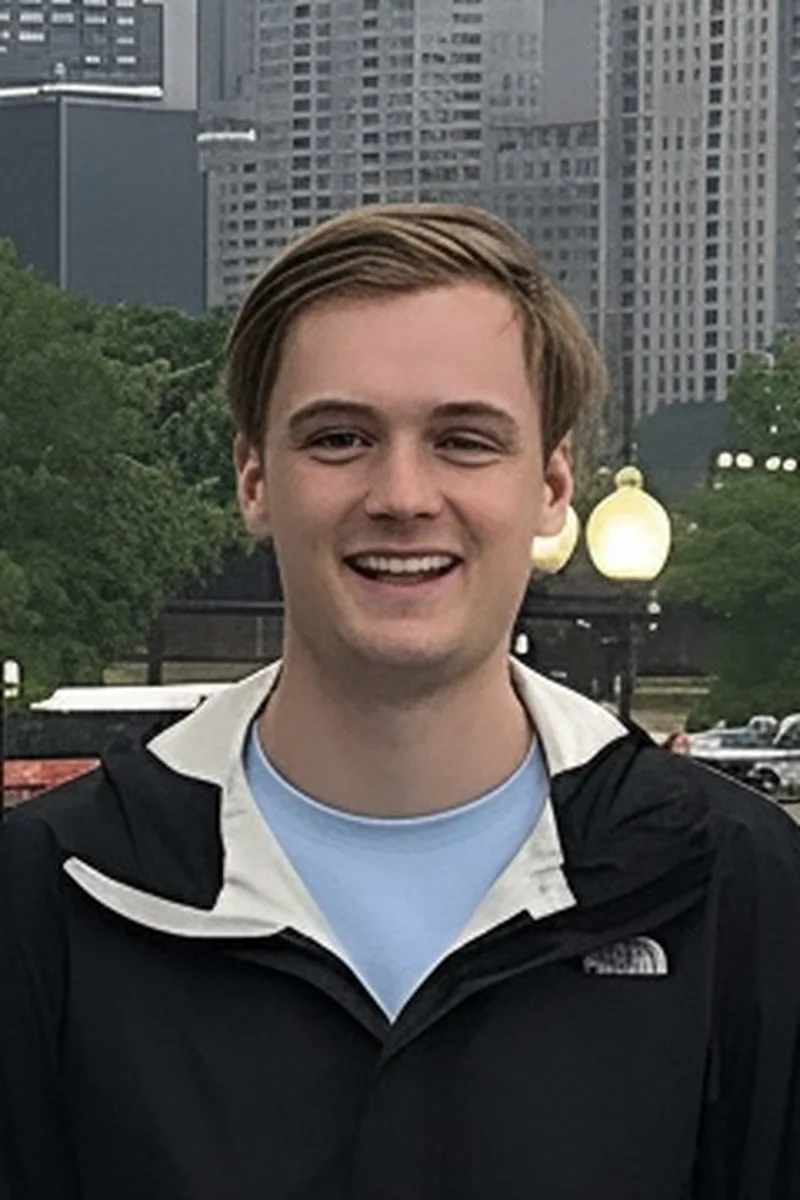
Studying visual and environmental studies at Harvard means Tom spends his time analyzing how images, spaces, and cultural artifacts carry meaning — a skill that translates directly to reading APUSH primary sources for context, audience, and purpose. His 1560 SAT reflects the kind of timed analytical reading the exam's document-based questions actually demand, and his writing and literature background gives him a sharp eye for helping students build thesis-driven essays that do more than just summarize.

I am a recent graduate of the University of Virginia living in Los Angeles. While at UVA, I earned a 3.95 GPA and graduated my major program with Highest Distinction. I have eight years of tutoring experience (including starting my own tutoring program) and have worked with students of all ages. I'm looking forward to helping people with their studies in any way I can.
Biology majors spend their time evaluating evidence, identifying patterns, and building arguments from data — skills that transfer directly to APUSH's document-based questions, where students must read sources critically and construct thesis-driven essays under pressure. Alan's UC Santa Barbara coursework and his own love of U.S. history (he calls it one of his favorite subjects to teach) mean he digs into the political and social turning points that show up most on the exam, from sectional crises through Cold War policy debates. Rated 4.7 by students.
Teaching in the US Peace Corps means explaining American institutions and historical turning points to audiences with no built-in assumptions about them — a skill that translates directly to APUSH's contextualization and causation demands, where students can't just name events but must explain why they mattered. Chris's International Relations master's degree adds the policy and diplomacy framework that sharpens analysis of everything from the Treaty of Versailles to containment strategy. Rated 4.8 by students.
Architecture school at Columbia trains you to research how buildings, cities, and spaces reflect the political and economic forces of their time — a habit of thinking that maps surprisingly well onto APUSH's emphasis on causation and contextualization across periods. Andrew brings that design-history lens to document analysis, teaching students to read sources for intent and audience the way an architect reads a site for constraints and possibilities. His 4.9 rating speaks to how well that cross-disciplinary approach clicks.
School psychology training is built around understanding how people think, learn, and respond to pressure — which comes in handy when students need to unpack the motivations behind everything from Jacksonian populism to Cold War containment policy. Alyssa applies that behavioral framework to APUSH's document analysis, teaching students to read primary sources not just for what they say but for the human calculations behind them. Her 1550 SAT and 5.0 rating speak to the kind of sharp, timed analytical thinking the exam rewards.
Studying political science at Stanford means Margaret spends her coursework inside the same institutional frameworks — constitutional design, federalism, party realignment — that APUSH tests most heavily across every period. That gives her a structural vocabulary for explaining why events like the Nullification Crisis or the New Deal reshape governance, which is exactly the causal reasoning the DBQ and LEQ score for. Her 1550 SAT also signals the timed reading and analytical writing stamina the exam demands.
Theater training builds a surprisingly useful APUSH skill — Amber knows how to read a text for subtext, audience, and intent, which is exactly what document-based questions ask students to do with political speeches, editorials, and propaganda. Her 1570 SAT and 35 ACT reflect the kind of timed analytical performance the exam rewards, and her casting background means she's practiced at quickly sizing up what someone is really trying to communicate. Rated 5.0 by students.
I'm excited to work with you or your child either on standardized test preparation or on generally improving performance in history, English, and social studies!
A University of Chicago political science degree means Asta spent four years immersed in the kind of rigorous argument-building and source analysis that APUSH essays demand — Chicago's core curriculum doesn't let you coast on surface-level claims. Her experience preparing international students in Hong Kong for U.S. college admissions also sharpened her ability to make American political and cultural context explicit, which is exactly what strong DBQ contextualization paragraphs require. Rated 5.0 by students.
Studying molecular biology at Yale might seem unrelated to APUSH, but Maxwell's scientific training sharpens exactly the kind of evidence-based reasoning the exam demands — evaluating sources, identifying patterns across data, and defending a thesis. He applies that analytical rigor to helping students dissect documents for context and purpose, particularly in periods where science, policy, and society collide, like industrialization or Cold War-era politics. Rated 5.0 by students.
Evaluating hundreds of fellowship candidates' writing and academic work at a nonprofit gave Will a finely tuned sense for what makes a historical argument land — clear thesis, precise evidence, purposeful structure — which is exactly what APUSH's DBQ and LEQ score for. His humanities and political science degree from Villanova, plus coursework at Cambridge, means he can connect American political development to broader intellectual currents in ways that strengthen periodization and contextualization essays. Holds a 5.0 rating.
I am currently a senior at Northwestern University and I will be receiving a Bachelor of Arts in Political Science and Legal Studies this spring. In the fall, I will begin attending law school at Northwestern Law. For many years, I tutored a wide range of students in Spanish, English literature, and writing. I have also continued to help many high school seniors with college application essays. While I tutor a variety of subjects, I am very passionate about helping students improve their reading and writing skills, and I really enjoy helping students with Critical Reading and Writing portions of Standardized Tests. I love working with students and helping them realize their full academic potential. In my spare time, I enjoy traveling, exploring Chicago, reading, and cooking.
The IB program's emphasis on extended essays and Theory of Knowledge — where students defend interpretive claims with structured evidence — builds the exact muscles APUSH's DBQ and LEQ require. Dalton completed the full IB diploma and now draws on that training to teach how to frame a historical argument around periodization or causation rather than just retelling events. His 35 ACT and 4.9 rating speak to the timed analytical performance the exam rewards.
A master's degree in Chinese politics means Elizabeth spent years analyzing how governments consolidate power, manage dissent, and navigate foreign relationships — the same analytical framework that unlocks APUSH's toughest comparative and causation questions, from Cold War containment policy to debates over executive authority. Her 1500 SAT and government coursework ground her in the primary-source reasoning and argumentative writing the DBQ demands. Rated 5.0 by students.
Testimonials
Because the right AP US History tutor makes all the difference.
Average Session Rating – Based on 3.4M Learner Ratings
Practice AP US History
Free practice tests, flashcards, and AI tutoring for AP US History
Nearby AP US History Tutors
Other Concord Tutors
Related Social Studies Tutors in Concord
Frequently Asked Questions
Expert tutors for AP US History should have strong knowledge of the course curriculum, ideally with experience teaching or tutoring AP-level history. Look for tutors who understand the exam format—including the multiple-choice section, short-answer questions, and document-based essay (DBQ)—and can teach effective strategies for each. Varsity Tutors connects you with tutors who have demonstrated expertise in American history and proven success helping students prepare for the AP exam.
Your first session typically focuses on understanding where you stand. The tutor will assess your current knowledge of US history content, identify which time periods or themes feel strongest and weakest, and discuss your goals for the AP exam. This helps create a personalized study plan that targets your specific needs—whether that's building foundational knowledge, mastering document analysis, or refining essay-writing skills.
Many students struggle with the sheer volume of content spanning from pre-Columbian times through recent history, making it hard to know what to prioritize. Others find the DBQ intimidating because it requires analyzing primary sources quickly while constructing a thesis-driven argument. Time management during the exam is another common issue—students often run out of time on the free-response section. A tutor can help you develop strategies for content review, document analysis, and pacing to tackle each of these challenges.
Score improvement depends on where you're starting and how consistently you study, but personalized 1-on-1 instruction typically accelerates progress significantly. Students who work with a tutor often see gains in their practice test scores within a few weeks by focusing on weak areas, learning test-specific strategies, and building confidence with the exam format. The key is combining tutoring with regular practice tests and active review of your mistakes.
The DBQ is a unique skill that requires analyzing primary sources, synthesizing information, and writing a cohesive argument under time pressure. A tutor can teach you a systematic approach: how to quickly identify the main idea in each document, spot patterns and connections, and construct a thesis that directly addresses the prompt. They'll also have you practice with real AP documents so you build speed and confidence before test day.
Most students benefit from 1-2 tutoring sessions per week, combined with independent study and practice tests. The ideal schedule depends on your current level and how much time you have before the exam. Your tutor can recommend a personalized study plan—for example, if you're starting several months out, you might focus on content review first, then shift to practice exams and strategy closer to test day.
Practice tests reveal exactly where your knowledge gaps are and help you get comfortable with the exam's timing and format. Taking full-length practice exams under timed conditions shows you how to pace yourself across the multiple-choice and free-response sections. Your tutor can review your practice test results with you, identify patterns in the questions you miss, and adjust your study plan accordingly—this targeted approach is much more efficient than general review.
Test anxiety often stems from feeling unprepared or unfamiliar with the exam format. Working with a tutor builds confidence through repeated exposure to AP-style questions, practice with time constraints, and mastery of content. As you see improvement on practice tests and feel more in control of your study strategy, anxiety naturally decreases. Your tutor can also teach you specific test-day strategies—like how to manage your time and approach difficult questions—so you feel ready when you walk into the exam room.
Let’s find your perfect tutor
Answer a few quick questions. We’ll recommend the right plan and match you with a top 5% tutor.