Award-Winning Geometry Tutors
serving Concord, CA
Geometry
Tutors in Concord
Private 1-on-1 tutoring, weekly live classes for academic support, test prep & enrichment, practice tests and diagnostics, and more to elevate grades and test scores.
Based on 3.4M Learner Ratings
UniversitiesSchools & Universities
DeliveredHours Delivered
ProficiencyGrowth in Proficiency
Who needs tutoring?
No obligation. Takes ~1 minute.
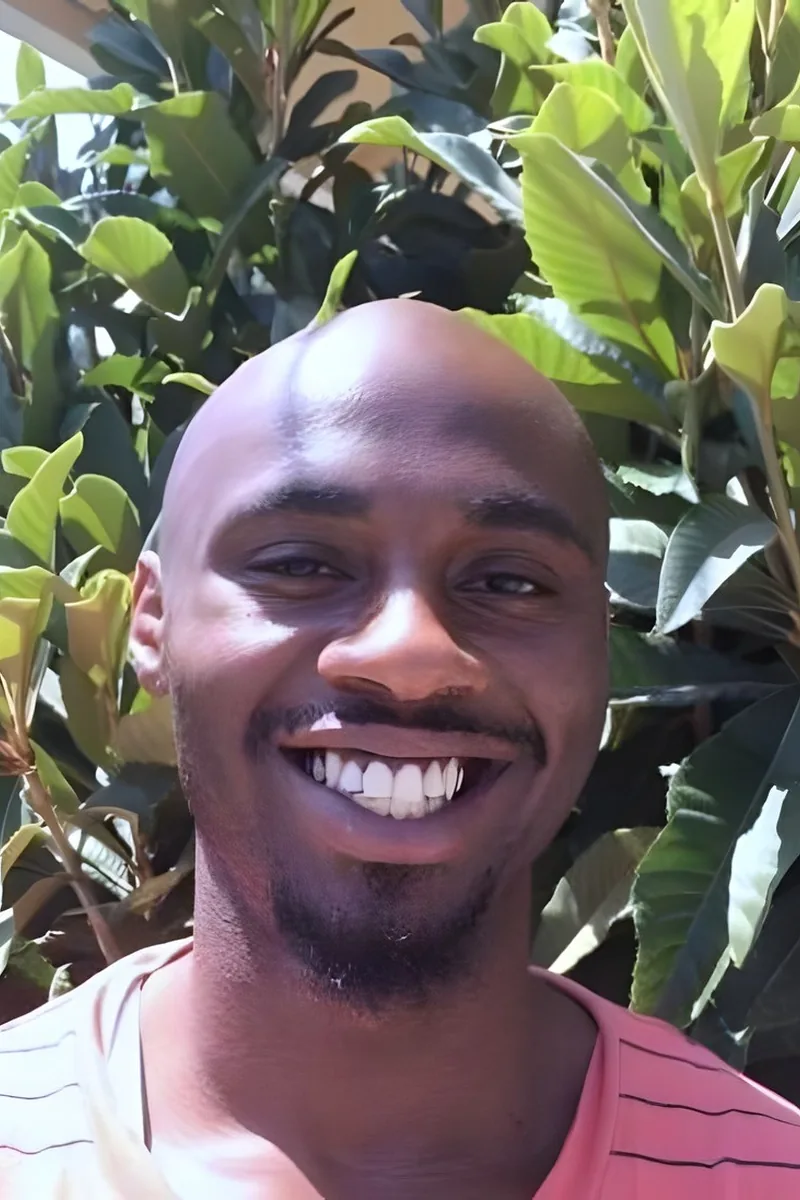
Proofs are usually the make-or-break moment in geometry, and Brian teaches students to construct them by thinking like a detective — identifying what's given, what's needed, and which theorems bridge the gap. His Caltech training in analytical reasoning sharpens how he explains congruence, similarity, and circle theorems, turning proof-writing from intimidating to methodical.
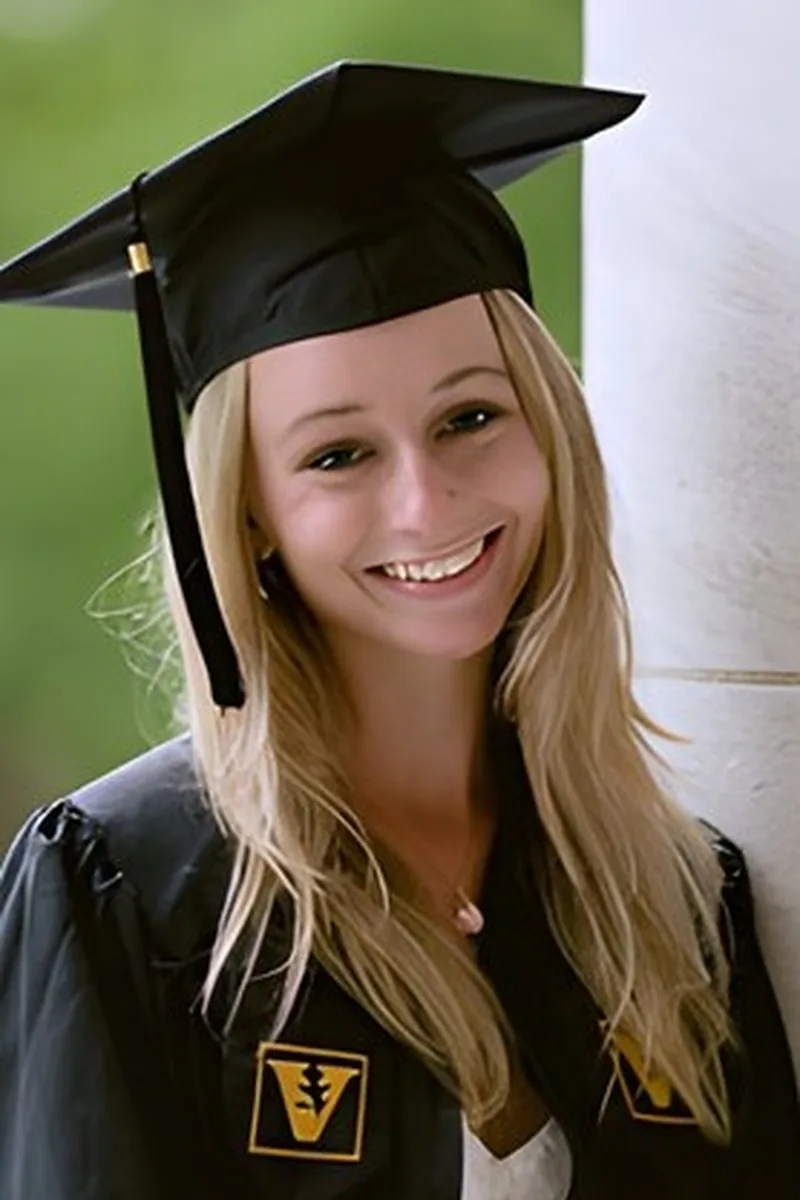
Jackie scored a 36 on the math section of the ACT, and her coursework through AP Calculus BC and Multivariable Calculus means she's deeply fluent in the reasoning skills that underpin geometry. She breaks down topics like angle relationships, area formulas, and coordinate geometry by tying them back to the algebraic thinking students already have — making new concepts feel like extensions, not mysteries. Rated 5.0 by students.
Running a high school math club where he tutored students across every level gave Chris a sharp sense of where geometry concepts like parallel line theorems and triangle congruence start to feel abstract and disconnected. His biomedical engineering coursework at UCLA reinforces that geometric intuition daily — modeling anatomical structures means constantly thinking about shapes, cross-sections, and spatial relationships. Rated 4.8 by students.
Proofs are usually where geometry students panic, but Timothy teaches them as logical arguments rather than mysterious rituals — each statement follows from the last, just like building a case. He also digs into the spatial reasoning behind area, volume, and triangle congruence so students can sketch their way through problems instead of memorizing formulas cold.
As a section editor for the Los Angeles Review of Books, John builds tightly structured arguments for a living — a skill that translates directly to geometric proofs, where every statement needs a reason and every chain of logic has to hold up under scrutiny. His 1580 SAT and broad math teaching range (pre-algebra through calculus) mean he can spot exactly which foundational gaps are making geometry's formal reasoning feel foreign to a student. Rated 5.0 by students.
Proofs are usually where geometry students panic — the jump from calculating angles to constructing logical arguments feels like a different subject entirely. Raquel approaches proofs as a form of structured reasoning, connecting each theorem back to visual intuition so the logic feels earned rather than arbitrary.
I am a graduate of Duke University with a degree in Health Policy and Education Policy. While at Duke University I was a student athlete, participated in the leadership of several clubs and service groups; as well as, working as a Math and Reading tutor. After graduation I spent a year pursing a business venture allotted to me through the Elevator Pitch Competition, my senior year of college, which I won in my category - Non-Profits. After that year, I joined the Teach for America Fellowship, where I fell in love with teaching. The Teach for America Fellowship is 2 years; however, after my first year due to the recognition and growth in my classroom I was invited to start a school. I spent 2 years at that school prior to getting married and moving to California, a few months ago, with my amazing, aerospace loving, husband.
Proofs are usually the first place geometry students panic, because suddenly math asks them to explain *why* something is true instead of just computing an answer. Mitch tackles proofs as logic puzzles, teaching students to chain together postulates and theorems one step at a time — the same structured reasoning his engineering training drilled into him.
Proofs are usually the first time a math student has to construct a logical argument instead of just computing an answer, and that shift trips up a lot of people. John approaches geometry by teaching students to read diagrams actively — identifying congruent angles, parallel line relationships, and triangle properties before writing a single step. His science training at Loyola Marymount built the same kind of systematic reasoning that proofs require.
A double major in computer science and English means Milan lives in two worlds — one where you build airtight logical sequences, and one where you construct persuasive arguments from evidence. That combination maps directly onto geometric proofs, where he teaches students to treat each given statement like a premise and each theorem like a rule in a program that has to run without errors. His 1540 SAT reflects the kind of precision that keeps multi-step reasoning from falling apart at the seams.
Proofs are where most geometry students hit a wall, because they require building a logical argument rather than just computing an answer. Naama teaches students to treat each proof like constructing a paragraph — claim, evidence, reasoning — which turns an intimidating format into something structured and approachable. She covers everything from triangle congruence to circle theorems with that same emphasis on logical flow.
Proofs are usually the first time a math student has to build a logical argument instead of just computing an answer, and that shift frustrates a lot of people. Alok approaches geometry by teaching students to read diagrams strategically — identifying congruent triangles, parallel-line angle relationships, and circle theorems — so the reasoning flows naturally from what they can see.
Proofs are usually the first place Geometry students feel lost, because suddenly math asks them to argue logically instead of just compute. Whitney's neuroscience degree from Pomona College was built on constructing and evaluating logical arguments, and she applies that same structured thinking to angle relationships, triangle congruence, and circle theorems.
Proofs are usually where geometry students panic, but Gerardo reframes them as logical arguments rather than mysterious rituals. He walks through angle relationships, triangle congruence, and circle theorems by emphasizing the reasoning chain — what you know, what you can conclude, and why. His physics training reinforces this approach, since spatial reasoning and geometric logic show up constantly in the physical sciences.
Having studied biology at UCLA, Nathan is used to thinking about structures — cell architecture, organ systems, skeletal frameworks — which gives him a surprisingly practical lens for geometry's emphasis on shapes, symmetry, and spatial relationships. He breaks down problems involving area, perimeter, and volume by encouraging students to sketch, label, and reason through each step rather than jump straight to a formula. That methodical, step-by-step approach works especially well for students who feel overwhelmed by multi-part geometry problems.
Proofs are usually the first time a math student has to construct a logical argument rather than just compute an answer, and that shift can be disorienting. Jack walks through each proof by identifying what's given, what's needed, and which theorems bridge the gap — turning a blank two-column table into a manageable puzzle. His anthropology training at Berkeley, which demands rigorous evidence-based reasoning, reinforces that same logical structure.
Proofs are where most geometry students lose confidence, because suddenly math asks them to explain *why* rather than just compute. Siavash tackles this by teaching logical structure first — how to chain together postulates and theorems — so that proving triangle congruence or parallel-line relationships feels like building an argument rather than guessing at steps.
Improv comedy and geometry have more in common than people think — both require reading a situation quickly, identifying constraints, and building a logical sequence on the fly. Michael's training at NYU's Atlantic Acting School and Experimental Theatre Wing sharpened exactly that kind of rapid spatial and structural thinking, which he now applies to teaching constructions, transformations, and the step-by-step logic behind geometric proofs. Rated 4.8 by students.
I'm an affable chemistry-loving person whose joy come from delivering knowledge :D
Proofs are usually the first time a math student has to build a logical argument from scratch, and that's exactly the skill Daniel leans into when teaching Geometry. Having studied engineering at Harvey Mudd College, he approaches congruence, similarity, and circle theorems as exercises in structured reasoning — teaching students to justify each step rather than just chase the right angle measure.
Proofs are usually the part of geometry that makes students want to quit. Drew approaches them as logical puzzles — teaching students to identify which postulates and theorems apply, then build an argument step by step, the same way he constructs formal proofs in his college math courses.
Proofs are usually what make geometry feel like a completely different subject from anything students have seen before. Alex walks through each logical step — from identifying congruent triangles to applying parallel-line angle relationships — so that writing a proof becomes a structured argument rather than a guessing game. His math background at UCLA means the deductive reasoning behind geometry is second nature.
Proofs are where most geometry students stall — the logic feels nothing like the computation they're used to. Gabriel approaches each proof as a structured argument, teaching students to identify given information, choose the right postulates, and build a chain of reasoning step by step. His 5.0 rating speaks to how well that logical, patient style clicks with students.
Proofs are usually the first time a geometry student has to construct a logical argument instead of just computing an answer — and that shift can be jarring. Joanne walks through two-column and paragraph proofs step by step, connecting each theorem about parallel lines, congruent triangles, or circle properties back to a visual diagram so the reasoning stays grounded.
Proofs are usually the first place geometry students feel lost — the logic feels nothing like the math they've done before. Thomas approaches proofs as structured arguments, a skill his English background sharpened, walking through each theorem step by step until the reasoning becomes second nature.
An International Development degree might seem unrelated to geometry, but Lizzy's coursework involved constant map-based spatial analysis — interpreting scale, calculating land areas, and reasoning about geographic shapes and boundaries. She brings that practical spatial fluency to topics like area, perimeter, and properties of polygons, grounding abstract theorems in tangible, real-world contexts.
Proofs are usually the first place geometry students feel lost — the logic feels nothing like the computation they're used to. Nathan teaches proof structure as a form of storytelling, where each statement follows from the last, and pairs that reasoning skill with hands-on practice in congruence, similarity, and circle theorems.
Proofs are where most geometry students panic, but they're really just structured arguments — something Alain's training in mathematical logic makes him well-suited to teach. He walks through congruence, similarity, and circle theorems by showing students how to build each proof step by step from what they already know.
Proofs trip up a lot of Geometry students because they require a completely different kind of thinking than arithmetic or algebra. Joseph approaches them as logical arguments — each statement backed by a reason — and teaches students to map out their reasoning before writing anything formal. He also covers the spatial skills side, from triangle congruence shortcuts to circle theorems, with clear diagrams and step-by-step walkthroughs.
Proofs are where most geometry students panic, because suddenly math asks you to explain *why* something is true instead of just computing an answer. Sean tackles that shift head-on, walking through logical chains step by step and using visual intuition to make congruence, similarity, and angle relationships click. His improvisational teaching style means he adjusts explanations until the reasoning genuinely lands.
Proofs are usually where geometry students panic, but the real issue is often that no one taught them how to organize a logical argument from given information to conclusion. Mariapaz treats proof-writing as a skill that can be practiced, walking through the reasoning behind congruence theorems and parallel line relationships until students can construct arguments on their own. She also digs into coordinate geometry and area problems, connecting visual intuition to algebraic tools.
Proofs are usually where geometry students start to struggle, because the class suddenly asks them to build logical arguments instead of just computing answers. Hugo teaches students to map out proof strategies step by step, treating each theorem as a tool they can deploy rather than a statement to memorize. He holds a 5.0 client rating.
Proofs are usually the first place geometry students feel lost, because suddenly math asks them to build logical arguments instead of just computing answers. Sarah tackles this by teaching proof structure as a skill in itself — identifying givens, choosing postulates, and linking steps — before layering in triangle congruence, parallel line theorems, and circle properties. Her math and physics training at Clark makes her especially comfortable bridging visual intuition with formal reasoning.
Cornell's biological engineering program threw Mary into years of modeling physical systems — fluid flow through channels, stress on biomaterials, device dimensions — all of which demand precise geometric reasoning about shapes, cross-sections, and spatial relationships. She brings that practical fluency to topics like circle theorems, properties of quadrilaterals, and area-volume calculations, making abstract definitions feel grounded in real measurement. Rated 5.0 by students.
A chemistry major at Harvard, James is used to thinking in three dimensions — molecular geometries, orbital shapes, bond angles — which gives him a natural fluency with the spatial reasoning geometry requires. He tackles circle theorems and polygon properties by encouraging students to sketch, label, and reason through diagrams before jumping to formulas, building the kind of geometric intuition that makes even multi-step problems feel manageable. Rated 4.9 by students.
Proofs are usually the sticking point in geometry — students can calculate angles and areas but freeze when asked to construct a logical argument about congruence or similarity. Christine approaches proof-writing the way she learned to structure engineering reports at Johns Hopkins: identify what you know, state what you need to show, and connect the two with clear reasoning.
Proofs are usually where geometry stops feeling like math and starts feeling like a foreign language. JF breaks down the logic behind two-column and paragraph proofs so students see them as structured arguments, not mysterious rituals. A 5.0 client rating speaks to an approach that makes even angle-chasing problems feel manageable.
Proofs are where most geometry students freeze up — the leap from calculating angles to constructing logical arguments feels like a different subject entirely. Paula bridges that gap by connecting each theorem back to something visual and concrete, whether it's triangle congruence or parallel line relationships. Her psychology background gives her a sharp read on where a student's reasoning breaks down.
Proofs are usually the first time a geometry student has to explain *why* something is true, not just calculate an answer. Vansh teaches proof-writing as a logical argument rather than a mysterious format, walking through triangle congruence, parallel-line theorems, and circle properties with enough patience to make the reasoning feel natural.
Kevin's Philosophy, Politics, and Economics program at Penn is essentially a training ground in structured argumentation — building claims from premises, identifying logical gaps, defending conclusions — which maps directly onto geometric proof-writing. He teaches students to treat two-column proofs the same way they'd treat a debate: state what you know, justify every step, and never skip a link in the chain. His 34 ACT composite reflects the kind of precise, methodical reasoning that makes geometry's logical demands feel manageable.
Testimonials
Because the right Geometry tutor makes all the difference.
Average Session Rating – Based on 3.4M Learner Ratings
Practice Geometry
Free practice tests, flashcards, and AI tutoring for Geometry
Nearby Geometry Tutors
Other Concord Tutors
Related Math Tutors in Concord
Frequently Asked Questions
Many students struggle with the transition from algebra to geometry's emphasis on visual reasoning and proof-writing. Common pain points include understanding why geometric properties work (not just memorizing them), tackling multi-step proofs, applying theorems to word problems, and visualizing 3D shapes. Personalized tutoring helps students build conceptual understanding rather than relying on memorization, making these challenging topics click.
Proof-writing requires both understanding geometric relationships and learning to communicate mathematical reasoning clearly. Expert tutors work with you to identify which theorems and postulates apply to each problem, organize your logical steps, and explain your reasoning in proper mathematical language. With guided practice and feedback on your work, you'll develop the problem-solving strategies that make proofs less intimidating.
Geometry requires translating between 2D diagrams and 3D spatial relationships, which doesn't come naturally to everyone. Some students need help developing visual-spatial reasoning skills, while others benefit from drawing their own diagrams to understand problems better. Personalized instruction allows tutors to use different approaches—sketching, manipulatives, or step-by-step visualization—until the concepts become clear.
Yes. Concord's schools use various geometry programs, and tutors are experienced with the major approaches and textbooks used across the district. Whether your course emphasizes coordinate geometry, transformations, or traditional Euclidean proofs, Varsity Tutors connects you with tutors who understand your specific curriculum and can align support with what you're learning in class.
Word problems require translating language into geometric diagrams and equations—a skill that takes practice. Tutors help you break down complex problems into manageable steps, identify relevant information, and choose the right theorems or formulas to apply. By working through problems together and discussing your reasoning, you'll develop strategies that work across different problem types.
One-on-one instruction creates a judgment-free space where you can ask questions, make mistakes, and learn at your own pace—without the pressure of a classroom. Tutors help you build confidence by celebrating progress, breaking difficult concepts into smaller steps, and showing you that geometry is logical and learnable. As you understand the material better, anxiety naturally decreases.
Expert tutors don't just teach isolated theorems—they help you recognize how geometric properties relate to each other and build on previous concepts. By discussing why certain rules work and how they connect to algebra or real-world applications, you develop deeper understanding and retain information longer. This approach transforms geometry from a collection of facts into a coherent system you can apply flexibly.
Your first session is about building a foundation for success. The tutor will assess your current understanding, identify specific challenges, and learn about your learning style and goals. You'll discuss what's working and what isn't in your geometry class, then develop a personalized plan to address your needs—whether that's mastering proofs, improving problem-solving strategies, or building overall confidence in the subject.
Let’s find your perfect tutor
Answer a few quick questions. We’ll recommend the right plan and match you with a top 5% tutor.