Award-Winning AP US History Tutors
serving San Francisco, CA
AP US History
Tutors in San Francisco
Private 1-on-1 tutoring, weekly live classes for academic support, test prep & enrichment, practice tests and diagnostics, and more to elevate grades and test scores.
Based on 3.4M Learner Ratings
UniversitiesSchools & Universities
DeliveredHours Delivered
ProficiencyGrowth in Proficiency
Who needs tutoring?
No obligation. Takes ~1 minute.

I am a recent graduate of the University of Virginia living in Los Angeles. While at UVA, I earned a 3.95 GPA and graduated my major program with Highest Distinction. I have eight years of tutoring experience (including starting my own tutoring program) and have worked with students of all ages. I'm looking forward to helping people with their studies in any way I can.
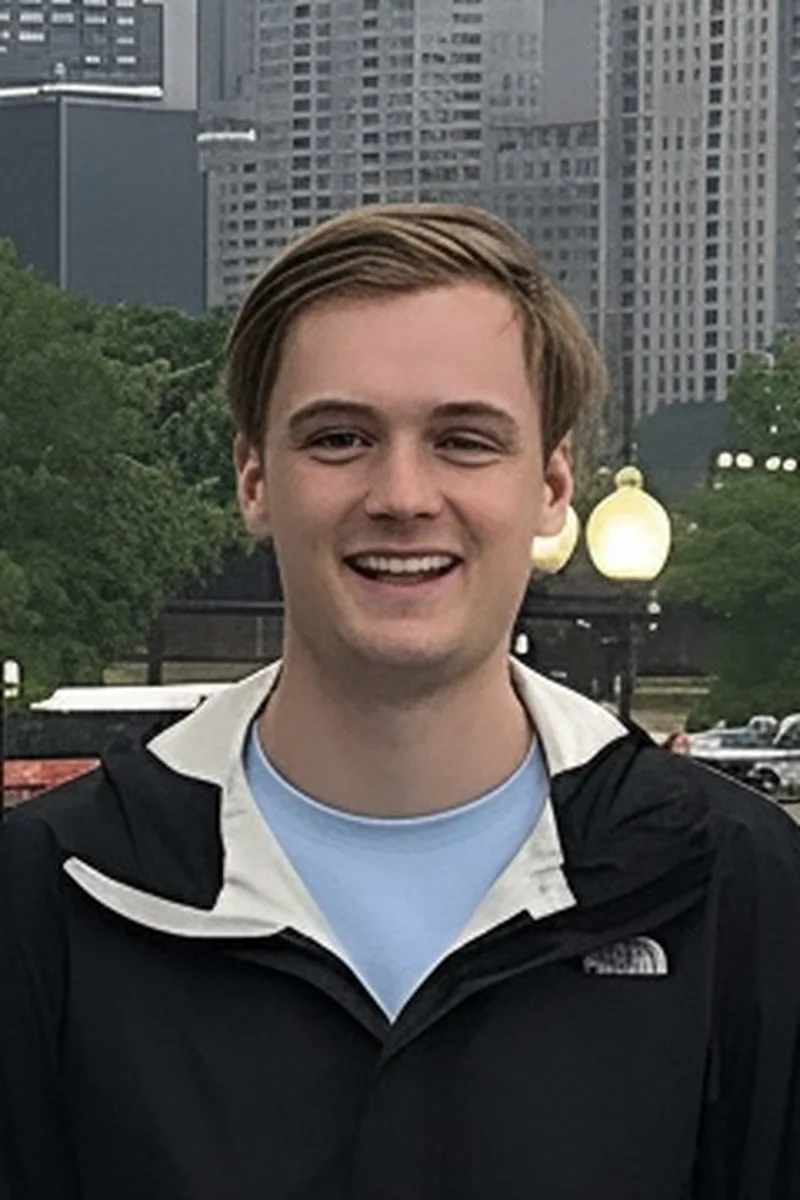
Studying visual and environmental studies at Harvard means Tom spends his time analyzing how images, spaces, and cultural artifacts carry meaning — a skill that translates directly to reading APUSH primary sources for context, audience, and purpose. His 1560 SAT reflects the kind of timed analytical reading the exam's document-based questions actually demand, and his writing and literature background gives him a sharp eye for helping students build thesis-driven essays that do more than just summarize.
Biology majors spend their time evaluating evidence, identifying patterns, and building arguments from data — skills that transfer directly to APUSH's document-based questions, where students must read sources critically and construct thesis-driven essays under pressure. Alan's UC Santa Barbara coursework and his own love of U.S. history (he calls it one of his favorite subjects to teach) mean he digs into the political and social turning points that show up most on the exam, from sectional crises through Cold War policy debates. Rated 4.7 by students.
Kristin's University of Chicago BA required the kind of intensive primary source analysis and argumentative writing that APUSH essays directly test — she spent years constructing evidence-based claims under the school's famously rigorous Core Curriculum. Her philosophy minor adds a layer of logical precision to thesis construction, particularly on LEQs where students need to sustain a causal or comparative argument across multiple periods without losing the thread. Rated 5.0 by students.
Political science majors spend years dissecting the constitutional tensions, legislative battles, and power dynamics that make up the core of the APUSH curriculum — Julian studied exactly the material the exam tests most heavily. His 1430 SAT signals strong timed reading and writing performance, which matters for an exam where the DBQ and LEQ live or die on how quickly a student can build a sourced, thesis-driven argument under pressure.
I'm excited to work with you or your child either on standardized test preparation or on generally improving performance in history, English, and social studies!
Jay earned his history degree with honors from Penn State's Schreyer Honors College, and AP US History plays directly to that strength. He digs into the DBQ and LEQ formats specifically, teaching students how to contextualize documents, build defensible claims, and weave evidence from periods like Reconstruction or the New Deal into arguments that score well on exam day.
As a first-generation college student who graduated cum laude from UCLA with a biology degree and Asian Languages minor, Abrahim brings an outsider's analytical eye to American history — he learned to question assumptions rather than take narratives at face value. That mindset translates well to APUSH's emphasis on sourcing and contextualization, where students need to interrogate *why* a document was created, not just what it says. Rated 5.0 by students, he approaches each historical period as a puzzle to decode rather than a list to memorize.
A statistics and machine learning certificate at Princeton means Julie spends her coursework building arguments from data — the same evidentiary reasoning APUSH demands when students must synthesize unfamiliar documents into a coherent thesis under time pressure. Her philosophy training adds a layer most history tutors skip: she teaches students to identify the logical structure of an argument before writing one, which is exactly what separates strong DBQs from ones that just summarize sources. Rated 4.9 by students.
Studying both biology and philosophy at Boston College means Andrew spends his days toggling between empirical evidence and argumentative reasoning — the exact combination APUSH essays demand when students must marshal specific historical evidence into a persuasive thesis. He's particularly strong on causation and contextualization questions, where his philosophy training kicks in to untangle why events unfolded as they did rather than just when. Rated 5.0 by students.
A Master of Public Policy degree means Erika spent graduate school analyzing how American institutions evolved and why specific policy decisions — from the New Deal to the Great Society — reshaped the country. That lens gives her a natural edge when teaching APUSH's thematic threads around government power, reform movements, and political realignment. Rated 5.0 by students, she connects policy context to the kind of argumentation the exam actually scores.
Evaluating hundreds of fellowship candidates' writing and academic work at a nonprofit gave Will a finely tuned sense for what makes a historical argument land — clear thesis, precise evidence, purposeful structure — which is exactly what APUSH's DBQ and LEQ score for. His humanities and political science degree from Villanova, plus coursework at Cambridge, means he can connect American political development to broader intellectual currents in ways that strengthen periodization and contextualization essays. Holds a 5.0 rating.
Document-Based Questions are where most AP US History students lose points — not because they lack knowledge, but because they don't know how to contextualize a source and weave it into an argument. Hannah holds a bachelor's degree in History and an MFA in Creative Writing, which means she tackles both the content (from colonial mercantilism through the Civil Rights era) and the writing skills the exam actually rewards.
Molly's Columbia University history degree means she studied the same primary source debates and historiographical arguments that APUSH condenses into a single exam — from constitutional crises to westward expansion to twentieth-century reform. Her classroom teaching experience across elementary grades sharpened her ability to break complex ideas into clear, layered explanations, which pays off when walking students through the periodization and causation reasoning that separates a 3 from a 5. Rated 5.0 by students.
A University of Chicago political science degree means Asta spent four years immersed in the kind of rigorous argument-building and source analysis that APUSH essays demand — Chicago's core curriculum doesn't let you coast on surface-level claims. Her experience preparing international students in Hong Kong for U.S. college admissions also sharpened her ability to make American political and cultural context explicit, which is exactly what strong DBQ contextualization paragraphs require. Rated 5.0 by students.
Testimonials
Because the right AP US History tutor makes all the difference.
Average Session Rating – Based on 3.4M Learner Ratings
Practice AP US History
Free practice tests, flashcards, and AI tutoring for AP US History
Nearby AP US History Tutors
Other San Francisco Tutors
Related Social Studies Tutors in San Francisco
Frequently Asked Questions
AP US History spans from pre-Columbian North America through the present day, organized into nine thematic learning objectives. The course emphasizes understanding major themes like identity, migration, conflict, and economic development across different time periods. You'll study key events, figures, and documents while developing skills in historical analysis, source interpretation, and argumentation—all essential for the May exam.
The AP US History exam is 3 hours and 15 minutes long, consisting of two sections: the multiple-choice and short-answer section (90 minutes) and the free-response section (100 minutes) with a document-based question and long essay question. Success requires both strong content knowledge and time management—many students struggle with pacing through the 55 multiple-choice questions and balancing depth with speed on essays.
Score improvement depends on your starting point and effort level, but focused tutoring typically helps students move up 1-2 score levels (from a 2 to a 3, or a 3 to a 4-5). The biggest gains come from identifying weak content areas, mastering essay structure and thesis development, and practicing timed responses under realistic exam conditions. Consistent practice with released AP exams and targeted feedback on your writing are key drivers of improvement.
Students often struggle with three main areas: memorizing vast amounts of content across 500+ years of history, understanding how to analyze primary sources and make historical arguments rather than just recalling facts, and managing time during the exam—especially finishing essays while maintaining quality. Additionally, many find it difficult to connect individual events into broader thematic patterns, which is crucial for earning higher scores on the DBQ and LEQ.
Varsity Tutors connects you with tutors who create personalized study plans targeting your specific weak areas, whether that's a particular time period, essay writing, or multiple-choice strategy. Tutors provide structured content review, teach you how to analyze documents and construct evidence-based arguments, conduct timed practice exams with detailed feedback, and help you build confidence through targeted test-taking strategies. This personalized approach is especially valuable given San Francisco's competitive academic environment.
Practice tests are essential—they help you identify content gaps, build stamina for the 3-hour 15-minute exam, and get comfortable with question formats and timing constraints. Taking full-length practice exams under timed conditions, then reviewing every question (correct and incorrect) with a tutor, accelerates learning far more than passive studying. Most students benefit from completing at least 3-4 full practice exams in the months leading up to May.
Strong AP essays require a clear, specific thesis that directly answers the prompt, followed by body paragraphs that provide relevant evidence and explain how that evidence supports your argument. Many students write factually accurate essays but lose points because their thesis is vague or they describe events without analyzing their significance. Tutors help you develop thesis-driven writing habits and practice structuring essays that demonstrate historical reasoning, not just knowledge recall.
Ideally, you'll begin focused exam preparation 8-12 weeks before the May test date, though students benefit from tutoring support throughout the entire AP course. If you're starting closer to the exam, prioritize reviewing released practice exams, identifying your weakest content areas and question types, and getting intensive feedback on essay writing. The sooner you connect with a tutor, the more time you have to build mastery rather than cramming.
Let’s find your perfect tutor
Answer a few quick questions. We’ll recommend the right plan and match you with a top 5% tutor.