Award-Winning Pre-Calculus Tutors
serving Fayetteville, AR
Pre-Calculus
Tutors in Fayetteville
Private 1-on-1 tutoring, weekly live classes for academic support, test prep & enrichment, practice tests and diagnostics, and more to elevate grades and test scores.
Based on 3.4M Learner Ratings
UniversitiesSchools & Universities
DeliveredHours Delivered
ProficiencyGrowth in Proficiency
Who needs tutoring?
No obligation. Takes ~1 minute.
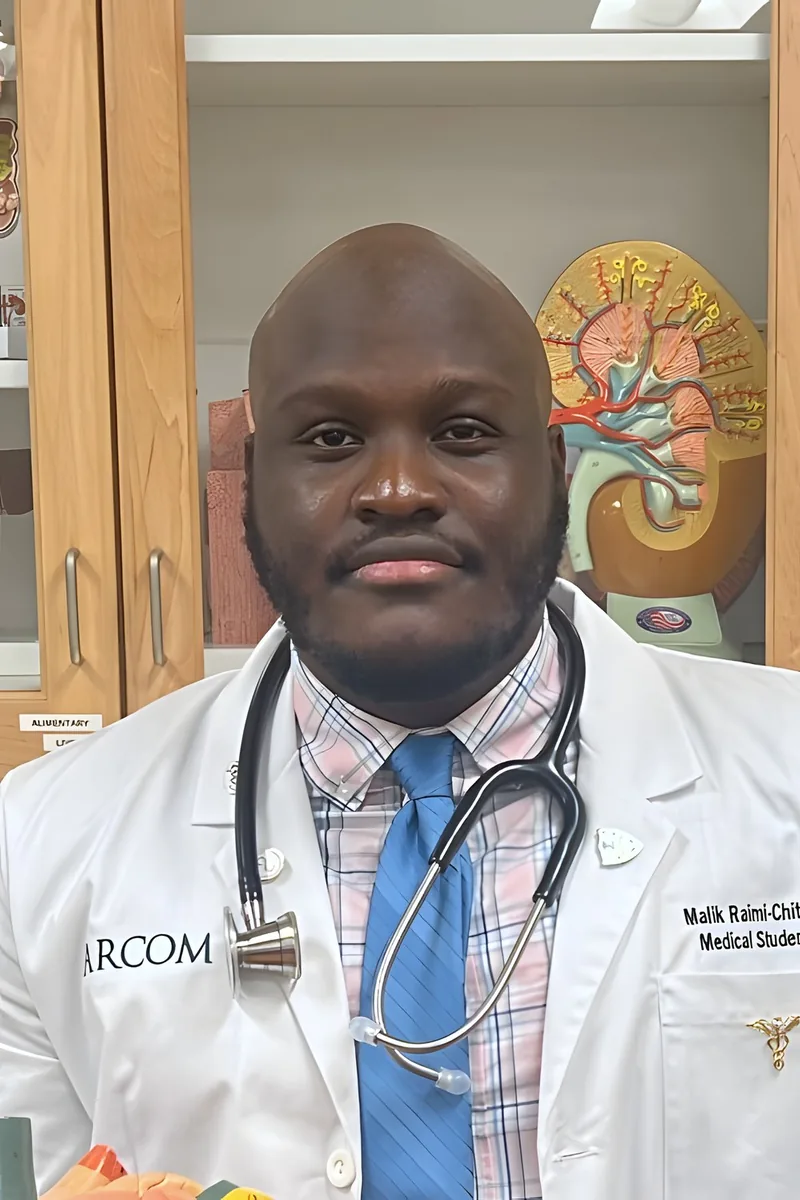
As a second-year medical student with a strong foundation in science and a passion for education, I specialize in making tough subjects easier to understand. I excel in math, biology, physics, and other challenging topics that often intimidate students and I genuinely enjoy helping others master them. My approach combines patience, clarity, and high-level understanding to break down complex ideas into manageable, confidence-boosting lessons. Whether it's reviewing homework or prepping for exams, I'm here to support and motivate students at any level below mine to reach their full academic potential. My interests include: Weightlifting and fitness training (especially strength and hypertrophy programs) Morning cardio and physical conditioning Studying medicine with a focus on anatomy, physiology, and clinical problem-solving Teaching and tutoring tough academic subjects like math, biology, and physics Watching anime as a way to relax and recharge (especially after a long day) Cooking (with a focus on high-protein, keto/carnivore meals)

Trigonometric identities, logarithmic functions, and the behavior of rational expressions all land differently when a student can see what's happening on a graph. Dylan leans heavily on visual and graphical reasoning to make Pre-Calculus concepts intuitive rather than procedural — an approach sharpened by his physics and math coursework at Vanderbilt. He's particularly effective at bridging the gap between algebraic manipulation and the conceptual thinking calculus will demand.
The jump into limits, trigonometric identities, and composite functions can feel overwhelming without someone who knows how to sequence the ideas clearly. Pinelopi has tutored math from pre-algebra through calculus, which means she can pinpoint exactly which earlier concept a student is missing when pre-calc material stops making sense. Rated 5.0 by students.
A year as a course assistant in Harvard's math department teaching introductory calculus gave Richard a sharp sense of exactly which pre-calculus skills — polynomial end behavior, composite functions, rate-of-change intuition — students need locked down before day one of calc. He teaches those topics with that forward view, connecting each piece to where it's actually headed so nothing feels like busywork. His 36 ACT and 1600 SAT confirm the quantitative range behind that perspective.
Researching cosmic ray acceleration at Princeton's astrophysics department meant Dennis had to model particle behavior using the exact toolkit pre-calculus teaches — parametric equations, vector components, and the interplay between exponential and trigonometric functions. He brings that research intuition to sessions, breaking down how and why transformations reshape a graph or how polar and rectangular forms connect, so the material clicks as a coherent system rather than a checklist. A 36 ACT and 4.7 rating back up the depth of understanding he brings.
Differential equations, calculus, and physics all live on Bidyut's teaching roster — which means he knows exactly which pre-calculus skills (and which specific weak spots) will matter most once students move forward. His biomedical engineering training at Johns Hopkins keeps him fluent in the trigonometric, exponential, and composite function reasoning that pre-calc demands, and he teaches those topics by connecting them to the applied problems where sloppy understanding actually costs you. A 36 ACT and 5.0 rating back up the depth he brings.
The leap into pre-calculus often stalls around trigonometric identities, limits intuition, or the shift from polynomial to rational and logarithmic functions. Gianna's perfect SAT Math score and Princeton coursework mean she sees these topics not as isolated chapters but as the toolkit students will rely on in calculus. She connects each concept forward so students understand why they're learning it, not just how to get through the homework.
I've been working with students for over seven years, from middle school all the way through college, across subjects like math, calculus, statistics, linear algebra, chemistry, and physics, with a lot of SAT and ACT prep mixed in. My background is perhaps a little unconventional. I have two bachelor's degrees, one in Engineering and one in Communication Studies, plus a Master's in Design. That combination means I can guide you through challenging technical material and communicate it in a way that is easy to grasp. What I care most about is helping students get to a place where they don't need me anymore. I know that sounds like a strange thing for a tutor to say, but I think it's the right goal. I'm not here to walk you through steps to copy down. I want you to understand why something works, because that's what holds up under pressure, on a test you haven't seen before. If you're ready to ace that test or prove that theorem that's been bugging you, reach out and let's work together
Chemical engineering at Georgia Tech means Aimee has been solving problems built on pre-calculus concepts — rational functions in reactor design, trigonometric models in thermodynamic cycles, logarithmic relationships in kinetics — since her first semester. She teaches the course by showing how each topic threads into the next, so the jump from polynomial behavior to limits feels like a natural step rather than a cliff. Her 33 ACT and 4.9 rating reflect the kind of structured, patient approach that makes that transition stick.
Competition math throughout high school taught Tracy to see pre-calculus topics like sequences, series, and trigonometric manipulations as puzzles with elegant internal logic — not just procedural hurdles before calculus. Her triple economics degree means she also knows how these tools land in practice, since exponential models and rate-of-change reasoning show up constantly in economic analysis. A 36 ACT and 4.9 rating confirm she delivers on both the conceptual and practical sides.
A PhD in statistics and a biomedical engineering degree mean Sam has spent years where pre-calculus isn't a course — it's the scaffolding holding together regression models, signal processing, and experimental design. He digs into the transition points that trip students up most, like moving from polynomial arithmetic to analyzing rational function behavior or connecting trig identities to their geometric origins. Rated 4.9 by students.
Jeffrey's mechanical engineering PhD work at Rice means he's spent years relying on the exact toolkit pre-calculus introduces — function composition, trigonometric modeling, and exponential behavior all show up constantly in dynamics and thermodynamics problems. He teaches these topics by walking through the engineering contexts where they actually matter, which gives students a concrete reason to care about each concept. His 34 ACT and 4.9 rating speak to the clarity he brings to quantitative subjects.
Most pre-calculus courses throw the unit circle, rational functions, and logarithmic properties at students in rapid succession without showing the thread connecting them — Kathleen's math degree from Washington University means she sees that thread clearly and teaches accordingly. She's especially sharp at bridging the gap between algebraic mechanics students already trust and the functional thinking calculus will demand, building each new concept as a natural extension rather than a separate topic to memorize. Her 35 ACT and 1550 SAT confirm the quantitative depth behind her approach.
Testimonials
Because the right Pre-Calculus tutor makes all the difference.
Average Session Rating – Based on 3.4M Learner Ratings
Practice Pre-Calculus
Free practice tests, flashcards, and AI tutoring for Pre-Calculus
Nearby Pre-Calculus Tutors
Other Fayetteville Tutors
Related Math Tutors in Fayetteville
Frequently Asked Questions
Varsity Tutors matches Fayetteville students with expert Pre-Calculus tutors for 1-on-1 instruction. We pair each student with a tutor based on their specific needs, learning style, and goals.
Whether you need homework help, exam prep, or want to get ahead, our Pre-Calculus tutors are ready to help.
Common challenges include gaps from earlier material, difficulty with specific concepts, and trouble applying learning to new problems. These issues can snowball quickly in Pre-Calculus.
A tutor identifies where you're stuck, fills in gaps, and provides targeted practice. The 1-on-1 format means you get help exactly where you need it.
Tutors work with your student's actual coursework—homework assignments, class notes, and upcoming tests. This keeps tutoring directly relevant to what's happening in the classroom.
When you share information about your student's school and curriculum, we can match you with a tutor who has relevant experience.
All tutors complete background checks, credential verification, and teaching evaluation. Many of our Pre-Calculus tutors hold advanced degrees or have years of teaching experience.
You can review tutor profiles to find someone with the right background for your student's level and needs.
Many students see improved grades within a few weeks, along with better understanding of Pre-Calculus concepts and more confidence tackling challenging material.
Tutors track progress and adjust their approach to ensure continued improvement.
Most students benefit from 1-2 sessions per week. More frequent sessions help if your student is significantly behind or has an important exam coming up.
Your tutor can recommend a schedule based on your student's specific situation and goals.
Tutoring is purchased in packages of hours, with rates varying by tutor experience. Varsity Tutors offers several options to fit different budgets and needs.
You can discuss pricing during your consultation to find what works best.
Your tutor will assess where your student is, discuss goals, and start working on priority areas. Most students bring current homework or upcoming test material to focus on.
By the end, you'll have a clear sense of how the tutor can help and a plan for moving forward.
Let’s find your perfect tutor
Answer a few quick questions. We’ll recommend the right plan and match you with a top 5% tutor.