Award-Winning Economics Tutors
serving Fayetteville, AR
Economics
Tutors in Fayetteville
Private 1-on-1 tutoring, weekly live classes for academic support, test prep & enrichment, practice tests and diagnostics, and more to elevate grades and test scores.
Based on 3.4M Learner Ratings
UniversitiesSchools & Universities
DeliveredHours Delivered
ProficiencyGrowth in Proficiency
Who needs tutoring?
No obligation. Takes ~1 minute.

After spending years on Wall Street analyzing markets, industries, and financial data as a research executive, Frank brings an insider's understanding of how macroeconomic forces — interest rates, inflation, trade dynamics — actually ripple through real institutions. His MBA sharpens that perspective, letting him connect textbook models of supply, demand, and market structure to the strategic decisions he made professionally.
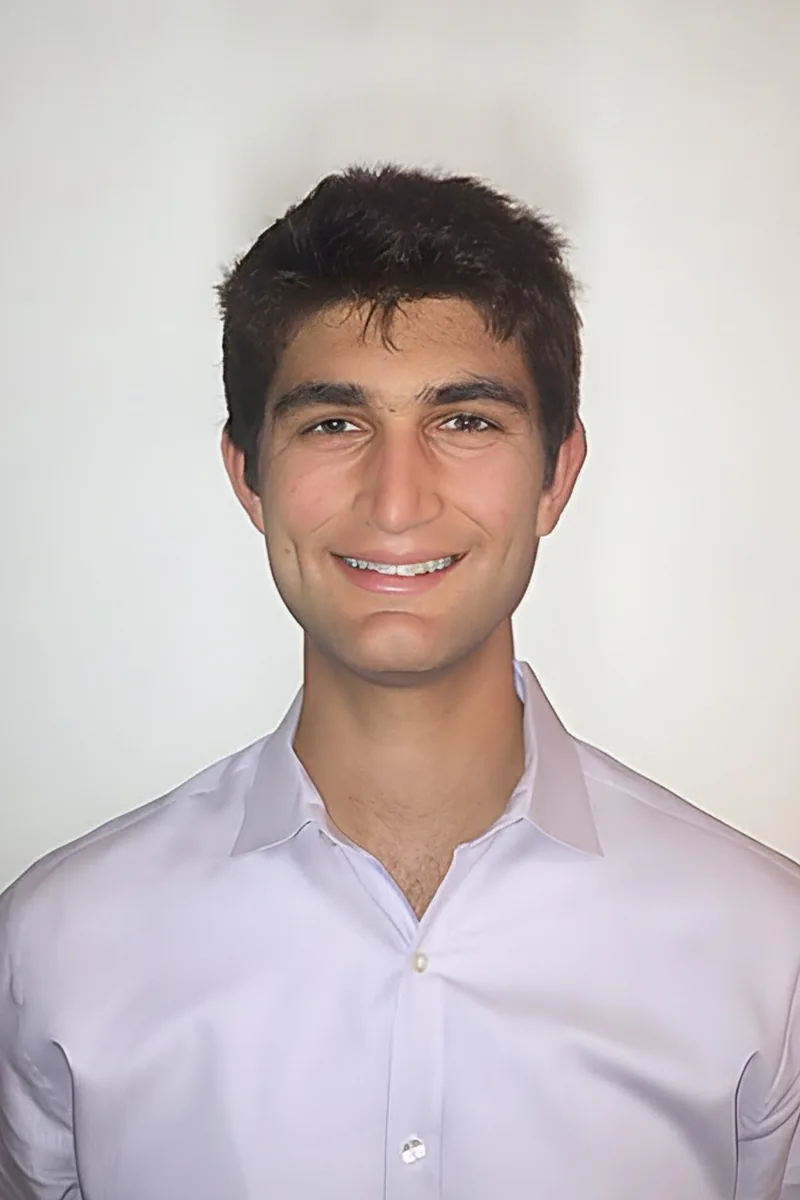
Dylan's undergraduate degree in Policy Analysis and Management required working through the economic frameworks that underpin real policy decisions — microeconomic reasoning about incentives, cost-benefit trade-offs, and how markets respond to regulation. His additional coursework in econometrics and AP Microeconomics means he can move fluidly between the intuitive side of economics and the quantitative tools students need to actually model outcomes.
Public policy analysis at the University of Chicago meant Noel spent his undergraduate years dissecting how economic principles — budget trade-offs, incentive design, cost-benefit frameworks — actually drive government decisions. That training makes him especially sharp on the macro side of economics, where fiscal policy and public spending aren't abstract textbook topics but the real-world problems he studied daily. Rated 4.9 by his students.
As an economics major at Northwestern, Sarah digs into the same core principles — scarcity, opportunity cost, market equilibrium, elasticity — that introductory students encounter for the first time. She translates abstract models into concrete examples, making supply-and-demand curves and production possibilities frontiers feel intuitive rather than mechanical.
With an economics degree and a 5.0 client rating, Ryan brings both academic grounding and clear communication to topics like elasticity, market failures, and the mechanics of supply-and-demand shifts. He also teaches finance and accounting, which means he can show students how microeconomic reasoning actually translates into business decisions — making abstract models feel like practical tools rather than exam fodder.
Studying economics at Penn while simultaneously completing a music degree meant Katherine had to internalize models quickly — there wasn't time to passively reread chapters on elasticity or game theory when rehearsals and problem sets competed for the same hours. That efficiency now shows up in her tutoring, where she zeroes in on the specific graph, equation, or intuition a student is missing and builds understanding from there. Her 1550 SAT speaks to the analytical sharpness she brings to quantitative econ topics.
Supply and demand curves seem simple until you have to use them to predict what happens after a tax, a price ceiling, or a shift in consumer expectations. Dana approaches economics as applied logic rather than memorization, connecting each concept to real-world policy questions she studied extensively during her public policy coursework. Her 36 ACT reflects the same analytical precision she brings to economic reasoning.
Supply and demand curves are just the starting point — Dawn digs into the mechanics of market equilibrium, elasticity, monetary policy, and game theory that make economics click at the college level. Her B.S. in Economics with a finance concentration from Duke means she can connect textbook models to how markets actually behave.
Applying to PhD programs in applied mathematics means Romeo lives in the quantitative world that most economics students find intimidating — the calculus behind marginal analysis, the optimization problems in consumer and producer theory, the statistical models that underpin econometric reasoning. His math degree and 1510 SAT give him the analytical toolkit to break down the equations hiding inside economic concepts, making the transition from intuitive supply-and-demand reasoning to formal modeling feel far less daunting.
A PhD candidate in economics at Yale with undergraduate degrees in physics and math from the same institution, Anthony brings serious quantitative firepower to the subject — the kind that matters when courses pivot from intuitive ideas about markets into optimization problems, game theory, or econometric proofs. He also teaches AP Micro, AP Macro, and econometrics, so he can connect introductory concepts to the formal models students will encounter as the material deepens. Rated 5.0 by his students.
Supply and demand curves are simple enough on the surface, but the real challenge is applying them — shifting curves correctly, interpreting elasticity, or reasoning through market failures. Benjamin's Economics degree from Notre Dame gave him deep fluency with both micro and macro frameworks, and he teaches students to think through cause-and-effect chains rather than memorize graph shapes.
Studying both engineering and economics at Duke gave Natalie a quantitative lens on economic reasoning — she's comfortable moving between supply-and-demand intuition and the math behind elasticity, optimization, and equilibrium. She digs into the "why" behind each model so students can apply concepts to unfamiliar problems, not just textbook examples.
Testimonials
Because the right Economics tutor makes all the difference.
Average Session Rating – Based on 3.4M Learner Ratings
Nearby Economics Tutors
Other Fayetteville Tutors
Related Business Tutors in Fayetteville
Frequently Asked Questions
Varsity Tutors matches Fayetteville students with expert Economics tutors for 1-on-1 instruction. We pair each student with a tutor based on their specific needs, learning style, and goals.
Whether you need homework help, exam prep, or want to get ahead, our Economics tutors are ready to help.
Common challenges include gaps from earlier material, difficulty with specific concepts, and trouble applying learning to new problems. These issues can snowball quickly in Economics.
A tutor identifies where you're stuck, fills in gaps, and provides targeted practice. The 1-on-1 format means you get help exactly where you need it.
Tutors work with your student's actual coursework—homework assignments, class notes, and upcoming tests. This keeps tutoring directly relevant to what's happening in the classroom.
When you share information about your student's school and curriculum, we can match you with a tutor who has relevant experience.
All tutors complete background checks, credential verification, and teaching evaluation. Many of our Economics tutors hold advanced degrees or have years of teaching experience.
You can review tutor profiles to find someone with the right background for your student's level and needs.
Many students see improved grades within a few weeks, along with better understanding of Economics concepts and more confidence tackling challenging material.
Tutors track progress and adjust their approach to ensure continued improvement.
Most students benefit from 1-2 sessions per week. More frequent sessions help if your student is significantly behind or has an important exam coming up.
Your tutor can recommend a schedule based on your student's specific situation and goals.
Tutoring is purchased in packages of hours, with rates varying by tutor experience. Varsity Tutors offers several options to fit different budgets and needs.
You can discuss pricing during your consultation to find what works best.
Your tutor will assess where your student is, discuss goals, and start working on priority areas. Most students bring current homework or upcoming test material to focus on.
By the end, you'll have a clear sense of how the tutor can help and a plan for moving forward.
Let’s find your perfect tutor
Answer a few quick questions. We’ll recommend the right plan and match you with a top 5% tutor.