Award-Winning AP Physics C: Electricity and Magnetism Tutors
serving Fayetteville, AR
AP Physics C: Electricity and Magnetism
Tutors in Fayetteville
Private 1-on-1 tutoring, weekly live classes for academic support, test prep & enrichment, practice tests and diagnostics, and more to elevate grades and test scores.
Based on 3.4M Learner Ratings
UniversitiesSchools & Universities
DeliveredHours Delivered
ProficiencyGrowth in Proficiency
Who needs tutoring?
No obligation. Takes ~1 minute.
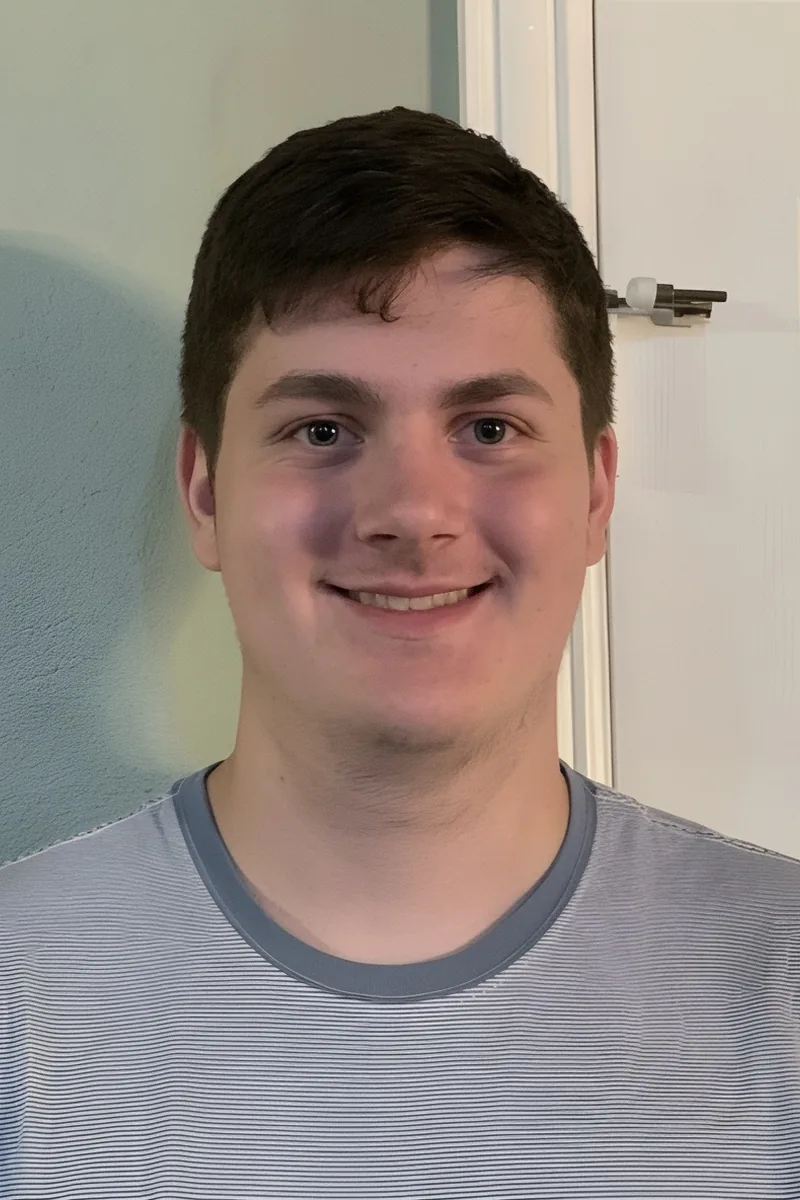
AP Physics C: E&M is where calculus and physics collide — Gauss's law integrals, Faraday's law, RC circuits, and Maxwell's equations all demand fluency in both. As a mechanical engineering student at Purdue, Austin uses these concepts daily and can unpack the vector calculus behind electromagnetic fields in a way that makes the math feel purposeful. Rated 4.9 by students.

Gauss's law, Faraday's law, Ampère's law — AP Physics C: E&M asks students to wield vector calculus in ways that feel like a massive leap from mechanics. Lindamulage tackles these topics regularly in his research at Brookhaven National Laboratory, so he can unpack concepts like electric flux, induced EMF, and RC circuits with the kind of physical intuition that turns intimidating math into clear reasoning.
Electromagnetism was the centerpiece of Michael's teaching at the University of Michigan, where he designed and led undergraduate lab courses on circuits, fields, and waves. AP Physics C: E&M demands comfort with Gauss's law, Ampère's law, Faraday's law, and RC/RL circuit analysis — all topics he's taught extensively at the college level. He knows exactly where the conceptual gaps tend to open up, especially around flux integrals and the superposition of electric fields.
Electricity and Magnetism trips students up because it layers vector calculus onto already-abstract concepts like electric flux, Gauss's law, and electromagnetic induction. Rachel's calculus expertise gives her a solid handle on the integral and differential equations that drive E&M problem-solving. She's upfront that this is one of the toughest AP courses offered, and she approaches it by making sure the math never becomes the bottleneck.
Gauss's law, Ampère's law, Faraday's law — AP Physics C: E&M asks students to wield vector calculus in three dimensions, often before they've fully internalized what a flux integral actually means. Rishik unpacks each law by starting with the geometry of the field before jumping into the math, so the integral setup feels logical rather than memorized. His parallel background in calculus and computer science gives him multiple ways to visualize abstract electromagnetic concepts.
Gauss's Law, Ampère's Law, and Faraday's Law each require setting up integrals over surfaces and paths that most students have never visualized before — it's arguably the hardest AP course offered. Grant's mechanical engineering background gives him hands-on familiarity with electric fields, circuits, and magnetic flux, and he unpacks the vector calculus behind each law by connecting it to physical setups students can actually picture. He's especially effective at teaching how to choose the right Gaussian surface or Amperian loop for a given problem.
I am a graduate of Cornell University's College of Arts and Sciences. I received my Bachelor of Arts in Chemistry with Distinction in 2015. Since graduation, I was a physics/chemistry teacher and soccer coach at a private school in Virginia for a year, where I led the soccer team to an undefeated season. Before teaching and coaching professionally, I was a Teaching Assistant for the Cornell Math and Physics Departments, where I taught many subjects including calculus, mechanics, electromagnetism. Throughout my time at Cornell and as a teacher, I tutored subjects ranging from the SAT to AP Physics and Algebra II, which is where my true talents lie: in small group or one-on-one settings where I can give students the full attention they deserve and tailor my approach specifically to their learning styles. This is why I am now pursuing tutoring as a part-time occupation at Varsity Tutors. I embrace teaching all math and science subjects, especially physics and calculus, at both the college and high school level and will go above and beyond to make sure all of my students succeed, according to their definition of success. In my spare time, I enjoy playing league soccer, basketball, tennis and guitar, and also like to travel and see as much of the world as I can.
Gauss's law, Ampère's law, Faraday's law — AP Physics C: E&M asks students to wield vector calculus inside electromagnetic theory, which is a steep jump from most prior coursework. Steven approaches each topic by first explaining the physical picture, then showing the mathematical framework, then working through a practical example that ties both together. His PhD in chemical engineering required deep work with electromagnetic principles and multivariable calculus alike.
Gauss's law, Ampère's law, Faraday's law — AP Physics C: E&M asks students to wield vector calculus in physical contexts that feel genuinely abstract at first. Jacques tackles this by grounding each law in a concrete setup (a charged sphere, a solenoid, a changing magnetic flux) before layering in the integral formulations. His engineering training at Princeton and decades of classroom physics teaching make him unusually comfortable in this territory.
Gauss's law, Ampère's law, Faraday's law — E&M asks students to visualize invisible fields and then describe them with surface and line integrals. Bryan breaks each problem into two stages: building geometric intuition about what the field looks like, then choosing the right mathematical tool to exploit symmetry. His physics degree and 5.0 student rating back up that structured approach.
AP Physics C: E&M is where calculus and electromagnetism collide — Gauss's law integrals, Ampère's law, RC and RL circuit transients — and Nathan tackles each of these by tying the math directly to the physical intuition behind it. As a computer science and engineering student at UCF who passed 15 AP exams, he knows how to break down vector calculus applications so they feel methodical rather than overwhelming.
AP Physics C: E&M is where calculus meets abstract field theory, and most students struggle not with the math itself but with visualizing what's happening inside capacitors, inductors, and current-carrying loops. Aleksandar pairs his UPenn physics coursework with a structured problem-solving method — breaking each scenario into a diagram, an equation selection, and a calculus setup — that turns intimidating free-response questions into repeatable steps.
Testimonials
Because the right AP Physics C: Electricity and Magnetism tutor makes all the difference.
Average Session Rating – Based on 3.4M Learner Ratings
Practice AP Physics C: Electricity and Magnetism
Free practice tests, flashcards, and AI tutoring for AP Physics C: Electricity and Magnetism
Nearby AP Physics C: Electricity and Magnetism Tutors
Other Fayetteville Tutors
Related Science Tutors in Fayetteville
Frequently Asked Questions
Varsity Tutors matches Fayetteville students with expert AP Physics C: Electricity and Magnetism tutors for 1-on-1 instruction. We pair each student with a tutor based on their specific needs, learning style, and goals.
Whether you need homework help, exam prep, or want to get ahead, our AP Physics C: Electricity and Magnetism tutors are ready to help.
Common challenges include gaps from earlier material, difficulty with specific concepts, and trouble applying learning to new problems. These issues can snowball quickly in AP Physics C: Electricity and Magnetism.
A tutor identifies where you're stuck, fills in gaps, and provides targeted practice. The 1-on-1 format means you get help exactly where you need it.
Tutors work with your student's actual coursework—homework assignments, class notes, and upcoming tests. This keeps tutoring directly relevant to what's happening in the classroom.
When you share information about your student's school and curriculum, we can match you with a tutor who has relevant experience.
All tutors complete background checks, credential verification, and teaching evaluation. Many of our AP Physics C: Electricity and Magnetism tutors hold advanced degrees or have years of teaching experience.
You can review tutor profiles to find someone with the right background for your student's level and needs.
Many students see improved grades within a few weeks, along with better understanding of AP Physics C: Electricity and Magnetism concepts and more confidence tackling challenging material.
Tutors track progress and adjust their approach to ensure continued improvement.
Most students benefit from 1-2 sessions per week. More frequent sessions help if your student is significantly behind or has an important exam coming up.
Your tutor can recommend a schedule based on your student's specific situation and goals.
Tutoring is purchased in packages of hours, with rates varying by tutor experience. Varsity Tutors offers several options to fit different budgets and needs.
You can discuss pricing during your consultation to find what works best.
Your tutor will assess where your student is, discuss goals, and start working on priority areas. Most students bring current homework or upcoming test material to focus on.
By the end, you'll have a clear sense of how the tutor can help and a plan for moving forward.
Let’s find your perfect tutor
Answer a few quick questions. We’ll recommend the right plan and match you with a top 5% tutor.