Award-Winning AP Physics C: Electricity and Magnetism Tutors
serving Little Rock, AR
AP Physics C: Electricity and Magnetism
Tutors in Little Rock
Private 1-on-1 tutoring, weekly live classes for academic support, test prep & enrichment, practice tests and diagnostics, and more to elevate grades and test scores.
Based on 3.4M Learner Ratings
UniversitiesSchools & Universities
DeliveredHours Delivered
ProficiencyGrowth in Proficiency
Who needs tutoring?
No obligation. Takes ~1 minute.

AP Physics C: E&M is where calculus meets abstract field theory, and most students struggle not with the math itself but with visualizing what's happening inside capacitors, inductors, and current-carrying loops. Aleksandar pairs his UPenn physics coursework with a structured problem-solving method — breaking each scenario into a diagram, an equation selection, and a calculus setup — that turns intimidating free-response questions into repeatable steps.
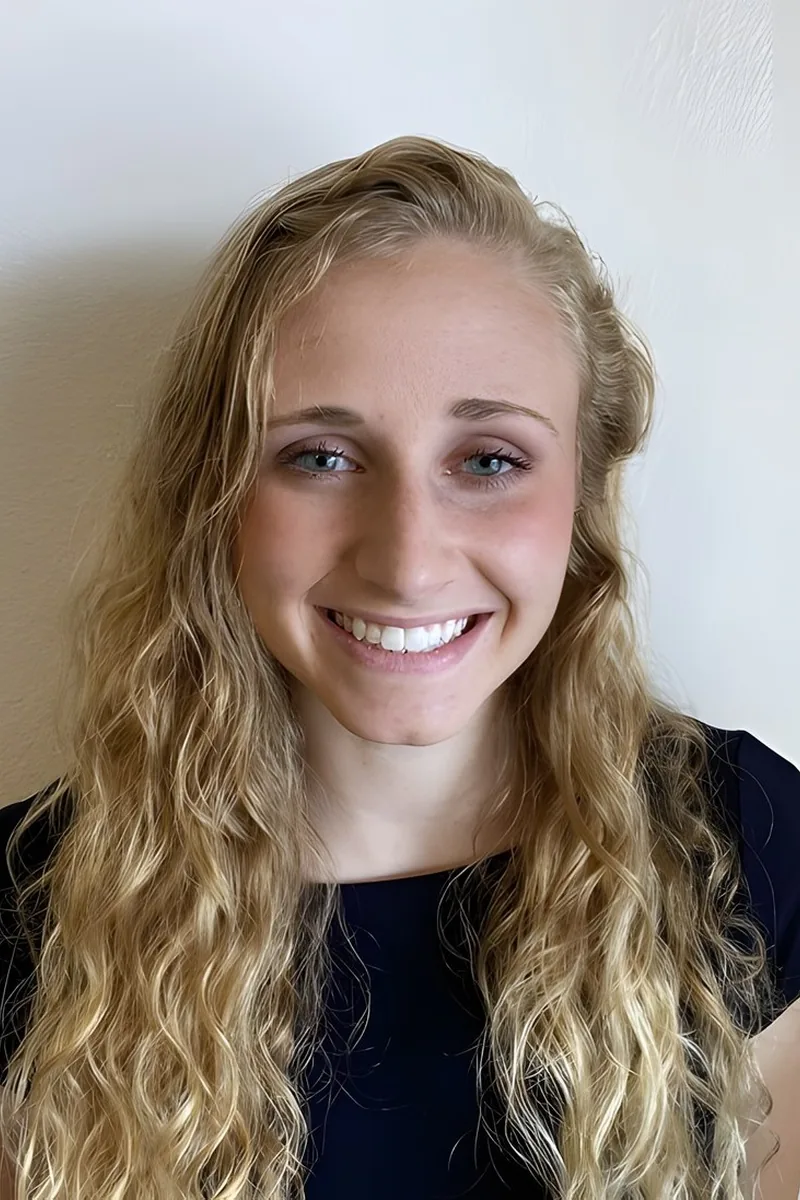
I am an Applied Physics Major with an Emphasis in Mechanical Engineering at Brigham Young University. I love to share the joy I have in the sciences and math to show truly the applications are so far-reaching.
Gauss's law, Ampère's law, RC circuits, and electromagnetic induction can feel abstract until someone connects them to physical systems. Justin's ME coursework at Illinois includes electronics and E&M-heavy physics sequences, so he unpacks Maxwell's equations and circuit analysis with the same rigor his engineering professors demand. He teaches students to sketch field diagrams first, turning intimidating integrals into manageable geometry.
I am pursuing a career in dentistry/oral surgery and will be beginning dental school at Boston University this fall. For this reason I recently took the DAT, which I am capable of assisting you with as well. During my undergraduate education, which I completed this past December, I worked in my school's tutoring center, helping my peers succeed in mathematics and science courses. Outside of my academic life, I am a big sports fan and I mostly follow the New York sports teams. For fun, I like to play basketball and golf with my friends. I am looking forward towards getting to know you and helping you with your academic needs.
Gauss's law, Ampère's law, Faraday's law — AP Physics C: E&M throws vector calculus at students who are still getting comfortable with electric fields and circuits. Will breaks each law down to its physical meaning first, then layers in the integral formulations so students understand what they're computing and why. As a current Rice physics student, he's recently worked through this exact material at the college level.
Gauss's law, Ampère's law, Faraday's law — AP Physics C: E&M asks students to think in three dimensions with vector calculus tools they've barely learned. Taha breaks down each Maxwell equation into physical intuition first, then builds up the mathematical formalism around it. His deep background in both calculus and physics lets him bridge the gap between what students see in their math classes and what the E&M exam actually demands.
Gauss's law, Ampère's law, Faraday's law — AP Physics C: E&M asks students to choose the right symmetry argument and execute a surface or line integral under time pressure. Yurok tackles this by drilling the geometric reasoning behind each law so students can recognize which tool applies before they start calculating. His physics and mathematics background at Emory keeps the vector calculus from becoming a bottleneck.
Gauss's law, Ampère's law, Faraday's law — AP Physics C: E&M asks students to wield vector calculus in the service of invisible fields, which is a genuinely difficult conceptual shift. Spencer's biomedical engineering studies require exactly this skill set, since electromagnetic principles drive technologies like MRI and neural signal processing. He unpacks each law with clear diagrams and step-by-step integral setups so the math reinforces the physics instead of obscuring it.
Gauss's law, Ampère's law, Faraday's law — E&M demands that students think in three dimensions about invisible fields, which is a fundamentally different skill than anything in Mechanics. Pratik tackles this by teaching students to visualize field lines and flux before jumping into the calculus, building geometric intuition that makes the integral setups feel natural.
AP Physics C: E&M is where calculus and electromagnetism collide, and most of the difficulty lives in translating physical setups — Gaussian surfaces, Amperian loops, RC circuits — into the right integral or differential equation. Megan's applied mathematics degree gives her deep comfort with the vector calculus and differential equations that make this course so demanding. She breaks down Gauss's law and Faraday's law problems step by step, connecting the math to the physical intuition behind each result.
Gauss's law, Ampère's law, Faraday's law — E&M asks students to visualize invisible fields and then describe them with surface and line integrals. Bryan breaks each problem into two stages: building geometric intuition about what the field looks like, then choosing the right mathematical tool to exploit symmetry. His physics degree and 5.0 student rating back up that structured approach.
Gauss's law, Ampère's law, Faraday's law — AP Physics C: E&M asks students to choose the right tool for each field configuration and then execute the calculus cleanly. Sophia breaks each problem into two phases: identifying the symmetry that dictates the approach, then setting up and evaluating the integral. Her 5.0 rating speaks to how clearly she communicates concepts that most students find abstract.
Testimonials
Because the right AP Physics C: Electricity and Magnetism tutor makes all the difference.
Average Session Rating – Based on 3.4M Learner Ratings
Practice AP Physics C: Electricity and Magnetism
Free practice tests, flashcards, and AI tutoring for AP Physics C: Electricity and Magnetism
Nearby AP Physics C: Electricity and Magnetism Tutors
Other Little Rock Tutors
Related Science Tutors in Little Rock
Frequently Asked Questions
AP Physics C: Electricity and Magnetism covers electrostatics, conductors and insulators, electric potential, capacitance, electric circuits, magnetic fields, and electromagnetic induction. The course emphasizes calculus-based problem-solving, requiring students to work with concepts like Coulomb's law, Gauss's law, Ampère's law, and Faraday's law. Understanding both the conceptual foundations and mathematical applications is essential for success on the exam.
Many students struggle with visualizing abstract concepts like electric and magnetic fields, especially when solving multidimensional problems. The heavy calculus requirements—including line integrals, surface integrals, and differential equations—often create a bottleneck for students who haven't mastered calculus fundamentals. Additionally, circuit analysis and understanding the relationships between electric and magnetic phenomena require strong conceptual clarity that can't be developed through memorization alone.
Score improvement depends on your starting point and commitment level. Students who work consistently with personalized 1-on-1 instruction typically see gains of 2-4 points on the AP scale (out of 5), though some see larger improvements with dedicated effort. The key is identifying your specific weak areas—whether that's circuit analysis, field calculations, or mathematical execution—and addressing them systematically through targeted practice and concept review.
Practice tests are critical for this exam because they help you develop timing strategies, identify conceptual gaps, and build familiarity with the question formats. Taking full-length practice exams under timed conditions reveals whether your struggles are conceptual (misunderstanding a topic) or procedural (knowing the concept but executing the math slowly). Expert tutors use practice test results to create targeted study plans that focus on your highest-impact weaknesses.
Your first session focuses on assessment and goal-setting. A tutor will review your current understanding of key concepts, discuss your target AP score, and identify which topics (electrostatics, circuits, magnetism, induction) need the most attention. You'll also discuss your timeline, learning style, and any specific challenges you're facing—whether that's calculus anxiety, visualization struggles, or test-taking speed—so the tutor can tailor their approach to your needs.
Look for tutors with strong backgrounds in calculus-based physics and demonstrated expertise in AP Physics C curriculum. Ideal tutors have experience helping students improve their AP scores, understand how to break down complex topics like Gauss's law and Faraday's law into manageable pieces, and can connect mathematical procedures to physical intuition. They should also be skilled at identifying whether a student's struggle is conceptual or computational, which is essential for efficient learning.
Most students benefit from starting preparation 3-4 months before the exam, dedicating 5-8 hours per week to studying and practice. This timeline allows time to work through each major topic thoroughly, take multiple practice tests, and review weak areas. For students starting later or with significant gaps, more intensive preparation—including weekly tutoring sessions—can help compress the timeline and maximize score improvement.
Test anxiety often stems from feeling unprepared for specific question types or running out of time. Working with a tutor on timed practice problems builds confidence and helps you develop efficient problem-solving strategies. Additionally, learning to quickly identify which questions to tackle first, which to skip initially, and how to allocate your time across the multiple-choice and free-response sections reduces stress significantly. Tutors can also teach you mental strategies for staying focused when you encounter a challenging problem.
Let’s find your perfect tutor
Answer a few quick questions. We’ll recommend the right plan and match you with a top 5% tutor.