Award-Winning Reading Tutors
serving Tucson, AZ
Reading
Tutors in Tucson
Private 1-on-1 tutoring, weekly live classes for academic support, test prep & enrichment, practice tests and diagnostics, and more to elevate grades and test scores.
Based on 3.4M Learner Ratings
UniversitiesSchools & Universities
DeliveredHours Delivered
ProficiencyGrowth in Proficiency
Who needs tutoring?
No obligation. Takes ~1 minute.
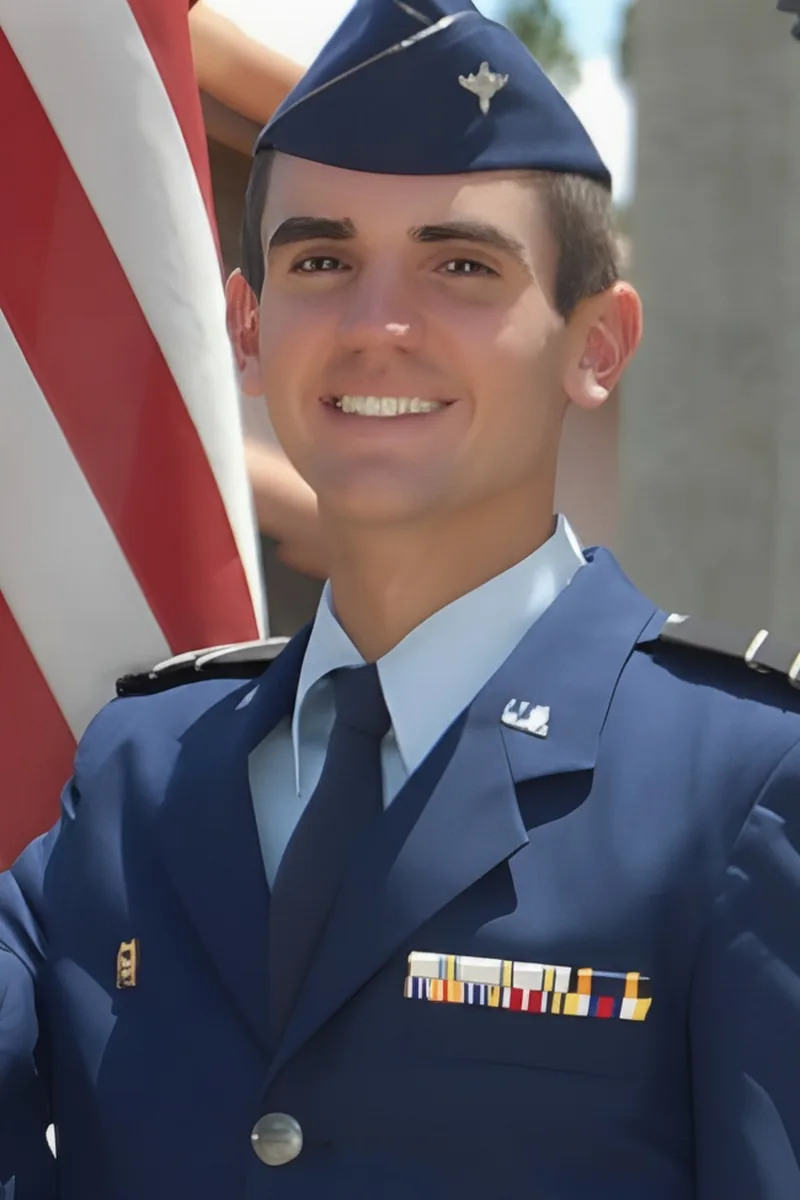
I am here because I thoroughly enjoy working with students and watching them succeed in their academic studies. As a Mathematics major at the University of Arizona (currently a junior), I have extensive experience teaching and tutoring: I have been a teacher's assistant for a Calculus II section at my university and have spent a great deal of time assisting students with non-math related subjects as well such as English and essay-writing, time management and study skills techniques, and standardized test prep (SAT).
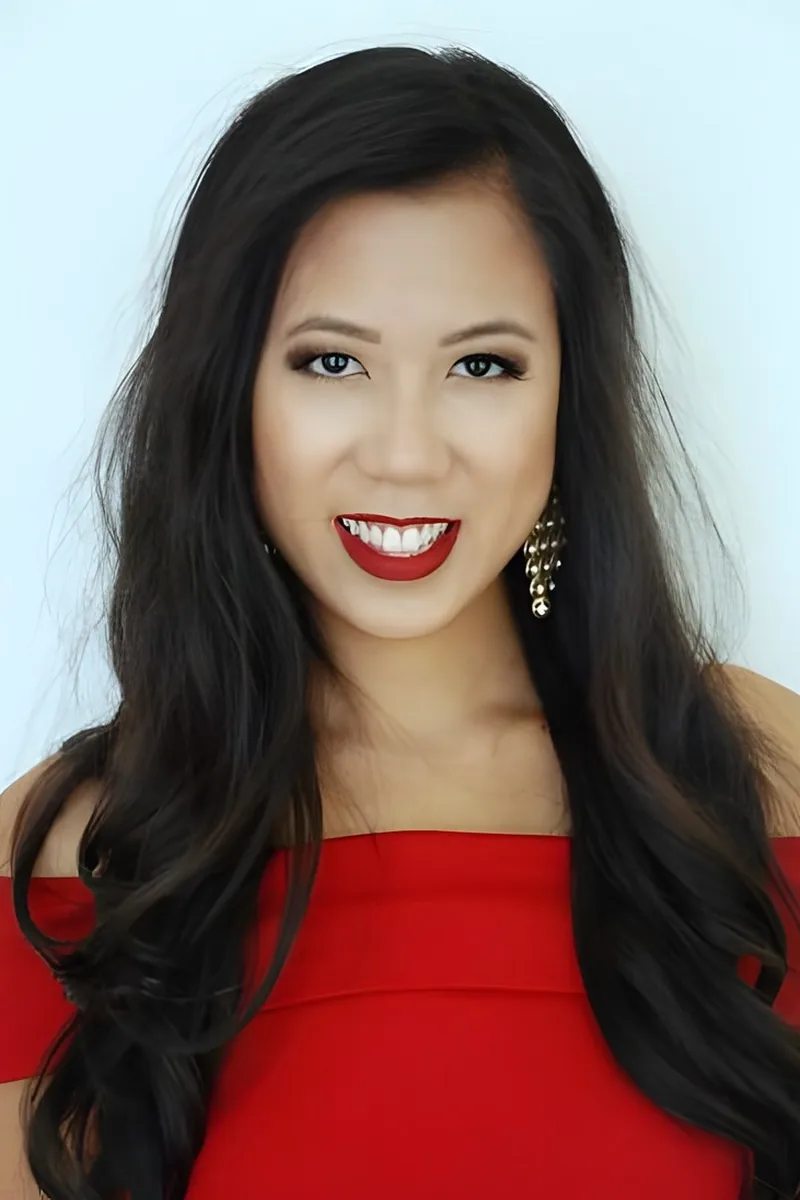
Strong reading comprehension isn't just about understanding individual words — it's about tracking an author's argument, recognizing cause and effect, and making inferences from context clues. Alina builds these skills through active-reading strategies like annotation and summarization that transfer to every subject a student encounters.
Lauren treats reading as a thinking skill, not just a decoding exercise — she teaches students to identify an author's argument, pull evidence from a passage, and make inferences that go beyond what's stated on the page. Her medical training requires constant critical reading of dense material, so she knows firsthand how to break a tough text into manageable pieces.
I am more passionate about the latter, and within the humanities I am most passionate about philosophy and English. The most important thing I've learned from those two fields (and the thing I'd most want to pass on to students) is how to find the right words for thoughts - this is important, not just because it allows people to express themselves well to others, but also because it affords clarity to people regarding their own opinions and ideas. Shortly after I graduated from college I embarked on an extended trip around Europe lasting from October 2017 to May 2018. My interests include traveling, piano, and reading.
I am a great tutor because I am young and enthusiastic. I can relate to the kids I tutor because I recently experienced the classes and standardized tests that they are taking. I use an informal style so that the student can feel comfortable asking questions. I try to connect personally to the students so that they have fun and look forward to tutoring. I tutor standardized tests and most high school classes. I have two years of experience tutoring and I spent both this summer and last summer teaching full-time.
The best part of tutoring is promoting students' long-term success through mastery of reading, writing, math, study skills, organization, and critical thinking. In particular, I enjoy helping students build test-taking strategies and core skills for the ACT, SAT, and other admissions tests. I also support pre-K and K-12 students learning math and ELA. Before joining Varsity, I tutored in a Reading and Writing Lab for university students with learning disabilities where I earned a College Reading and Learning Association (CRLA) certification. Since joining Varsity, I have completed continuing education through the Lastinger Center for Learning. I graduated from the University of Arizona in 2021 with a BA in Cultural Anthropology. In addition to tutoring, I have worked as an instructional aide for an art program, an applied anthropology researcher, and a nonprofit program coordinator. Out of all these experiences, I enjoy tutoring the most. I look forward to working with you!
I'm excited to share my love of science and learning through tutoring! I tutor Biology, Ecology, and standardized test prep. From high school to Stanford, I have learned that lectures are often difficult for students to follow. They can lose confidence in subjects because the information is not presented in a way that is effective for their learning. My job is to work with students to figure out the best way to learn challenging material. This may involve breaking down complicated ideas into consumable parts, discussing concepts back and forth, or working through practice problems together. Ultimately, I believe that students should never feel unintelligent because they don't immediately grasp a concept. I am committed to empowering students to approach challenging subjects with confidence.
Perfect verbal scores on both the SAT and GRE didn't come from speed — they came from a disciplined approach to close reading that Amanda now teaches to students at every level. She unpacks how to identify an author's argument, track shifts in tone, and distinguish main ideas from supporting details. Her Kenyon College English training and Oxford study give her a toolkit for making even dense or unfamiliar texts accessible.
Struggling readers often skip over context clues and lose track of an author's argument across paragraphs — two habits Courtney specifically targets. She uses annotation strategies borrowed from how scientists read research papers: marking claims, identifying evidence, and summarizing sections in the margins. This active-reading approach builds comprehension skills that pay off in every subject, not just English.
The difference between reading words and actually comprehending a passage often comes down to a few specific skills: identifying the author's purpose, tracking argument structure, and making inferences from context clues. Jake's own 1580 SAT score came partly from mastering these techniques, and he applies the same close-reading strategies to everything from standardized test passages to assigned novels.
Philosophy texts are notoriously dense, full of layered arguments and abstract vocabulary — so after four years of parsing Kant and Aristotle at Arizona State, Rachelle developed reading strategies that transfer to virtually any subject. She breaks down active reading techniques like annotation, summarization, and inference-making so students can tackle challenging passages with confidence rather than frustration.
Strong readers don't just decode words — they track arguments, weigh evidence, and make inferences across paragraphs. John's background in law and history trained him to do exactly that with dense, complex texts, and he brings those same active-reading strategies to students working on comprehension, vocabulary in context, and critical analysis. Rated 5.0 across his sessions.
At the Kumon Math and Reading Center, Megan spent three years watching students at every level — from kids sounding out words to high schoolers dissecting novels — and learned to pinpoint exactly where comprehension breaks down. She teaches active reading strategies like annotation, inference-tracking, and identifying an author's purpose so that students stop passively scanning pages. An avid reader herself, she connects students with texts that build skill without killing curiosity.
Psychology research trains a very specific kind of reading — the ability to move through dense methodology sections, pull key findings from results tables, and evaluate whether an author's conclusions actually follow from the data. Robert brings that analytical reading habit from his graduate work into tutoring, teaching students to interrogate a passage's structure and reasoning instead of passively absorbing words. It's an approach that clicks especially well for students ready to move past surface-level comprehension into deeper critical reading.
Pulling meaning from a dense passage comes down to knowing what to look for: how an author builds an argument, where the tone shifts, what's implied versus stated. Steven's background in literature and creative writing at ASU's Honors College trained him to dissect texts at the sentence level, a skill he now applies to reading comprehension across fiction, nonfiction, and standardized test passages.
A history and economics double major at Northwestern who then survived three years of law school at Tulane, Andrew has spent most of his academic life buried in dense, argument-driven texts. That background means he teaches reading as an analytical exercise — pulling apart how a passage is structured, what the author assumes, and where the key claims actually live. Rated 4.9 by students.
Anthropology fieldwork and biology coursework handed Amanda two very different reading loads — ethnographies where meaning hides in cultural context, and lab papers where one misread variable wrecks an entire analysis. She teaches students to shift gears between those modes, recognizing when a text demands close literal attention versus when they need to read for implication and tone. Her 1550 SAT and 4.9 rating speak to how well that flexibility translates to any passage a student encounters.
Most of Steven's tutoring subjects — accounting, business, statistics — require pulling specific numbers and meaning out of dense, detail-heavy text, which turns out to be exactly the skill that transfers to reading comprehension. He teaches students to approach a passage the way you'd approach a financial statement: identify what matters, ignore the filler, and make sure every conclusion traces back to something actually on the page. Rated 4.8 by students.
Breaking a dense passage into its core argument, supporting evidence, and rhetorical moves is a skill Madeleine practiced constantly as both a math student parsing proofs and a TA leading text-based seminars at Barrett Honors College. She teaches students to read actively — annotating for structure, identifying an author's purpose, and distinguishing main ideas from supporting details — so they can tackle any passage with confidence.
Years of reading NASA technical documentation — mission specs for Galileo and Cassini, data analysis reports for the Hubble Space Telescope — trained Chris to extract critical information from material that punishes skimming. He brings that same disciplined, detail-oriented approach to reading sessions, teaching students how to slow down, identify what a passage is actually communicating, and separate key ideas from supporting noise. His 33 ACT confirms the strategy works across text types, not just scientific ones.
Neuroscience coursework at Trinity meant Lindsey spent four years reading research papers where misunderstanding one sentence could derail an entire experiment — a habit that trained her to read slowly, precisely, and with constant self-checking. She brings that same discipline to reading sessions, teaching students how to pause, restate what they just read in their own words, and catch the moments their comprehension starts to drift. Rated 5.0 by students.
Fluency, vocabulary acquisition, and comprehension don't always develop at the same speed, and Jessica's education training taught her to diagnose exactly where a reader is getting stuck. She uses targeted strategies — context clues for unfamiliar words, prediction exercises for engagement, and summarization techniques for retention. Students come away not just reading more accurately but actually understanding and remembering what they've read.
Whether a student struggles with reading comprehension on standardized tests or with analyzing assigned texts for class, Lindsay breaks the process into concrete skills: identifying main ideas, tracking an author's argument across paragraphs, and distinguishing between what a passage states and what it implies. Her 35 ACT — which demands exactly these skills across every section — speaks to how deeply she understands strategic reading.
Jared's background in Romance Languages means he learned to read across linguistic structures — parsing syntax in Spanish, French, or Italian where word order and idiom don't map neatly onto English. That cross-language habit of slowing down to decode how a sentence actually works carries directly into teaching English reading comprehension: he shows students how to trace an author's logic, unpack unfamiliar vocabulary from context, and recognize when a passage's meaning hinges on structure rather than individual words.
An avid reader who studied philosophy in both the U.S. and Argentina, Wallace tackles reading comprehension by teaching students to ask what an author is actually arguing — not just what the words say on the surface. He breaks down strategies for identifying main ideas, making inferences, and connecting passages to broader context.
Struggling readers often aren't missing vocabulary — they're missing strategies for tracking an argument or identifying what a passage is really doing. Spencer breaks reading comprehension into concrete skills: distinguishing main ideas from supporting details, recognizing tone shifts, and making inferences from context. His interdisciplinary background means he's comfortable working with texts from science, history, and literature equally.
Struggling readers often need someone who understands how comprehension develops — not just what to read, but how to read actively. Janna's human development degree from BYU and her ongoing PhD in developmental psychology give her concrete strategies for building vocabulary, improving fluency, and teaching students to monitor their own understanding as they go.
A genetics PhD means Cameron has spent years extracting meaning from research papers where a single misread clause changes the entire conclusion — the kind of high-stakes, detail-oriented reading that builds real comprehension instincts. He brings that scientific reader's discipline to tutoring sessions, teaching students how to break a passage into its moving parts, track what the author is actually claiming, and separate key ideas from supporting detail.
Strong reading comprehension isn't about speed — it's about knowing what to do when a passage stops making sense. Liliana breaks down strategies like annotation, context-clue vocabulary building, and identifying an author's purpose so students can work through unfamiliar texts independently. Her anthropology training, which requires parsing dense ethnographies and field reports, informs the way she approaches difficult material with students.
Decoding a passage isn't just about knowing the words — it's about tracking an author's purpose, recognizing how evidence supports a claim, and making inferences from context. Alexa breaks reading comprehension into these concrete skills so students can tackle unfamiliar texts with a clear strategy instead of guessing.
Strong reading comprehension comes down to active engagement: annotating, questioning the author's purpose, and connecting new information to what you already know. Kelly's lifelong habit of deep reading across genres — fiction, nonfiction, poetry — means she can model these strategies with whatever text a student brings to the table.
Strong readers don't just decode words — they make inferences, track an author's argument, and distinguish main ideas from supporting details without slowing down. Teresa's psychology training sharpened her understanding of how comprehension actually works in the brain, which she uses to teach active reading strategies like annotation, summarization, and questioning the text.
Struggling readers often lose momentum because they're decoding words without constructing meaning from them. Gabrielle, who taught reading to ESL learners of all ages while volunteering across Asia, builds comprehension by teaching students to ask questions of the text — predicting, summarizing, and connecting ideas paragraph by paragraph until active reading becomes second nature.
Strong readers don't just decode words — they track cause and effect, distinguish main ideas from supporting details, and make inferences the text doesn't spell out. Gabrielle builds these comprehension strategies explicitly, giving students concrete tools they can apply to any passage they encounter.
I am currently in the process of applying to Law School. I have tutored middle school and high school students in subjects ranging from 5th grade reading to geometry to the SAT. While I am happy and able to tutor a number of subjects, I am most passionate about Test Prep because these scores are very important to students, and I enjoy helping them to conquer the test and succeed. My teaching philosophy can be described as a coaching style in which, like athletics, I believe learning the subject matter, good techniques, and constant practice are the best ways to achieving better scores.
I'm Liz! I'm so excited to help my students reach their academic goals. I have a Bachelor's Degree in Government and Performance and Communication Arts, and a Master's Degree in Chinese Politics. With a long academic career and lots of experience with standardized tests, I'm ready help prepare my students for their next steps and help them succeed and build confidence where they are now. I can't wait to meet you!
Running a private tutoring company out of Houston while still finishing his degree at Rice meant Troy was simultaneously reading business contracts, academic texts, and his students' assigned material — all requiring different speeds and strategies. He teaches readers to adjust their approach based on what's in front of them, whether that's pulling the main idea from a dense paragraph or slowing down to decode unfamiliar vocabulary in context. Rated 4.8 by students.
I am interested in bettering your educational experience in the Life Sciences, Chemistry, and Math! If you or your child is struggling with math or science courses or, perhaps, is preparing for a standardized test that requires application knowledge in these areas then I may be the guy for you! I am also interested in tutoring individuals who are working towards acceptance into a professional school that might have been out of school for a while.
I'm Annelisa, originally from Phoenix, Arizona. I recently graduated from Yale University, where I studied art and its interactions with political journalism and science. I'm happy to tutor on a wide range of subjects, especially writing, college application, and the SAT!
I'm a rising senior at Yale University. My two main passions in life are biology and English--people might see them as completely opposite subjects, but I think they're just two sides of the same coin! As a tutor, I believe that flexibility and personalization are key. Above all, my goal is to help people not just do well in their assignments but also truly understand the material. I look forward to working with you!
Testimonials
Because the right Reading tutor makes all the difference.
Average Session Rating – Based on 3.4M Learner Ratings
Other Tucson Tutors
Related English Tutors in Tucson
Frequently Asked Questions
Many students struggle with reading comprehension—understanding what they've read, identifying main ideas, and making connections between concepts. Others find it difficult to analyze texts critically, especially when tackling complex literature or dense informational passages. With Tucson's diverse student population across 427 schools, personalized tutoring can address these gaps by working at each student's pace and focusing on their specific reading needs.
Most students begin to notice progress within 4-6 weeks of consistent, personalized instruction—especially when tutoring focuses on targeted strategies like active reading techniques, vocabulary building, and comprehension practice. The timeline depends on the student's starting level and frequency of sessions, but research on 1-on-1 instruction shows that personalized feedback accelerates learning significantly compared to classroom-only instruction.
Effective strategies include previewing text before reading, asking questions while reading, summarizing key points, and making connections to prior knowledge. Tutors also teach annotation techniques, visualization, and how to identify text structure—all skills that transfer across subjects. Personalized tutoring allows students to practice these strategies with immediate feedback and guidance tailored to their reading level.
Absolutely. Tutors help students develop strong thesis statements, support arguments with textual evidence, and structure essays effectively. They also provide personalized feedback on drafts, helping students refine their analysis and voice. Whether students are studying classic literature or contemporary texts, personalized instruction breaks down the writing process into manageable steps and builds confidence in analytical thinking.
Tutors typically assess reading level through conversation, reviewing current schoolwork, and observing how a student tackles unfamiliar texts. They evaluate comprehension, fluency, vocabulary knowledge, and critical thinking skills to understand where a student excels and where support is needed. This personalized assessment ensures tutoring focuses on the right skills and materials for each individual student.
Strong vocabulary directly impacts reading comprehension and confidence. Tutors teach context clues, word roots, and strategies for learning new words in meaningful ways—not just memorizing lists. Rather than isolated drilling, personalized tutoring connects vocabulary to texts students are actually reading, making new words stick and improving overall reading fluency.
The first session is typically a getting-to-know-you conversation where tutors learn about the student's reading history, current challenges, and goals. Tutors may review recent assignments or have the student read aloud to assess strengths and areas for growth. This personalized foundation helps tutors create a tailored plan that addresses the student's specific needs and learning style.
Strong reading skills are foundational for success in every subject—from understanding science textbooks to analyzing historical documents to solving word problems in math. Tutors help students apply reading strategies across all their classes, improving comprehension and academic confidence overall. This cross-subject benefit makes reading tutoring an investment in a student's entire academic performance.
Let’s find your perfect tutor
Answer a few quick questions. We’ll recommend the right plan and match you with a top 5% tutor.