Award-Winning Algebra Tutors
serving Scottsdale, AZ
Algebra
Tutors in Scottsdale
Private 1-on-1 tutoring, weekly live classes for academic support, test prep & enrichment, practice tests and diagnostics, and more to elevate grades and test scores.
Based on 3.4M Learner Ratings
UniversitiesSchools & Universities
DeliveredHours Delivered
ProficiencyGrowth in Proficiency
Who needs tutoring?
No obligation. Takes ~1 minute.
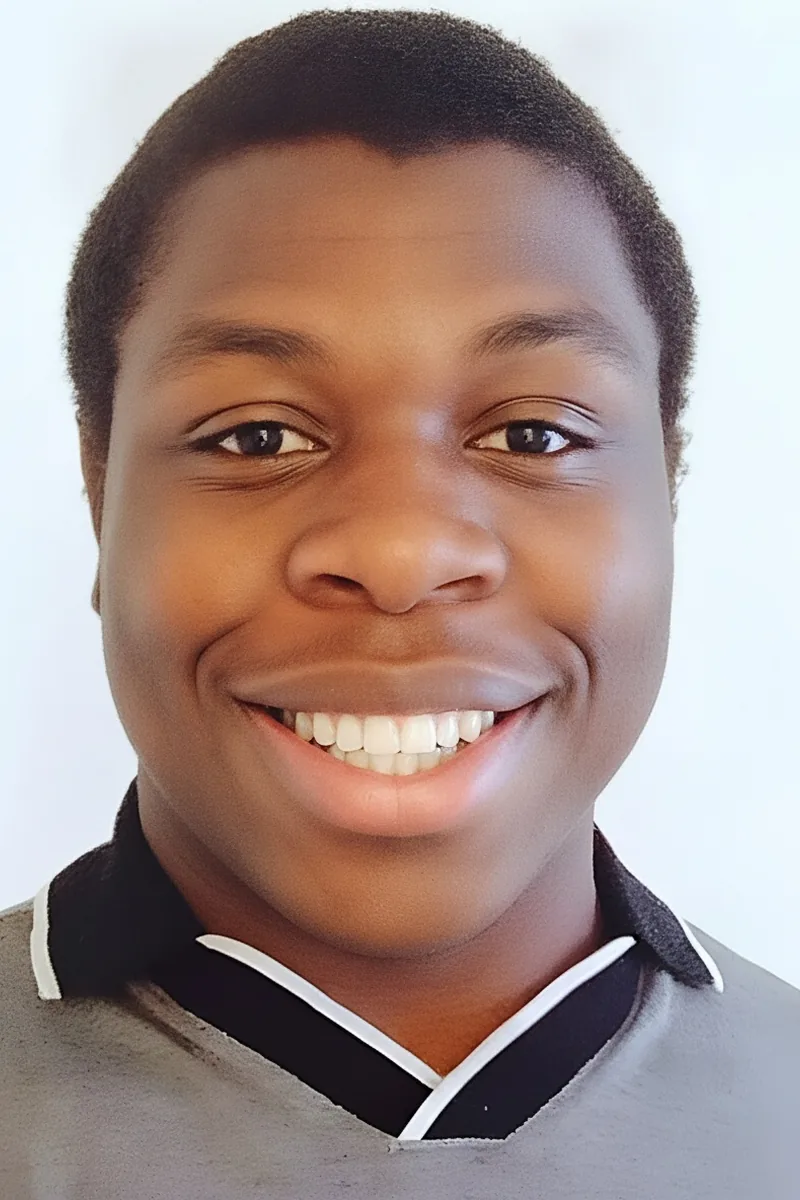
The jump from arithmetic to algebraic thinking — manipulating variables, solving systems of equations, interpreting graphs — trips up students who never learned *why* the rules work. Niabari tackles that gap directly, walking through each step of problems like quadratic factoring or linear modeling so the logic is visible, not hidden behind shortcuts.

A lot of algebra frustration comes from not understanding what the variable actually represents in a given problem. Troy tackles that head-on, teaching students to set up equations from real scenarios — mixing rates, distance problems, profit models — before drilling the procedural solving. Rated 4.8 by students, he keeps sessions grounded in why each step makes sense.
A lot of algebra frustration comes from not understanding what variables represent in the first place. Daniel tackles that head-on, teaching students to translate word problems into equations and build intuition around concepts like slope and systems of equations before drilling procedures.
Word problems are where algebra stops being abstract and starts confusing students who were fine with straight computation. Jake spends time on translating English sentences into equations — identifying what the variable represents, setting up relationships, and checking whether an answer makes sense — because that translation skill is what carries into every math course after algebra.
Most Algebra students struggle not with the computations but with translating word problems into equations and knowing which technique to reach for. Alex, who scored a 1560 SAT and tutors math across every level up through graduate engineering, teaches students to read a problem and identify its structure before touching any algebra. That pattern-recognition skill pays off long after the course ends.
I am Arizona born and raised, my education includes an NYC law school degree with an undergraduate BS degree from University of Miami. In college I majored in Health Sciences with minors in Psychology and Public Health while in law school I leaned into corporate law and finance. Between law school and college I've pretty much covered every topic under the sun! In my spare time, I enjoy reading (especially mystery novels), pretending I'm a chef, and meditating.
Every algebra concept — from solving linear equations to factoring quadratics to graphing inequalities — is really a small logical argument, and Andrew treats it that way. His approach emphasizes understanding why you can perform each step, which means students can reconstruct methods on a test instead of relying on memorized shortcuts that fall apart under pressure.
Most Algebra frustration comes from one place: procedures learned without any sense of *why* they work, so that one unfamiliar problem derails everything. Sam digs into the reasoning behind techniques like factoring, solving systems, and manipulating expressions, giving students a framework they can adapt when problems don't look exactly like the textbook example. His mathematics degree means the underlying logic comes naturally to him.
Since 2016, Brodie has been teaching algebra to students across every grade level, and his biomedical engineering degree from ASU's Barrett Honors College means he knows exactly how algebraic thinking scales — from basic variable isolation in pre-algebra all the way to the systems and models he built in engineering coursework. His emphasis has always been on efficient problem-solving strategies rather than brute-force repetition, especially when tackling multi-step equations and word problems. Rated 5.0 by students with a 34 ACT to back it up.
Luke zeroes in on the moment algebra shifts from arithmetic with letters to genuine abstract reasoning — typically around systems of equations and quadratic functions. His psychology background gives him a sharp read on where a student's thinking is breaking down, and he restructures explanations on the fly to make the logic land.
When a student stalls on algebra, it's usually one specific skill — distributing, factoring, or manipulating equations with fractions — creating a chain reaction of confusion. Lindsey diagnoses exactly where that breakdown is happening and rebuilds the logic from there, using language that actually makes sense to the student. Her cum laude neuroscience degree required fluency in algebraic reasoning, and her 5.0 rating shows she can transfer that fluency to others.
Most algebra frustration comes not from the new material itself but from gaps in number sense or fraction skills hiding underneath. Leah diagnoses those gaps quickly, then teaches topics like factoring, linear systems, and quadratic equations in a way that patches the foundation and moves students forward at the same time.
Pure math majors at Rice don't just take algebra — they learn to prove why algebraic rules work in the first place, from the properties of real numbers to the structure underlying polynomial operations. Aaron brings that deeper perspective to his tutoring, breaking down topics like systems of equations and quadratic expressions so students grasp the reasoning driving each step. Rated 4.9 by students.
When variables start replacing numbers, a lot of students lose their footing. Hana walks through the reasoning behind equation-solving and graphing techniques so that concepts like slope, systems of equations, and factoring feel like extensions of logic rather than arbitrary rules to memorize.
Philosophy trained Galen to think in structured logical sequences, which turns out to be exactly what algebra requires — building one valid step on top of another until a solution emerges. He's particularly effective at walking students through word problems and translating messy real-world language into clean equations, a skill he honed turning abstract ideas into precise written arguments throughout his degree.
Alexis approaches algebra the way a coach approaches game film: break down each problem type, identify where mistakes happen, and practice until the technique becomes automatic. Whether it's solving systems of equations or factoring quadratics, she builds repetition into every session so students develop real fluency. Rated 5.0 by students.
A solid grip on algebra is what separates students who survive higher math from those who struggle through it. Courtney's quantitative background in environmental sciences and biostatistics means she's spent years relying on algebraic reasoning — solving systems, manipulating expressions, modeling relationships — and she breaks those skills down in concrete, practical terms.
A methodical thinker with training in formal logic and quantitative analysis, Elizabeth breaks algebraic concepts like systems of equations and inequalities into clear, repeatable steps. Her 5.0 rating speaks to how well she translates abstract notation into language students actually understand.
When variables start replacing numbers, a lot of students lose the thread of what they're actually doing and why. Michelle reconnects algebra to concrete reasoning — showing, for example, how solving a system of equations is really just finding where two relationships intersect. Her 5.0 rating speaks to how well that approach lands.
Most algebra frustration comes from being told to follow steps without understanding the reasoning behind them — why you "flip and multiply" with fractions, or what solving for x actually means graphically. Kristi tackles algebra by making the logic visible, connecting symbolic manipulation to concrete meaning. Nearly a decade of tutoring across every math level gives her a sharp sense of where each student's understanding breaks down.
Linda's analytical background in philosophy translates surprisingly well to algebra, where the real challenge is often learning to think systematically about variables and relationships rather than just crunching numbers. She's particularly effective at unpacking word problems and translating verbal descriptions into equations — a skill that draws directly on her expertise in language and logic.
A clear grasp of algebra unlocks everything from standardized tests to college-level coursework, and Ivanna zeroes in on the conceptual logic behind operations like factoring and solving systems of equations. Her approach treats each problem as a puzzle with a structure to uncover, not just a procedure to memorize.
A lot of algebra clicks once a student sees the structure underneath it — why factoring a quadratic is really just reverse multiplication, or how a system of equations maps onto intersecting lines. Annelisa approaches algebra as a logic puzzle, drawing on the analytical rigor she built at Yale and the quantitative instincts behind her 1570 SAT.
A lot of algebra frustration comes from not knowing *why* you're manipulating an equation — just being told to isolate x. Alice breaks down the logic behind each step, whether it's factoring quadratics or solving systems, so the procedures start to feel intuitive rather than arbitrary. Her science background at Yale means she's constantly translating real problems into algebraic form.
When variables, equations, and word problems first appear in Algebra, the biggest hurdle is often translating a sentence into a mathematical statement. Tim tackles that translation process head-on, showing students how to set up equations from scratch rather than pattern-matching to a memorized template. His engineering experience means he has an endless supply of concrete examples that make abstract expressions feel tangible.
What Diana loves about algebra is the detective work — figuring out what a problem is actually asking before reaching for a calculator. Her Stanford BA and Brown MA are both in philosophy, which trained her to break arguments into logical steps, and she applies that same precision to teaching students how to set up equations, isolate variables, and reason through multi-step problems. She's been tutoring math ranging from arithmetic through calculus for years, but algebra remains her favorite subject to teach — rated 4.9 by students.
Most algebra struggles come down to not understanding *why* a rule works — why you flip the inequality when multiplying by a negative, or why cross-multiplication is valid. Rachelle digs into those underlying reasons rather than just drilling procedures, an instinct she developed earning her Summa Cum Laude philosophy degree at Arizona State.
Most algebra frustration comes from one place: students learn procedures without understanding why they work, so every new problem type feels like starting over. John teaches the underlying logic — why you balance equations, what a function actually represents, how factoring connects to graphing — so that skills transfer from one chapter to the next. His 1490 SAT score reflects strong quantitative fundamentals.
The jump from arithmetic to algebra trips students up when variables start replacing numbers and equations require strategic thinking instead of straightforward computation. Alex tackles this by walking through the reasoning behind each manipulation — why you distribute, how to set up equations from word problems, what "solving for x" actually means — so the logic sticks. Rated 4.8 by students.
When a student stalls in Algebra, it's usually on one specific skill — maybe factoring trinomials, maybe graphing systems of equations — rather than the whole subject at once. Arshia pinpoints that sticking point and unpacks it with concrete examples before layering on complexity. Her approach keeps students from falling into the trap of memorizing steps without understanding what they're solving for.
The leap from arithmetic to algebra — where numbers become variables and equations become puzzles — trips up more students than any single math concept. Megan spent four years tutoring peers in algebra and geometry during high school, building a knack for explaining ideas like solving systems of equations or factoring quadratics in plain, concrete language. She's now a computer science major at Harvey Mudd, where algebraic thinking is a daily tool.
Word problems are often the most dreaded part of algebra — not because the math is harder, but because translating English into equations is a separate skill nobody explicitly teaches. Kyle spends real time on that translation process, showing students how to pull variables, relationships, and constraints out of a problem before solving anything.
I am a graduate student at Arizona State University studying Human and Social Dimensions of Science and Technology, and am passionate about the value of education at all levels. Previously I worked at the US Department of Energy on energy technology in Washington, DC. I have enjoyed setting up roots in Phoenix over the past few years, and am excited about sharing my knowledge and passion for learning with others in the area.I have a knack for explaining complicated ideas to people in simple terms, enjoy deepening people's understandings of issues, and value education highly. All of these characteristics make me an ideal tutor for Varsity Tutors, and I look forward to the opportunity to share my academic experiences and skills with tutees. In addition, I can give an expert's perspective on a wide range of topics including political science, public policy, various topics in science and technology, as well as an academic success-oriented mindset.
The jump from arithmetic to algebraic thinking trips up a lot of students right around systems of equations and quadratic factoring, where the problems stop looking like puzzles with one obvious move. Elise spent years at Huntington Learning Center tutoring algebra across age groups, and she's developed a knack for diagnosing exactly where a student's reasoning breaks down and rebuilding from that point.
Law school trains you to isolate variables and build airtight logical chains — skills Jeff applies directly when teaching algebra concepts like inequalities and linear equations. His history background also means he's comfortable walking through multi-step problems narratively, showing students how each algebraic move follows from the last like an argument building toward a conclusion.
A lot of algebra frustration comes from not understanding *why* a technique works — why you flip the inequality sign when multiplying by a negative, or what completing the square actually accomplishes geometrically. Ken digs into those reasons, drawing on the rigorous math training from his CS coursework at ASU's Barrett Honors College to make the logic behind each step transparent.
Having taken 10 AP classes and tutored algebra more than any other subject through high school, Thara built a mental catalog of exactly where students get tripped up — whether it's distributing negatives, setting up word problems, or losing track of steps when solving multi-variable equations. Now a pre-med sophomore at Duke, she still uses algebraic reasoning daily in her science coursework, which keeps those skills sharp and grounded in real application.
A lot of algebra frustration comes from not understanding *why* a technique works — why you flip the inequality sign when dividing by a negative, or what completing the square actually accomplishes geometrically. Jamila teaches the reasoning behind each procedure so that students can problem-solve on their own instead of relying on memorized shortcuts. Rated 5.0 by students.
Every statistics and calculus course Robert has taken started with algebra — solving systems of equations, manipulating expressions, and understanding functions. He breaks algebraic reasoning into clear, repeatable steps and emphasizes the "why" behind each manipulation so students can tackle unfamiliar problems with confidence instead of relying on memorized shortcuts.
Fieldwork in anthropology and archaeology requires constant algebraic thinking — calculating site dimensions from partial measurements, solving for unknown variables in dating formulas, building proportional models from fragmentary data. Amanda brings that hands-on comfort with algebra into her teaching, particularly when unpacking how to translate real-world scenarios into equations and work through them systematically. Her 1550 SAT and 4.9 rating speak to the depth of that mathematical fluency.
Testimonials
Because the right Algebra tutor makes all the difference.
Average Session Rating – Based on 3.4M Learner Ratings
Practice Algebra
Free practice tests, flashcards, and AI tutoring for Algebra
Other Scottsdale Tutors
Related Math Tutors in Scottsdale
Frequently Asked Questions
Varsity Tutors matches Scottsdale students with expert Algebra tutors for 1-on-1 instruction. We pair each student with a tutor based on their specific needs, learning style, and goals.
Whether you need homework help, exam prep, or want to get ahead, our Algebra tutors are ready to help.
Common challenges include gaps from earlier material, difficulty with specific concepts, and trouble applying learning to new problems. These issues can snowball quickly in Algebra.
A tutor identifies where you're stuck, fills in gaps, and provides targeted practice. The 1-on-1 format means you get help exactly where you need it.
Tutors work with your student's actual coursework—homework assignments, class notes, and upcoming tests. This keeps tutoring directly relevant to what's happening in the classroom.
When you share information about your student's school and curriculum, we can match you with a tutor who has relevant experience.
All tutors complete background checks, credential verification, and teaching evaluation. Many of our Algebra tutors hold advanced degrees or have years of teaching experience.
You can review tutor profiles to find someone with the right background for your student's level and needs.
Many students see improved grades within a few weeks, along with better understanding of Algebra concepts and more confidence tackling challenging material.
Tutors track progress and adjust their approach to ensure continued improvement.
Most students benefit from 1-2 sessions per week. More frequent sessions help if your student is significantly behind or has an important exam coming up.
Your tutor can recommend a schedule based on your student's specific situation and goals.
Tutoring is purchased in packages of hours, with rates varying by tutor experience. Varsity Tutors offers several options to fit different budgets and needs.
You can discuss pricing during your consultation to find what works best.
Your tutor will assess where your student is, discuss goals, and start working on priority areas. Most students bring current homework or upcoming test material to focus on.
By the end, you'll have a clear sense of how the tutor can help and a plan for moving forward.
Let’s find your perfect tutor
Answer a few quick questions. We’ll recommend the right plan and match you with a top 5% tutor.