Award-Winning Pre-Calculus Tutors
serving Glendale, AZ
Pre-Calculus
Tutors in Glendale
Private 1-on-1 tutoring, weekly live classes for academic support, test prep & enrichment, practice tests and diagnostics, and more to elevate grades and test scores.
Based on 3.4M Learner Ratings
UniversitiesSchools & Universities
DeliveredHours Delivered
ProficiencyGrowth in Proficiency
Who needs tutoring?
No obligation. Takes ~1 minute.
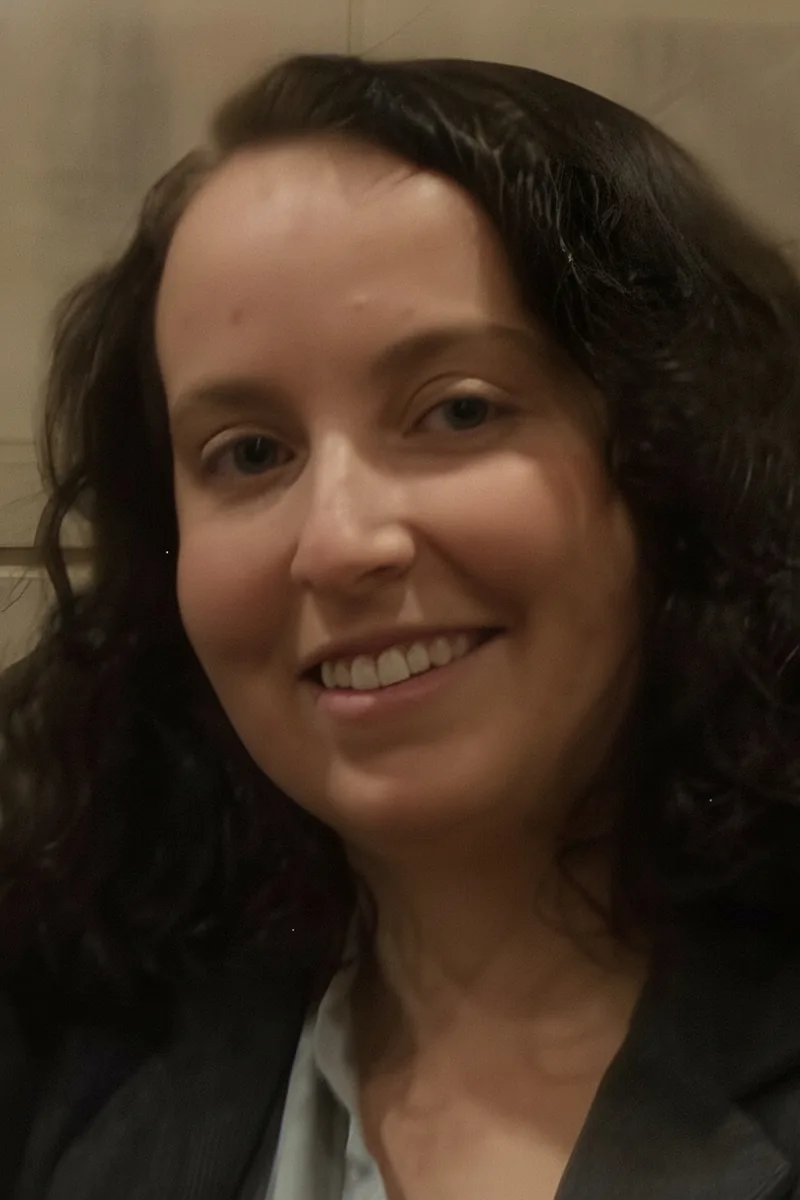
Having served as a multivariable calculus teaching assistant at Harvard, Kristi knows exactly which pre-calculus skills — limit intuition, trigonometric fluency, the mechanics of function composition — students need to have locked down before calculus stops being forgiving. Her dual astrophysics and planetary science background means she learned these tools by applying them to orbital mechanics and signal analysis, not just textbook exercises. Rated 5.0 by students.
Four years as a Military Police Officer in the Arizona Army National Guard built the kind of disciplined, systematic problem-solving that translates directly to tackling pre-calculus — breaking complex scenarios into sequential steps, whether that's analyzing a piecewise function or working through a multi-step trigonometric proof. Rachelle pairs that structured thinking with the rigorous logic training from her summa cum laude philosophy degree at ASU, where formal proofs and symbolic reasoning were daily practice. She's especially sharp at walking through the "why" behind identities and transformations so students can derive what they need instead of memorizing formulas cold.
Twenty-five years of engineering and software work means Tim has used polynomial modeling, trigonometric analysis, and function composition as everyday professional tools — not classroom abstractions. He teaches pre-calculus by connecting each concept to the calculus and differential equations he also tutors, so students see exactly how mastering rational functions or logarithmic properties now prevents roadblocks later. His physics degree grounds the whole approach in quantitative rigor.
After earning her BA at Stanford and MA at Brown — both in philosophy — Diana spent years building businesses, designing structures, and solving real-world problems before turning to math tutoring, where algebra became her central love. That detective-work instinct carries directly into pre-calculus: she treats topics like rational functions and trigonometric identities as puzzles to reason through, pushing students to understand the logic behind each manipulation rather than memorize steps. Rated 4.9 by students.
Chemical engineering at Washington and Lee meant Alex spent semesters immersed in the differential equations and modeling that pre-calculus is quietly preparing students for — so he teaches topics like rational functions, limits of sequences, and trigonometric identities with a clear sense of where each one is headed. Now in medical school, he still uses that engineering instinct to break down composite and piecewise functions into their mechanical parts. His 36 ACT and 1590 SAT reflect the kind of precision he brings to every problem.
A law PhD and a history degree might not scream pre-calculus, but John's path through software engineering and founding a SaaS company means he's been neck-deep in the mathematical modeling that ties algebra to calculus — growth curves, rate-of-change intuition, and the functional thinking that makes code actually work. He tackles topics like polynomial end behavior and composite functions by emphasizing the logical structure underneath, drawing on the same analytical rigor that carried him to a 1490 SAT. Rated 5.0 by students.
I am here because I thoroughly enjoy working with students and watching them succeed in their academic studies. As a Mathematics major at the University of Arizona (currently a junior), I have extensive experience teaching and tutoring: I have been a teacher's assistant for a Calculus II section at my university and have spent a great deal of time assisting students with non-math related subjects as well such as English and essay-writing, time management and study skills techniques, and standardized test prep (SAT).
Having taught everything from elementary math through calculus — plus biology, chemistry, and organic chemistry — Amanda sees pre-calculus as the crossroads where algebraic skills have to mature into the kind of functional thinking the sciences demand. She digs into polynomial end behavior and rational function analysis by tying them to the modeling her anthropology and biology training actually required. Her 1550 SAT and 4.9 rating confirm the quantitative range behind that interdisciplinary perspective.
Laser engineering as a hobby means Sam regularly works through the trigonometric optics and exponential decay models that most students only see on a pre-calculus worksheet — calculating beam divergence angles, lens alignments, and power attenuation curves. His dual degree in physics and mathematics gives him the formal framework to explain why these function families behave the way they do, connecting each transformation or identity back to something concrete. Holds a 5.0 rating from students.
Trigonometric identities, rational functions, and the unit circle all converge in Pre-Calculus to set up everything a student will see in calculus. Gordon breaks these topics into visual, step-by-step reasoning — connecting, for example, how transformations of parent functions actually work rather than asking students to memorize shift rules. His own path through Calculus I and II at ASU gives him a clear sense of exactly which Pre-Calc skills matter most going forward.
The jump into pre-calculus means juggling trigonometric identities, polar coordinates, and limit intuition all at once. Brodie's biomedical engineering background at ASU's Barrett Honors College required heavy use of these tools, so he teaches them as practical building blocks rather than abstract formulas to memorize. Rated 5.0 by students.
A history and economics double major at Northwestern might seem like an unlikely pre-calculus tutor, but Andrew's coursework in econometrics demanded real fluency with the polynomial, exponential, and logarithmic functions that form the backbone of the course. His legal training sharpened an ability to break complex arguments into logical steps — the same skill that makes multi-step trigonometric proofs and function transformations manageable. Rated 4.9 by students, with a 1490 SAT confirming the quantitative chops behind his teaching.
Pre-calc is where students first encounter the ideas — limits, function behavior, complex trigonometric identities — that either set them up for calculus success or leave them scrambling. Madeleine treats it as genuine preparation rather than a grab bag of disconnected topics, connecting polynomial end behavior and composition of functions to the calculus concepts they're building toward. Her applied math degree from ASU gives her a clear view of that bigger picture.
I am a graduate student currently working on my Master's Degree in Big Data Systems.
Lindsay's biology and math double background at the University of Arizona means she learned pre-calculus concepts like exponential modeling and logarithmic relationships in the context of population dynamics, enzyme kinetics, and decay curves — not just as abstract exercises. She teaches the bridge between algebra and calculus by emphasizing how function families actually behave, drilling into transformations and compositions until students can reason through unfamiliar problems on their own. Her 35 ACT and 4.9 rating confirm that analytical rigor carries over into her tutoring.
Pre-calculus is really two courses stitched together — advanced function analysis and trigonometry — and the students who struggle usually lose the thread between them. Tracey ties concepts like limits of rational functions, composite functions, and polar coordinates into a coherent story so students see the course as preparation for calculus, not just a grab bag of topics. She teaches this material in her own high school classroom and knows which problems best prepare students for what's next.
Hi! I'm a STEM, SAT/ACT, and language tutor with over a decade of teaching and tutoring experience. I have tutored students in every grade level in K-12 and first and second year college students. I mainly teach Math, Science, Physics, Hindi, English, French, ACT (35 score), and SAT (1560 score), and other subjects upon request.
Chemical engineering coursework throws Adrian straight into the deep end of pre-calculus material — solving systems with matrices, modeling reaction rates with exponential and logarithmic functions, and decomposing periodic signals using trig identities. He teaches the course as someone still actively using these tools in his engineering classes, which keeps his explanations grounded in how each concept actually behaves rather than how it looks on a formula sheet. His 34 ACT confirms the quantitative instincts behind his approach.
The jump from Algebra 2 to Pre-Calculus trips students up because suddenly they're juggling trigonometric identities, polar coordinates, and the unit circle all at once. Kristi breaks these topics into visual, intuitive pieces — connecting each new concept back to the algebra skills students already have so nothing feels like it came out of nowhere. Rated 5.0 by students.
Pre-Calculus is where abstract algebra and geometric intuition finally merge, and students who don't build that bridge struggle when limits and derivatives arrive. Geoffrey breaks down composite functions, sequences, and conic sections by showing how each concept feeds directly into calculus — a connection he makes naturally as an electrical engineering student at ASU. He holds a 5.0 rating from students.
Dual-majoring in physics and mathematics at Emory means Yurok encounters pre-calculus material from two directions simultaneously — trigonometric functions describing wave motion in one class, then the formal properties of those same functions proved rigorously in another. That double exposure gives him a sharp sense for where students get stuck on topics like polar coordinates or composite functions, and he tackles those sticking points by connecting the visual intuition to the algebraic structure. His 1570 SAT and 4.9 rating back up the approach.
Eighteen years of designing houses means Aaron thinks in the language pre-calculus actually teaches — scaling dimensions with trigonometric ratios, modeling roof pitches as slope functions, and sketching curves that describe load paths through a structure. He digs into the organizing principles behind each topic so students can reason through problems like graph transformations or composite functions on their own, not just follow memorized steps. Rated 5.0 by students.
The jump from Algebra 2 to Pre-Calculus often blindsides students when topics like trigonometric identities, polar coordinates, and limits start demanding conceptual flexibility. Jared tackles these ideas by anchoring each new abstraction to graphical and algebraic reasoning students already trust. His approach turns Pre-Calc from a disconnected grab bag into a coherent preparation for what comes next.
The jump into pre-calculus — trigonometric identities, polar coordinates, limits as a preview of calculus — demands comfort with abstraction that many students haven't needed before. Hritik's biochemistry degree required heavy quantitative coursework, and he uses that background to connect pre-calc concepts to the bigger mathematical picture so they feel purposeful rather than arbitrary.
Mechanical engineering at Arizona State means Nitesh solves problems daily that trace straight back to pre-calculus — resolving force vectors with trigonometry, modeling oscillations with sinusoidal functions, analyzing motion through parametric equations. He teaches these topics by connecting them to the physical systems where they actually matter, turning abstract identities and transformations into something students can visualize. Rated 4.9 by students.
The jump into pre-calculus — trigonometric identities, limits intuition, and complex rational functions — often catches students off guard after coasting through earlier courses. Hanna's math tutoring background extends through differential equations, giving her a clear picture of where pre-calc concepts are headed and why mastering them now matters. She connects each topic to its calculus payoff so students see purpose in the work.
Eight years of tutoring middle and high school math means Charles has watched hundreds of students hit the same pre-calculus sticking points — the moment rational functions start behaving unpredictably, or when trigonometric graphs stop looking like anything algebra prepared them for. His biochemistry background actually reinforces the course's trickiest material, since reaction kinetics and molecular modeling depend on the same exponential and logarithmic reasoning students are building for the first time. He teaches those connections explicitly, turning pre-calc from a holding pattern into genuine preparation for what comes next.
A math degree means Leah didn't just pass through pre-calculus — she built everything that came after on top of it, from calculus through quantitative reasoning and beyond. She's particularly sharp at demystifying the shift from algebraic manipulation to thinking in terms of function families, especially when students hit the wall where rational expressions and composite functions start feeling abstract. Her 1520 SAT confirms the quantitative chops behind that clarity.
Three and a half years as a peer math tutor — covering everything from algebra through calculus — taught Chris exactly where students lose the thread in pre-calculus, and it's almost always during the shift from manipulating expressions to reasoning about function behavior. His applied mathematics minor means he can ground slippery topics like composite functions and rational asymptotes in the concrete logic underneath them, bridging the gap between algebraic comfort and calculus readiness. Rated 5.0 by students.
Emily's mathematical research into Markov chains and combinatorial optimization at Smith College means she thinks about sequences, probability structures, and function behavior at a level well beyond what pre-calculus demands — which gives her unusual clarity when teaching the building blocks like polynomial end behavior, rational function asymptotes, and summation notation. She connects each topic forward to the calculus concepts they're preparing students for, making the "why are we learning this" question easy to answer. Holds a 5.0 rating and a 1550 SAT.
A genetics PhD means Cameron spent years modeling inheritance patterns, gene expression curves, and population dynamics — work that demands fluency with the polynomial, exponential, and logarithmic functions at the heart of pre-calculus. That scientific training shapes how he teaches function behavior: instead of drilling isolated procedures, he connects each concept to the quantitative reasoning students will actually need in calculus and beyond.
I am a graduate of the University of Florida's PhD program in the Microbiology and Cell Science Department. Since graduation, I have worked for a startup company studying neurodegenerative biomarker uptake by immune cells in the peripheral blood during neuroinflammation. While I tutor a variety of subjects, my main passions lie in biology, microbiology, and chemistry. I believe it is important for students to not only learn the subject material but also to discover how they learn in general and how they can learn to take assessment tests efficiently.
Having taught across the full math ladder — elementary arithmetic through calculus — Maurice knows exactly which algebraic skills need to be rock-solid before a student can make sense of rational functions, composite expressions, or the behavior of logarithms. His special education training sharpens that instinct further: he spots the specific conceptual gap causing confusion and addresses it directly, rather than re-explaining the same procedure louder. That diagnostic approach makes the jump from algebra to pre-calculus feel like a natural next step instead of a sudden leap.
Hi, I recently earned my Ph.D. in Organic Chemistry from Purdue University and have entered the private sector. In my program, I found that teaching and instructing students was very enjoyable and I wish to continue that by being a tutor. I have been a successful tutor for over a decade and know how to instruct to a variety of different skill sets and learning abilities.
Aerospace engineering at Georgia Tech means Naveen is knee-deep in the trigonometric and vector math that pre-calculus introduces — resolving forces, modeling trajectories, and working with parametric equations are routine parts of his coursework. He tackles the course by zeroing in on how each new function type connects to the algebra students already have down, making the jump to abstract behavior less jarring. His 35 ACT and 1570 SAT confirm the quantitative chops behind that engineering perspective.
Pre-calculus is where polynomial behavior, rational functions, and limits start converging into one toolkit — and students who build real intuition here have a dramatically easier time in calculus. Adam taught an accelerated college-level math course and brings that same structured pacing to topics like composite functions, conic sections, and end behavior analysis.
The jump to Pre-Calculus — limits, trigonometric identities, polar coordinates — catches a lot of students off guard because it requires combining skills from every prior math class at once. Ayushi's computer science background at ASU means she's spent years applying these exact concepts in algorithm design and modeling, so she can show students how each piece fits into a larger mathematical toolkit.
The leap into pre-calculus is really about learning to think in terms of function behavior — how graphs shift, how trig identities simplify, why limits start to matter. Jamison tackles these ideas by building each one visually and algebraically at the same time, so students aren't just memorizing unit circle values without context. His broad math background, from algebra through calculus, means he always knows what's coming next and how to prepare for it.
Graphing is where pre-calculus clicks for Chelsea — her math education degree from BYU trained her to teach visually, sketching transformations and function behavior so students can see what's happening before they formalize it with algebra. She's especially strong at bridging the gap between a student's intuitive approach and the standard method, letting them build toward correct solutions through reasoning that actually sticks. Her background covers the full algebra-through-calculus pipeline, so she knows exactly which pre-calc skills need to be airtight before moving on.
Most pre-calculus students hit a wall not because the math gets harder, but because the course demands a different kind of thinking — shifting from solving equations to analyzing how functions behave, transform, and connect. Teresa's psychology background actually serves her well here, since she's attuned to where conceptual confusion sets in and can reframe ideas like composite functions or trigonometric graphs in ways that stick. Rated 4.9 by students.
Testimonials
Because the right Pre-Calculus tutor makes all the difference.
Average Session Rating – Based on 3.4M Learner Ratings
Practice Pre-Calculus
Free practice tests, flashcards, and AI tutoring for Pre-Calculus
Other Glendale Tutors
Related Math Tutors in Glendale
Frequently Asked Questions
Varsity Tutors matches Glendale students with expert Pre-Calculus tutors for 1-on-1 instruction. We pair each student with a tutor based on their specific needs, learning style, and goals.
Whether you need homework help, exam prep, or want to get ahead, our Pre-Calculus tutors are ready to help.
Common challenges include gaps from earlier material, difficulty with specific concepts, and trouble applying learning to new problems. These issues can snowball quickly in Pre-Calculus.
A tutor identifies where you're stuck, fills in gaps, and provides targeted practice. The 1-on-1 format means you get help exactly where you need it.
Tutors work with your student's actual coursework—homework assignments, class notes, and upcoming tests. This keeps tutoring directly relevant to what's happening in the classroom.
When you share information about your student's school and curriculum, we can match you with a tutor who has relevant experience.
All tutors complete background checks, credential verification, and teaching evaluation. Many of our Pre-Calculus tutors hold advanced degrees or have years of teaching experience.
You can review tutor profiles to find someone with the right background for your student's level and needs.
Many students see improved grades within a few weeks, along with better understanding of Pre-Calculus concepts and more confidence tackling challenging material.
Tutors track progress and adjust their approach to ensure continued improvement.
Most students benefit from 1-2 sessions per week. More frequent sessions help if your student is significantly behind or has an important exam coming up.
Your tutor can recommend a schedule based on your student's specific situation and goals.
Tutoring is purchased in packages of hours, with rates varying by tutor experience. Varsity Tutors offers several options to fit different budgets and needs.
You can discuss pricing during your consultation to find what works best.
Your tutor will assess where your student is, discuss goals, and start working on priority areas. Most students bring current homework or upcoming test material to focus on.
By the end, you'll have a clear sense of how the tutor can help and a plan for moving forward.
Let’s find your perfect tutor
Answer a few quick questions. We’ll recommend the right plan and match you with a top 5% tutor.