Award-Winning AP Chemistry Tutors
serving Birmingham, AL
AP Chemistry
Tutors in Birmingham
Private 1-on-1 tutoring, weekly live classes for academic support, test prep & enrichment, practice tests and diagnostics, and more to elevate grades and test scores.
Based on 3.4M Learner Ratings
UniversitiesSchools & Universities
DeliveredHours Delivered
ProficiencyGrowth in Proficiency
Who needs tutoring?
No obligation. Takes ~1 minute.

Three semesters as a college chemistry TA gave Joshua deep familiarity with the exact concepts that stump AP students: equilibrium calculations, thermodynamics, and electrochemistry. He knows how free-response questions are structured and teaches students to connect mathematical problem-solving with the conceptual reasoning the AP exam rewards.
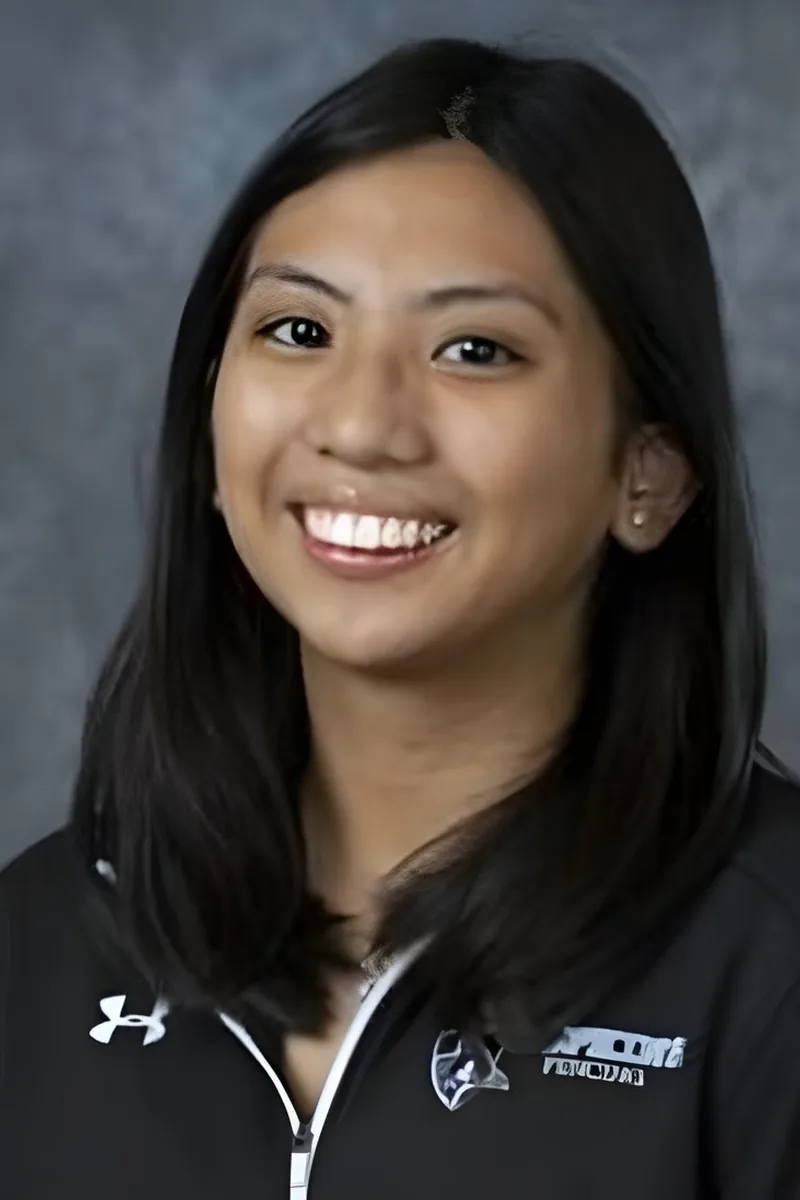
A biophysics major and premed student at Johns Hopkins, Czarina is currently deep in the college chemistry sequence that AP Chemistry is designed to preview — so she knows exactly which concepts, like molecular orbital theory and colligative properties, carry the most weight on the exam versus which ones fade into background noise. She earned a 770 on the SAT Chemistry Subject Test and teaches the subject by linking quantitative problem-solving to the physical intuition behind each reaction. Rated 5.0 by students.
Forty-plus AP and general chemistry students have worked through thermodynamics, electrochemistry, and equilibrium calculations with Amy, and her 5.0 rating speaks to the results. Her master's in environmental toxicology keeps her deeply connected to the material — she teaches AP concepts like Gibbs free energy and kinetics as tools scientists actually use, not just formulas to memorize for the exam.
Teaching 12th grade Chemistry at a high-performing Philadelphia magnet school means Kathleen sees exactly which AP Chemistry concepts — from equilibrium reasoning to periodic trends — trip students up on exams, and she's built classroom-tested strategies for each one. Her Penn M.S.Ed in Secondary Science Education and her chemistry degree give her both the content depth and the pedagogical training to explain why a reaction proceeds the way it does, not just how to get the right answer. Rated 5.0 by students.
Notre Dame's pre-med track put Aidan through the full college chemistry gauntlet — general and organic — where concepts like electron configuration, molecular polarity, and reaction spontaneity weren't just exam topics but prerequisites for everything that followed. He scored a 35 on the ACT, and that same precision shows up in how he teaches AP Chemistry's trickiest quantitative work, particularly gas law problems and solution chemistry where one missed conversion derails the entire calculation.
A PhD in chemical engineering means Steven didn't just study chemistry — he lived in thermodynamics, kinetics, and equilibrium for an entire career. For AP Chemistry, he unpacks topics like electrochemistry, reaction mechanisms, and Le Chatelier's principle by explaining the concept, restating it differently, and then grounding it in a real-world scenario that makes the logic stick. Rated 4.9 by students.
Few AP Chemistry tutors have actually written and graded college chemistry exams for years. Jeremy, a Yale-trained Ph.D. who has taught General Chemistry at the college level many times, knows precisely how equilibrium, thermodynamics, and kinetics questions are designed to test conceptual understanding versus rote calculation. He breaks down free-response strategies and teaches students to connect the big ideas the exam rewards.
Cornell's chemical engineering program put Rahul through physical chemistry, thermodynamics, and reaction engineering courses where AP Chemistry concepts like enthalpy, equilibrium, and kinetics were just the starting point — so he can teach those topics with the depth that makes free-response questions feel manageable. He's especially sharp on thermochemistry, his self-described favorite, and connects energy diagrams and Hess's law to the industrial-scale processes he studied as an engineer. Rated 4.9 by students.
AP Chemistry's jump from memorizing periodic trends to applying thermodynamics and equilibrium concepts trips up a lot of students. Eric's engineering coursework at Duke required mastering these same principles — reaction kinetics, enthalpy calculations, electrochemistry — and he teaches them with the quantitative rigor the AP exam demands. Rated 5.0 by students.
Thermodynamics, equilibrium, and electrochemistry tend to be the units where AP Chemistry students hit a wall — the math gets heavier and the conceptual leaps get bigger. Amanda tackles these topics by connecting abstract chemical principles to biological systems she knows deeply from her medical training, which makes ideas like Gibbs free energy or Le Chatelier's principle feel less arbitrary. Rated 4.7 by students.
Cornell's Chemistry & Chemical Biology program meant Samantha spent years doing the kind of lab work and quantitative problem-solving that AP Chemistry's free-response section is designed to test — from designing experiments around reaction stoichiometry to interpreting spectroscopic data. She's a deeply visual teacher who uses molecular models and diagrams to make abstract ideas like orbital hybridization and intermolecular forces click, especially for students who struggle when the textbook stays purely symbolic. Rated 5.0 by students.
Georgia Tech's chemical engineering curriculum threw Aimee into college-level thermodynamics, kinetics, and reaction engineering years before most students encounter those ideas — which means she can teach AP Chemistry's toughest conceptual leaps, like connecting enthalpy diagrams to spontaneity or interpreting rate law data, from genuine fluency rather than textbook familiarity. Her 4.9 rating and experience as a teaching assistant show she can translate that depth into clear, patient explanations when a student is stuck on a free-response problem at 9 p.m. the night before the exam.
Testimonials
Because the right AP Chemistry tutor makes all the difference.
Average Session Rating – Based on 3.4M Learner Ratings
Practice AP Chemistry
Free practice tests, flashcards, and AI tutoring for AP Chemistry
Nearby AP Chemistry Tutors
Other Birmingham Tutors
Related Science Tutors in Birmingham
Frequently Asked Questions
AP Chemistry covers eight major units: atomic structure and properties, molecular and ionic bonding, intermolecular forces and properties, chemical reactions, kinetics, thermodynamics, equilibrium, and acids and bases. The course emphasizes both conceptual understanding and problem-solving skills, with significant focus on laboratory work and data analysis. A tutor can help you master each unit's core concepts and build the mathematical foundations needed for success on the exam.
Score improvement depends on your starting point and the time you invest. Students who work consistently with a tutor typically see gains of 1-2 score points (on the 1-5 scale) over several months, with larger improvements possible if you're addressing fundamental gaps in stoichiometry, equilibrium, or thermodynamics. The key is identifying your specific weak areas early and building targeted practice around them, which personalized 1-on-1 instruction excels at doing.
Most students struggle with equilibrium calculations, acid-base chemistry, and thermodynamics—topics that require both conceptual understanding and strong algebra skills. Stoichiometry and gas laws also trip up many students because they demand careful attention to units and dimensional analysis. A tutor can break these complex topics into manageable pieces, show you common problem patterns, and help you avoid the calculation errors that often cost points on the exam.
Practice tests are essential—they help you understand the exam's format, pacing demands, and question styles while revealing exactly where your knowledge gaps are. Taking full-length practice tests under timed conditions also builds the stamina and confidence you need for test day. A tutor can review your practice test results with you, explain why you missed questions, and design focused review sessions around your specific weak areas rather than having you study everything equally.
Test anxiety often stems from feeling unprepared or uncertain about your problem-solving approach. Working through practice problems repeatedly with a tutor builds genuine confidence—when you've solved similar problems dozens of times, you walk into the exam knowing you can handle what's coming. Additionally, learning time-management strategies (like skipping hard questions initially and returning to them) and having a consistent pre-exam routine can significantly reduce anxiety and help you perform closer to your actual ability level.
Look for a tutor with strong chemistry knowledge who has successfully helped other students prepare for the AP exam. They should be able to explain difficult concepts clearly, identify your specific misconceptions, and create a study plan tailored to your goals and timeline. Varsity Tutors connects you with expert tutors in the Birmingham area who understand the AP Chemistry curriculum and know how to build both your conceptual understanding and test-taking skills.
Most students benefit from starting tutoring 3-4 months before the exam, though this depends on your starting level and how much time you can commit weekly. Consistent, focused study—even 5-7 hours per week with a tutor—is more effective than cramming. A tutor can help you create a realistic study schedule that covers all eight units thoroughly while leaving time for practice tests and targeted review of your weak areas.
Your first session typically involves assessing your current understanding of chemistry fundamentals, discussing your goals for the AP exam, and identifying which topics feel most confusing. A tutor will ask about your learning style, how much time you can dedicate to studying, and when you're taking the exam. From there, they'll create a personalized plan focused on filling gaps and building confidence in your weakest areas.
Let’s find your perfect tutor
Answer a few quick questions. We’ll recommend the right plan and match you with a top 5% tutor.