Award-Winning Geometry Tutors
serving Birmingham, AL
Geometry
Tutors in Birmingham
Private 1-on-1 tutoring, weekly live classes for academic support, test prep & enrichment, practice tests and diagnostics, and more to elevate grades and test scores.
Based on 3.4M Learner Ratings
UniversitiesSchools & Universities
DeliveredHours Delivered
ProficiencyGrowth in Proficiency
Who needs tutoring?
No obligation. Takes ~1 minute.
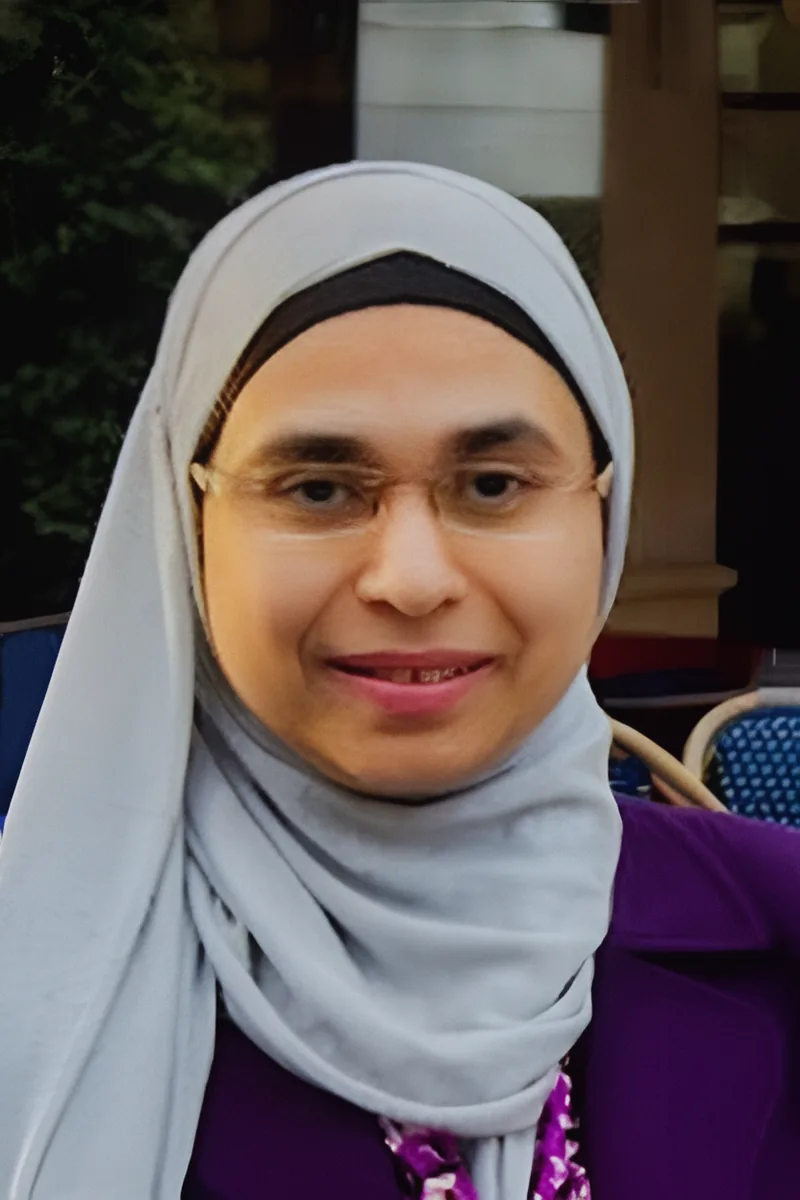
As a former IB student, my love for knowledge runs deep. I majored in Biomedical Engineering at the University of Alabama at Birmingham, graduating in December 2015 with honors (BME honors and Science and Technology Honors program) and going on to earn a Master's degree in Management Information Systems from the same university in 2019. I am currently pursuing a Master of Engineering in Artificial Intelligence and Machine Learning from the University of Illinois at Chicago and hope to start a career in data science and analytics. I greatly enjoy helping others learn and tutored throughout high school and college; I love seeing the light flash on in a student's eyes when they finally understand something they had been struggling with or when they easily solve a problem. I have tutored both young children as well as high school and college students, in just about every subject. I particularly enjoy language tutoring; I am fluent in Arabic and French and I love literature and poetry. I also love to tutor math and science subjects. My tutoring style is very much student-first; I listen and observe to determine the best approach for each individual student and what methods or strategies will be most helpful for you specifically. I am not averse to making a fool of myself with song or dance if it will help! I enjoy what I do and I want the students I work with to enjoy learning as well.
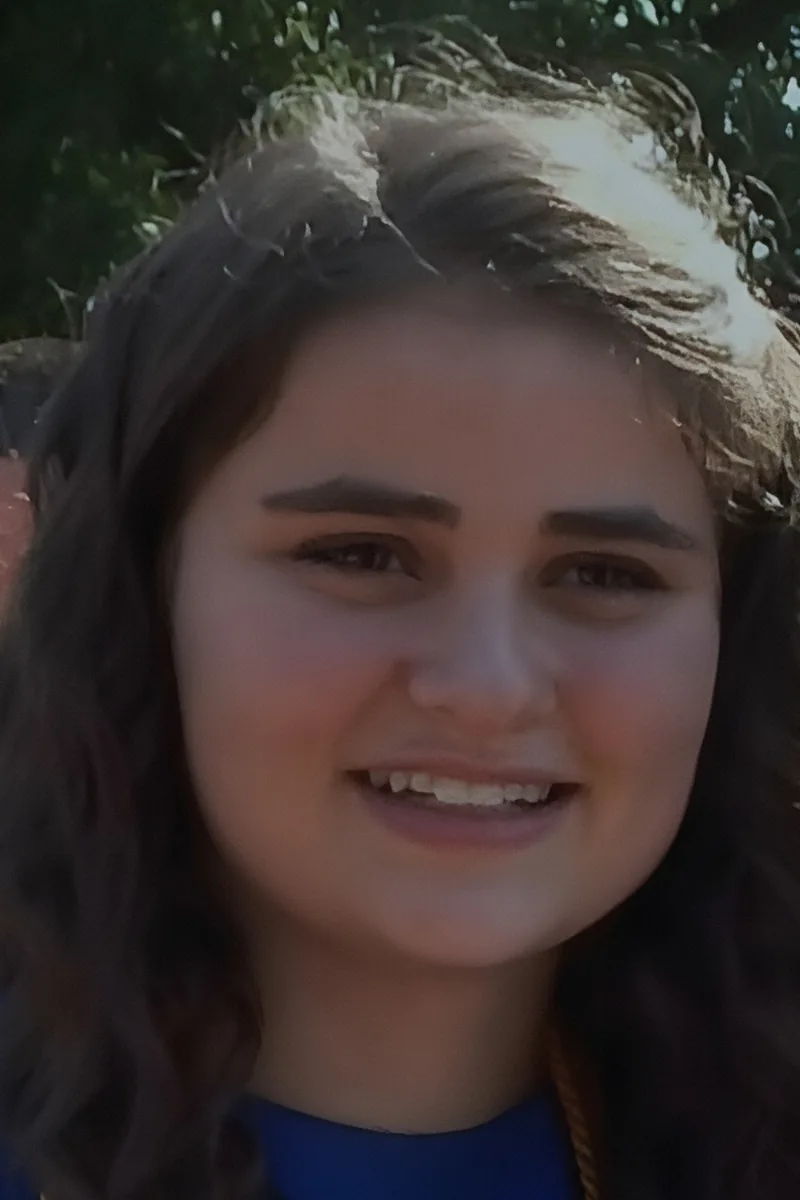
The thing about geometry proofs that trips most students up isn't the logic — it's not knowing which theorem to reach for when a diagram has five different things going on at once. Rosalyn, a math major at Amherst with a 34 ACT, tackles that by teaching students to read a figure systematically, identifying parallel line relationships or congruent triangles before attempting a single step. Rated 5.0 by students.
Proofs are usually where geometry students start to struggle — the logic feels completely different from arithmetic. Emma approaches them as structured arguments, teaching students to identify given information, choose the right theorem, and build each step deliberately. Her engineering training at Georgia Tech reinforces that same logical rigor every day.
Proofs trip up most Geometry students because they require a completely different kind of thinking than arithmetic — you're building logical arguments, not just computing answers. Nina treats each proof like a puzzle, encouraging students to sketch, label, and talk through their reasoning before writing anything formal. Her background in writing and analytical thinking translates naturally to the structured logic Geometry requires.
Proofs are usually the first place geometry students feel lost, because suddenly math requires written logical arguments instead of just calculations. Darcey walks through each proof step as a chain of reasoning, teaching students to identify which theorem or postulate justifies every move from the given information to the conclusion.
Proofs trip up most geometry students because they demand a completely different kind of thinking than computation does. Phillip approaches them as logical arguments: identifying what's given, what's needed, and which theorems bridge the gap. His engineering training at Brown means spatial reasoning and geometric relationships are second nature to him.
Theater training builds a surprising skill for geometry: Amber's background in staging and set design means she's used to thinking about space, angles, and spatial relationships in practical, visual terms — which translates directly to topics like transformations, reflections, and symmetry. She teaches students to sketch and annotate diagrams before jumping into calculations, turning abstract problems into something they can actually see and reason through. Rated 5.0 by students.
Proofs are usually where geometry stops feeling like math and starts feeling like a foreign language. Ava tackles that disconnect by teaching students to read diagrams actively — identifying congruent triangles, parallel line relationships, and angle pairs before ever writing a formal statement. Her engineering background means spatial reasoning is second nature to her.
Proofs and spatial reasoning make geometry feel like a different species of math compared to algebra, and that shift frustrates a lot of students. Steve tackles it by grounding geometric logic in tangible examples — angle relationships in trusses, symmetry in mechanical parts — drawing on his engineering background to make abstract theorems feel concrete.
Proofs are usually the first place geometry students get stuck, because suddenly math requires structured argumentation instead of computation. Sami approaches geometric reasoning the way he learned to build logical arguments in computer science at Duke — step by step, with each claim justified before moving to the next. He covers everything from triangle congruence to circle theorems with that same emphasis on clear, connected thinking.
Most geometry struggles aren't about the shapes — they're about constructing logical arguments. Writing a two-column proof or reasoning through circle theorems requires a style of thinking that Justin, trained in mathematical proof at both the undergraduate and doctoral level, breaks down into concrete steps. He treats each theorem as a claim that needs defending, which builds reasoning skills students carry into every future math class.
An MIT math major doing research in Spectral Graph Theory, Enrico brings a deep comfort with spatial structures and relationships that makes geometry's core ideas — congruence, similarity, transformations — feel like natural extensions of logical thinking rather than a pile of disconnected rules. He emphasizes building intuition around definitions so that when a problem asks students to prove two triangles congruent or reason about angle bisectors, the right approach surfaces on its own. Rated 5.0 by students.
Proofs are usually the sticking point in geometry — students can calculate angles and areas but freeze when asked to construct a logical argument from postulates. Kevin tackles this by teaching proof strategy as a skill: identifying what's given, what's needed, and which theorems connect the two. His background in computational geometry and algorithmic thinking at Stanford gives him a structured approach that clicks for students who think logically.
Proofs are usually the part of geometry that makes students want to quit, but they're also the part that teaches the most transferable thinking skills. Benjamin approaches geometric proofs as structured arguments — each statement needs evidence, each step needs justification — which clicks especially well for students who think verbally. His background spanning both math and writing makes him effective at bridging that gap between visual intuition and formal reasoning.
An applied math major at Stanford, Alex approaches geometry problems the way a mathematician would — by asking what's actually true about a figure before deciding which tools to use. That habit is especially valuable when students face problems combining circle theorems, inscribed angles, and arc-length relationships, where jumping to formulas too early usually leads nowhere. Rated 4.8 by students.
A political science degree from the University of Chicago means Asta spent four years constructing airtight arguments from premises to conclusions — exactly the skill that makes geometric proofs click. She applies that structured reasoning to two-column proofs and logical chains involving congruence, triangle properties, and circle theorems, treating each one like a case to be built rather than a formula to memorize. Rated 5.0 by students.
Proofs are usually where geometry stops feeling like math and starts feeling like a foreign language. JF breaks down the logic behind two-column and paragraph proofs so students see them as structured arguments, not mysterious rituals. A 5.0 client rating speaks to an approach that makes even angle-chasing problems feel manageable.
Testimonials
Because the right Geometry tutor makes all the difference.
Average Session Rating – Based on 3.4M Learner Ratings
Practice Geometry
Free practice tests, flashcards, and AI tutoring for Geometry
Nearby Geometry Tutors
Other Birmingham Tutors
Related Math Tutors in Birmingham
Frequently Asked Questions
Many students struggle with the shift from algebra's procedural focus to geometry's emphasis on reasoning and proof. Common pain points include understanding why geometric properties work (not just memorizing them), tackling multi-step proofs, visualizing 3D shapes from 2D diagrams, and applying theorems to word problems. With personalized 1-on-1 instruction, tutors help students build conceptual understanding so they see the logic behind each step rather than just following formulas.
Proofs require a different kind of thinking than most math students have practiced before—you need to connect given information to conclusions using logical reasoning. Tutors work with students to develop a systematic approach: identifying what you know, what you need to prove, and which theorems or properties bridge the gap. Through guided practice with increasingly complex proofs, students build confidence and learn to recognize patterns that make proof-writing feel less intimidating.
Absolutely. Many students find it hard to mentally rotate shapes, understand how 2D diagrams represent 3D objects, or visualize angle relationships. Expert tutors use multiple strategies—drawing from different perspectives, using physical models, and working through problems step-by-step—to strengthen spatial reasoning. Over time, students develop the mental tools to tackle coordinate geometry, volume problems, and other visualization-heavy topics with greater ease.
Word problems require students to translate real-world scenarios into geometric diagrams and equations—a skill that takes practice. Tutors teach students to break problems into manageable steps: identify what's given, sketch the situation, label known and unknown values, and select the right theorems or formulas. With personalized guidance, students learn to see patterns in problem types and develop problem-solving strategies they can apply independently.
Yes. Geometry tutors in Birmingham work with students across different textbooks and teaching approaches used throughout the city's school districts. Whether your student's school emphasizes coordinate geometry, classical proofs, or applied geometry, tutors customize instruction to support what's being taught in class. This alignment means tutoring reinforces classroom learning and helps students master the specific standards and problem types their teachers emphasize.
Math anxiety often stems from feeling lost or unsupported—geometry's abstract nature can intensify this. Personalized tutoring creates a low-pressure environment where students ask questions freely, work at their own pace, and build confidence through small wins. As students begin to understand *why* geometric concepts work rather than just memorizing rules, anxiety typically decreases and they develop a sense of competence that carries over to classwork and tests.
The first session is about understanding your student's current level, learning style, and specific challenges. A tutor will review recent classwork or tests, ask about topics that feel confusing, and assess whether your student struggles more with conceptual understanding, showing work clearly, or applying theorems to new problems. This foundation helps the tutor create a personalized plan that targets your student's exact needs and builds momentum quickly.
Showing work in geometry means clearly stating what you're given, which properties or theorems you're using, and how each step follows logically. Tutors teach students to organize their thinking on paper—labeling diagrams, writing out reasoning, and explaining each conclusion. This skill matters not just for getting full credit on tests and homework, but for developing mathematical communication and catching their own mistakes before submitting work.
Let’s find your perfect tutor
Answer a few quick questions. We’ll recommend the right plan and match you with a top 5% tutor.