Award-Winning Pre-Calculus Tutors
serving Birmingham, AL
Pre-Calculus
Tutors in Birmingham
Private 1-on-1 tutoring, weekly live classes for academic support, test prep & enrichment, practice tests and diagnostics, and more to elevate grades and test scores.
Based on 3.4M Learner Ratings
UniversitiesSchools & Universities
DeliveredHours Delivered
ProficiencyGrowth in Proficiency
Who needs tutoring?
No obligation. Takes ~1 minute.
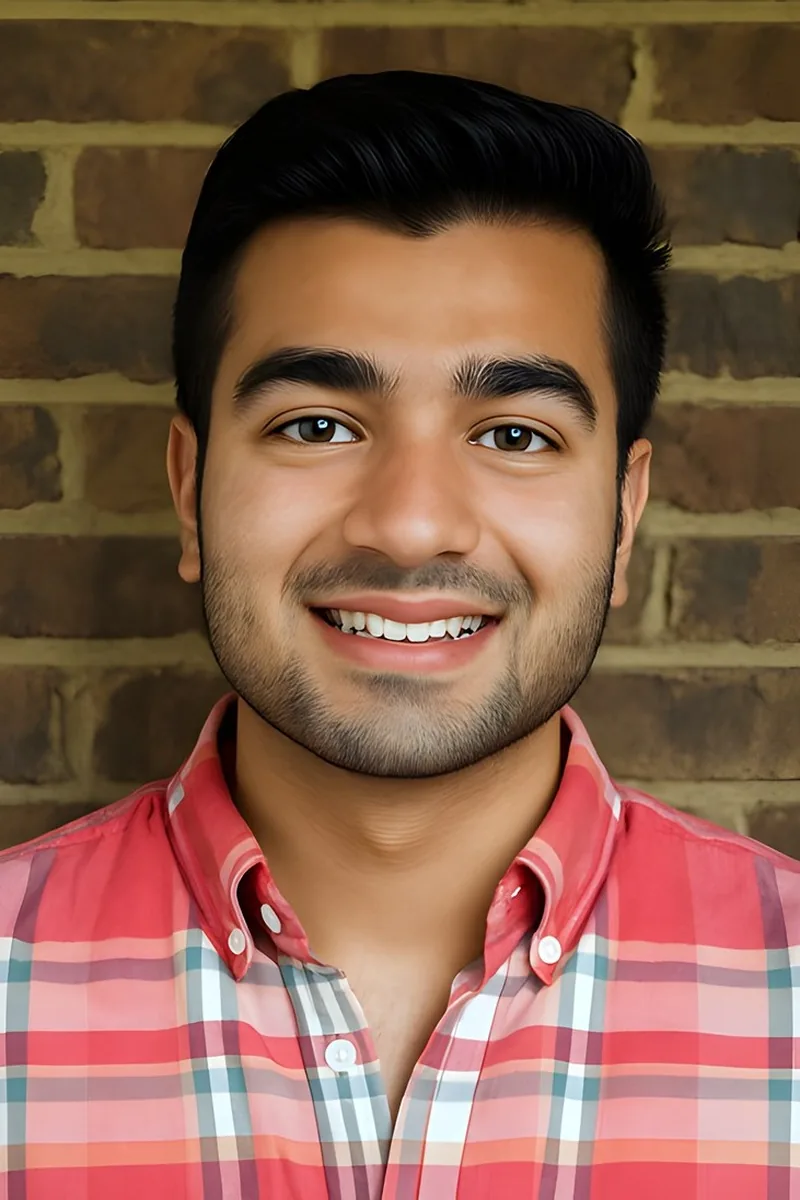
The leap from trig identities to limits can feel enormous without someone who sees the thread connecting them. As a math major at Vanderbilt, Mustafa teaches Pre-Calculus as the bridge it's meant to be — unpacking rational functions, polar coordinates, and sequences in ways that set students up for calculus rather than just checking boxes. His 5.0 rating speaks to how well that approach lands.

Everything in Pre-Calculus — trig identities, polar coordinates, sequences and series — exists to set up the ideas students will need in calculus, but that bigger picture often gets lost in the details. Rosalyn connects each topic to what's coming next, so the material feels purposeful rather than arbitrary. She's a math major at Amherst College with a 5.0 tutoring rating.
Trig identities, polar coordinates, and limits previews all converge in pre-calculus, and the jump in abstraction catches a lot of students off guard. Emma's aerospace engineering background at Georgia Tech means she works with these exact tools regularly, so she can show students not just how to manipulate the formulas but why each concept matters once calculus begins.
Trig identities, limits, and the behavior of rational functions all land at once in pre-calculus, and students who try to memorize without understanding get buried fast. Darcey approaches each topic by connecting it to the graphical intuition underneath — showing why an asymptote appears or how a unit circle actually generates sine and cosine values.
I am an aerospace engineering student. I am very passionate about teaching math, physics, and chemistry. I realized tutoring was my calling while working as a tutor at my school. Seeing students gain a greater understanding of the subject was the highlight of my day while working there.
The jump to pre-calculus is where many students first encounter trigonometric identities, polar coordinates, and limits — concepts that feel disconnected from anything they've done before. Eileen bridges that gap by tying each new idea back to familiar algebra and geometry, giving students a clear roadmap into calculus.
Differential equations, calculus, and physics all live on Bidyut's teaching roster — which means he knows exactly which pre-calculus skills (and which specific weak spots) will matter most once students move forward. His biomedical engineering training at Johns Hopkins keeps him fluent in the trigonometric, exponential, and composite function reasoning that pre-calc demands, and he teaches those topics by connecting them to the applied problems where sloppy understanding actually costs you. A 36 ACT and 5.0 rating back up the depth he brings.
Having scored 5s on both AP Calculus BC and AP Physics C while at a Harvard-track pace of 16 AP courses, Derek built the kind of deep pre-calculus fluency — limits of rational expressions, trigonometric manipulation, composite function analysis — that only comes from leaning on those tools constantly across multiple disciplines. His computer science major adds a distinctive angle: he teaches sequences, recursive definitions, and function behavior through the algorithmic thinking that makes those concepts precise rather than fuzzy. A 1550 SAT and 4.9 rating round out the picture.
I've been working with students for over seven years, from middle school all the way through college, across subjects like math, calculus, statistics, linear algebra, chemistry, and physics, with a lot of SAT and ACT prep mixed in. My background is perhaps a little unconventional. I have two bachelor's degrees, one in Engineering and one in Communication Studies, plus a Master's in Design. That combination means I can guide you through challenging technical material and communicate it in a way that is easy to grasp. What I care most about is helping students get to a place where they don't need me anymore. I know that sounds like a strange thing for a tutor to say, but I think it's the right goal. I'm not here to walk you through steps to copy down. I want you to understand why something works, because that's what holds up under pressure, on a test you haven't seen before. If you're ready to ace that test or prove that theorem that's been bugging you, reach out and let's work together
A math degree from Penn means Ben didn't just pass through pre-calculus — he built everything that came after on top of it, from linear algebra to multivariable calculus. That depth lets him teach topics like rational functions and trigonometric identities by revealing the structural logic underneath, so students carry real understanding into calculus instead of a fragile set of memorized steps. Holds a 5.0 rating.
An applied mathematics degree from Stanford means Alex didn't just pass through pre-calculus — he built an entire major on top of it, so he knows exactly which concepts in trigonometric reasoning, function transformations, and limit intuition carry the most weight later. He teaches the course as a bridge rather than a checklist, connecting each new idea back to the algebra underneath it and forward to the calculus ahead. His 35 ACT and 4.8 rating reflect a tutor who's still close enough to the material to remember where it gets confusing.
Chemical engineering and math — Greg's double focus at Vanderbilt — means he hits pre-calculus material from two directions at once, using polynomial and rational functions to model reactor behavior in one class while proving their properties rigorously in the other. That dual fluency is especially useful when students get stuck on the conceptual jump from manipulating expressions to analyzing how entire function families behave. His 1550 SAT and 5.0 rating round out the picture.
Mechanical engineering at Harvard means Christopher spends most of his time in calculus and differential equations — but he knows exactly which pre-calculus skills hold that work together, especially fluency with trigonometric graphs, composite functions, and the algebraic manipulation that makes limits possible later. He teaches each topic by gradually removing scaffolding until a student can tackle problems independently, flagging the specific mistakes that tend to snowball in calculus. His 35 ACT and 4.8 rating reflect a tutor who's recently built the same bridge his students are crossing now.
Todd's biology degree from UIUC built the quantitative reasoning that pre-calculus demands — modeling population dynamics with exponential and logarithmic functions, analyzing periodic phenomena with trig, interpreting rate-of-change problems that preview calculus. He draws on that science background to give function families a concrete meaning, so topics like transformations and composite functions feel like tools with a purpose rather than abstract exercises. His 33 ACT and 5.0 rating back that up.
A mechanical engineering degree from WashU (magna cum laude) means Caroline spent years where pre-calculus wasn't a course — it was the baseline language for everything from thermodynamic cycles to stress analysis, with polar coordinates, parametric equations, and trig identities showing up in nearly every problem set. She zeroes in on the conceptual leap from manipulating expressions to thinking in terms of function behavior, which is exactly where most students stall before calculus. Holds a 5.0 rating and a 1560 SAT.
Doing research in Spectral Graph Theory at MIT means Enrico encounters the full toolkit of pre-calculus — eigenvalue behavior, polynomial roots, matrix transformations — at a level where shaky fundamentals would be immediately exposed. He teaches the course by making definitions click intuitively, so that concepts like composite functions or rational expressions feel like natural extensions of algebra rather than arbitrary new rules. His 36 ACT, 1570 SAT, and 5.0 rating confirm the depth behind that intuition.
Chemical engineering at Georgia Tech means Aimee has been solving problems built on pre-calculus concepts — rational functions in reactor design, trigonometric models in thermodynamic cycles, logarithmic relationships in kinetics — since her first semester. She teaches the course by showing how each topic threads into the next, so the jump from polynomial behavior to limits feels like a natural step rather than a cliff. Her 33 ACT and 4.9 rating reflect the kind of structured, patient approach that makes that transition stick.
Testimonials
Because the right Pre-Calculus tutor makes all the difference.
Average Session Rating – Based on 3.4M Learner Ratings
Practice Pre-Calculus
Free practice tests, flashcards, and AI tutoring for Pre-Calculus
Nearby Pre-Calculus Tutors
Other Birmingham Tutors
Related Math Tutors in Birmingham
Frequently Asked Questions
Pre-Calculus shifts from solving equations to understanding functions, their properties, and how they behave. While Algebra 2 focuses on "how do I solve this?", Pre-Calculus asks "what does this function do?" This conceptual jump—moving from procedural steps to seeing patterns and connections—is where many students hit a wall. Personalized tutoring helps bridge this gap by building intuition alongside the mechanics, so concepts like transformations, trigonometric identities, and function composition click rather than feel like isolated rules to memorize.
Trigonometry (unit circle, identities, and applications), function transformations, logarithms, and word problems that require setting up and solving multi-step equations are frequent pain points. Many students also struggle with graphing rational and polynomial functions, understanding domain and range in context, and connecting algebraic solutions to their geometric meaning. A tutor can slow down on these specific areas, use multiple approaches to explain them, and help you see why they matter—not just how to do them.
Word problems require translating English into equations and then solving strategically—two skills that don't always develop together. Tutors work with you on identifying what information matters, choosing the right function or equation type, and checking whether your answer makes sense in context. By practicing this process repeatedly with feedback, you build the pattern recognition and confidence to tackle unfamiliar problems on tests.
Graphing connects the algebraic and visual sides of functions—it's where you see why certain equations behave the way they do. Pre-Calculus heavily emphasizes transformations, asymptotes, and interpreting graphs, and many students find this jump from plugging in numbers to understanding shape and behavior confusing. Personalized instruction lets a tutor show you how changes to an equation shift a graph, use technology effectively, and build the visual intuition that makes Calculus much more manageable.
Your first session is about understanding where you are and where you want to go. A tutor will review your current coursework, identify specific topics that feel shaky, and talk about your goals—whether that's improving your grade, preparing for the AP exam, or building confidence for Calculus. You'll likely work through a problem or two together to see how the tutor explains concepts and whether their style clicks for you. This foundation helps shape all future sessions.
Math anxiety often stems from feeling lost or rushing through material without understanding it—both things personalized tutoring directly addresses. Working 1-on-1 means you can ask questions without judgment, go at your own pace, and spend extra time on concepts until they truly make sense. As you see yourself solving problems correctly and understanding the "why" behind procedures, confidence builds naturally. Many students also benefit from learning problem-solving strategies and how to check their work, which reduces test anxiety.
Yes. Birmingham's 5 school districts use different materials, and tutors understand how to work with various textbooks and approaches. Whether your school uses a traditional sequence, integrated curriculum, or specific textbook like Stewart or Larson, Varsity Tutors connects you with tutors who can align their instruction to your course. This ensures you're reinforcing what you're learning in class while also filling gaps in understanding.
Absolutely. Tutors can focus on high-value topics, teach test-taking strategies specific to multiple choice and free response formats, and have you practice with released exams under timed conditions. They'll also help you identify which topics to prioritize based on your current level and the exam's emphasis. This targeted approach is much more efficient than trying to review everything on your own.
Let’s find your perfect tutor
Answer a few quick questions. We’ll recommend the right plan and match you with a top 5% tutor.