Award-Winning Calculus Tutors
serving Birmingham, AL
Calculus
Tutors in Birmingham
Private 1-on-1 tutoring, weekly live classes for academic support, test prep & enrichment, practice tests and diagnostics, and more to elevate grades and test scores.
Based on 3.4M Learner Ratings
UniversitiesSchools & Universities
DeliveredHours Delivered
ProficiencyGrowth in Proficiency
Who needs tutoring?
No obligation. Takes ~1 minute.

Studying malaria parasite phenotypes at Notre Dame meant Haley spent her graduate work immersed in the quantitative modeling side of biology — growth rate equations, decay functions, and the calculus that underpins how populations change over time. That hands-on experience with derivatives and integrals in a research context lets her teach the material as something with real predictive power, not just abstract symbol manipulation. Rated 5.0 by students.
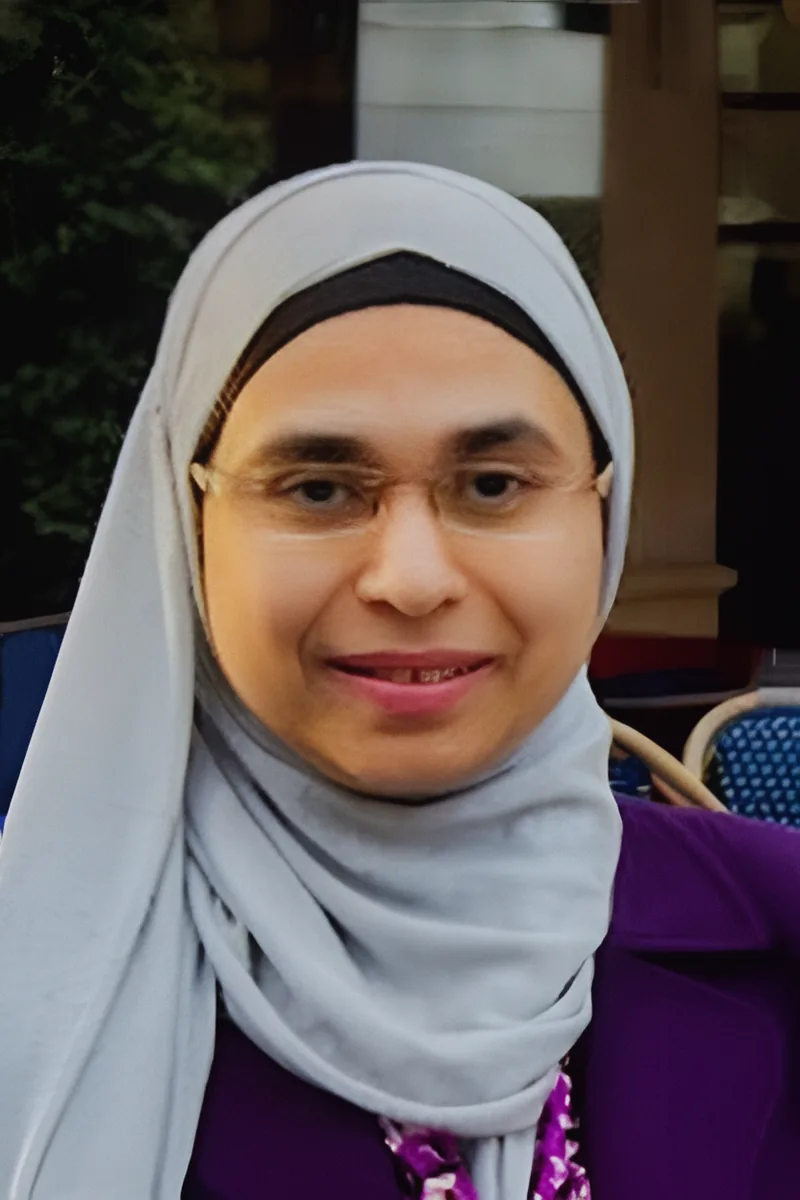
As a former IB student, my love for knowledge runs deep. I majored in Biomedical Engineering at the University of Alabama at Birmingham, graduating in December 2015 with honors (BME honors and Science and Technology Honors program) and going on to earn a Master's degree in Management Information Systems from the same university in 2019. I am currently pursuing a Master of Engineering in Artificial Intelligence and Machine Learning from the University of Illinois at Chicago and hope to start a career in data science and analytics. I greatly enjoy helping others learn and tutored throughout high school and college; I love seeing the light flash on in a student's eyes when they finally understand something they had been struggling with or when they easily solve a problem. I have tutored both young children as well as high school and college students, in just about every subject. I particularly enjoy language tutoring; I am fluent in Arabic and French and I love literature and poetry. I also love to tutor math and science subjects. My tutoring style is very much student-first; I listen and observe to determine the best approach for each individual student and what methods or strategies will be most helpful for you specifically. I am not averse to making a fool of myself with song or dance if it will help! I enjoy what I do and I want the students I work with to enjoy learning as well.
Human biology at Stanford meant Joshua's coursework leaned heavily on quantitative modeling — growth rates, concentration gradients, and the kind of applied calculus that makes biological systems quantifiable. That background gives him a way to teach derivatives and integrals as tools for describing change in systems students can actually picture, rather than as isolated rules on a worksheet.
Studying mathematics at Vanderbilt means Mustafa lives in the world of proofs and abstractions that calculus is built on. He digs into the reasoning behind derivatives and integrals — explaining why the chain rule works, not just when to apply it — so students can tackle related rates, optimization, and integration techniques with genuine understanding. That depth is what earns him a 5.0 client rating.
Studying mathematics at Amherst College means Rosalyn isn't just using calculus as a tool for another field — she's immersed in the theoretical backbone behind it, from epsilon-delta proofs to the formal logic of continuity and differentiability. When a student gets stuck on, say, the chain rule or integration by substitution, she'll rework the same problem through multiple angles until one clicks. Rated 5.0 by students.
International relations coursework might not scream calculus, but Jennessa's broad tutoring range across math and science means she's comfortable walking through the conceptual scaffolding that early calculus demands — particularly the shift from algebraic slope to instantaneous rate of change. Her 5.0 rating speaks to a teaching style that slows down at exactly the right moments, making notation and new definitions feel manageable rather than overwhelming.
Aerospace engineering at Georgia Tech means Emma lives in calculus — from integration techniques in fluid dynamics to differential equations in orbital mechanics. She unpacks concepts like the chain rule, related rates, and convergence tests by tying them to physical problems that give the math a concrete purpose. Rated 5.0 by students.
Environmental studies might seem distant from calculus, but Nina's coursework involves modeling ecological systems — growth rates, resource depletion curves, and accumulation problems that rely on derivatives and integrals. She teaches calculus by grounding abstract procedures in these kinds of tangible scenarios, making concepts like the chain rule or definite integrals feel like tools with a purpose.
Wildlife science coursework at Auburn meant Darcey had to apply calculus to real ecological problems — modeling population growth with logistic differential equations, calculating rates of habitat change, and interpreting area-under-the-curve data for species surveys. That hands-on context gives her a way to teach derivatives and integrals as tools that describe how natural systems actually shift over time, not just abstract procedures on a worksheet.
I am an aerospace engineering student. I am very passionate about teaching math, physics, and chemistry. I realized tutoring was my calling while working as a tutor at my school. Seeing students gain a greater understanding of the subject was the highlight of my day while working there.
Three BS degrees including one in Finance means Matt has worked through the calculus that underpins financial modeling — present value derivations, marginal cost optimization, and the continuous compounding formulas that rely on limits and exponentials. His 1530 SAT confirms the quantitative chops to back that up, and he teaches the material by connecting each rule to the business logic that makes it worth learning.
From epsilon-delta definitions of limits to integration techniques like substitution and parts, calculus demands both conceptual understanding and mechanical skill. James has tutored college students through calculus courses at Harvard for years, often connecting abstract ideas — like why the chain rule works — back to tangible applications in chemistry and the physical sciences. That dual perspective makes dense material more intuitive.
Tackling limits, derivatives, and integrals requires building each concept on the last, and one shaky step can derail an entire semester. Kathy's quantitative training in economics at Duke kept her deep in applied calculus — optimization problems, rates of change, area under curves — and she teaches the reasoning behind each rule so students can handle problems they haven't seen before.
Seven years of tutoring math through the calculus sequence means Kate has seen nearly every way a student can misunderstand the chain rule or botch a u-substitution. She digs into the specific step where confusion starts — whether that's setting up a Riemann sum or interpreting a derivative graphically — and rebuilds understanding from there.
Biomedical engineering at Northwestern means Ingrid has used calculus as a daily tool — computing integrals for drug delivery models, differentiating rate equations in biomaterials research, and applying differential equations in her work at the John Rogers Lab. That hands-on engineering context lets her teach concepts like the chain rule or integration by parts through problems where the math actually builds something, not just satisfies a homework prompt.
Philosophy trains you to follow an argument step by step, testing each claim before moving to the next — which turns out to be exactly how you survive a calculus proof or a related-rates problem. Jeff's Princeton philosophy degree and 1550 SAT give him both the logical rigor and the quantitative chops to unpack derivatives and integrals methodically, even though math isn't his primary academic home. He treats each new rule the way he'd treat a philosophical premise: something to justify from the ground up, not just accept on authority.
Economics relies heavily on derivatives and integrals — marginal cost, consumer surplus, optimization under constraints — so Simon didn't just study calculus, he applied it daily throughout his degree. He's especially sharp at explaining the logic behind limit definitions and the chain rule, the two places where most students first lose the thread. That application-heavy perspective turns calculus from symbol manipulation into something students can actually visualize.
Ben's math degree from Penn means he's gone well beyond the standard calculus sequence — through multivariable calculus, linear algebra, and the rigorous proofs that tie them together — so he teaches concepts like the chain rule or integration by parts with a clear sense of where they lead. That depth shows up in how he unpacks problems: connecting each technique back to the underlying logic instead of treating it as a standalone trick. Rated 5.0 by students.
Limits, derivatives, and integrals all build on each other, so one shaky concept can derail an entire semester. Akarsh approaches calculus by making sure each layer is solid before moving on — walking through chain rule applications or Riemann sums until the logic behind the formulas becomes second nature.
Anthropology and human evolutionary studies might not scream calculus, but Victoria's coursework involved quantitative modeling of population dynamics and morphological change over time — territory where rates of change and accumulation aren't abstract concepts but tools for answering real questions. Her 1520 SAT confirms strong quantitative chops, and she brings that same analytical rigor to breaking down derivatives and integrals into steps that actually make sense.
Biology at Cornell means Josef worked through calculus where it actually lives — modeling enzyme kinetics, analyzing growth curves, and interpreting the rates of change that govern biological systems. His 1530 SAT confirms the quantitative chops to back that up, and he teaches derivatives and integrals by anchoring each concept in the kind of applied problem where the math stops feeling abstract. Rated 5.0 by students.
Pre-med coursework threw Sydny into calculus with real stakes — understanding rates of change in drug concentration curves, modeling exponential decay in pharmacokinetics, and applying integration to biological systems. She breaks down limits, derivatives, and integrals by connecting each concept to a concrete problem rather than leaving students adrift in abstraction.
Testimonials
Because the right Calculus tutor makes all the difference.
Average Session Rating – Based on 3.4M Learner Ratings
Nearby Calculus Tutors
Other Birmingham Tutors
Related Math Tutors in Birmingham
Frequently Asked Questions
Many students struggle with the transition from algebra and precalculus to calculus's conceptual framework—understanding limits, derivatives, and integrals as foundational ideas rather than just procedures. Word problems and multi-step applications are frequent pain points, as is connecting graphical, algebraic, and numerical representations. Additionally, calculus requires strong foundational skills in trigonometry and functions, so gaps in those areas often surface during calculus coursework.
During an initial session, tutors will assess your current understanding of calculus topics, identify specific areas of difficulty, and discuss your learning goals—whether that's improving test scores, building conceptual understanding, or preparing for AP Calculus exams. This diagnostic approach helps tutors create a personalized plan that addresses your unique needs and learning style, ensuring subsequent sessions focus on what matters most to you.
Expert tutors focus on helping you see the 'why' behind calculus concepts—why the derivative represents a rate of change, how limits connect to continuity, and what integration actually measures. Through guided problem-solving and strategic questioning, tutors help you recognize patterns and connections across topics, building deeper conceptual understanding that makes future material easier to grasp and helps you solve novel problems with confidence.
Showing work in calculus reveals your reasoning and helps identify exactly where misunderstandings occur—whether in applying rules, setting up problems, or making algebraic errors. Tutors guide you through problem-solving strategies that emphasize clear communication of your thinking, which not only improves exam performance but also deepens your own understanding of each step's purpose and how concepts connect.
Word problems require translating real-world scenarios into mathematical language, identifying which calculus concepts apply, and then solving strategically. Tutors help you develop a systematic approach: reading carefully for key information, sketching diagrams, defining variables, and choosing appropriate calculus techniques. With practice and feedback on your problem-solving process, you'll build the confidence and pattern recognition skills to tackle unfamiliar problems independently.
Math anxiety often stems from feeling lost or unsupported, which personalized tutoring directly addresses. Working 1-on-1 with an expert tutor creates a low-pressure environment where you can ask questions freely, work at your own pace, and celebrate small wins—all of which build confidence and reduce anxiety. As you experience success and develop a deeper understanding of calculus concepts, you'll likely find your confidence and enjoyment of the subject growing together.
Yes. Calculus is taught using various textbooks and approaches across Birmingham schools, and tutors are experienced working with different curricula—whether your course emphasizes early transcendentals, traditional sequences, or specific textbook editions. Varsity Tutors connects you with tutors who can align their instruction to your specific course materials and teaching style, ensuring seamless support for your particular class.
Absolutely. Tutors help you master both AB and BC calculus content, develop test-taking strategies, and practice with released AP exam questions to build familiarity with the exam format and time constraints. Personalized instruction allows tutors to focus on your specific weak areas—whether that's limits and continuity, optimization problems, or integration techniques—giving you targeted preparation that maximizes your score potential.
Let’s find your perfect tutor
Answer a few quick questions. We’ll recommend the right plan and match you with a top 5% tutor.