Award-Winning Spanish Tutors
serving Miami, FL
Spanish
Tutors in Miami
Private 1-on-1 tutoring, weekly live classes for academic support, test prep & enrichment, practice tests and diagnostics, and more to elevate grades and test scores.
Based on 3.4M Learner Ratings
UniversitiesSchools & Universities
DeliveredHours Delivered
ProficiencyGrowth in Proficiency
Who needs tutoring?
No obligation. Takes ~1 minute.
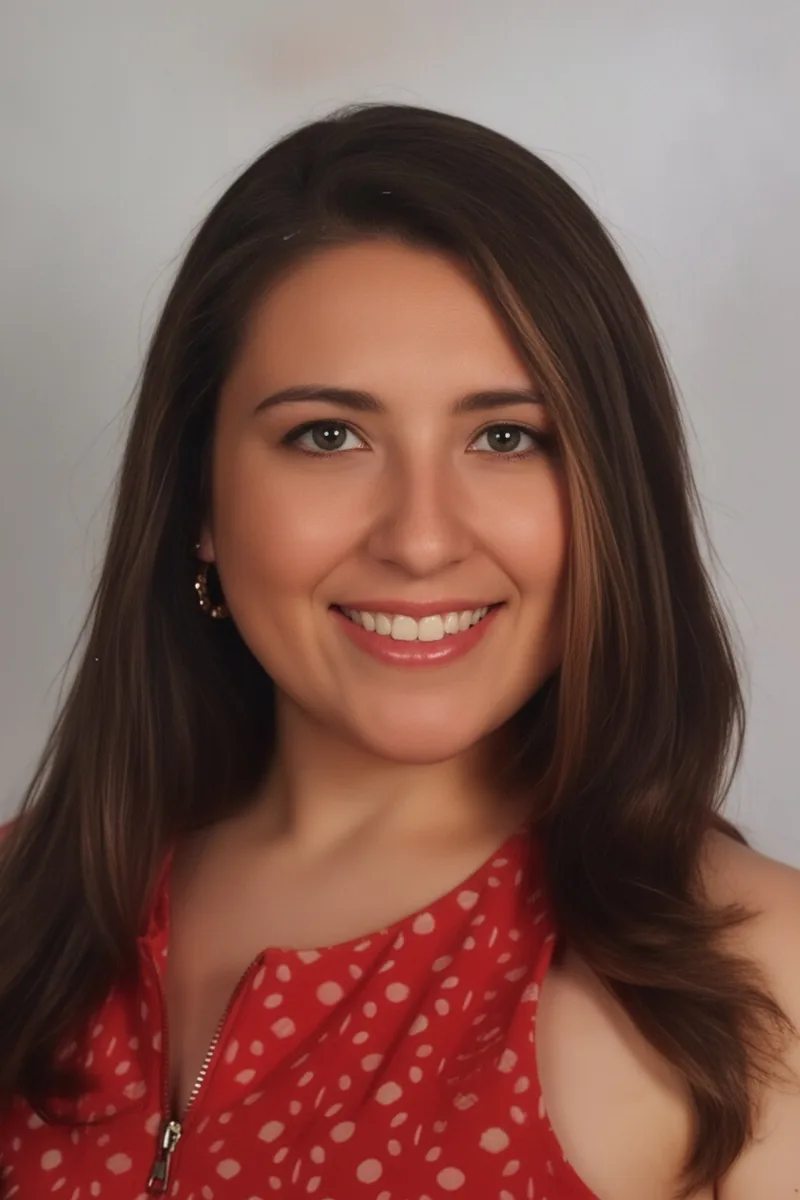
Learning a language sticks when it connects to something real, and Caitlin ties Spanish vocabulary and grammar to cultural contexts she encounters in her Duke coursework on global societies. She breaks down tricky concepts like subjunctive mood triggers and ser-versus-estar distinctions so they feel intuitive rather than arbitrary. Her 5.0 rating speaks to how well that approach clicks with students.
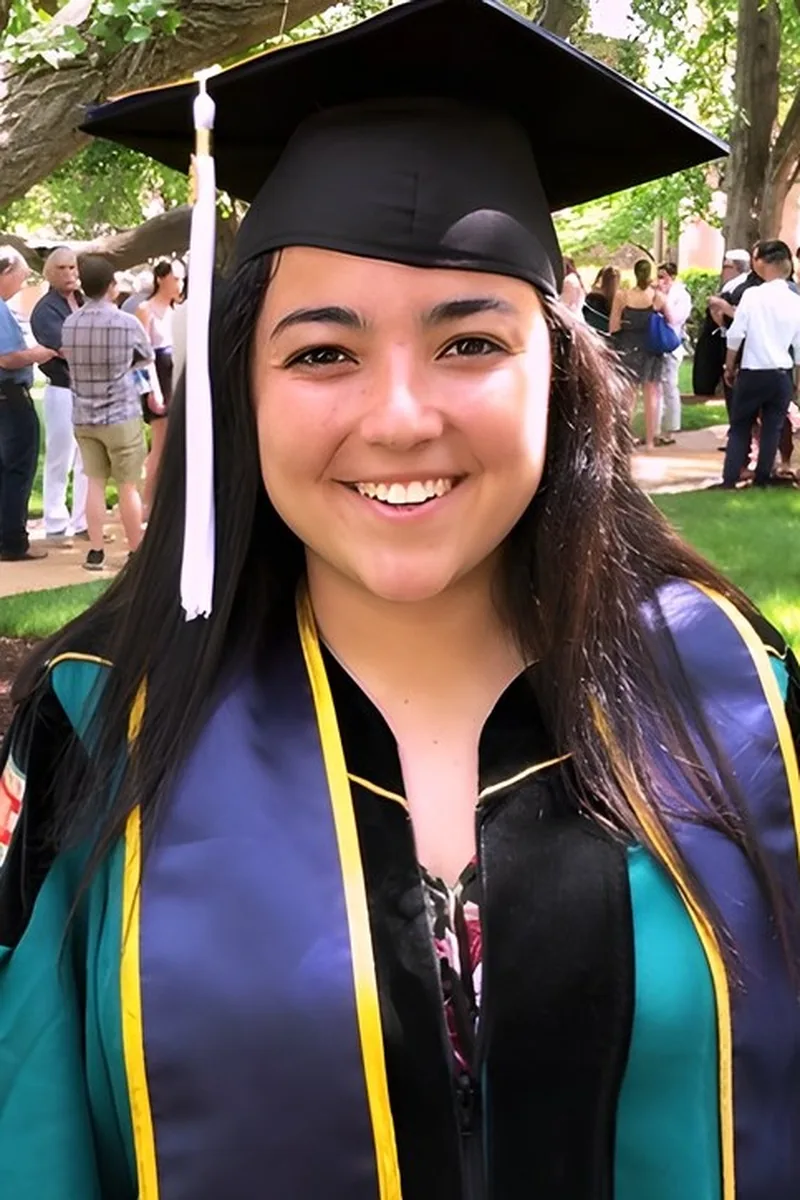
Born in Colombia and speaking Spanish at home, Manuela brings the kind of native fluency that lets her explain why certain phrases sound right to a native ear — the difference between textbook subjunctive and how her family actually uses it at the dinner table. Her Romance Languages degree adds formal linguistic training on top of that intuition, so she can teach the grammar rules behind what she's always known instinctively. Rated 5.0 by students.
Covering Spanish from introductory through advanced levels, Dalila tackles the grammar structures — ser vs. estar, preterite vs. imperfect, subjunctive triggers — that tend to stall progress if they aren't internalized early. She pairs structured drills with conversational practice so vocabulary and conjugation patterns stick beyond the next quiz.
Apoorva has studied Spanish through the advanced level and teaches grammar concepts — verb conjugations, pronoun usage, subjunctive mood — with the same systematic clarity she applies to math and science. She's especially useful for students who need structure around tricky topics like ser vs. estar or preterite vs. imperfect, breaking rules into patterns that are easier to internalize.
Being fully bilingual in Spanish and English gives Adriana an intuitive sense for the stumbling blocks English speakers hit — ser vs. estar, subjunctive triggers, indirect object pronoun placement. She breaks down grammar structures by connecting them to how native speakers actually think about the language, which makes rules feel logical instead of arbitrary.
Having studied Spanish through the advanced level — including Spanish 4 — Marissa tackles everything from verb conjugation patterns in the subjunctive mood to reading comprehension of authentic texts. She adjusts her teaching based on whether a student needs to nail grammar fundamentals or push toward more nuanced written expression. Rated 4.8 by students.
After volunteering as a tutor in rural Guatemala, Marina developed the kind of practical Spanish fluency that goes beyond conjugation charts. She teaches grammar concepts like subjunctive mood and preterite-vs-imperfect distinctions using real-world context, connecting classroom Spanish to how the language actually sounds and functions in conversation.
Growing up with Spanish and scoring well enough on the SAT Spanish Subject Test to tutor it, Juan brings native-level comfort to grammar concepts like the subjunctive mood and ser-versus-estar distinctions that trip up English speakers. He explains the logic behind conjugation patterns rather than just drilling tables.
As a native Spanish speaker headed to Dartmouth, Solange brings the instinctive ear of someone who grew up thinking in the language — she can hear when an accent is off or a verb tense doesn't fit before she can name the rule. That native intuition makes her especially effective at teaching pronunciation, listening comprehension, and the conversational flow that second-language learners struggle to pick up from textbook exercises alone. Rated 5.0 by students.
Isabella's coursework in AP Spanish Literature and Culture gave her deep exposure to texts by García Márquez, Cervantes, and other canonical authors, which sharpened both her literary analysis and her command of advanced Spanish grammar. She approaches vocabulary and conjugation through reading and cultural context, making the language stick in ways that flashcard drills alone can't.
Having spoken Spanish at home since childhood, Sofia carries the kind of intuitive grammar and idiomatic fluency that comes from growing up inside the language — she learned ser versus estar long before she ever saw a conjugation chart. Her biology degree means she's also comfortable explaining Spanish medical and scientific terminology for students heading into healthcare or STEM fields. Rated 5.0 by students.
Teaching Spanish through all four levels gives Stephanie a clear picture of where students typically stall — whether it's ser vs. estar, the subjunctive mood, or building enough vocabulary to hold a real conversation. She connects grammar concepts to practical usage so the rules feel intuitive rather than arbitrary.
I am a law student, but I took an unusual route to get there. I used to attend medical school but had a change of heart in my career path. Part of this was due to my political science major (double major with biology) in college as well as a number of Spanish and other courses that I took. Tutoring is something, I feel, that has come naturally to me, even back to my high school days. My goal is to help you learn as much as you can and reach your true potential. I will work hard to make sure that this happens, as long as you put in the work, too! We will work together to tailor your learning experience to your needs.
Born in Colombia and fully bilingual since childhood, Simon teaches Spanish with a native speaker's intuition for the subtle differences between textbook phrasing and how people actually talk. He digs into verb conjugations, pronoun placement, and conversational idioms by drawing on real-world usage rather than rote drills. Students picking up Spanish at any level get someone who can switch fluidly between both languages to clarify tricky concepts like ser vs. estar or subjunctive mood.
As a native Spanish speaker who has tutored Spanish-speaking immigrant families in Durham, Santiago understands the language from the inside out — its grammar, its regional variations, and the cultural context that textbooks often flatten. He teaches verb conjugations, subjunctive mood, and sentence structure by connecting rules to how the language actually sounds and functions in conversation. That native fluency means he can explain nuances that non-native instructors often miss.
Though Spanish isn't Olivia's primary area — her degree is in American Studies and her deepest expertise runs through English, writing, and test prep — her strong analytical training in language and literature gives her a useful framework for breaking down grammar rules and sentence structure in a second language. She approaches Spanish the way she approaches any text-heavy subject: by finding the patterns that make the system make sense.
Learning Spanish grammar is a lot like learning to code: there are rules, exceptions to those rules, and a logic underneath that makes both click once you see it. Gabriel uses that structured, pattern-based thinking to teach verb conjugations, subjunctive triggers, and sentence construction in a way that builds real comprehension. He adapts his approach depending on whether a student needs help with classroom Spanish or reading-level fluency.
Years of teaching in one of Queens' most diverse middle schools meant James was constantly switching between cultural contexts and communication styles — experience that carries directly into language instruction. His Japanese major at SUNY Albany proves he can internalize a foreign language's grammar from scratch, and he applies that same learner's discipline to breaking down Spanish verb forms, sentence structure, and vocabulary acquisition.
I am graduated from Penn State University in Industrial Engineering in 2017. I've tutored ever since I was in high school, and I love helping people! I like to help my students understand math (and other topics) instead of just doing it blindly. My goal is to help my students improve their math (and other topics) and build skills that will help them find learning easier in the future! Fun fact, I used to work for Disney and I like to salsa dance!
Learning Spanish under Muriel means working with someone who has lived the process of mastering multiple Romance languages and understands exactly where English speakers stumble — subjunctive triggers, ser versus estar, preterite versus imperfect. Her degree in Spanish and Italian Literature gives her a native-level command of the language's grammar and nuance. She connects new structures to patterns students already recognize, turning confusing conjugation tables into intuitive systems.
Beyond classroom Spanish, Heidi spent years working as a Spanish translator for a New York City municipal agency, handling real documents with real stakes. That professional fluency means she can teach verb conjugations and subjunctive mood with an ear for how Spanish actually sounds in practice. She also tutored Spanish during her undergraduate years at Binghamton, where she minored in the language alongside a certification in Comparative Literature and Translation Studies.
I am a senior at Vanderbilt University studying English (Creative Writing) and Quantitative Methods. I currently tutor a wide range of subjects from elementary school reading and writing to ACT prep to college-level English and literature and also offer studying and organizational skills within academic coaching.
Kaitlyn has taught Spanish alongside math and science for over five years, covering verb conjugations, sentence structure, and reading comprehension across multiple grade levels. Her biology background also means she can help students tackling scientific Spanish vocabulary or preparing for bilingual coursework. Rated 4.8 by students.
Nicole minored in Spanish at the University of Miami, where immersion in South Florida's bilingual culture reinforced what she learned in the classroom. She's particularly effective at teaching grammar concepts like the subjunctive mood and ser versus estar, connecting each rule to real-world usage so it actually sticks. As a native Russian and English speaker, she understands firsthand how different languages structure thought differently.
A Romance Languages degree doesn't just mean Osmel speaks Spanish — it means he studied its structure, regional variations, and literary traditions at the university level. He unpacks tricky grammar concepts like the subjunctive mood and ser-vs.-estar distinctions by showing the logic behind them. Students walk away understanding why Spanish works the way it does, which makes advanced reading and writing far more intuitive.
Emily learned Spanish not in a classroom but while working in Central America, which means she understands the messy, humbling process of moving from beginner confusion to genuine fluency. She's upfront about having struggled early on with verb conjugations and subjunctive mood, and she uses that experience to teach grammar in context — through real conversations and practical scenarios rather than rote charts.
Biology and maritime studies don't scream "Spanish tutor," but Lindsey's double major required parsing dense scientific terminology with Latin roots — the same roots that power Spanish vocabulary. She uses those etymological connections to help students build vocabulary faster and decode unfamiliar words on sight, turning her science background into a surprisingly effective language-learning shortcut. Rated 4.9 by students.
Holding a BA in Modern Languages with a Spanish concentration, Crystal brings the depth of a language major to every grammar lesson, verb conjugation drill, and reading comprehension exercise. She understands the progression from Spanish 1 basics through advanced literature and composition because she lived it academically. Whether a student is struggling with ser versus estar or tackling the subjunctive mood, she explains the underlying logic rather than just handing out memorization charts.
Having completed the full International Baccalaureate program, Rithika developed study strategies for picking up new material systematically — an approach she now applies to Spanish vocabulary acquisition and grammar patterns. She treats language learning like any other analytical challenge, mapping out conjugation rules and sentence structures so students can build on logic rather than pure memorization.
Courtney holds a BA in Spanish and Iberian Studies and an MA in Hispanic and Latin American Languages, which means she doesn't just teach grammar rules — she understands the linguistic architecture behind them. She digs into verb conjugation patterns, pronoun placement, and subjunctive usage in ways that make the logic of Spanish click rather than feel like a list of exceptions to memorize.
I am very interested in a career in the medical field, so I am apart of some pre-medical organizations. I really enjoy playing all different sports, from soccer to volleyball to tennis.
I am passionate about learning and assisting others with the intention of becoming an excellent physician in the future. I am eager to apply the knowledge and skills that I have learned along the way to improve the lives of those looking to better themselves.
Covering Spanish from introductory grammar through advanced coursework, Jackson teaches verb conjugation, sentence structure, and vocabulary acquisition in ways that build on each other logically. His experience across four levels of Spanish means he can pinpoint exactly where a gap formed and address it before moving forward.
Harrison's strength is in STEM — biology, chemistry, physics, calculus — not Spanish, but his interdisciplinary science background means he's constantly learning new technical vocabularies and symbol systems, which translates into a structured, pattern-driven approach to picking up grammar and conjugation. His 4.9 rating across 92 subjects suggests he knows how to break down unfamiliar material clearly, even outside his core expertise.
Teaching Spanish through all four levels gives Liraz a clear picture of where students get stuck at each stage — from foundational vocabulary gaps in Spanish 1 to the more nuanced tense distinctions that trip up advanced learners. As a biology major at Vanderbilt, she brings a pattern-oriented mindset to language learning, treating conjugation systems and grammatical rules as logical structures to decode rather than endless lists to memorize.
Jenna's Spanish minor means she's moved well beyond introductory grammar into literature, composition, and upper-level coursework in the language. She unpacks tricky concepts like subjunctive mood, ser versus estar, and preterite versus imperfect by connecting them to patterns students already recognize from English. Rated 5.0 by her students.
Learning Spanish clicks faster when grammar rules connect to real usage — why subjunctive shows up in certain emotional expressions, or how direct and indirect object pronouns stack in conversation. Sebastian teaches these patterns through context rather than rote charts, drawing on experience across multiple levels of Spanish instruction. His computer science background also means he thinks in systems, which turns messy conjugation tables into logical, predictable structures.
Having taught every level from Spanish 1 through Spanish 4, Kat knows exactly where the grammar gets confusing — the jump from preterite to imperfect, the subjunctive mood, indirect object pronoun stacking. She builds each concept onto the last so students aren't just memorizing conjugation charts but actually understanding why Spanish sentences work the way they do.
Speaking Spanish and understanding Spanish grammar are different muscles, and Denisse trains both. She teaches across all levels — from present-tense conjugation and gendered nouns for beginners to subjunctive mood and idiomatic expressions for advanced students — drawing on her own bilingual fluency to make the language feel natural rather than formulaic.
Studying Latin American politics, literature, and history in the original Spanish gave Alyssa a command of the language that textbooks alone can't replicate. She teaches grammar structures like the subjunctive and preterite-vs-imperfect distinction through real-world context — news articles, song lyrics, short fiction — so the rules actually stick. Rated 4.9 by students.
Testimonials
Because the right Spanish tutor makes all the difference.
Average Session Rating – Based on 3.4M Learner Ratings
Nearby Spanish Tutors
Other Miami Tutors
Related Languages Tutors in Miami
Frequently Asked Questions
Speaking fluency develops best through consistent practice with immediate feedback—something classroom settings with 18+ students per teacher often can't provide. Varsity Tutors connects you with expert Spanish tutors who dedicate sessions to real conversation, helping you build confidence with pronunciation, natural phrasing, and cultural context. Regular 1-on-1 speaking practice accelerates progress far beyond what textbook exercises alone can achieve.
Verb conjugation is one of the trickiest aspects of Spanish, but it becomes manageable with structured practice and pattern recognition. Expert tutors help you understand the logic behind conjugations rather than just memorizing tables, then apply those rules in real conversation. This combination of explanation and contextual practice is far more effective than grammar worksheets alone.
Vocabulary sticks when you use it repeatedly in meaningful contexts rather than cramming isolated word lists. Tutors use spaced repetition and retrieval practice—proven learning techniques where words appear in conversations, writing exercises, and cultural discussions over time. This approach helps you build an active vocabulary you can actually use, not just recognize on tests.
Yes—pronunciation is one of the biggest advantages of 1-on-1 tutoring. Expert tutors can identify specific sounds you struggle with, model correct pronunciation, and give you immediate feedback as you practice. They also help you understand the rhythm and intonation of Spanish, which are just as important as individual sounds for clear, natural-sounding speech.
Reading and writing require different strategies than speaking. Tutors help you tackle authentic texts at your level, build reading comprehension, and develop writing skills through guided practice with feedback on grammar, vocabulary, and style. Whether you're preparing for AP Spanish exams or aiming for professional proficiency, personalized instruction targets your specific gaps.
Language is inseparable from culture—understanding idioms, humor, social norms, and regional differences makes you a more effective communicator. Expert tutors weave cultural context into lessons, helping you understand not just what to say, but when and how to say it appropriately. This deeper learning also makes Spanish more engaging and memorable.
Your first session is an assessment and goal-setting conversation. The tutor will evaluate your current level across all four skills—reading, writing, speaking, and listening—and learn about your goals, whether that's passing an AP exam, improving conversation skills, or achieving professional fluency. They'll then create a personalized plan tailored to your needs and learning style.
Yes. Varsity Tutors connects you with tutors familiar with Miami's school districts and their Spanish programs, whether you're in middle school, high school, or preparing for AP Spanish. They understand local curriculum standards and can align tutoring with what you're learning in class, helping you excel on exams and build genuine proficiency.
Let’s find your perfect tutor
Answer a few quick questions. We’ll recommend the right plan and match you with a top 5% tutor.