Award-Winning Reading Tutors
serving Canton, OH
Reading
Tutors in Canton
Private 1-on-1 tutoring, weekly live classes for academic support, test prep & enrichment, practice tests and diagnostics, and more to elevate grades and test scores.
Based on 3.4M Learner Ratings
UniversitiesSchools & Universities
DeliveredHours Delivered
ProficiencyGrowth in Proficiency
Who needs tutoring?
No obligation. Takes ~1 minute.
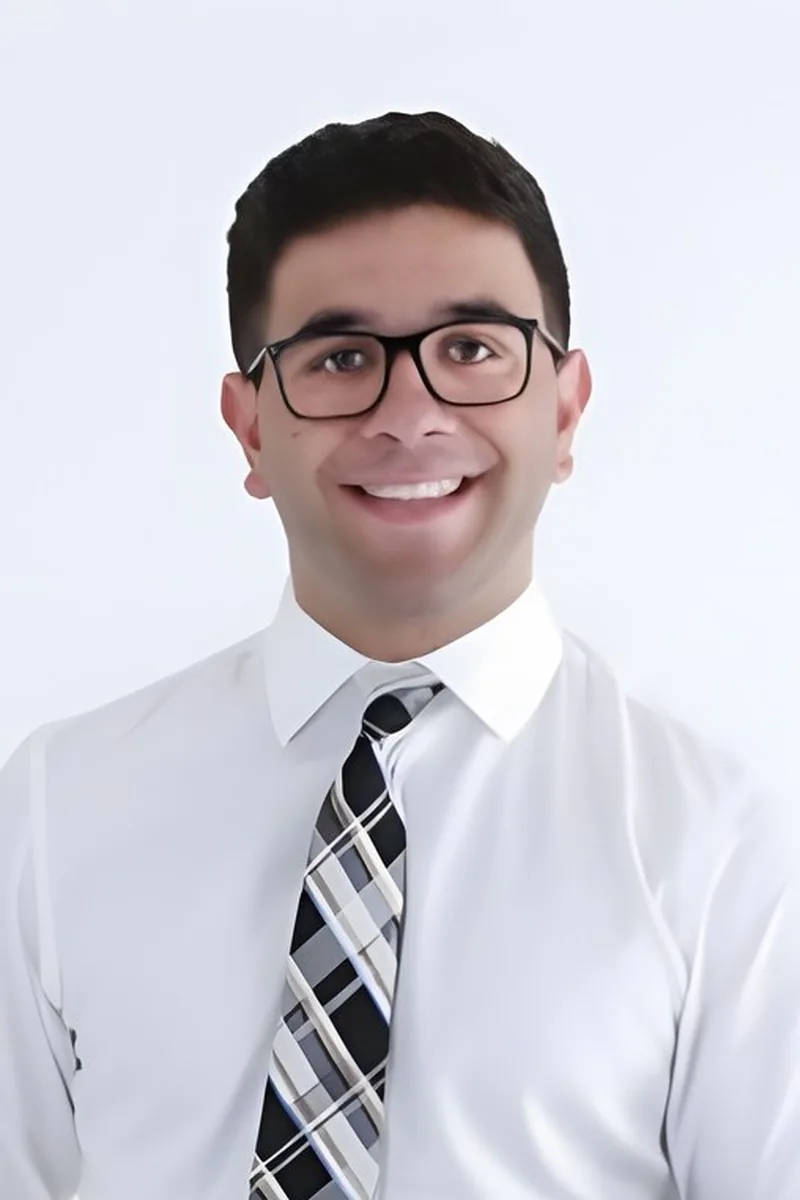
I am a rising Sophomore at Georgetown University and I am double-majoring in Economics and Political Science with a minor in Statistics. Over the past few years I have spent much of time time working on my public speaking/writing skills during my time in Speech and Debate. I am most passionate about math and current events, and I have a substantial amount of experience with almost all forms of standardized testing. I am a firm proponent of education, believing it to be absolutely necessary for an improved quality of life, and I try to impart this appreciation to all of my students. In my spare time, I enjoy reading, watching Netflix, basketball, and skiing!

Developing culturally literate curricula for middle and high schoolers — the kind where students actually want to read the assigned material — taught Elena that engagement isn't a bonus, it's the mechanism through which comprehension improves. Her McGill and Edinburgh training in religious studies means she's spent years pulling meaning from texts that are ancient, dense, and deliberately ambiguous, which translates into a knack for showing students how to wrestle with unfamiliar language and extract an author's argument even when the writing resists easy summary.
Poetry and nature literature were the texts that first made Emma want to teach — she built weekly reading-centered lesson plans around them for students from preschool through 12th grade at Chautauqua Institution, adapting how she approached a piece depending on whether a seven-year-old or a teenager was sitting across from her. That range, plus her Education minor at Cornell, means she can adjust quickly between a student who needs help retelling a simple story and one who's learning to track theme across a full novel. Rated 5.0 by students.
Studying ancient Greek and Roman texts at Duke alongside a biology major gave Emma an unusual reading range — she's comfortable unpacking everything from dense scientific literature to classical prose translated across millennia. She teaches students to slow down and trace how an author builds an argument or narrative, picking up on structural cues that make even unfamiliar material feel navigable. Rated 4.9 by students.
Breaking down a dense passage into its core argument is a skill Lilian practiced constantly in her business coursework at Washington University in St. Louis, where case studies and research articles demanded fast, accurate comprehension. She teaches students to identify an author's purpose, track how evidence supports claims, and distinguish main ideas from supporting details.
Strong reading isn't just about comprehension — it's about learning to interrogate a text, identify an author's rhetorical moves, and synthesize information across sources. Alastair's dual focus on History and Political Science at Columbia means he spends most of his week doing exactly that, pulling apart dense academic writing and primary documents. He teaches students to annotate actively and read with a clear purpose rather than passively scanning pages.
Breaking down a dense passage starts with knowing what to look for — Karen teaches active reading strategies like annotation, identifying author's purpose, and distinguishing main ideas from supporting details. Her 1530 SAT score reflects the kind of close reading skill she brings to every session, whether the text is a short story or a nonfiction argument.
Building real reading comprehension means learning to ask questions while reading — what's the author's purpose, where is the argument shifting, what evidence supports the main idea. Ella currently tutors 9th–12th graders and brings that daily classroom experience to sessions, tailoring her approach to whether a student struggles with vocabulary in context, inference, or simply maintaining focus through longer passages.
As a Title I Reading instructor working with students from kindergarten through twelfth grade, Crystal has tackled everything from phonics and fluency to advanced comprehension strategies like making inferences and analyzing author's purpose. She's 5.0-rated and especially skilled at matching reading activities to a student's current level so that progress feels steady rather than overwhelming.
Stronger reading starts with active engagement — annotating, predicting, and pausing to summarize rather than passively scanning lines. William teaches these strategies explicitly, whether a student is working through a novel for English class or building general comprehension skills. His psychology coursework gives him useful insight into how memory and attention affect reading retention.
Teaching ESL sharpened one skill in Zoe that transfers directly to reading instruction: the ability to diagnose exactly where comprehension breaks down, whether it's vocabulary, sentence structure, or losing the thread of an argument across paragraphs. Her 7–12 ELA certification and master's in Curriculum & Instruction mean she can adapt on the fly — switching from phonics-level decoding work to close analysis of an author's tone depending on what a particular reader actually needs. Rated 4.7 by students.
Strong reading comprehension comes down to knowing what to do when a passage doesn't click on the first pass. Sunay teaches active reading strategies — annotation, summarizing paragraphs in the margins, identifying an author's purpose before diving into details — that he refined while prepping students for the ACT Reading section, where he scored a 33 composite.
Before a student can succeed in any subject, they need to be a confident, active reader — someone who questions the text, tracks ideas across paragraphs, and adjusts their pace for different material. Amos teaches these metacognitive reading habits explicitly, whether the student is working through fiction, nonfiction, or standardized test passages. His two decades of experience across educational settings give him a sharp eye for where comprehension breaks down.
Bioethics coursework and medical school demand a particular kind of reading — parsing dense arguments where the author's position is buried under layers of evidence, counterarguments, and qualifying language. Hyerin teaches students to do the same thing she does daily: identify the claim a passage is actually making, separate it from supporting detail, and recognize when a writer is hedging versus asserting. Rated 4.9 by students.
Teaching kindergarten through eighth grade gave Diana something most reading tutors don't get — a clear picture of how the same student who's sounding out CVC words in first grade needs to be tracking themes and making inferences by fifth. Her Master of Science in Education from Johns Hopkins sharpened that developmental awareness into targeted instruction, especially around the transition from learning-to-read to reading-to-learn where so many kids quietly fall behind.
Strong reading comprehension isn't just about understanding individual words — it's about tracking how ideas connect across sentences and paragraphs. Beth unpacks strategies like annotating for main ideas, distinguishing fact from opinion, and making inferences from context clues. Her approach turns reading from a passive activity into an active, deliberate skill.
Strong readers don't just decode words — they make inferences, track an author's argument, and distinguish main ideas from supporting details in real time. Melanie teaches active reading strategies like annotation, summarization, and questioning that turn passive page-scanning into genuine comprehension across fiction and nonfiction texts.
Between an Animal Sciences degree and full-time work as a biotech research associate, Brittany spends her days parsing dense lab protocols and scientific papers where misreading one line can derail an entire experiment — a habit that sharpens how she teaches reading comprehension at any level. She breaks passages into manageable pieces, showing students how to identify what a paragraph is actually saying before moving on to the next, building the kind of deliberate reading practice that carries from science articles to literature. Her 32 ACT reflects that same careful, strategic approach to text.
Two years teaching English in Guadeloupe meant Megan watched students wrestle with texts in a language that wasn't their own — an experience that sharpened her ability to break reading into concrete, teachable moves like predicting meaning from context, identifying a paragraph's purpose, and separating key details from filler. She carries that same structured approach into English-language reading sessions, especially for students who know how to decode words on a page but haven't yet learned how to hold an author's thread across a full passage. Rated 5.0 by students.
Struggling readers often skip the step that matters most: slowing down to ask what the author is actually doing in a passage. Alice teaches active reading strategies — annotation, summarizing in the margins, identifying an author's purpose paragraph by paragraph — that turn passive page-turning into real comprehension. Her education background means she adapts these techniques for every level, from students building fluency to those tackling dense academic texts.
An avid reader herself, Kathryn approaches reading instruction by teaching students how to actively interrogate a text: identifying an author's purpose, tracking arguments across paragraphs, and distinguishing main ideas from supporting detail. These skills transfer directly to stronger performance in every other subject.
Gifted students often read above grade level but still miss inferencing and critical analysis skills that don't come automatically with decoding ability — Chloe sees this daily as a Gifted Intervention Specialist working with advanced 3rd through 5th graders. She teaches those readers to move past surface-level understanding and start questioning what an author means, not just what an author says. Rated 5.0 by students.
Between her journalism career and her AmeriCorps work mentoring middle and high schoolers, Claire has spent years teaching people to pull meaning from complex texts. She unpacks reading strategies like annotation, context-clue vocabulary building, and identifying an author's purpose — skills that transfer across every subject a student encounters.
I am a current student at the University of Pennsylvania majoring in English and minoring in journalism and art history. I am very passionate about literature, writing and history, and I love sharing my knowledge and learning new things. In the past few years, I have worked with young children learning to read and high school Latin students, and I also love working with students on improving Standardized Test results. In my spare time, I love reading, music and anything active!
I am a Yale grad, Johns Hopkins master's candidate, and certified early childhood educator. At Yale, I studied History and Child Development. I went on to teach with Teach For America, and I am currently in my 3rd year of teaching. Tutoring has been an interest of mine for many years. I started tutoring when I was in middle school, and I haven't stopped. I thoroughly enjoy working with students of all ages to help supplement their learning. I am looking forward to helping your child to meet his/her goals!
I am a 2nd year medical student at Northeast Ohio Medical University and have tutored K-12 and college students over the past 10 years in various subjects ranging from math and science to SAT prep and language arts. My educational background includes an MPA in Development Practice from Columbia University's School of International and Public Affairs, a B.S. in Molecular, Cell, & Developmental Biology, and a B.S. in Mathematics-Economics (both from UCLA). In addition, I have scored in the 99th percentile on the SAT, ACT, and GMAT exams and scored in the 95th percentile on the MCAT. I really enjoy working with students of all ages and backgrounds and believe all students are capable of learning and being successful with the right approach to education. I would love the chance to discuss in more detail what kind of tutoring you or your student is interested in and thank you for your consideration!
I am a graduate of Vanderbilt University class of 2016 majoring in Neuroscience. If you have any questions or inquiries about the college process, selecting a major, or Vanderbilt University, I am happy to answer your questions. Currently, I am looking to obtain a Masters degree and am applying to such programs. I tutor children on a weekly basis at my local church from ages of 8 to 14 on an assortment of subjects. I understand that there are different learning styles and I try to find the right approach for each different student.
I am currently an undergrad at Vanderbilt University, majoring in Mathematics and Political Science. I have been tutoring students since high school, mostly in science and math. I've found that STEM courses are intimidating to many students, and I hope to get rid of that fear and promote an appreciation for numbers and the sciences. In my tutoring, I focus on helping students understand the concepts beneath the problems, so as to facilitate learning rather than memorization. I strongly believe that every student is capable of reaching a strong level of understanding in any subject, given the correct tools, a teacher who can offer what they need, and some hard work.
I'm looking forward to helping your student find personal success in their academic lives!
I am a current sophomore at Vanderbilt University! I am double majoring in Public Policy and Human & Organizational Development with a minor in Spanish. I first started tutoring in high school, when I started working at Kumon Learning Center and began teaching elementary and middle school students reading and mathematics. I also volunteered my tutoring services through my high school's National Merit Society, through which I helped my peers in advanced subjects such as AP testing, ACT, SAT, and PSAT prep.
I am a sophomore Neuroscience and Behavior major at the University of Notre Dame working towards the goal of medical school, and I have a great passion for learning and helping others learn. As someone who received a lot of different types of tutoring for the ACT/SAT/PSAT, I know a lot of strategies to help get anyone to the score that they want! I also have a passion for biology, math, and all types of sciences. I love working with anyone who wants to learn and improve.
I am able to create short-cuts, tricks, and other useful methods that students love because I, myself, am a student. Therefore, I can relate well with all my students. Since my experiences range far and wide, I am confident that I can provide the best services as a tutor in my subject areas.
I am a graduate of the University of Calgary, where I received my Bachelor of Science in Computer Science. Since graduation, I have worked as a software developer and have practical experience with variety of technologies. I tutor a variety of subjects related to Computer Science, including computer languages used in web development like HTML, CSS, JavaScript, and Ruby. My favorite part of teaching Computer Science concepts is helping students break down a complicated subject into manageable parts and build up a powerful understanding -- much like the practice of software engineering itself. In my spare time, I enjoy cooking, music, art, and hiking.
I am currently an undergraduate student at Vanderbilt University, double majoring in Molecular and Cellular Biology and Communication of Science and Technology. Ultimately, I am pursuing a career in genetic research and genetic counseling. I have experience tutoring biology through the National Honor Society during high school, and I have also helped elementary school students with homework while babysitting. As a member of Vanderbilt Student Volunteers for Science, I teach science lessons to Nashville middle school students several times per semester, with topics ranging from evolution to ocean currents and everything in between.
I'm currently an undergraduate at Yale University pursuing a Bachelor of Arts in English. While I am most passionate about English Literature, I tutor a wide range of subjects, including SAT and ACT Prep, High School Level Math, and French Language.
I am not tutoring, I enjoy skiing, camping, playing basketball and listening to music.
I am a former elementary and middle-school teacher and am now looking to use my teaching knowledge and experience to tutor. I received my bachelor's degree in Science-Business from the University of Notre Dame and my master's degree in Secondary Education from Providence College. I taught 5-8th grade math for two years and 5th grade math, English/Language Arts, Reading, and Religion for 1 year. I am no longer teaching because I am back in school myself, but would love to use my experience as an educator to tutor you or your child!
I am very familiar with both the SAT and the ACT and look forward to working with you!
I am a complete Harry Potter nerd. I also love music- Handbells, Choir, Piano, Band, Percussion, all that jazz.
I'm excited to be tutoring again.
Testimonials
Because the right Reading tutor makes all the difference.
Average Session Rating – Based on 3.4M Learner Ratings
Other Canton Tutors
Related English Tutors in Canton
Frequently Asked Questions
Varsity Tutors matches Canton students with expert Reading tutors for 1-on-1 instruction. We pair each student with a tutor based on their specific needs, learning style, and goals.
Whether you need homework help, exam prep, or want to get ahead, our Reading tutors are ready to help.
Common challenges include gaps from earlier material, difficulty with specific concepts, and trouble applying learning to new problems. These issues can snowball quickly in Reading.
A tutor identifies where you're stuck, fills in gaps, and provides targeted practice. The 1-on-1 format means you get help exactly where you need it.
Tutors work with your student's actual coursework—homework assignments, class notes, and upcoming tests. This keeps tutoring directly relevant to what's happening in the classroom.
When you share information about your student's school and curriculum, we can match you with a tutor who has relevant experience.
All tutors complete background checks, credential verification, and teaching evaluation. Many of our Reading tutors hold advanced degrees or have years of teaching experience.
You can review tutor profiles to find someone with the right background for your student's level and needs.
Many students see improved grades within a few weeks, along with better understanding of Reading concepts and more confidence tackling challenging material.
Tutors track progress and adjust their approach to ensure continued improvement.
Most students benefit from 1-2 sessions per week. More frequent sessions help if your student is significantly behind or has an important exam coming up.
Your tutor can recommend a schedule based on your student's specific situation and goals.
Tutoring is purchased in packages of hours, with rates varying by tutor experience. Varsity Tutors offers several options to fit different budgets and needs.
You can discuss pricing during your consultation to find what works best.
Your tutor will assess where your student is, discuss goals, and start working on priority areas. Most students bring current homework or upcoming test material to focus on.
By the end, you'll have a clear sense of how the tutor can help and a plan for moving forward.
Let’s find your perfect tutor
Answer a few quick questions. We’ll recommend the right plan and match you with a top 5% tutor.