Award-Winning Pre-Calculus Tutors
serving Roanoke, VA
Pre-Calculus
Tutors in Roanoke
Private 1-on-1 tutoring, weekly live classes for academic support, test prep & enrichment, practice tests and diagnostics, and more to elevate grades and test scores.
Based on 3.4M Learner Ratings
UniversitiesSchools & Universities
DeliveredHours Delivered
ProficiencyGrowth in Proficiency
Who needs tutoring?
No obligation. Takes ~1 minute.
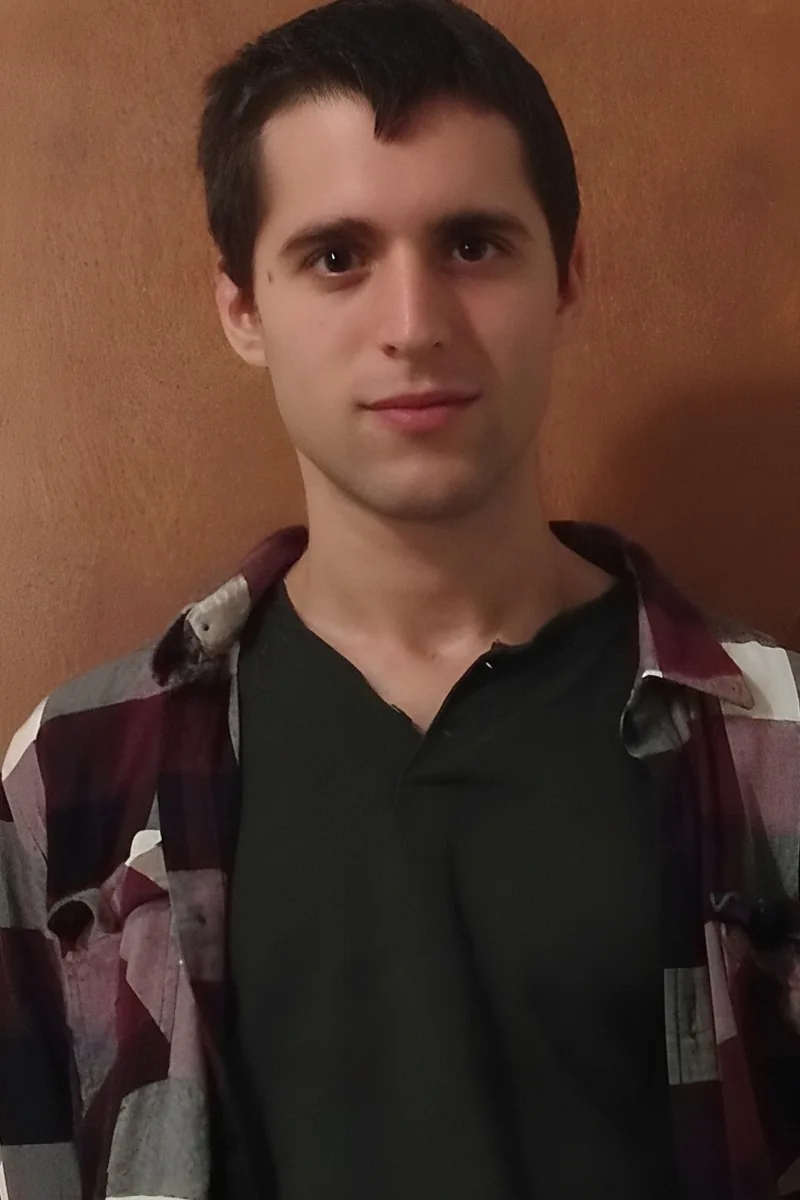
Having spent countless hours teaching calculus to engineering, computer science, and physics majors, Austin knows exactly which pre-calculus skills — rate of change intuition, fluent manipulation of trig identities, comfort with composite and inverse functions — make or break a student's readiness for what comes next. His applied mathematics degree means he treats the course as purposeful groundwork, not just a checklist of disconnected topics. He's particularly sharp at demystifying the leap from algebraic thinking to functional reasoning, where most students first feel lost.
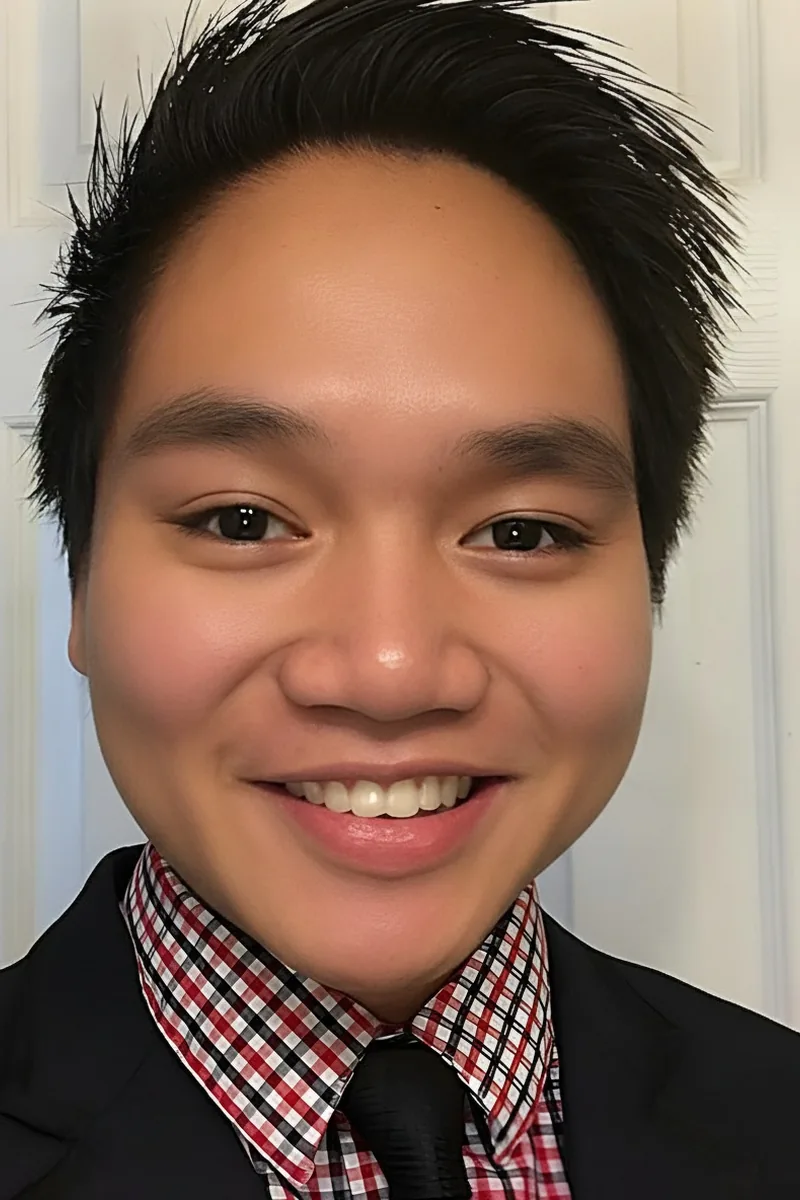
Teaching chemistry courses as adjunct faculty at VCU means Joel regularly watches students hit the same pre-calculus walls — logarithmic pH calculations that fall apart because log properties were never internalized, or rate law problems that stall because exponential functions feel foreign. He tackles those exact gaps head-on, connecting the algebraic scaffolding students already have to the function behavior they'll need in calculus and the sciences. His 1510 SAT and 5.0 rating back up the approach.
The jump into Pre-Calculus — trigonometric identities, polar coordinates, sequences and series — often determines whether a student thrives or struggles in calculus the following year. Roshni treats each topic as a tool with a clear purpose, showing how the unit circle or a logarithmic property will reappear later so students actually retain it. Her science-heavy BS/MD coursework at VCU keeps these concepts in constant use.
Most pre-calculus students hit a wall when the course pivots from computation to conceptual thinking — suddenly they're asked to analyze function behavior, interpret transformations, and reason about limits intuitively. Kyle's philosophy training makes him unusually good at teaching that shift, since his entire graduate education centered on building rigorous arguments from abstract premises. His 1460 SAT and trajectory toward a teaching career at the high school level mean he approaches pre-calc with both the math chops and the instructional intentionality to make topics like rational functions and trigonometric identities genuinely make sense.
Trigonometric identities, polar coordinates, and the behavior of rational functions — Pre-Calculus packs in a huge range of concepts that all need to click before calculus makes sense. Ying approaches each topic by connecting it forward to the engineering applications she encounters at VCU, which gives students a reason to care about why sinusoidal models or limit intuition actually matter.
I am currently a lead preschool teacher. I received my Bachelor's in Psychology from VCU and am looking to return to school to further my education. While in college, I worked as a Supplemental Instruction leader, teaching general biology and anatomy. I have also worked in an after school program with elementary age children, but I have my fondest memories volunteering as a counselor for Camp Kesem. In my own experience, I loved school and now I love teaching even more at all age levels! I especially enjoy the challenge of getting creative to discover what approach and mediums work best for each student. I am available for in person as well as online tutoring.
Having completed the full IB diploma with higher-level math, Brittany knows exactly where pre-calculus trips students up — the jump from manipulating expressions to reasoning about function behavior, especially with trigonometric and logarithmic families. Her chemistry degree at UVA keeps her actively using these tools for modeling reaction kinetics and equilibrium curves, so she teaches them as living concepts rather than isolated chapters. Rated 5.0 by students.
Halfway through medical school with a biochemistry degree already under her belt, Palak has lived the exact transition pre-calculus prepares students for — she needed rock-solid command of trigonometric identities and exponential models before calculus, then used them constantly in pharmacology and physiology. She zeroes in on the conceptual gaps that trip students up during that algebra-to-calculus bridge, especially around graphing rational functions and interpreting transformations. Rated 4.8 by students.
Mechanical engineering at UVA means Julian uses trig identities, polar coordinates, and limit concepts on a near-daily basis — the exact material that makes pre-calculus feel overwhelming for many students. He unpacks each topic by showing how the pieces fit together, so that concepts like composite functions and the unit circle become tools students can actually wield rather than formulas to memorize.
Studying for actuarial exams while fresh off an Applied Math and Statistics degree at Stony Brook means Jason is actively drilling the exact pre-calculus machinery — series convergence, probability distributions built on exponential functions, and trigonometric modeling — that most tutors haven't touched since undergrad. He approaches topics like rational functions and transformations by connecting them to the calculus concepts they're scaffolding toward, giving students a clear sense of where each skill is headed. Rated 4.9 by students.
The jump from algebra to calculus hinges on how well a student understands trigonometric identities, function behavior, and limits — all of which live in pre-calculus. Andrew approaches the course as direct preparation for what's ahead, connecting topics like polar coordinates and conic sections to the engineering applications he encounters at UVA. That forward-looking perspective gives students a reason to care about each new concept.
I am a student at the University of Virginia pursuing a degree in computer science through the college of engineering. I have been tutoring since my 10th grade of high school through volunteering as well self employed tutoring. I mainly tutor in math, specifically subjects from algebra to calculus. I am passionate about helping students grasp concepts in mathematics and excel in their courses. In my free time I enjoy playing sports, reading, and spending time with friends.
As a developing tutor currently pursuing my Bachelor's degree in Computer Science at Old Dominion University, I am dedicated to helping students excel in mathematics, specifically in classes concerning Algebra and Calculus. While I may have less than a year of tutoring experience, I am committed to cultivating a healthy learning environment by using various methods suited for whoever I may be tutoring, as well as always keeping in mind that being wrong is the first step to being right!
Hello, I currently work in an experimental quantum optics lab and will be enrolled in a quantum computing Ph.D. program at Rice University Fall 2026. I have been an employed tutor at my college (William and Mary) and during my high school career at the Governor's School at Innovation Park for 4 years. I struggled in my first physics class at George Mason University through my Governor's school as a junior in high school, but spent hours restructuring how I learned and approached problems to reach success! Physics and math are my true passions and I cannot wait to use the valuable lessons and strategies I learned to help and support you in your academic journey. William and Mary GPA - 3.95 B.S. in Physics (honors) - 4.0 770 on math SAT 5 on AP Calculus BC exam Experience with Pearson Physics textbook and Griffiths
Hi everyone! My name is Iris, and I am passionate about making math fun and easy for everyone. My philosophy is that every student can succeed when concepts are explained from the ground up in a way that fits their learning style. I break problems into steps, encourage questions, and create a comfortable environment for students. I think mistakes are an important part of learning, and my motivation comes from seeing a student go from stuck to succeeding on their own!
I'm a Crane Structural Engineer at a major defense contractor with a VA Mechanical Engineering FE/EIT. I've spent years tutoring math, physics, and engineering courses and use them everyday. I also graduated from Virginia Tech with a B.S. in Engineering Science and Mechanics and minors in Mathematics and Leadership Studies. I use humor and relatable situations to teach, turning difficult topics into easy concepts to remember. I've been the student at the bottom of the class before, so I know what it's like to be overwhelmed. I find the best fix for that is to use what students know to WORK SMARTER NOT HARDER. I've also tutored students with disabilities, tailoring my approach to meet unique learning needs with patience and creativity. I'm on the East Coast but keep a flexible schedule to ensure full availability for West Coast students. Whether you're local or four time zones away, I'm ready to help you reach your full potential. Hope to see you soon and best of luck with classes!
I have been coaching students to their best performance in math for seven years. I am fluent in all levels of math, primary, secondary, and freshman/sophomore university level. I am also fluent with the mathematics which one may find on the ACT, SAT, GRE, ASVAB, CLEP test and most standardized test. My background in Engineering also gives me a level of confidence with computer science and general sciences such as physics and chemistry. I have over a year of study in each myself. Overall, I have had much success working with students in various languages and levels of computer programming.
Second-year medical school at Baylor means Michelle is neck-deep in the quantitative reasoning that pre-calculus builds — rate-of-change intuition for physiology, logarithmic models for acid-base chemistry, and exponential functions for everything from bacterial growth to drug clearance. Her biochemistry degree from Rice cemented the algebraic and trigonometric groundwork she now draws on daily, so she teaches these topics as someone who genuinely needed them to stick. A 1570 SAT confirms the mathematical precision behind her approach.
The jump from algebra to calculus-readiness often stalls at one specific point: understanding how functions actually behave — why a rational expression blows up near an asymptote, how composite functions layer transformations, what makes polynomial end behavior predictable. Samuel tackles that conceptual bridge head-on, drawing on his applied mathematics training at Caltech where these ideas aren't theoretical warm-ups but working tools. His 1550 SAT confirms the quantitative sharpness behind his teaching.
Cognitive science at Penn blends psychology, philosophy, and a surprising amount of mathematical modeling — Samantha's coursework has kept her actively working with the function families, transformations, and analytical reasoning that define pre-calculus. She's especially sharp at bridging the gap between algebraic mechanics and the conceptual shift pre-calc demands, like understanding why a rational function behaves near its asymptotes or how composite functions layer operations in a specific order. Her 1460 SAT reflects the quantitative grounding behind that clarity.
Holding degrees in both mechanical and electrical engineering, Steve has spent years in the territory where pre-calculus stops being coursework and starts being the toolkit — trigonometric analysis for signal processing, polynomial modeling for system dynamics, vectors and complex numbers for circuit design. He teaches the course knowing exactly which skills will matter most when students hit calculus and engineering-track courses, and builds each lesson around that forward view. Rated 4.9 by students.
The University of Chicago's core curriculum put Valerie through rigorous math coursework alongside her Classics and Theatre studies, giving her a working command of the function families, transformations, and trigonometric reasoning that define pre-calculus. She's particularly sharp at demystifying sequences and series — breaking the pattern logic down step by step until the formulas feel inevitable rather than arbitrary. Her 1540 SAT confirms the quantitative skill behind her approach.
Engineering physics at Cornell means Daniel is currently neck-deep in the material that grows directly out of pre-calculus — and he remembers exactly where the conceptual jumps tripped him up, from grasping how polynomial end behavior works to internalizing why the unit circle isn't just a memorization exercise. He tackles those sticking points by connecting each new idea to the algebra underneath it, building toward calculus-readiness one concept at a time. Holds a 5.0 rating and a 1520 SAT.
The jump into limits, trigonometric identities, and composite functions can feel overwhelming without someone who knows how to sequence the ideas clearly. Pinelopi has tutored math from pre-algebra through calculus, which means she can pinpoint exactly which earlier concept a student is missing when pre-calc material stops making sense. Rated 5.0 by students.
The jump into pre-calculus — trigonometric identities, limits intuition, complex rational functions — is where many students realize they can't rely on memorized shortcuts anymore. Benjamin's economics coursework at the University of Chicago keeps him immersed in the kind of rigorous mathematical thinking that pre-calc demands. He connects each new concept back to its underlying logic so students actually retain it.
The leap from trig identities to limits can feel abrupt if the underlying logic of functions isn't solid. Pranav tackles Pre-Calculus by connecting topics like rational functions, polar coordinates, and sequences back to the graphical intuition students already have. As a Biomedical Engineering student at Johns Hopkins, he uses these tools daily and can show students why each concept matters beyond the textbook.
A year as a course assistant in Harvard's math department teaching introductory calculus gave Richard a sharp sense of exactly which pre-calculus skills — polynomial end behavior, composite functions, rate-of-change intuition — students need locked down before day one of calc. He teaches those topics with that forward view, connecting each piece to where it's actually headed so nothing feels like busywork. His 36 ACT and 1600 SAT confirm the quantitative range behind that perspective.
Tutoring calculus students at Penn's Tutoring Center taught Brittany exactly which pre-calculus skills matter most — she saw firsthand where gaps in trigonometric reasoning or shaky function manipulation derailed students in Gen Chem and Physics. Her psychology training also gives her a sharp read on how students get stuck, letting her adjust explanations of topics like polynomial end behavior or composite functions on the fly. She's been teaching math since her Mu Alpha Theta days in high school and hasn't stopped since.
Mechanical engineering at Harvard means Christopher spends most of his time in calculus and differential equations — but he knows exactly which pre-calculus skills hold that work together, especially fluency with trigonometric graphs, composite functions, and the algebraic manipulation that makes limits possible later. He teaches each topic by gradually removing scaffolding until a student can tackle problems independently, flagging the specific mistakes that tend to snowball in calculus. His 35 ACT and 4.8 rating reflect a tutor who's recently built the same bridge his students are crossing now.
Testimonials
Because the right Pre-Calculus tutor makes all the difference.
Average Session Rating – Based on 3.4M Learner Ratings
Practice Pre-Calculus
Free practice tests, flashcards, and AI tutoring for Pre-Calculus
Other Roanoke Tutors
Related Math Tutors in Roanoke
Frequently Asked Questions
Varsity Tutors matches Roanoke students with expert Pre-Calculus tutors for 1-on-1 instruction. We pair each student with a tutor based on their specific needs, learning style, and goals.
Whether you need homework help, exam prep, or want to get ahead, our Pre-Calculus tutors are ready to help.
Common challenges include gaps from earlier material, difficulty with specific concepts, and trouble applying learning to new problems. These issues can snowball quickly in Pre-Calculus.
A tutor identifies where you're stuck, fills in gaps, and provides targeted practice. The 1-on-1 format means you get help exactly where you need it.
Tutors work with your student's actual coursework—homework assignments, class notes, and upcoming tests. This keeps tutoring directly relevant to what's happening in the classroom.
When you share information about your student's school and curriculum, we can match you with a tutor who has relevant experience.
All tutors complete background checks, credential verification, and teaching evaluation. Many of our Pre-Calculus tutors hold advanced degrees or have years of teaching experience.
You can review tutor profiles to find someone with the right background for your student's level and needs.
Many students see improved grades within a few weeks, along with better understanding of Pre-Calculus concepts and more confidence tackling challenging material.
Tutors track progress and adjust their approach to ensure continued improvement.
Most students benefit from 1-2 sessions per week. More frequent sessions help if your student is significantly behind or has an important exam coming up.
Your tutor can recommend a schedule based on your student's specific situation and goals.
Tutoring is purchased in packages of hours, with rates varying by tutor experience. Varsity Tutors offers several options to fit different budgets and needs.
You can discuss pricing during your consultation to find what works best.
Your tutor will assess where your student is, discuss goals, and start working on priority areas. Most students bring current homework or upcoming test material to focus on.
By the end, you'll have a clear sense of how the tutor can help and a plan for moving forward.
Let’s find your perfect tutor
Answer a few quick questions. We’ll recommend the right plan and match you with a top 5% tutor.