Award-Winning High School Chemistry Tutors
serving Roanoke, VA
High School Chemistry
Tutors in Roanoke
Private 1-on-1 tutoring, weekly live classes for academic support, test prep & enrichment, practice tests and diagnostics, and more to elevate grades and test scores.
Based on 3.4M Learner Ratings
UniversitiesSchools & Universities
DeliveredHours Delivered
ProficiencyGrowth in Proficiency
Who needs tutoring?
No obligation. Takes ~1 minute.

Stoichiometry, electron configurations, and equilibrium reactions tend to feel like disconnected rules until someone shows how they fit together. Waleed's engineering coursework required strong chemistry fundamentals — particularly in thermodynamics and molecular interactions — and he uses that background to teach the logic underneath the formulas rather than just the formulas themselves.
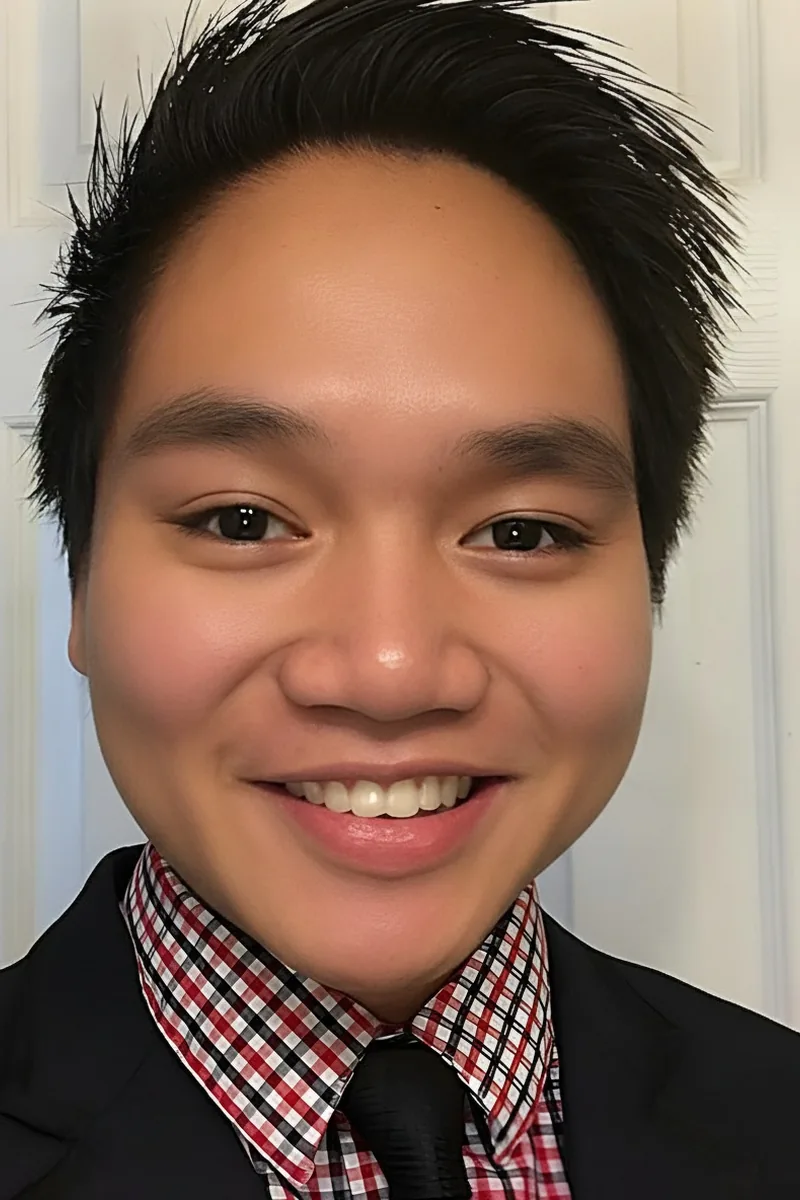
Teaching high school chemistry at the university level as VCU adjunct faculty gives Joel an unusual vantage point — he knows exactly which foundational gaps in mole conversions, electron configurations, and bonding theory trip students up later in AP or college courses. He addresses those gaps early, building each concept from the periodic table up so nothing feels like rote memorization.
Chemistry wasn't Christianna's primary field, but architecture school demands a solid grasp of material science — understanding molecular bonding, thermodynamics, and how chemical properties determine structural integrity. She applies that practical, problem-solving mindset to topics like stoichiometry, equilibrium, and periodic trends.
I'm a current medical student at VCU School of Medicine, and a graduate of Johns Hopkins University. I received my Bachelor of Science in Molecular and Cellular Biology. I've had the pleasure of tutoring a diverse range of students for 5 years; while I tutor a broad set of subjects, I'm most passionate about biology, psychology, and chemistry. I'm a big proponent of ensuring understanding over memorization and teaching concepts that last for years to come (particularly for other students interested in medicine!) In my free time, I love to write poetry, edit essays, and gush about game writing with friends.
Stoichiometry and gas laws tend to click faster when the tutor explaining them is actively using that chemistry in a BS/MD program — Roshni's biology major at VCU means she's working through college-level chemistry courses where these high school topics are prerequisite knowledge, not abstract exercises. She zeroes in on dimensional analysis and mole relationships as the throughline connecting nearly every unit, teaching students to set up problems systematically so new chapters feel like extensions of what they already know. Rated 4.9 by students.
Most high school chemistry struggles come down to the same few sticking points: mole conversions, balancing equations, and making sense of electron configurations. Ava doesn't just re-explain the textbook — she identifies exactly where a student's understanding breaks down and rebuilds from there. Her Bachelor's in Chemistry from James Madison University means she knows these topics inside and out, not just at the high school level but at the depth needed to truly make them intuitive.
I am currently a lead preschool teacher. I received my Bachelor's in Psychology from VCU and am looking to return to school to further my education. While in college, I worked as a Supplemental Instruction leader, teaching general biology and anatomy. I have also worked in an after school program with elementary age children, but I have my fondest memories volunteering as a counselor for Camp Kesem. In my own experience, I loved school and now I love teaching even more at all age levels! I especially enjoy the challenge of getting creative to discover what approach and mediums work best for each student. I am available for in person as well as online tutoring.
When students say they "don't get chemistry," the real issue is usually somewhere specific — maybe it's dimensional analysis, maybe it's electron configurations, maybe it's knowing when to apply Le Chatelier's principle. Brittany, a chemistry major at UVA, diagnoses those sticking points quickly and clears them up through guided questioning rather than lecturing. She holds a 5.0 rating from students.
A chemistry minor alongside her biology degree means Shona didn't just take a few chem classes — she worked through organic chemistry, biochemistry, and physical chemistry at VCU. She unpacks tricky high school topics like stoichiometry, electron configurations, and acid-base reactions by tying them back to the logic behind the periodic table. That deeper understanding turns confusing formulas into something students can actually reason through.
Balancing equations and stoichiometry tend to frustrate students who haven't built a mental model of what's actually happening at the molecular level. Andrew earned AP Chemistry credit while in high school and now applies that chemistry foundation in his engineering studies at UVA, giving him a practical perspective on topics like bonding, equilibrium, and gas laws.
Balancing equations and predicting products clicked differently for Donya once her psychology training at the University of Maryland showed her how students actually process new information — so she teaches stoichiometry and reaction types by building the logic in the order a brain naturally organizes it. Her coursework in biology and chemistry means she can trace why gas laws or periodic trends matter beyond the textbook, connecting them to the neuroscience and physiology questions that make the concepts stick.
Balancing equations, stoichiometry, and periodic trends all demand a kind of precise, quantitative reasoning that Allan developed through his biological sciences coursework, where chemistry and biology constantly overlap. He walks students through each problem type step by step, emphasizing the logic behind mole ratios and reaction predictions so the math never feels arbitrary.
Starting chemistry for the first time can feel like learning a new language — moles, electron configurations, Lewis structures — and Eric excels at translating that language into something intuitive. He holds a master's in chemistry and approaches introductory topics with patience and specificity, making sure students understand the 'why' behind each concept before moving to the next one.
Balancing redox reactions, predicting products, and navigating the mole concept are the places where most high school chemistry students get stuck. Noel's college-prep teaching background means he's seen these sticking points up close and tackles them by walking through the reasoning step by step rather than handing students a shortcut to memorize.
General chemistry was the first subject Alec taught as a TA at Cornell, running problem-solving sessions where students worked through stoichiometry, equilibrium, and acid-base reactions in real time. That hands-on teaching background means he knows exactly where high schoolers get tripped up — whether it's balancing redox equations or making sense of periodic trends. Rated 4.8 by students.
Balancing equations and predicting reaction products can feel like learning a foreign language, but Eric breaks inorganic chemistry concepts down into logical steps that build on each other. His science training across biology and ecology gives him a knack for connecting chemical principles — like bonding and stoichiometry — to real-world processes students can actually picture.
Stoichiometry tends to be the first place high school chemistry students feel genuinely lost — and it's a topic Elijah has tackled from every angle through his biochemistry coursework, where mole relationships and reaction yields weren't just problem sets but the backbone of lab work. He teaches students to read a balanced equation like a recipe, tracking atoms and mass so the math feels logical instead of arbitrary. Rated 5.0 by students.
Teaching college chemistry for years gave Jeremy a clear picture of what high school students actually need before they arrive on a college campus — and where most curricula leave gaps. He zeroes in on the conceptual reasoning behind topics like mole conversions, gas laws, and electron configurations, making sure students can explain *why* an answer is correct, not just arrive at the right number.
Three science bachelor's degrees — including one specifically in chemistry — mean Sung has spent serious time with everything from electron orbitals to thermochemistry, not just at the introductory level but across multiple disciplinary angles. He digs into the "why" behind concepts like periodic trends and reaction energetics so students can reason through unfamiliar problems on exams instead of relying on memorized shortcuts. Rated 5.0 by students.
Serving as an undergraduate teaching assistant for introductory biochemistry at Cornell gave Josef a clear picture of where students first lose the thread in chemistry — usually right around stoichiometry and the mole concept, when the math suddenly feels disconnected from what's happening at the molecular level. He bridges that gap by tying quantitative problems back to the reaction logic, so balancing equations and calculating yields feel like extensions of chemical reasoning rather than standalone arithmetic exercises. Holds a 5.0 rating.
Balancing redox equations, predicting products, and navigating stoichiometry all become more manageable when a student understands the 'why' behind each reaction type. Maggie's molecular and cellular biology degree gave her deep fluency in chemical principles, and she applies that knowledge to demystify everything from periodic trends to equilibrium calculations. She holds a 5.0 rating from students.
When mole conversions and electron configurations start piling up in high school chemistry, the subject can feel like pure memorization. Andrew reframes it: he walks through the logic of the periodic table so students can predict reactivity, bonding behavior, and molecular geometry from first principles instead of flashcards. Rated 4.8 by students.
Stoichiometry and gas laws tend to feel like arbitrary math until someone connects them back to what's actually happening at the molecular level — and Nishad's pre-med training means he's spent years building that connection across chemistry, biology, and anatomy courses. He teaches students to trace the logic from balanced equations through to mole ratios and limiting reagents, so the calculations follow naturally from understanding rather than formula memorization.
Testimonials
Because the right High School Chemistry tutor makes all the difference.
Average Session Rating – Based on 3.4M Learner Ratings
Other Roanoke Tutors
Related Science Tutors in Roanoke
Frequently Asked Questions
Varsity Tutors matches Roanoke students with expert High School Chemistry tutors for 1-on-1 instruction. We pair each student with a tutor based on their specific needs, learning style, and goals.
Whether you need homework help, exam prep, or want to get ahead, our High School Chemistry tutors are ready to help.
Common challenges include gaps from earlier material, difficulty with specific concepts, and trouble applying learning to new problems. These issues can snowball quickly in High School Chemistry.
A tutor identifies where you're stuck, fills in gaps, and provides targeted practice. The 1-on-1 format means you get help exactly where you need it.
Tutors work with your student's actual coursework—homework assignments, class notes, and upcoming tests. This keeps tutoring directly relevant to what's happening in the classroom.
When you share information about your student's school and curriculum, we can match you with a tutor who has relevant experience.
All tutors complete background checks, credential verification, and teaching evaluation. Many of our High School Chemistry tutors hold advanced degrees or have years of teaching experience.
You can review tutor profiles to find someone with the right background for your student's level and needs.
Many students see improved grades within a few weeks, along with better understanding of High School Chemistry concepts and more confidence tackling challenging material.
Tutors track progress and adjust their approach to ensure continued improvement.
Most students benefit from 1-2 sessions per week. More frequent sessions help if your student is significantly behind or has an important exam coming up.
Your tutor can recommend a schedule based on your student's specific situation and goals.
Tutoring is purchased in packages of hours, with rates varying by tutor experience. Varsity Tutors offers several options to fit different budgets and needs.
You can discuss pricing during your consultation to find what works best.
Your tutor will assess where your student is, discuss goals, and start working on priority areas. Most students bring current homework or upcoming test material to focus on.
By the end, you'll have a clear sense of how the tutor can help and a plan for moving forward.
Let’s find your perfect tutor
Answer a few quick questions. We’ll recommend the right plan and match you with a top 5% tutor.