Award-Winning Physics Tutors
serving Chandler, AZ
Physics
Tutors in Chandler
Private 1-on-1 tutoring, weekly live classes for academic support, test prep & enrichment, practice tests and diagnostics, and more to elevate grades and test scores.
Based on 3.4M Learner Ratings
UniversitiesSchools & Universities
DeliveredHours Delivered
ProficiencyGrowth in Proficiency
Who needs tutoring?
No obligation. Takes ~1 minute.

Kinematics equations and free-body diagrams become far less intimidating once a student sees them as descriptions of real motion rather than symbol-shuffling exercises. River teaches physics by tying each problem back to a concrete scenario — a ball in flight, a block on a ramp — and then showing how the math follows naturally from the physical setup. His science training at ASU kept physics tightly integrated with biology and chemistry, so he's comfortable across the discipline.
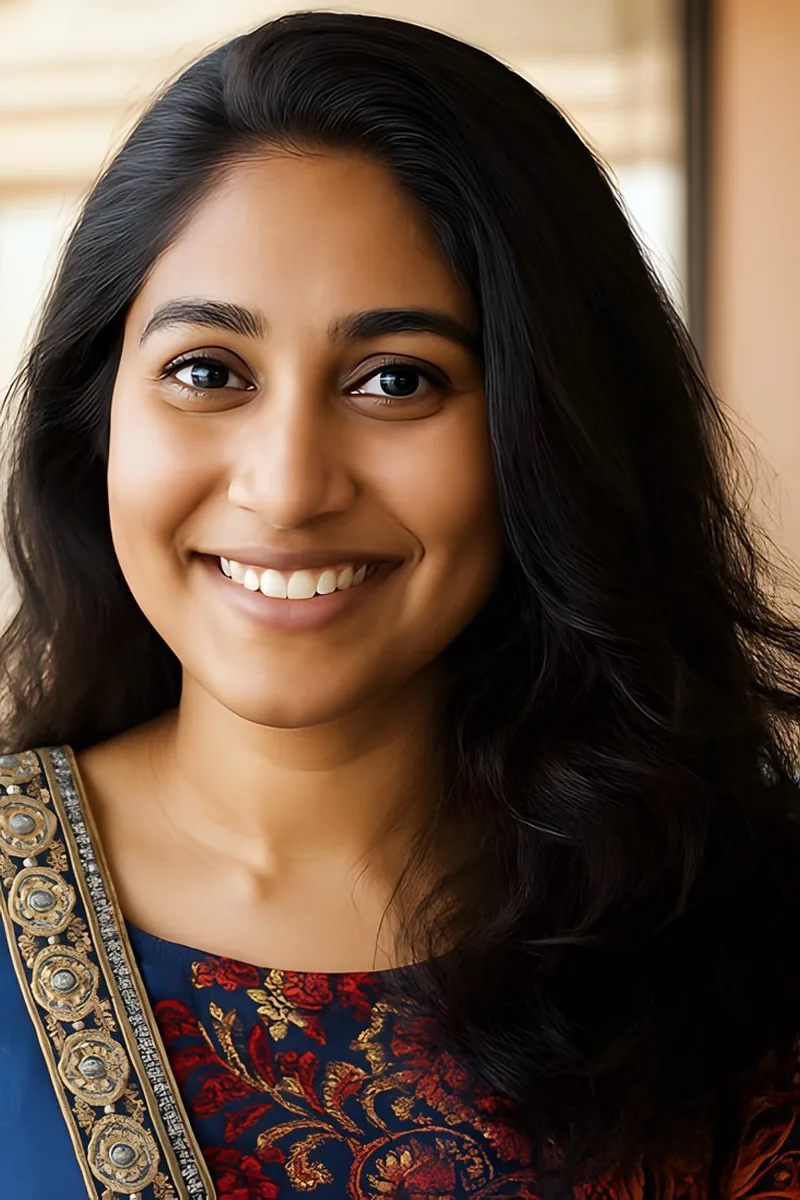
Coding simulations in Python and Java actually builds serious physics intuition — Mehek has modeled everything from projectile trajectories to wave interference computationally, which means she can explain why the equations work, not just how to use them. Her 35 ACT confirms the quantitative chops to tackle force diagrams, energy conservation, and kinematics problems with precision.
Coming from a biological sciences background, Musa approaches physics problems by grounding abstract formulas in tangible scenarios — force diagrams for real objects, energy conservation in systems students can visualize. He spent a year at ASU's tutoring center identifying the exact spots where students lose the thread, whether that's vector decomposition or connecting Newton's laws to free-body diagrams.
A physics degree and 25-plus years of engineering work mean Tim doesn't just remember kinematics, electromagnetism, and thermodynamics — he's applied them professionally across multiple industries. He digs into free-body diagrams, energy conservation problems, and circuit analysis by showing students the reasoning process an engineer actually uses. That approach turns problem-solving from guesswork into a repeatable method.
After earning three bachelor's degrees and a law PhD, John pivoted to co-founding a tech startup — a path that demanded teaching himself the quantitative and systems-level thinking that physics problems run on. He approaches mechanics and energy concepts the way an engineer-turned-entrepreneur would: break the system into components, figure out what governs each piece, then build the solution step by step. Rated 5.0 by students.
Studying physics as a chemical engineering grad student means Alex doesn't just know the equations — he's applied Newton's laws, energy conservation, and wave mechanics to real systems in the lab. He teaches physics by starting with the physical situation, sketching free-body diagrams or energy bar charts, and only then reaching for the math. His 5.0 rating speaks to how well that approach lands.
Kinematics, force diagrams, and energy conservation problems all follow a similar pattern: translate the physical situation into math, solve, then interpret. Elise approaches physics by drilling that translation step, since most errors happen before students even pick up a calculator. Her quantitative training through biomedical sciences and medical school keeps her sharp across mechanics, electricity, and waves.
I am Arizona born and raised, my education includes an NYC law school degree with an undergraduate BS degree from University of Miami. In college I majored in Health Sciences with minors in Psychology and Public Health while in law school I leaned into corporate law and finance. Between law school and college I've pretty much covered every topic under the sun! In my spare time, I enjoy reading (especially mystery novels), pretending I'm a chef, and meditating.
A physics degree doesn't just teach someone to solve problems — it rewires how they think about forces, energy, and motion at a fundamental level. Sam brings that depth to topics from Newtonian mechanics through electromagnetism, walking students through free-body diagrams, conservation laws, and circuit analysis with the precision of someone who's done it professionally. He also builds laser systems as a hobby, so applied physics is genuinely part of his daily life.
Having concentrated on physics within her applied mathematics degree, Madeleine spent time in a university research lab where she collaborated on real experimental problems — not just textbook scenarios. That experience means she can explain Newtonian mechanics, energy conservation, or wave behavior with both mathematical precision and physical intuition. She's rated 5.0 by students and excels at showing how equations map onto what's actually happening.
Few physics tutors can say they've applied Newton's laws and electromagnetic theory to actual spacecraft. Chris worked at NASA on missions including Galileo, Cassini, and the Hubble Space Telescope's NICMOS instrument, turning textbook physics into functioning science. Whether the topic is kinematics, wave optics, or thermodynamics, he unpacks the underlying principles using examples drawn from real engineering and research problems.
I am a graduate student currently working on my Master's Degree in Big Data Systems.
Designing houses for a living means Aaron solves real physics problems constantly — calculating load paths through structures, resolving force vectors at joints, and applying statics principles that most students only see as textbook exercises. That architectural engineering background gives him a concrete vocabulary for teaching mechanics, forces, and energy concepts, because he can point to an actual beam or truss and explain why the math matters. Rated 5.0 by students.
Yurok's dual degree in physics and mathematics at Emory means the calculus behind every physics concept — from deriving kinematic equations to integrating electric fields — is second nature, not an extra hurdle. He teaches across every level from introductory mechanics through AP Physics C and quantum mechanics, so he can pinpoint whether a student's stuck on the physical reasoning or the math underneath it. Rated 4.9 by students.
Studying mechanical engineering means Nitesh doesn't just remember physics formulas — he understands the force diagrams, energy conservation principles, and rotational dynamics behind them. He unpacks each problem by identifying which physical law applies and why, so students build the kind of reasoning that transfers across topics from mechanics to waves.
An electrical engineering degree is essentially a physics degree with a soldering iron — Ajay spent years applying Newton's laws, electromagnetic theory, and energy conservation principles to real circuit and system design problems. He teaches physics by connecting each concept to something tangible, whether that's explaining torque through a wrench or wave behavior through a guitar string. His 34 ACT reflects the kind of analytical precision he brings to problem-solving.
Charles earned his biochemistry degree at Arizona State, where physics courses in mechanics, thermodynamics, and wave behavior were central to his training. He breaks down force diagrams and energy conservation problems by connecting them to everyday scenarios — a ball rolling downhill, a car braking — so the math feels grounded in something real.
Arpita approaches physics the way she approaches her pre-med science courses at Emory: diagram first, equation second. Whether it's free-body diagrams for Newton's laws or energy bar charts for conservation problems, she teaches students to translate word problems into visual models before reaching for a formula. That habit builds the kind of problem-solving instinct that carries across mechanics, electricity, and waves.
Medical school trains you to think in systems — and that's exactly how Hanna approaches physics problems, whether it's tracing how forces propagate through a pulley setup or tracking energy through a collision. Her premed coursework and experience tutoring math through differential equations mean the calculus backbone of physics never becomes a stumbling block, and she can connect concepts like torque or fluid pressure to the biomedical contexts that make them stick. Rated 5.0 by students.
Studying geology at Ohio University meant Paul lived in the overlap between physics and the natural world — calculating forces on rock formations, modeling wave propagation, applying thermodynamic principles to mineral systems. He unpacks topics like Newton's laws, energy conservation, and kinematics by tying them to tangible scenarios that make the equations feel grounded.
Maurice's Special Education training gives him a sharp eye for where a student's understanding actually breaks down — whether it's confusing velocity with acceleration or misapplying Newton's third law in force diagrams. He rebuilds each concept step by step, adjusting the explanation until the physics clicks rather than just repeating the same approach louder. He teaches across math and science from elementary through college level, so bridging the algebra gaps that often stall physics progress comes naturally.
Aerospace engineering at Georgia Tech means Naveen solves mechanics, fluid dynamics, and thermodynamics problems daily — the same core physics that introductory students encounter for the first time. He breaks down force and motion scenarios by connecting them to the engineering applications where those principles actually matter, giving students a concrete reason to care about free-body diagrams and conservation laws. His 35 ACT reflects the quantitative instincts he brings to every problem.
Samuel teaches across the full math sequence — pre-algebra through calculus — which means he can pinpoint whether a physics struggle is actually a trig identity gap, a vector decomposition issue, or a genuine conceptual misunderstanding about forces or energy. That math fluency lets him spend less time re-teaching algebra mid-problem and more time on the physical reasoning: setting up free-body diagrams, choosing reference frames, and connecting Newton's laws to the actual motion.
A self-described physics dork with a BS in mechanical engineering, Daniel lives and breathes the subject — from Newtonian mechanics to thermodynamics to electromagnetism. He connects equations to real physical scenarios so that free-body diagrams and conservation laws feel intuitive rather than formulaic.
Pursuing a biology degree at the University of Houston means Pooja regularly works through the mechanics, thermodynamics, and wave concepts that overlap heavily with introductory physics — and her comfort tutoring calculus and algebra keeps the mathematical side from becoming a separate obstacle. She's especially effective at translating word-heavy problems into clear diagrams and identifying which conservation law or force relationship actually governs the scenario. Rated 5.0 by students.
During high school Yuxuan tutored peers in physics after school, and his engineering-adjacent coursework at UC Berkeley kept him deep in mechanics, electromagnetism, and thermodynamics throughout college. He approaches problem-solving by teaching students to draw clean free-body diagrams and energy diagrams first, so the math follows logically instead of feeling like guesswork.
Understanding physics means being comfortable switching between diagrams, equations, and physical intuition, often in the same problem. As a working engineer, Emeka applies Newtonian mechanics, energy conservation, and wave behavior to real structures — so he teaches these concepts with the kind of specificity that textbooks often skip.
Civil engineers live in Newtonian mechanics — forces, moments, equilibrium, and motion are the bread and butter of the discipline. Jenna applies that professional-level fluency to physics tutoring, unpacking free-body diagrams and kinematics equations in ways that make the problem-solving process feel systematic rather than overwhelming.
Jack passed AP Physics 1 in high school and now applies Newtonian mechanics, energy methods, and wave behavior routinely in his civil engineering program at Arizona State. That combination of exam experience and ongoing practice means he can unpack free-body diagrams, conservation laws, and kinematics problems at whatever level a student needs — conceptual or calculation-heavy.
Kinematics problems look deceptively simple until a student has to decompose vectors, choose a reference frame, and keep signs consistent across two dimensions. Gordon tutors algebra-based physics by emphasizing free-body diagrams and systematic problem setup before anyone touches an equation — an approach he developed while mentoring engineering undergraduates at ASU. Once students trust the diagram, the math follows naturally.
As a passionate tutor with experience in subjects ranging from AP Calculus BC to AP Chemistry, I am dedicated to fostering a supportive learning environment where students can thrive. Currently pursuing a Bachelor's degree in Biomedical Engineering at Tufts University, I bring a unique perspective to my tutoring approach, emphasizing real-world applications of complex concepts. My teaching philosophy centers on building strong connections with students, encouraging them to ask questions and explore their interests. I find immense joy in helping students achieve their academic goals and develop a love for learning, whether they are preparing for the ACT or mastering piano. Let's work together to unlock your potential!
I'm a 24-year old teacher/tutor. I am a very personable, outgoing person and I enjoy making connections with others- especially when I can make people feel comfortable no matter what the setting- and I find that those who have less to say usually have the most important things to say! Tutoring provides me with a platform in which I am able to help others gain confidence in their work and watch them discover abilities they may not have known that they have. Above all, this is what I most love about tutoring and teaching.
Hi, I recently earned my Ph.D. in Organic Chemistry from Purdue University and have entered the private sector. In my program, I found that teaching and instructing students was very enjoyable and I wish to continue that by being a tutor. I have been a successful tutor for over a decade and know how to instruct to a variety of different skill sets and learning abilities.
I am currently in the process of obtaining a Bachelor of Science degree in pure mathematics at Rice University in Houston, Texas. I tutor a wide range of subjects including U.S. History, algebra, calculus, chemistry, comparative politics, economics, and test preparation. Although I enjoy tutoring in all of these subjects, I especially like tutoring math-related subjects such as high school algebra, calculus, and linear algebra. Outside of class and tutoring, I enjoy golfing, stargazing, collecting foreign coins, and playing the violin.
Cornell's chemical engineering program put Rahul through four years of mechanics, fluid dynamics, and thermodynamics problems that demand real physical intuition — not just plugging into formulas. He pushes students to understand why a conservation law applies before setting up the math, building the kind of conceptual reasoning that makes multi-step problems feel manageable rather than chaotic. Rated 4.9 by students.
Jackie took AP Physics C — the calculus-based version — and scored a 5 on the exam, which means she's comfortable with everything from Newtonian mechanics to electromagnetic induction. She unpacks free-body diagrams and energy conservation problems by tying the math to real physical situations students can visualize. That combination of calculus fluency and physical intuition makes her especially effective for students preparing for AP or college-level physics.
Kinematics equations and free-body diagrams are straightforward once a student learns to read a physics problem like a story — identifying what's moving, what forces act on it, and what the question is really asking. Maggie teaches that translation process explicitly, drawing on her science background to walk through mechanics, energy conservation, and wave behavior with clarity. She holds a 5.0 student rating.
Benjamin's physics teaching goes beyond plugging values into kinematic equations. He digs into free-body diagrams, energy conservation, and vector decomposition by asking students to predict outcomes before calculating — a habit that builds the physical intuition textbooks often skip. His math fluency from studying economics at UChicago means the quantitative side never becomes a bottleneck.
Applied math at Caltech means Samuel's daily coursework is the calculus and differential equations that power every physics problem — from projectile motion to oscillating springs to electric fields. He teaches students to build the mathematical setup first, identifying which principles apply and why, so that plugging into formulas becomes the easy final step rather than a frantic guessing game.
Testimonials
Because the right Physics tutor makes all the difference.
Average Session Rating – Based on 3.4M Learner Ratings
Practice Physics
Free practice tests, flashcards, and AI tutoring for Physics
Other Chandler Tutors
Related Science Tutors in Chandler
Frequently Asked Questions
Varsity Tutors matches Chandler students with expert Physics tutors for 1-on-1 instruction. We pair each student with a tutor based on their specific needs, learning style, and goals.
Whether you need homework help, exam prep, or want to get ahead, our Physics tutors are ready to help.
Common challenges include gaps from earlier material, difficulty with specific concepts, and trouble applying learning to new problems. These issues can snowball quickly in Physics.
A tutor identifies where you're stuck, fills in gaps, and provides targeted practice. The 1-on-1 format means you get help exactly where you need it.
Tutors work with your student's actual coursework—homework assignments, class notes, and upcoming tests. This keeps tutoring directly relevant to what's happening in the classroom.
When you share information about your student's school and curriculum, we can match you with a tutor who has relevant experience.
All tutors complete background checks, credential verification, and teaching evaluation. Many of our Physics tutors hold advanced degrees or have years of teaching experience.
You can review tutor profiles to find someone with the right background for your student's level and needs.
Many students see improved grades within a few weeks, along with better understanding of Physics concepts and more confidence tackling challenging material.
Tutors track progress and adjust their approach to ensure continued improvement.
Most students benefit from 1-2 sessions per week. More frequent sessions help if your student is significantly behind or has an important exam coming up.
Your tutor can recommend a schedule based on your student's specific situation and goals.
Tutoring is purchased in packages of hours, with rates varying by tutor experience. Varsity Tutors offers several options to fit different budgets and needs.
You can discuss pricing during your consultation to find what works best.
Your tutor will assess where your student is, discuss goals, and start working on priority areas. Most students bring current homework or upcoming test material to focus on.
By the end, you'll have a clear sense of how the tutor can help and a plan for moving forward.
Let’s find your perfect tutor
Answer a few quick questions. We’ll recommend the right plan and match you with a top 5% tutor.