Award-Winning AP Biology Tutors
serving Chandler, AZ
AP Biology
Tutors in Chandler
Private 1-on-1 tutoring, weekly live classes for academic support, test prep & enrichment, practice tests and diagnostics, and more to elevate grades and test scores.
Based on 3.4M Learner Ratings
UniversitiesSchools & Universities
DeliveredHours Delivered
ProficiencyGrowth in Proficiency
Who needs tutoring?
No obligation. Takes ~1 minute.

Four years studying conservation biology at ASU means River didn't just learn AP Bio content — he lived in it, from cellular respiration pathways to ecological modeling and evolutionary mechanisms. He breaks down the exam's emphasis on experimental design and data interpretation by walking students through how actual biologists think about controls, variables, and evidence. That lab-trained instinct for analyzing figures is exactly what the AP Bio free-response section rewards.
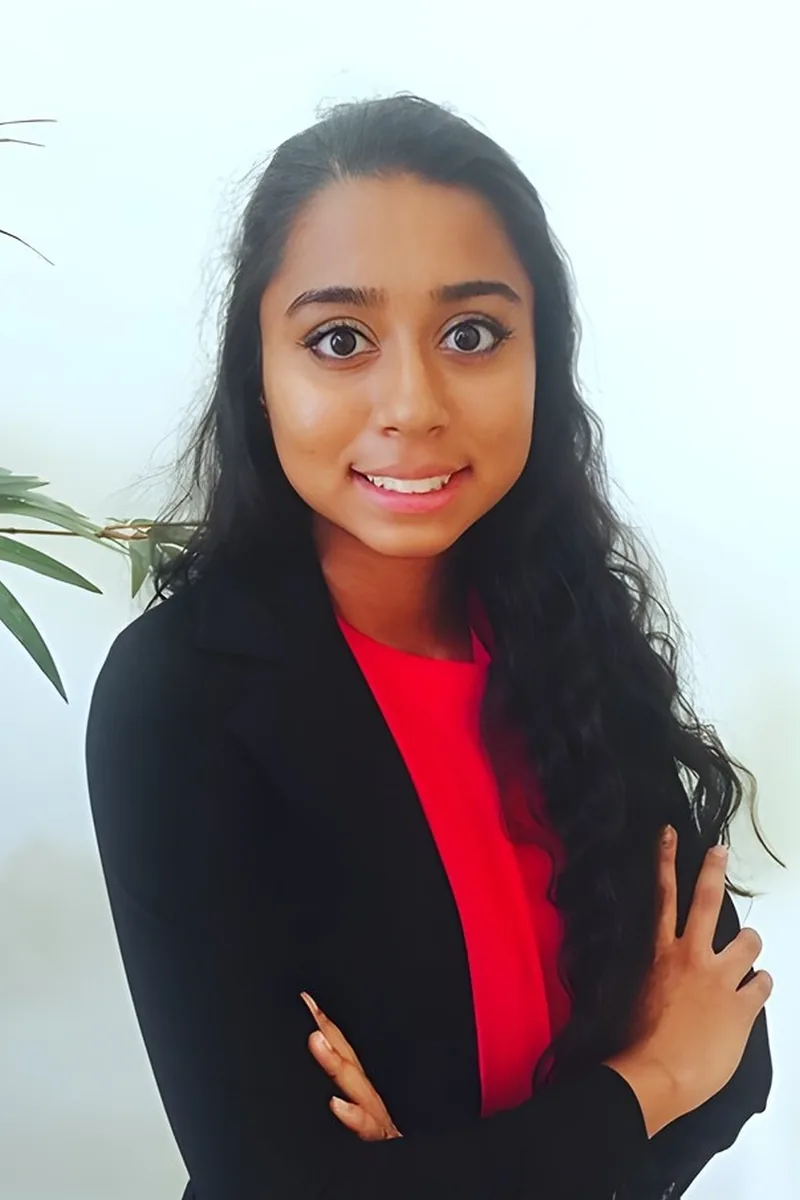
Having taken 10 AP courses in high school — including AP Biology — Thara knows the exam inside out, from the free-response rubric expectations to the way the multiple-choice questions test application over recall. She's now deepening that knowledge on Duke's pre-med track, which means topics like cellular respiration, gene regulation, and ecology aren't just test material for her — they're concepts she uses daily in college-level biology.
Every AP Biology free-response question rewards students who can connect molecular details to large-scale biological outcomes — explaining how a point mutation disrupts protein folding, or tracing energy flow from photosystem II through an entire ecosystem. Gordon earned his B.S. in Biological Sciences from Arizona State and has mentored premed undergraduates through this exact material, so he knows which experimental design and data-analysis skills the College Board actually tests.
Pursuing a B.S. in Biology at the University of Houston, Pooja is immersed daily in the same cellular processes, genetics pathways, and ecological concepts that dominate the AP Bio exam. She unpacks dense topics like signal transduction and gene regulation by tying them to experimental design questions — the format that trips up most AP students on free-response sections.
AP Bio covers a massive range, but the units that trip students up most — cellular energetics, gene expression, and ecology modeling — all reward the kind of quantitative thinking Yuxuan brings from his biochemistry training at UC Berkeley. He teaches students to interpret data-driven free-response questions the way a lab scientist would: identify variables, trace cause and effect, then build an argument from evidence. Rated 4.9 by students.
As an aspiring physician currently pursuing my Bachelor's in Physiology and Medical Sciences at the University of Arizona, I am passionate about empowering students to achieve their academic and personal aspirations. With over 5 years of tutoring experience across a diverse range of subjects including ACT, SAT, AP exams, and college application essays. I have developed a keen understanding of the unspoken rules that govern these assessments. My approach is student-centered and adaptive; I tailor my strategies to meet individual learning styles, whether that means incorporating engaging games for those with attention challenges or allowing self-directed learners to guide our sessions. Having recently navigated the same academic landscape as my students, I am intimately familiar with the pressures they face, and I strive to demystify the testing process. I am particularly excited about tutoring AP Biology, AP Calculus, and college applications, as these areas require not just content mastery but also strategic insight into what admissions officers are truly seeking. Outside of tutoring, I enjoy cooking, 3D printing, and weightlifting, all of which enrich my perspective and foster a supportive learning environment. Through tutoring, my goal is not just to teach but to mentor, equipping students with the tools they need to thrive in their educational journeys.
The best part of tutoring is promoting students' long-term success through mastery of reading, writing, math, study skills, organization, and critical thinking. In particular, I enjoy helping students build test-taking strategies and core skills for the ACT, SAT, and other admissions tests. I also support pre-K and K-12 students learning math and ELA. Before joining Varsity, I tutored in a Reading and Writing Lab for university students with learning disabilities where I earned a College Reading and Learning Association (CRLA) certification. Since joining Varsity, I have completed continuing education through the Lastinger Center for Learning. I graduated from the University of Arizona in 2021 with a BA in Cultural Anthropology. In addition to tutoring, I have worked as an instructional aide for an art program, an applied anthropology researcher, and a nonprofit program coordinator. Out of all these experiences, I enjoy tutoring the most. I look forward to working with you!
Environmental science coursework gave Ethan an ecology-first perspective on biology — population dynamics, energy flow through ecosystems, and the interplay between organisms and their environments — which lines up directly with AP Bio's ecology and evolution units that many science-focused tutors breeze past. He also teaches AP Statistics, so he's unusually comfortable with the data interpretation and experimental design questions that trip students up on the exam. Rated 5.0 by students.
Dental school at UMKC required Nik to master the same molecular biology, genetics, and physiology that AP Bio covers — but at a clinical depth where understanding how a mutation affects protein folding actually matters for diagnosing patients. His biology degree gave him the foundational content, and his 4.9 rating from students suggests he's figured out how to make dense topics like cellular energetics and heredity click for others, not just himself.
Stephanie is a molecular biology major at Princeton who tutors biology and general chemistry at the university's peer tutoring center — meaning she's actively teaching concepts like gene regulation, enzyme kinetics, and cellular signaling to college students, then turning around and making that same material accessible for AP Bio. Her 5.0 rating speaks to how well she translates that Princeton-level depth into the kind of precise, mechanism-driven explanations the exam's free-response questions demand.
Teaching has been a lifelong passion of mine. What drives me is sharing knowledge while genuinely connecting with others. I discovered my love for tutoring in high school and have been dedicated to it ever since. At Stanford University, I earned a BS in Human Biology and Chemistry while continuing to tutor throughout, advancing to Lead Tutor. After graduation, I spent a year as a Teaching Associate, designing and delivering course content which significantly broadening my pedagogical approach. What sets me apart is my versatility. Having served as both tutor and instructor, I can adapt my teaching style to each student's unique needs, whether that be building up foundational skills or pursuing advanced mastery. I'm now pursuing graduate studies at The Johns Hopkins School of Medicine, staying engaged with cutting-edge science while maintaining my commitment to education. I look forward to helping you achieve your academic goals!
AP Bio covers an enormous range — from molecular genetics to ecology — and the exam rewards students who can apply concepts to unfamiliar experimental scenarios, not just recall definitions. Phillip studies biomedical engineering at Brown, so he regularly engages with cell signaling, gene expression, and physiological systems at a level well beyond the AP curriculum. He teaches students to interpret data figures and design experiments the way the free-response questions demand.
Working in a Yale research lab that uses CRISPR-Cas9 gives Matthew a perspective on AP Biology that most tutors can't offer — he connects textbook topics like gene regulation, signal transduction, and evolution to experiments happening right now. He's especially sharp on the free-response questions, where students need to design experiments and interpret data rather than just recall facts.
The premedicine track at Rochester means Ian has taken the full sequence of biology courses — genetics, cell biology, physiology — alongside the chemistry that makes AP Bio's trickier units on enzyme kinetics and cellular energetics click. He's especially good at unpacking how molecules actually behave during processes like photosynthesis or signal transduction, giving students the mechanistic detail that earns full credit on free-response questions. Holds a 5.0 rating.
Fourth-year med student at Albert Einstein College of Medicine, Michael has spent years applying the biology he first studied as a summa cum laude graduate in Biology from Yeshiva College — so AP Bio's units on genetics, cellular processes, and physiology aren't abstract for him, they're the foundation of his daily clinical work. His experience teaching MCAT prep for Kaplan means he's already coached students through the same high-stakes biological reasoning that AP Bio's free-response questions demand, especially the kind where you need to connect a molecular mechanism to an organism-level outcome.
Brown's Health and Human Biology concentration has Nova deep in the cellular and molecular content that AP Bio tests hardest — but her real edge is on the SAT Subject Test in Biology E/M, which means she's drilled the kind of rapid concept application the AP exam's multiple-choice section demands. She scored a 1530 SAT and holds a 5.0 rating, and she approaches the evolution and ecology units by tying them back to the human biology lens that makes abstract population dynamics feel concrete.
Studying biological sciences at Cornell means Viraj is immersed in the same cellular processes, genetics pathways, and ecological principles that AP Biology tests at a college level. He teaches students to think in terms of energy flow and information transfer — the two conceptual threads the College Board uses to connect every unit on the exam. His 5.0 rating speaks to how well that framework translates to exam-day performance.
Succeeding on the AP Biology exam means going beyond memorizing cell structures and metabolic pathways — it means interpreting experimental data, constructing explanations, and reasoning across biological scales from molecules to ecosystems. Jake studies Human Biology at Stanford, where his coursework in genetics, physiology, and ecology maps directly onto the AP curriculum's four big ideas.
Ruthie studied the biological basis of behavior in college, which means she didn't just memorize AP Bio content like cell signaling and genetics — she had to apply it to understand how nervous systems produce behavior, how neurotransmitters cross synapses, and how gene expression shapes organisms at every level. That interdisciplinary angle is especially useful for the exam's ecology and evolution units, where students need to connect molecular mechanisms to organism-level outcomes. Rated 5.0 by students.
Testimonials
Because the right AP Biology tutor makes all the difference.
Average Session Rating – Based on 3.4M Learner Ratings
Practice AP Biology
Free practice tests, flashcards, and AI tutoring for AP Biology
Other Chandler Tutors
Related Science Tutors in Chandler
Frequently Asked Questions
Varsity Tutors matches Chandler students with expert AP Biology tutors for 1-on-1 instruction. We pair each student with a tutor based on their specific needs, learning style, and goals.
Whether you need homework help, exam prep, or want to get ahead, our AP Biology tutors are ready to help.
Common challenges include gaps from earlier material, difficulty with specific concepts, and trouble applying learning to new problems. These issues can snowball quickly in AP Biology.
A tutor identifies where you're stuck, fills in gaps, and provides targeted practice. The 1-on-1 format means you get help exactly where you need it.
Tutors work with your student's actual coursework—homework assignments, class notes, and upcoming tests. This keeps tutoring directly relevant to what's happening in the classroom.
When you share information about your student's school and curriculum, we can match you with a tutor who has relevant experience.
All tutors complete background checks, credential verification, and teaching evaluation. Many of our AP Biology tutors hold advanced degrees or have years of teaching experience.
You can review tutor profiles to find someone with the right background for your student's level and needs.
Many students see improved grades within a few weeks, along with better understanding of AP Biology concepts and more confidence tackling challenging material.
Tutors track progress and adjust their approach to ensure continued improvement.
Most students benefit from 1-2 sessions per week. More frequent sessions help if your student is significantly behind or has an important exam coming up.
Your tutor can recommend a schedule based on your student's specific situation and goals.
Tutoring is purchased in packages of hours, with rates varying by tutor experience. Varsity Tutors offers several options to fit different budgets and needs.
You can discuss pricing during your consultation to find what works best.
Your tutor will assess where your student is, discuss goals, and start working on priority areas. Most students bring current homework or upcoming test material to focus on.
By the end, you'll have a clear sense of how the tutor can help and a plan for moving forward.
Let’s find your perfect tutor
Answer a few quick questions. We’ll recommend the right plan and match you with a top 5% tutor.