Award-Winning Physical Chemistry Tutors
serving Pittsburgh, PA
Physical Chemistry
Tutors in Pittsburgh
Private 1-on-1 tutoring, weekly live classes for academic support, test prep & enrichment, practice tests and diagnostics, and more to elevate grades and test scores.
Based on 3.4M Learner Ratings
UniversitiesSchools & Universities
DeliveredHours Delivered
ProficiencyGrowth in Proficiency
Who needs tutoring?
No obligation. Takes ~1 minute.
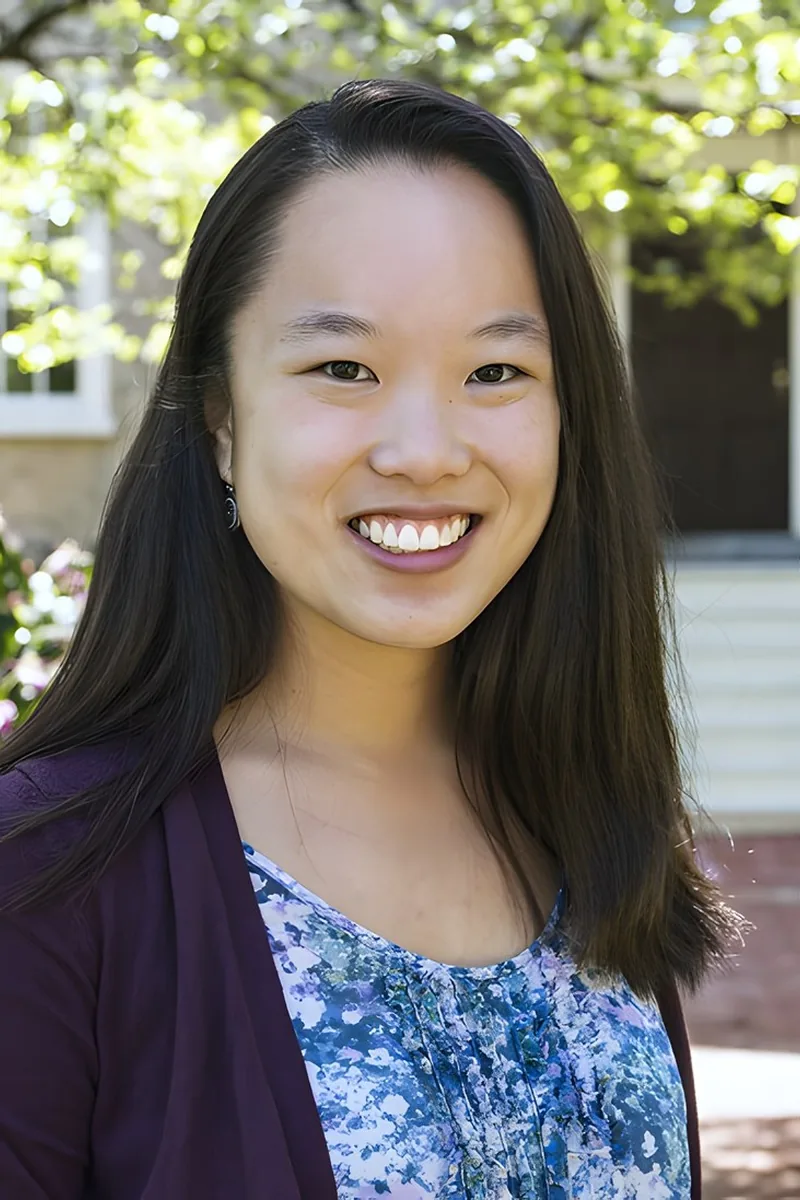
Teaching high school chemistry daily means Kathleen regularly translates thermodynamic concepts like enthalpy, entropy, and equilibrium into language that clicks — a skill that carries directly into the more calculus-heavy treatment those same ideas get in a p-chem course. Her M.S.Ed from Penn and chemistry degree give her both the content depth and the instinct for spotting exactly where a derivation stops making sense to a student. Rated 5.0 by students.

Biology coursework builds a surprising amount of p-chem intuition — enzyme kinetics, membrane energetics, and metabolic thermodynamics all run on the same free energy and rate equations that dominate a physical chemistry sequence. Ade uses that biological grounding to make abstract derivations tangible, turning something like a Boltzmann distribution into a concrete picture of how molecules actually partition energy across states.
I am currently a graduate student in Chemical Engineering at the University of Delaware. I am working on using magnetic and flow fields to create advanced materials by directing the self-assembly process of nanoparticles . I have tutored students in Chemistry, Physics and Math all throughout undergraduate and graduate work. I truly enjoy breaking material down into its core components that allows the students to understand complicated information.
Pursuing a dual Ph.D./Pharm.D. at UConn with graduate work in medicinal chemistry means Xhesika encounters the thermodynamic and kinetic formalism of p-chem as daily working tools — calculating drug stability, modeling reaction pathways, predicting how molecular interactions shift with temperature and pressure. She teaches derivations like Maxwell relations and Clausius-Clapeyron by tying each variable back to the pharmacological systems where she actually uses them, so the math carries chemical weight instead of feeling like abstract symbol-pushing.
Mechanical engineering at Rice means Aleksey has been solving thermodynamic cycles, heat transfer problems, and differential equations for years — the exact mathematical toolkit that p-chem throws at students in a chemistry wrapper. He breaks down topics like entropy, enthalpy, and phase equilibria by treating them as engineering problems first, then layering in the molecular-level chemistry that gives each variable its meaning. Rated 5.0 by students.
I am a public school teacher (Chemistry and Living Environment) but can tutor most sciences. I truly believe in differentiated learning and once I know the learning style of a student, I tailor my teaching style for optimum time usage. I love to utilize stories from my real life experiences in labs to help students understand the implications of their science education.
Thermodynamics, kinetics, and quantum mechanics all converge in physical chemistry — and that's exactly where Monika's biochemistry and molecular biology training intersects. She breaks down intimidating topics like Gibbs free energy calculations and reaction rate laws by tying them to real chemical systems she studied during her PhD research. Rated 4.8 by students.
Eight years as a chemistry professor at Trinity College meant Maria taught p-chem repeatedly — not just lecturing on thermodynamic state functions and quantum mechanical models, but sitting with students in office hours untangling the specific derivation step where they got lost. That Ph.D.-level command of the subject, combined with a 5.0 rating, reflects someone who knows exactly which Maxwell relation or partition function integral is about to cause trouble and can rework it on the spot.
Katherine's broad math and science background — spanning calculus, thermodynamics, and physics — means she's comfortable with the multivariable calculus and differential equations that make p-chem derivations so dense. She takes apart concepts like Maxwell relations and chemical potential by slowing down at the exact algebraic step where the physical intuition tends to disappear. Rated 5.0 by students.
Genetics PhD work is surprisingly calculus-intensive — population dynamics, statistical mechanics of molecular interactions, and the thermodynamic stability of nucleic acid structures all demand the same quantitative reasoning that drives p-chem. Nicholas brings that background to topics like free energy calculations and kinetic modeling, where his comfort with both the math and the molecular biology underneath it keeps derivations grounded in actual chemical behavior. Rated 4.8 by students.
Differential equations, calculus, and organic chemistry all sit in Nate's regular teaching rotation, which means he's constantly moving between the math and the chemistry that p-chem smashes together — and he knows exactly where students lose the thread between the two. He zeroes in on building intuition around concepts like chemical potential and equilibrium thermodynamics by tying each derivation back to the reaction behavior students already recognize from general and organic chemistry. Rated 5.0 by students.
I am pursuing a career in dentistry/oral surgery and will be beginning dental school at Boston University this fall. For this reason I recently took the DAT, which I am capable of assisting you with as well. During my undergraduate education, which I completed this past December, I worked in my school's tutoring center, helping my peers succeed in mathematics and science courses. Outside of my academic life, I am a big sports fan and I mostly follow the New York sports teams. For fun, I like to play basketball and golf with my friends. I am looking forward towards getting to know you and helping you with your academic needs.
A PhD in chemistry means Justin didn't just pass p-chem — he lived in its formalism for years, from quantum mechanical models to statistical thermodynamics, and then kept using it through doctoral research. That depth shows when he teaches: he can trace a concept like chemical potential or a Maxwell relation back to the physical picture driving the math, catching the exact step where a student's understanding breaks down. Rated 5.0 by students.
Two biomedical engineering degrees mean Allyson has been doing the calculus-heavy thermodynamics and kinetics work that p-chem formalizes — modeling energy transfer in biological systems, working through rate equations for physiological processes — since undergrad. She zeroes in on the specific mathematical step where a derivation goes from followable to opaque, whether that's a tricky partial derivative in a Maxwell relation or the statistical reasoning inside a Boltzmann distribution. Rated 4.9 by students.
Thermodynamic state functions, quantum mechanical models, and kinetic rate laws all converge in Physical Chemistry, and most students need someone who can bridge the math and the chemistry simultaneously. Abismael's chemical engineering training put him through the full gauntlet — partial differential equations applied to heat transfer, Gibbs free energy calculations for phase equilibria, statistical mechanics. He explains each derivation from multiple angles and tests understanding with problems designed to be harder than what shows up on the exam.
Testimonials
Because the right Physical Chemistry tutor makes all the difference.
Average Session Rating – Based on 3.4M Learner Ratings
Other Pittsburgh Tutors
Related Science Tutors in Pittsburgh
Frequently Asked Questions
Physical Chemistry bridges chemistry and physics by studying how matter behaves at the molecular level—covering thermodynamics, kinetics, quantum mechanics, and equilibrium. Students often find it challenging because it requires both strong math skills and the ability to visualize abstract molecular processes. Understanding the underlying principles (rather than just memorizing formulas) is essential for success, which is where personalized tutoring makes a real difference.
The biggest hurdles are typically balancing complex equations, mastering unit conversions, and connecting abstract concepts like entropy or activation energy to real-world scenarios. Many students also struggle with the math-heavy problem solving and understanding when to apply different thermodynamic or kinetic principles. Tutors can help break down these concepts into manageable pieces and show you how to approach problems systematically.
Physical Chemistry labs let you observe phenomena like reaction rates, temperature changes, and phase transitions firsthand—making abstract theories concrete. Experiments help you understand why equations work and build intuition about concepts like Le Chatelier's principle or calorimetry. A tutor can help you design experiments, analyze data, and write clear lab reports that demonstrate your understanding of the underlying science.
Expert tutors focus on teaching you *why* concepts work, not just *what* to memorize. They use visualization techniques, real-world examples, and guided problem-solving to build deep understanding. By working through practice problems together and explaining your reasoning, you develop the scientific thinking skills needed to tackle unfamiliar problems on exams and in labs.
Your first session is about understanding your specific challenges—whether that's quantum mechanics, thermodynamics, equilibrium, or exam preparation. The tutor will assess your current level, identify gaps in foundational knowledge, and create a personalized plan tailored to your goals. From there, you'll start working on the concepts and problem types that matter most to your coursework.
Varsity Tutors connects you with expert tutors who have strong backgrounds in Physical Chemistry and understand the specific demands of your course—whether it's general chemistry with physical concepts, AP Chemistry, or college-level Physical Chemistry. When you get matched with a tutor, you can discuss your curriculum, textbook, and learning style to ensure a great fit from day one.
Absolutely. One of the biggest advantages of personalized tutoring is that tutors can use diagrams, molecular models, animations, and analogies to make abstract concepts concrete and memorable. Whether you're struggling to picture electron configurations, phase diagrams, or reaction mechanisms, a tutor can explain these visually and help you build mental models that stick.
Tutors help you master both the content and test-taking strategy by reviewing key concepts, working through past exam questions, and identifying patterns in problem types. They'll help you practice under timed conditions, review your mistakes, and build confidence in your problem-solving approach. This combination of content review and strategic practice typically leads to stronger exam performance.
Let’s find your perfect tutor
Answer a few quick questions. We’ll recommend the right plan and match you with a top 5% tutor.