Award-Winning AP Physics C: Electricity and Magnetism Tutors
serving Pittsburgh, PA
AP Physics C: Electricity and Magnetism
Tutors in Pittsburgh
Private 1-on-1 tutoring, weekly live classes for academic support, test prep & enrichment, practice tests and diagnostics, and more to elevate grades and test scores.
Based on 3.4M Learner Ratings
UniversitiesSchools & Universities
DeliveredHours Delivered
ProficiencyGrowth in Proficiency
Who needs tutoring?
No obligation. Takes ~1 minute.
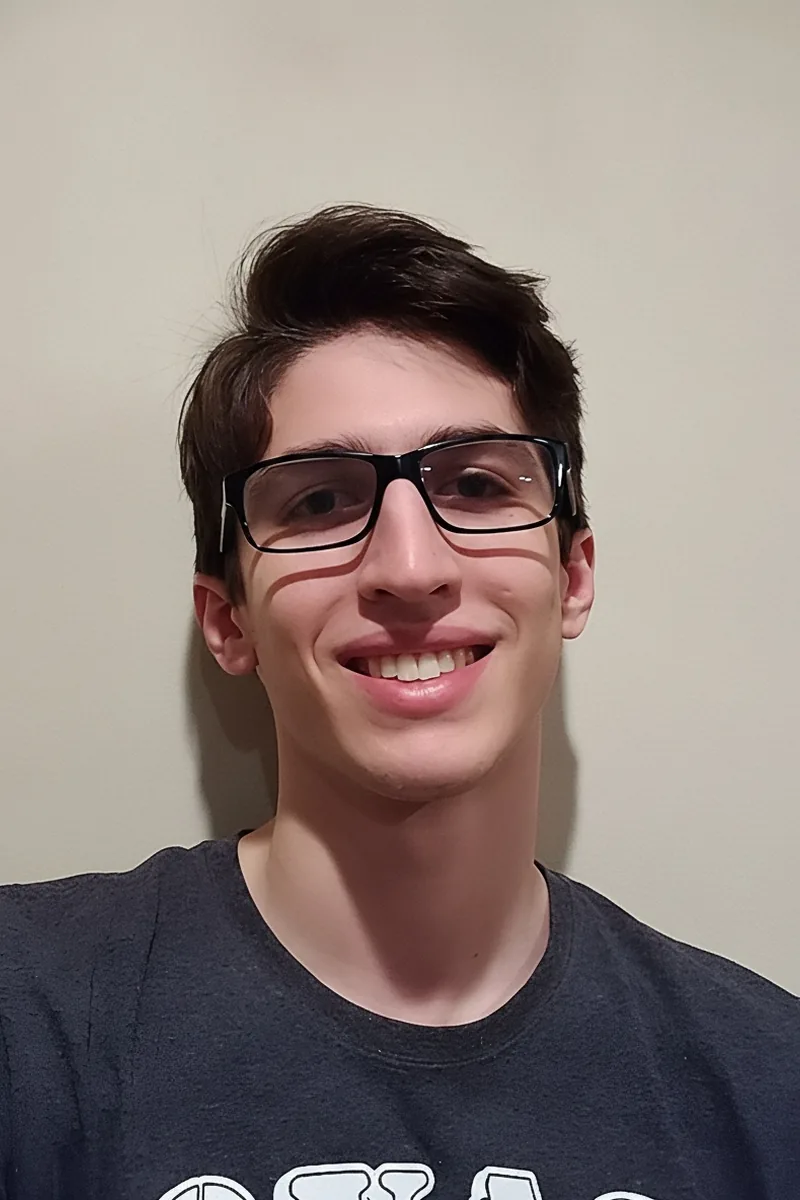
Gauss's law, Ampère's law, Faraday's law — AP Physics C: E&M throws vector calculus at students who are often still getting comfortable with multivariable thinking. Matthew studies both mathematics and physics at Harvard and has coursework in multivariable calculus, so he can unpack the geometry behind flux integrals and field line arguments in a way that makes Maxwell's equations feel less like magic.

Gauss's law, Ampère's law, Faraday's law — AP Physics C: E&M asks students to wield vector calculus in the service of invisible fields, which is a genuinely difficult conceptual shift. Spencer's biomedical engineering studies require exactly this skill set, since electromagnetic principles drive technologies like MRI and neural signal processing. He unpacks each law with clear diagrams and step-by-step integral setups so the math reinforces the physics instead of obscuring it.
AP Physics C: E&M is where calculus meets abstract field theory, and most students struggle not with the math itself but with visualizing what's happening inside capacitors, inductors, and current-carrying loops. Aleksandar pairs his UPenn physics coursework with a structured problem-solving method — breaking each scenario into a diagram, an equation selection, and a calculus setup — that turns intimidating free-response questions into repeatable steps.
Gauss's law, Ampère's law, RC circuits — AP Physics C: E&M piles abstract vector calculus on top of already counterintuitive electromagnetic concepts. Victoria unpacks each topic by building physical intuition first, like visualizing electric field lines before setting up a flux integral, so the math serves the physics instead of obscuring it. Her background in medical imaging gives her real-world examples of how electromagnetic principles show up beyond the textbook.
Gauss's law, Ampère's law, Faraday's law, RC circuits — AP Physics C: E&M asks students to wield vector calculus in physical contexts most haven't encountered before. Justin earned his bachelor's in physics and mathematics at Washington University in St. Louis before completing a PhD in Computational Mathematics at the University of Chicago, giving him the exact blend of mathematical rigor and physical intuition this course demands. He breaks down intimidating surface integrals and field superposition problems into clear, repeatable reasoning steps.
Gauss's law, Ampère's law, RC circuits — AP Physics C: E&M demands comfort with vector calculus applied to invisible fields, which is a steep jump for most students. David's engineering coursework at UCLA keeps him immersed in this material, and he excels at translating abstract field equations into concrete, visual reasoning.
I am an Applied Physics Major with an Emphasis in Mechanical Engineering at Brigham Young University. I love to share the joy I have in the sciences and math to show truly the applications are so far-reaching.
Gauss's law, Ampère's law, RC circuits, electromagnetic induction — AP Physics C: E&M is where most students hit a wall because the math and the physical intuition have to work together simultaneously. Dennis's research designing optical-electronic multiplexers required him to model electromagnetic wave behavior at a professional level, and he brings that fluency to breaking down the toughest problems on the exam.
Electromagnetism was the centerpiece of Michael's teaching at the University of Michigan, where he designed and led undergraduate lab courses on circuits, fields, and waves. AP Physics C: E&M demands comfort with Gauss's law, Ampère's law, Faraday's law, and RC/RL circuit analysis — all topics he's taught extensively at the college level. He knows exactly where the conceptual gaps tend to open up, especially around flux integrals and the superposition of electric fields.
Gauss's law, Ampère's law, Faraday's law — AP Physics C: E&M asks students to wield vector calculus inside electromagnetic theory, which is a steep jump from most prior coursework. Steven approaches each topic by first explaining the physical picture, then showing the mathematical framework, then working through a practical example that ties both together. His PhD in chemical engineering required deep work with electromagnetic principles and multivariable calculus alike.
AP Physics C: E&M is widely considered the hardest AP science exam, and it's also the subject closest to Sabrina's daily life as a Princeton electrical engineering student with an applied physics focus. She digs into Gauss's law, Ampère's law, RC circuits, and Faraday's law with the fluency of someone who uses Maxwell's equations in her own research and coursework. Her physics research at a Max Planck Institute adds another layer of depth to her explanations.
I am a graduate of Cornell University's College of Arts and Sciences. I received my Bachelor of Arts in Chemistry with Distinction in 2015. Since graduation, I was a physics/chemistry teacher and soccer coach at a private school in Virginia for a year, where I led the soccer team to an undefeated season. Before teaching and coaching professionally, I was a Teaching Assistant for the Cornell Math and Physics Departments, where I taught many subjects including calculus, mechanics, electromagnetism. Throughout my time at Cornell and as a teacher, I tutored subjects ranging from the SAT to AP Physics and Algebra II, which is where my true talents lie: in small group or one-on-one settings where I can give students the full attention they deserve and tailor my approach specifically to their learning styles. This is why I am now pursuing tutoring as a part-time occupation at Varsity Tutors. I embrace teaching all math and science subjects, especially physics and calculus, at both the college and high school level and will go above and beyond to make sure all of my students succeed, according to their definition of success. In my spare time, I enjoy playing league soccer, basketball, tennis and guitar, and also like to travel and see as much of the world as I can.
Gauss's law, Ampère's law, Faraday's law — AP Physics C: E&M asks students to think in vector fields and surface integrals, which is a major leap from mechanics. As an astrophysics and chemistry double major at CU Boulder, Graham works with electromagnetic theory as a core part of his studies and breaks down each law into the physical picture behind the math. He holds a 5.0 rating from students.
Gauss's law, Ampère's law, and Faraday's law each require students to set up integrals over surfaces and paths that feel nothing like standard calculus problems. Vishank's comfort with multivariable math and his experience teaching across physics and calculus let him bridge that gap — showing exactly how to choose a Gaussian surface or an Amperian loop and why the math works the way it does.
Gauss's law and Ampère's law become far more manageable once a student can visualize the symmetry each problem is really asking about. Emily's physics coursework at Cornell covered electricity and magnetism at the calculus level, and she approaches each concept by connecting the integral setup to the physical scenario. Her 4.8 rating speaks to how clearly she translates abstract field equations into something students can actually work with.
Testimonials
Because the right AP Physics C: Electricity and Magnetism tutor makes all the difference.
Average Session Rating – Based on 3.4M Learner Ratings
Practice AP Physics C: Electricity and Magnetism
Free practice tests, flashcards, and AI tutoring for AP Physics C: Electricity and Magnetism
Nearby AP Physics C: Electricity and Magnetism Tutors
Other Pittsburgh Tutors
Related Science Tutors in Pittsburgh
Frequently Asked Questions
AP Physics C: E&M focuses on electrostatics, conductors and dielectrics, electric circuits, magnetic fields, and electromagnetic induction. The course emphasizes calculus-based problem-solving, including applications of Gauss's law, Ampère's law, and Faraday's law. A tutor can help you master both the conceptual understanding and the mathematical techniques needed to apply these principles to complex problems.
Students typically struggle most with Gauss's law and its applications, understanding magnetic force and field interactions, and electromagnetic induction problems that require connecting multiple concepts. The heavy calculus component—including line integrals, surface integrals, and vector fields—also trips up many students. Personalized tutoring can break down these abstract concepts into manageable pieces and show you how to apply them step-by-step.
Score improvement depends on your starting point and how consistently you work with a tutor. Students who engage in regular practice, focus on weak areas, and learn effective problem-solving strategies typically see gains of 1–2 points on the AP scale (out of 5). The key is identifying which specific topics—whether it's circuit analysis, field calculations, or exam pacing—are holding you back, then targeting those areas systematically.
The exam is 90 minutes with 35 multiple-choice questions and 3 free-response problems. Most students benefit from spending roughly 45 minutes on multiple-choice (about 1.3 minutes per question) and 45 minutes on free-response, though this varies based on your strengths. A tutor can help you practice under timed conditions, identify which question types slow you down, and develop strategies for tackling harder problems without getting stuck.
Start by taking full-length practice tests under timed conditions to identify weak areas, then focus on targeted practice with specific topics before moving to mixed problem sets. Review every mistake carefully—not just the answer, but why you missed it and what concept or technique you need to strengthen. A tutor can guide you through this process, help you spot patterns in your errors, and ensure you're not just memorizing solutions but truly understanding the physics.
Varsity Tutors connects Pittsburgh students with expert tutors who specialize in AP Physics C: Electricity and Magnetism. You can get matched with a tutor who understands the specific curriculum, knows the exam format, and can tailor instruction to your learning style—whether you need help with conceptual understanding, problem-solving techniques, or exam strategy. The matching process ensures you work with someone experienced in helping students succeed on this challenging exam.
Your first session will typically focus on understanding your current level, identifying your biggest challenges, and establishing a study plan. The tutor will likely assess which topics you're strongest in and where you need the most support—whether that's conceptual gaps, math skills, or test-taking strategy. From there, you'll work together to create a personalized roadmap that targets your specific needs before the exam.
Yes—AP Physics C: E&M is calculus-based, so you'll need to be comfortable with derivatives, integrals, and vector calculus. If calculus is a weak area for you, let your tutor know early so they can reinforce those skills alongside the physics concepts. Many students benefit from reviewing specific calculus techniques (like line and surface integrals) in the context of physics problems, which makes the math more concrete and meaningful.
Let’s find your perfect tutor
Answer a few quick questions. We’ll recommend the right plan and match you with a top 5% tutor.