Award-Winning Japanese Tutors
serving Pittsburgh, PA
Japanese
Tutors in Pittsburgh
Private 1-on-1 tutoring, weekly live classes for academic support, test prep & enrichment, practice tests and diagnostics, and more to elevate grades and test scores.
Based on 3.4M Learner Ratings
UniversitiesSchools & Universities
DeliveredHours Delivered
ProficiencyGrowth in Proficiency
Who needs tutoring?
No obligation. Takes ~1 minute.

Jacob's degree in East Asian Languages and Civilizations from the University of Chicago means his Japanese instruction is rooted in deep study of the culture, history, and linguistic traditions behind the language. He connects vocabulary and grammar to their cultural logic — explaining why certain verb endings carry social weight or how kanji compounds reflect Chinese origins — giving students a richer understanding than drills alone provide. Rated 5.0 by students.
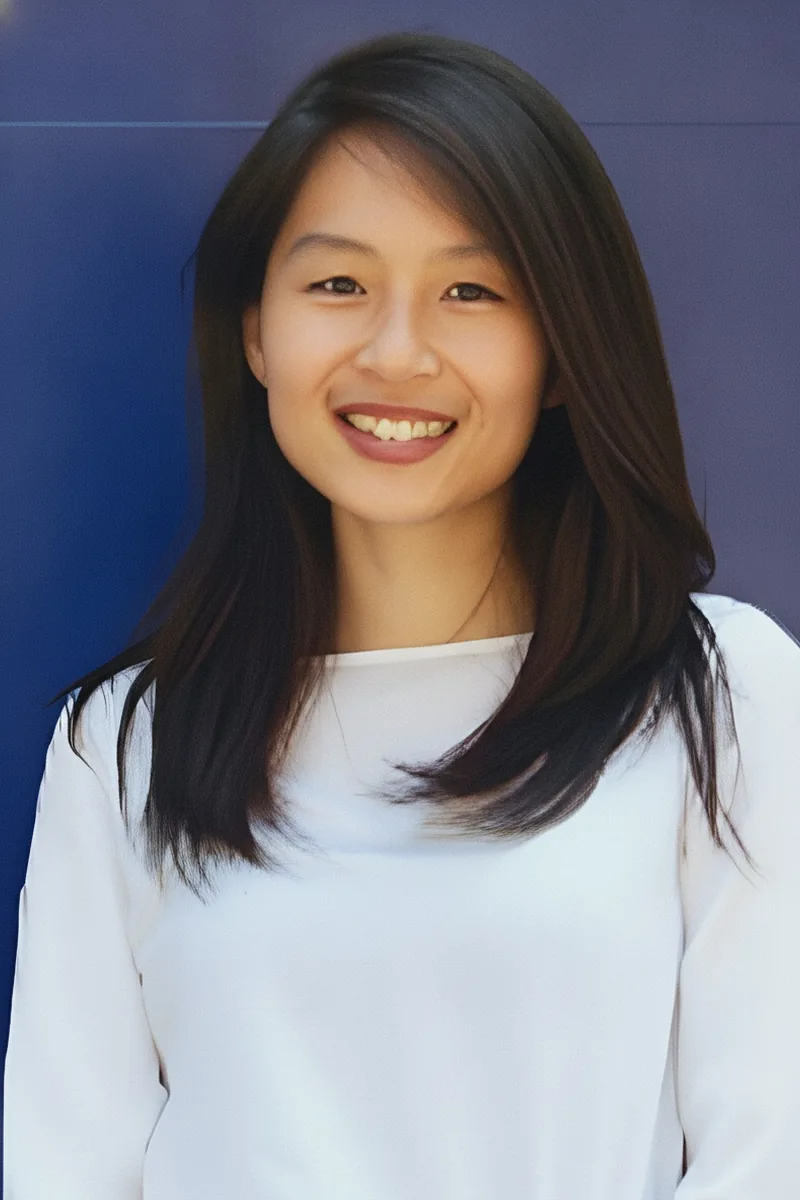
I am open to tutoring in a broad range of subjects, including Algebra, Spanish I/II, ESL and Biology (SAT II, AP, and MCAT).
I currently work for an afterschool enrichment program (Best Brains) tutoring elementary English and math, and I have 4+ years of experience as a private ESL tutor for both children and adults. I am working toward my Masters of Science in Secondary English Education and ESL at the University of Wisconsin- Madison. I graduated from the University of Oregon with a Bachelor of Arts in Comparative World Literature and Japanese, and from the University of Wisconsin-Madison with a Master of Arts in Japanese Language and Literature. I began tutoring while I was in high school, assisting with algebra homework. In college, I volunteered as a kindergarten reading assistant through a program called Start Making a Reader Today. I later volunteered while in graduate school at a local high school tutoring students in beginner Japanese. I have also been employed by the University of Wisconsin as a Teaching Assistant, and taught in Religious Studies and East Asian Studies. In all cases, it has been a pleasure watching students progress in their academics and to see them grow as young scholars. I especially enjoy teaching language arts because of the feeling of connection that language can bring. My favorite part of teaching is seeing the smiling face of someone the moment that they finally "get" something they've been struggling with and watching their confidence boost. In my free time, I host a small book club, pen pal with friends around the world, and try my hand at new recipes.
Zhaleh is actively studying Japanese at Carnegie Mellon University, which means she's navigating the same kanji memorization strategies, grammar particle distinctions, and reading comprehension challenges her students face. She breaks down tricky structures like て-form conjugations and は vs. が usage in ways that make the logic behind the language click.
Between his East Asian Studies major at Harvard, his presidency of the Harvard College Japan Initiative, and his work in the Yenching Library's Japanese Collection, Shane lives and breathes Japanese. He reads novels and plays games in Japanese for fun, which means he teaches the language the way it's actually used — from kanji recognition and particle usage to the register shifts that textbooks barely cover.
Learning Japanese means juggling three writing systems, unfamiliar sentence structures, and particles that don't map neatly onto English — Rex tackles each layer separately so students can build real reading and conversational ability. His communication design background also gives him a unique perspective on how visual layout and typography work in Japanese media, which keeps lessons engaging and culturally grounded.
Few Japanese tutors can combine formal academic study with real teaching experience in Japan — Sophie has both. Her East Asian Studies work at Princeton included intensive Japanese language training, and she spent time teaching English in Japan, which gave her deep familiarity with how the two languages map onto (and diverge from) each other. She tackles everything from hiragana and katakana basics to particle usage and keigo politeness levels.
Learning Japanese means juggling three writing systems, a grammar structure that's the reverse of English, and cultural nuances that change how you speak depending on who you're talking to. Natasha taught Japanese at the high school level and lived in Japan teaching in elementary schools, giving her the kind of practical fluency that makes hiragana drills, particle usage, and conversational practice feel grounded in real life. She's 5.0-rated and works with beginners through advanced learners.
Most students learning Japanese hit a wall somewhere between mastering hiragana and actually constructing sentences with particles, verb conjugations, and counters. Kai has been teaching Japanese through the student organization meetings on campus, building lessons that move learners from basic self-introductions to reading short passages and holding simple conversations.
Having completed an Asian Languages minor at UCLA, Abrahim brings formal training in Japanese grammar, kanji acquisition, and reading comprehension to his tutoring. He approaches the language methodically — building from particle usage and verb conjugation patterns up to reading authentic texts — which works especially well for students who want structure rather than immersion-only learning.
I am a great tutor because not only are my fundamental verbal and quantitative skills strong, but I am able to communicate my reasoning and problem solving skills quickly and clearly.
A PhD in linguistics means Lewis doesn't just know languages — he understands how they work structurally, which is exactly what you need when Japanese throws you grammar that has zero English parallels. He applies that analytical framework to breaking down sentence-final particles, SOV word order, and the logic behind verb conjugation so the patterns become predictable rather than random. His experience teaching ESL/ELL also means he's practiced at bridging the gap between how English and non-European languages organize meaning.
I am also fluent (reading/listening/writing) in Cantonese and mandarin Chinese because of my upbringing. Half of my childhood education was received in Hong Kong and the other half was in Australia.
Hi! It's Wataru. I am originally from Japan and have been living in New York since 2000. I had a career as an industrial newspaper pressman/editor in Tokyo so that I know newspaper level strict grammar and manner of business speech. I watch anime and I can talk about Japanese subculture with you if you like. I have been teaching Japanese language in person and online. I have taught from beginners to JLPT N3 certificate prep students. I've taught American, Canadian, English, Indian, German, Australian, Mexican, and so on. Teaching is one of my way to feel the joy of supporting people. I'll help you master the language and dive into Japanese culture and subculture. Once you start to think in Japanese, you will notice that your way of communication changes. English is good for business, law, and science while Japanese is more about sharing feelings. The waiters in Japan may be reluctant to serve your table, but my students prepare well to make them feel at ease and they have fantastic travel in Japan.
Testimonials
Because the right Japanese tutor makes all the difference.
Average Session Rating – Based on 3.4M Learner Ratings
Other Pittsburgh Tutors
Related Languages Tutors in Pittsburgh
Frequently Asked Questions
Your first session is an opportunity to discuss your current level, learning goals, and any specific challenges you're facing—whether that's verb conjugation, kanji recognition, or conversation confidence. The tutor will assess your strengths in reading, writing, speaking, and listening, then create a personalized plan tailored to your needs and timeline. This foundation helps ensure every session after builds on what works best for you.
In a classroom setting, students often get limited speaking time. With personalized 1-on-1 instruction, you have dedicated time to practice conversation, receive real-time feedback on pronunciation and accent, and build confidence speaking without the pressure of peers. Your tutor can adjust the difficulty level and topics to match your interests, making speaking practice engaging and effective rather than intimidating.
The most effective approach combines both. Understanding grammar rules gives you a framework for constructing sentences correctly, while natural usage—through conversation, listening to native speakers, and cultural immersion—helps you internalize how Japanese actually sounds and flows. A skilled tutor balances explicit instruction in grammar with plenty of real-world application so you're not just memorizing rules but developing actual fluency.
Spaced repetition and active retrieval practice are proven methods—reviewing vocabulary at increasing intervals and testing yourself rather than just re-reading. Personalized tutoring incorporates these techniques alongside contextual learning, where new words are practiced in sentences and conversations relevant to your life. Your tutor can also help you connect vocabulary to cultural context, which makes words more memorable than isolated memorization.
Kanji mastery requires consistent practice with strategic methods—learning radicals (building blocks), understanding stroke order, and practicing in context rather than isolation. A tutor can prioritize the most useful kanji for your level, teach you efficient recognition and writing techniques, and integrate kanji practice into your reading and writing assignments. Many students find that learning kanji alongside vocabulary and grammar, rather than separately, helps everything stick better.
Language is deeply connected to culture—understanding Japanese customs, communication styles, and cultural references makes the language more meaningful and memorable. Tutors can incorporate cultural immersion into lessons through authentic materials like Japanese media, news, and literature, helping you understand not just what to say but when and why to say it. This approach accelerates both language learning and genuine cultural appreciation.
Look for tutors with native or near-native fluency, teaching experience across multiple proficiency levels, and expertise in the four core skills: reading, writing, speaking, and listening. Ideally, they understand the specific challenges Pittsburgh students face and can adapt to your learning style. Varsity Tutors connects you with experienced Japanese tutors who have proven track records helping students reach their goals, whether that's conversational fluency, test preparation, or cultural proficiency.
Conversational fluency typically requires 600-750 hours of dedicated study according to language learning research. With consistent personalized tutoring—combined with your own practice—many students reach conversational ability in 6-12 months, though the timeline depends on your starting level, frequency of sessions, and effort outside tutoring. Regular speaking practice with a tutor accelerates this process significantly compared to self-study alone.
Let’s find your perfect tutor
Answer a few quick questions. We’ll recommend the right plan and match you with a top 5% tutor.