Award-Winning AP Physics C: Mechanics Tutors
serving Pittsburgh, PA
AP Physics C: Mechanics
Tutors in Pittsburgh
Private 1-on-1 tutoring, weekly live classes for academic support, test prep & enrichment, practice tests and diagnostics, and more to elevate grades and test scores.
Based on 3.4M Learner Ratings
UniversitiesSchools & Universities
DeliveredHours Delivered
ProficiencyGrowth in Proficiency
Who needs tutoring?
No obligation. Takes ~1 minute.
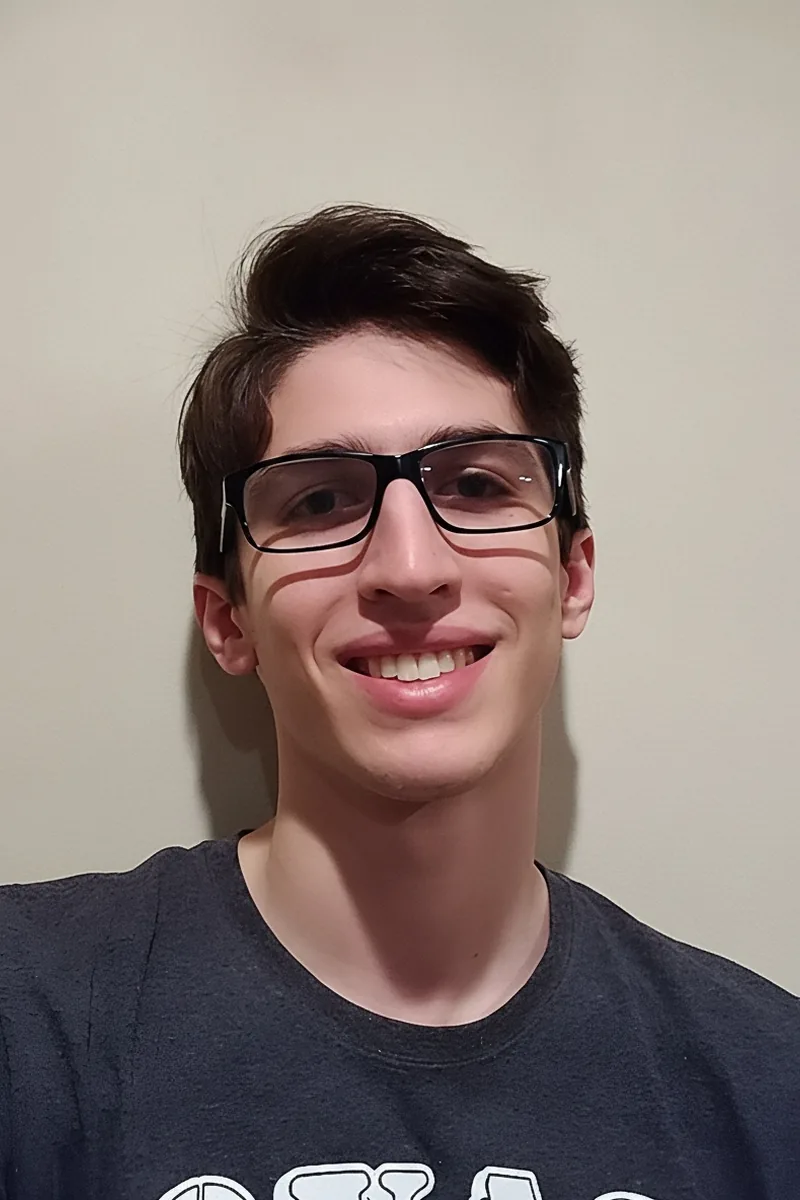
Studying mathematics and physics at Harvard, Matthew is building the calculus and mechanics toolkit simultaneously — which means he sees the connection between a differential equation and a physical system as one idea, not two separate steps. His 34 ACT and deep comfort with multivariable calculus let him dig into the trickier AP Physics C territory, like work done by position-dependent forces or setting up moment-of-inertia integrals for composite objects, with real mathematical fluency. Rated 4.9 by students.
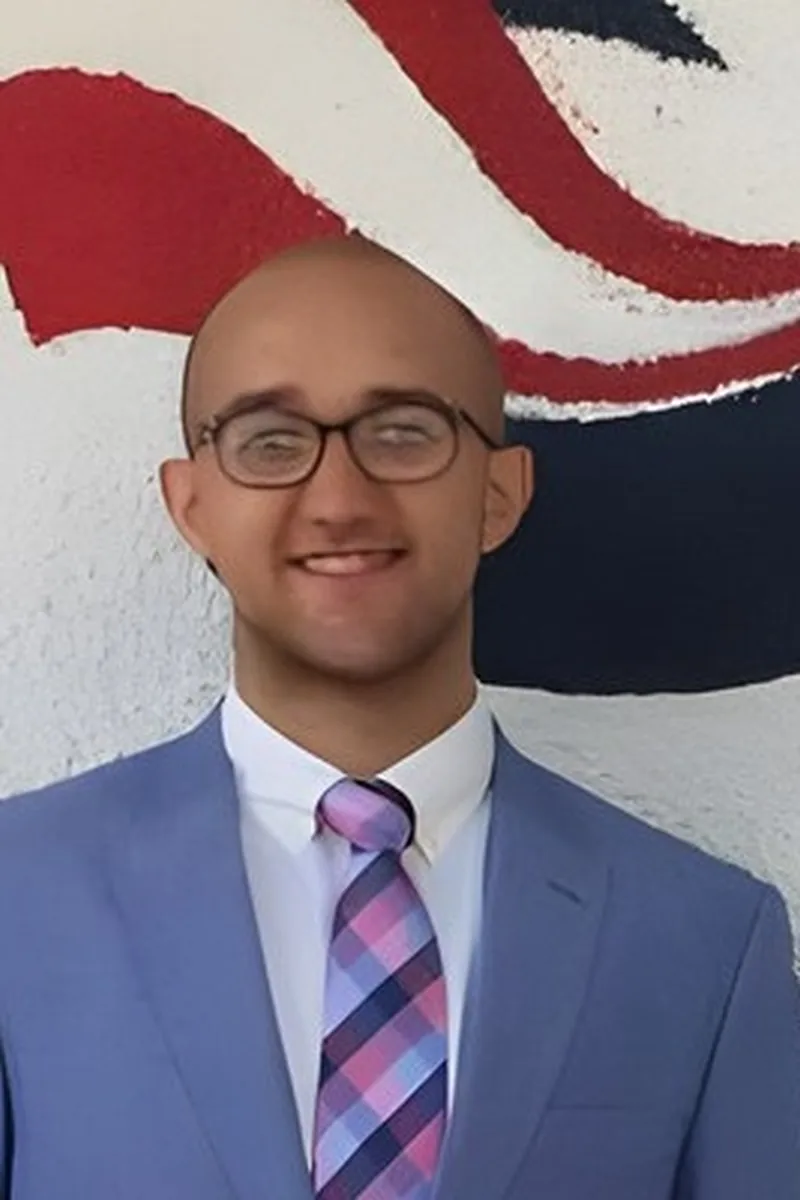
Vaughn's physics degree and 1590 SAT mean the calculus-based problem-solving AP Physics C: Mechanics demands — setting up Newton's second law as a differential equation, computing work done by variable forces — is squarely in his wheelhouse. He zeroes in on dimensional analysis and unit tracking as a way to catch errors before they cascade through multi-step free-response problems, a habit that pays off especially in rotational dynamics where signs and reference frames get tricky.
Biomedical engineering throws you into calculus-based mechanics from day one — Spencer's coursework has him modeling forces on biological systems using the same Newtonian framework and integral setups that AP Physics C tests on free-response problems. His 35 ACT and parallel teaching across both AP Calculus BC and AP Physics C mean he can diagnose whether a student's stuck on the physics concept or the calculus execution, and address the right one.
Kimanthi's biomedical engineering degree from Duke required the same calculus-heavy mechanics — torque on prosthetic joints, force integrals through fluid systems, energy methods applied to biomechanical models — that AP Physics C tests in a more abstract form. That background means she can ground rotational dynamics and work-energy problems in tangible physical scenarios, giving students an intuitive hook before the math gets dense. Rated 5.0 by students.
Steven's biology degree from Drexel included the calculus-based physics sequence that maps directly onto AP Physics C: Mechanics — kinematics, Newton's laws in differential form, and energy conservation problems that demand clean integral setups. Where many science-track tutors skim the mechanics, his organismal physiology concentration meant applying force and motion concepts to biological systems, giving him a concrete way to explain why a free-body diagram matters before any calculus happens. Rated 5.0 by students.
Every AP Physics C: Mechanics problem ultimately comes down to two things — drawing the right free-body diagram and knowing which calculus tool to reach for next. Ryan's mechanical engineering studies at Temple mean he applies Newton's laws, work-energy integrals, and rotational kinematics to real systems in his coursework, so he can show students exactly where a problem shifts from physics reasoning to calculus execution. His 32 ACT and hands-on engineering background keep the math grounded in physical intuition rather than abstract symbol-pushing.
Biology majors who also score a 1590 SAT tend to be the ones who genuinely enjoy the quantitative side of science — and Kimberly's UNC coursework in biochemistry and IB/AP sciences means she's comfortable with the calculus-based force and energy problems that define this exam. She's especially useful for students who understand the physics conceptually but freeze when a free-response question asks them to set up a work integral or derive an equation of motion from Newton's second law. Rated 4.9 by students.
Richard holds both a B.S. in Math and a B.S. in Physics, which means the calculus and the mechanics aren't two separate languages for him — they developed together, and he teaches AP Physics C that way, treating the math as inseparable from the physical reasoning rather than an add-on. His graduate work in atmospheric sciences demanded constant modeling of force systems and fluid dynamics, so problems involving variable forces or energy conservation across complex scenarios are second nature. He can also tutor entirely in Spanish for bilingual students who think more clearly in their first language.
Data analytics trains you to model systems mathematically and interpret what the numbers actually mean — skills Vishank applies directly when tackling AP Physics C: Mechanics problems that require setting up kinematic equations or integrating variable forces. His coursework in calculus through linear algebra, combined with tutoring across both math and science, means he can diagnose whether a student's struggle on a free-response problem is a physics misunderstanding or a calculus execution error. Rated 4.9 by students.
Emily's computational biology major at Cornell pairs heavy calculus and physics coursework with programming — a combination that trained her to model real systems mathematically, which is exactly what AP Physics C: Mechanics demands when a problem asks you to integrate a variable force or derive an equation of motion. Her 36 ACT and 1590 SAT reflect the kind of quantitative precision that pays off on the exam's trickiest free-response questions, especially those involving work-energy theorem applications and non-constant acceleration. Rated 4.9 by students.
Engineering coursework at Notre Dame means Alexandra is solving calculus-based mechanics problems every week — free-body diagrams with variable forces, work-energy integrals, the full Newton's second law treatment that AP Physics C demands. Her 1530 SAT and 32 ACT point to the quantitative comfort that lets her explain the reasoning behind each setup rather than just walking through formulas. Rated 5.0 by students.
Double-majoring in physics and computer science at Stony Brook, Kiran lives in the calculus-based mechanics world daily — setting up work-energy integrals, deriving equations of motion, solving the same kinds of problems AP Physics C puts on the free-response section. His 34 ACT and physics coursework give him both the mathematical fluency and the physical intuition to explain why a particular integral applies to a given force scenario, not just how to evaluate it.
Emergency medicine demands snap physics intuition — understanding how forces transfer through a body, how momentum changes in a collision, how energy dissipates on impact — and Victoria built that intuition through her pre-med physics coursework before medical school at Boston University. She teaches AP Physics C: Mechanics by grounding each calculus setup in a concrete physical scenario, making sure students can articulate *why* they're integrating a force over a displacement before they ever pick up a pencil. Her math-and-physics double focus across 25 tutoring subjects means she catches the exact moment a student's confusion shifts from the mechanics to the calculus.
John scored a 36 on the ACT and tutors the full calculus-to-physics pipeline — AP Calculus AB, AP Physics 1, and AP Physics C: Mechanics — so he sees exactly where students' math skills break down under the pressure of a mechanics problem. He teaches students to recognize which physical scenarios call for integration versus differentiation before they even write an equation, turning the free-response section into a series of deliberate decisions rather than panicked formula hunts. Rated 4.9 by students.
Mechanics is where Cory is most at home. He treats AP Physics C: Mechanics as a student's first real encounter with calculus-based reasoning about the physical world — deriving kinematic equations from integrals, connecting Newton's laws to differential equations in rotational dynamics, and building intuition for conservation laws that goes beyond plugging into formulas. His physics degree means the vector calculus never gets hand-waved away.
Computational mathematics at Rice is essentially applied calculus with the volume turned up — Vinson's coursework in differential equations and numerical methods maps directly onto the mechanics problems where students need to set up Newton's second law as a differential equation and solve it, not just memorize kinematic formulas. His 36 ACT and National AP Scholar status (including AP Physics and the full calculus sequence) mean he's been through the exact exam pressure these students face. Rated 4.8 by students.
Simulating cosmic ray acceleration through turbulent plasmas requires exactly the kind of calculus-based mechanics reasoning that AP Physics C tests — Newton's laws applied to complex systems, rotational dynamics, and energy methods. Dennis walks students through the hardest problems on the exam by teaching them to set up the physics first and let the calculus follow naturally. Rated 4.7 by students.
Four years of teaching undergraduate physics labs at the University of Michigan — especially circuits, electromagnetism, and wave mechanics — gave Michael a sharp eye for where students' calculus intuition breaks down inside a physics problem. For AP Physics C: Mechanics, he zeroes in on that breakdown point: translating a physical setup (a block on a spring, a rotating disk with non-uniform mass) into the correct integral or differential equation. His PhD-level fluency means he can explain not just which formula applies, but why the math takes that particular form.
Rice's mechanical engineering program puts Ashton through calculus-based statics, dynamics, and kinematics every semester — the same core mechanics that AP Physics C tests, just applied to real structural and machine systems. That daily exposure means he can spot whether a student's free-response mistake is a physics misread or a calculus execution error, and address the right one. His 32 ACT underscores the quantitative fluency backing his approach.
Testimonials
Because the right AP Physics C: Mechanics tutor makes all the difference.
Average Session Rating – Based on 3.4M Learner Ratings
Practice AP Physics C: Mechanics
Free practice tests, flashcards, and AI tutoring for AP Physics C: Mechanics
Nearby AP Physics C: Mechanics Tutors
Other Pittsburgh Tutors
Related Science Tutors in Pittsburgh
Frequently Asked Questions
AP Physics C: Mechanics focuses on classical mechanics and covers kinematics, Newton's laws, work and energy, momentum, circular motion, oscillations, and gravitation. The course emphasizes calculus-based problem-solving, requiring students to apply derivatives and integrals to physics concepts. For students in Pittsburgh preparing for the AP exam, understanding how these topics interconnect is essential for both the multiple-choice and free-response sections.
AP Physics C: Mechanics combines rigorous physics concepts with calculus, which creates a steep learning curve for many students. The exam requires not just memorizing formulas, but understanding the underlying physics principles and applying them to novel problem scenarios. Common struggles include translating word problems into mathematical models, managing time during the exam, and distinguishing between similar concepts like work versus energy or velocity versus acceleration.
Score improvement depends on your starting point and commitment level, but personalized 1-on-1 instruction typically helps students identify and close knowledge gaps more efficiently than studying alone. Many students see meaningful gains by focusing on their weakest topics—whether that's problem-solving strategies, calculus applications, or specific units like oscillations or gravitation. Consistent practice with targeted feedback over several months often leads to score increases of 1-2 points on the 1-5 AP scale.
Practice tests are critical for AP Physics C: Mechanics success because they reveal which topics need more review and help you build pacing skills for the actual exam. Taking full-length practice tests under timed conditions allows you to experience the pressure of the real test and identify whether you struggle more with the multiple-choice section (45 minutes) or the free-response section (45 minutes). Reviewing your mistakes on practice tests—especially understanding why you chose wrong answers—is where the real learning happens.
Ideally, students benefit most from starting tutoring at the beginning of the course to build a strong foundation in calculus-based problem-solving and conceptual understanding. However, tutoring is valuable at any point—even students who start a few months before the exam can improve by focusing on their weakest units and test-taking strategies. For students in Pittsburgh aiming for a strong score, 8-12 weeks of consistent tutoring combined with regular practice tests typically provides solid preparation.
The free-response section rewards clear reasoning and proper setup as much as correct final answers—partial credit is generous if you show your work and use sound physics principles. A strong strategy is to read all three questions first, tackle the one you feel most confident about, and manage your time so you attempt all three. Expert tutors can help you practice organizing your solutions, identifying which equations to use, and avoiding common mistakes like forgetting to include units or missing negative signs in vector problems.
Calculus is fundamental to AP Physics C: Mechanics—you'll use derivatives to find velocity and acceleration, and integrals to find displacement and work. Unlike AP Physics 1 and 2, which are algebra-based, Physics C requires you to understand derivatives and integrals conceptually, not just mechanically. If calculus is a weak area, personalized tutoring can help you strengthen both your calculus skills and your ability to apply them to physics problems.
Your first session focuses on understanding where you stand: which topics feel solid, which are confusing, and what your goals are (improving overall understanding, targeting a specific score, or preparing for the exam). Varsity Tutors connects you with tutors who specialize in AP Physics C: Mechanics and can assess your strengths and gaps through discussion and sample problems. From there, your tutor creates a personalized plan that addresses your specific challenges, whether that's calculus applications, problem-solving strategies, or test anxiety management.
Let’s find your perfect tutor
Answer a few quick questions. We’ll recommend the right plan and match you with a top 5% tutor.