Award-Winning Physical Chemistry Tutors
serving Philadelphia, PA
Physical Chemistry
Tutors in Philadelphia
Private 1-on-1 tutoring, weekly live classes for academic support, test prep & enrichment, practice tests and diagnostics, and more to elevate grades and test scores.
Based on 3.4M Learner Ratings
UniversitiesSchools & Universities
DeliveredHours Delivered
ProficiencyGrowth in Proficiency
Who needs tutoring?
No obligation. Takes ~1 minute.
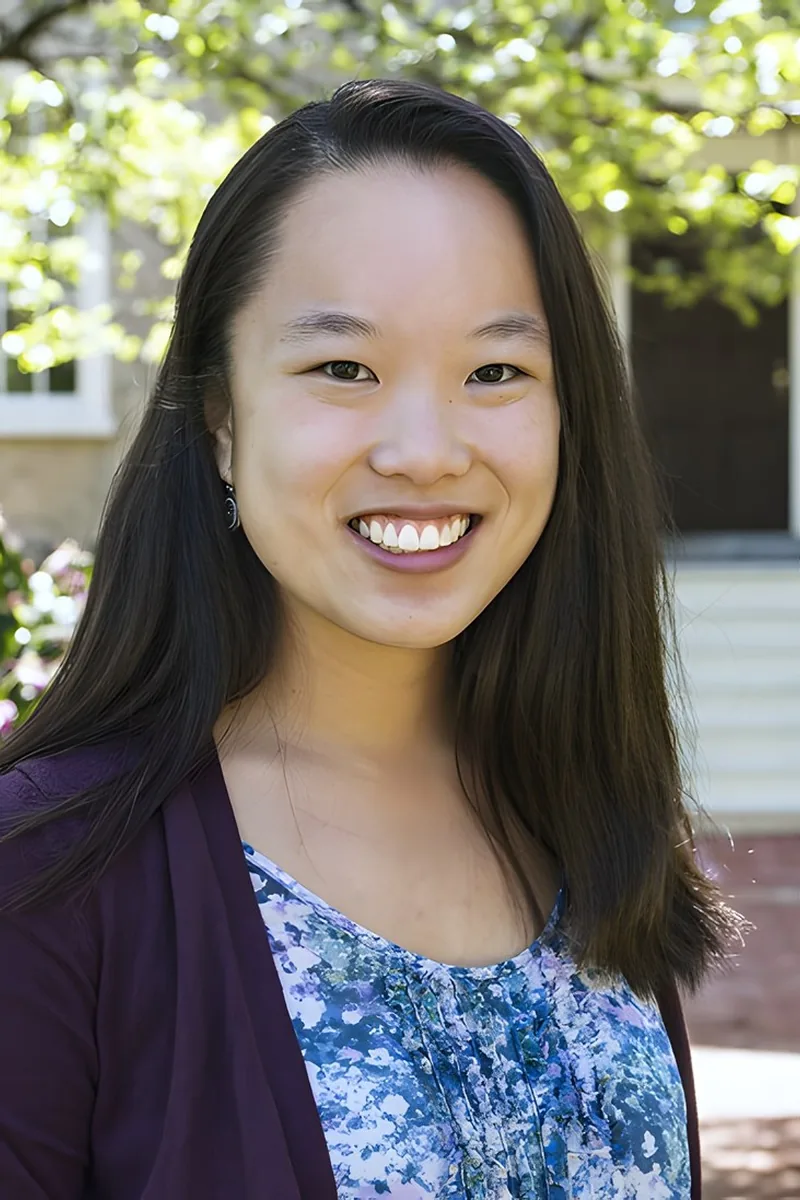
Teaching high school chemistry daily means Kathleen regularly translates thermodynamic concepts like enthalpy, entropy, and equilibrium into language that clicks — a skill that carries directly into the more calculus-heavy treatment those same ideas get in a p-chem course. Her M.S.Ed from Penn and chemistry degree give her both the content depth and the instinct for spotting exactly where a derivation stops making sense to a student. Rated 5.0 by students.

Biology coursework builds a surprising amount of p-chem intuition — enzyme kinetics, membrane energetics, and metabolic thermodynamics all run on the same free energy and rate equations that dominate a physical chemistry sequence. Ade uses that biological grounding to make abstract derivations tangible, turning something like a Boltzmann distribution into a concrete picture of how molecules actually partition energy across states.
I am currently a graduate student in Chemical Engineering at the University of Delaware. I am working on using magnetic and flow fields to create advanced materials by directing the self-assembly process of nanoparticles . I have tutored students in Chemistry, Physics and Math all throughout undergraduate and graduate work. I truly enjoy breaking material down into its core components that allows the students to understand complicated information.
Scoring in the 98th percentile on the MCAT required Nishant to internalize the thermodynamic and kinetic reasoning that p-chem makes rigorous — enthalpy diagrams, equilibrium constants, and rate law derivations all showed up under intense time pressure before he encountered them in their full mathematical form as a medical student at Case Western. He teaches a physics TA's instinct for applied problem-solving to the calculus-dense material, breaking a topic like a Maxwell relation or a phase diagram into the physical question it's actually answering.
A chemistry B.S. means Edward didn't just pass p-chem — he built his degree around it, working through the thermodynamic derivations, quantum mechanical models, and kinetics frameworks that the course demands at full rigor. That direct grounding in the subject lets him zero in on where a student's understanding breaks, whether it's a shaky grasp of partial derivatives in a Maxwell relation or confusion about what a wave function actually represents. Rated 5.0 by students.
Maurice's teaching background in special education sharpens his ability to break down the layered abstractions in p-chem — when a student is lost inside a Gibbs free energy derivation, he isolates exactly which conceptual step broke down and rebuilds from there. His coursework across calculus, statistics, and chemistry gives him enough quantitative range to walk through the thermodynamic and kinetic formalisms, even if p-chem isn't his deepest specialty.
A physics degree gives Cory something many p-chem tutors lack — native comfort with the quantum mechanics and statistical mechanics that chemistry students often encounter for the first time in this course. He treats topics like wave functions, partition functions, and thermodynamic state variables as extensions of the physics he already thinks in, then builds the chemical context around them. Rated 4.9 by students.
Eight years as a chemistry professor at Trinity College meant Maria taught p-chem repeatedly — not just lecturing on thermodynamic state functions and quantum mechanical models, but sitting with students in office hours untangling the specific derivation step where they got lost. That Ph.D.-level command of the subject, combined with a 5.0 rating, reflects someone who knows exactly which Maxwell relation or partition function integral is about to cause trouble and can rework it on the spot.
Biochemistry lab work and a dual bachelor's in arts and biochemistry mean Andrew has already applied the thermodynamics, kinetics, and quantum mechanical concepts that make p-chem brutal — calculating free energy changes in enzyme systems, modeling reaction rates at the molecular level. He unpacks the heavy calculus in derivations by keeping one foot in the real chemistry, so a partition function or a phase diagram reads as a description of molecular behavior rather than an exercise in pure math. Rated 4.9 by students.
I am pursuing a career in dentistry/oral surgery and will be beginning dental school at Boston University this fall. For this reason I recently took the DAT, which I am capable of assisting you with as well. During my undergraduate education, which I completed this past December, I worked in my school's tutoring center, helping my peers succeed in mathematics and science courses. Outside of my academic life, I am a big sports fan and I mostly follow the New York sports teams. For fun, I like to play basketball and golf with my friends. I am looking forward towards getting to know you and helping you with your academic needs.
Studying biochemistry and cell biology at Rice means Sugi already had to internalize the thermodynamic and kinetic principles that drive cellular processes — free energy calculations for metabolic reactions, equilibrium constants governing binding events — before tackling them in their pure mathematical form. She unpacks p-chem derivations by linking each variable back to the molecular behavior it quantifies, turning something like a chemical potential expression into a description of what molecules are actually doing at a phase boundary. Rated 5.0 by students.
A PhD in chemistry means Justin didn't just pass p-chem — he lived in its formalism for years, from quantum mechanical models to statistical thermodynamics, and then kept using it through doctoral research. That depth shows when he teaches: he can trace a concept like chemical potential or a Maxwell relation back to the physical picture driving the math, catching the exact step where a student's understanding breaks down. Rated 5.0 by students.
Genetics PhD work is surprisingly calculus-intensive — population dynamics, statistical mechanics of molecular interactions, and the thermodynamic stability of nucleic acid structures all demand the same quantitative reasoning that drives p-chem. Nicholas brings that background to topics like free energy calculations and kinetic modeling, where his comfort with both the math and the molecular biology underneath it keeps derivations grounded in actual chemical behavior. Rated 4.8 by students.
Before switching to economics at Columbia, Damani was on the pre-med track — which means he's recently sat through the same thermodynamics, kinetics, and calculus-intensive chemistry coursework that p-chem demands, and remembers exactly where the conceptual gaps tend to open up. He approaches topics like enthalpy, equilibrium constants, and rate laws by reconstructing the reasoning behind each equation rather than just presenting the final derivation. Rated 5.0 by students.
Testimonials
Because the right Physical Chemistry tutor makes all the difference.
Average Session Rating – Based on 3.4M Learner Ratings
Other Philadelphia Tutors
Related Science Tutors in Philadelphia
Frequently Asked Questions
Physical Chemistry bridges chemistry and physics, focusing on the properties of molecules and how chemical reactions occur at a molecular level. It's challenging because it requires understanding abstract concepts like thermodynamics, quantum mechanics, and kinetics—and then applying them to real reactions. Many students struggle with the math-heavy nature of the subject and visualizing molecular behavior that we can't directly observe.
Students often struggle with three main areas: mastering equilibrium calculations and Le Chatelier's principle, understanding thermodynamic concepts like entropy and Gibbs free energy, and connecting mathematical equations to actual chemical behavior. Additionally, many find it hard to visualize molecular interactions and predict reaction rates without seeing the molecules move. Personalized tutoring helps break down these abstract ideas into concrete, understandable pieces.
Your first session focuses on understanding where you are right now. A tutor will discuss which topics are giving you the most trouble—whether it's thermodynamics, kinetics, equilibrium, or something else—and identify gaps in foundational knowledge that might be holding you back. From there, they'll create a personalized plan tailored to your specific needs and learning style, so every session builds on what you actually need help with.
Absolutely. Tutors can help you understand the theory behind your experiments, predict expected results, analyze data using proper statistical methods, and write clear lab reports that connect your observations to Physical Chemistry principles. This bridges the gap between classroom theory and hands-on lab work, making experiments feel less like following steps and more like applying real chemistry knowledge.
Understanding concepts is far more important—and actually makes formulas easier to remember. When you understand why entropy increases in spontaneous reactions or how activation energy affects reaction rates, the equations become tools that make sense rather than random symbols to memorize. Tutors focus on building that deep understanding so you can tackle new problems confidently, even if you've never seen them before.
Unit conversions trip up many students because they're not just math—they're about understanding what each unit represents physically. Tutors teach you to think about conversions systematically, checking that your answer makes sense in context (like whether entropy should increase or decrease). With practice and personalized feedback, dimensional analysis becomes a reliable tool rather than a source of anxiety.
Varsity Tutors connects you with tutors who have strong backgrounds in chemistry and physics—many hold degrees in chemistry, chemical engineering, or related fields, and many have teaching or tutoring experience. Each tutor understands not just the content but how to explain abstract concepts clearly and help students develop scientific reasoning skills that go beyond memorization.
Pricing varies based on the tutor's experience level and your specific needs, and we work with students to find options that fit their budget. Whether you need weekly sessions leading up to an exam or intensive help with a tough unit, you can customize your tutoring plan. Contact us to discuss what works best for your situation and get matched with a tutor in the Philadelphia area.
Let’s find your perfect tutor
Answer a few quick questions. We’ll recommend the right plan and match you with a top 5% tutor.