Award-Winning History Tutors
serving Albuquerque, NM
History
Tutors in Albuquerque
Private 1-on-1 tutoring, weekly live classes for academic support, test prep & enrichment, practice tests and diagnostics, and more to elevate grades and test scores.
Based on 3.4M Learner Ratings
UniversitiesSchools & Universities
DeliveredHours Delivered
ProficiencyGrowth in Proficiency
Who needs tutoring?
No obligation. Takes ~1 minute.

Studying philosophy at Chicago meant immersing in intellectual history — tracing how Enlightenment ideas shaped revolutions, or how economic theories drove policy shifts across centuries. Justin teaches students to read historical sources as arguments with premises and conclusions, which transforms how they write document-based essays and analyze cause-and-effect relationships.
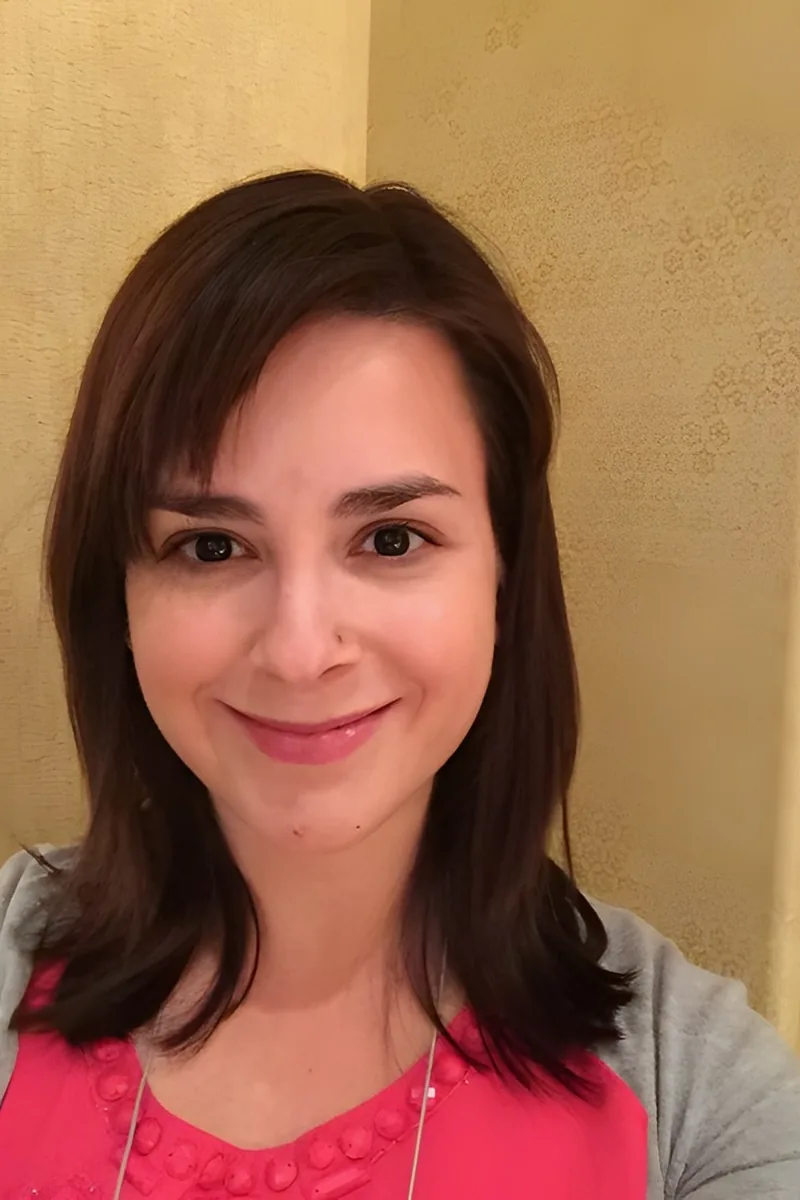
Shelley approaches history the way her psychology program approaches research: by interrogating sources for bias, context, and competing interpretations rather than treating any single account as settled fact. She's especially sharp at teaching students to write document-based essays that weave primary evidence into a clear analytical argument.
Years of working in national and state parks gave Rachel a front-row seat to how history shapes landscapes, policies, and communities — context she now brings to teaching students how to analyze primary sources, trace cause and effect, and build historical arguments. She treats history as a set of interconnected stories rather than a list of dates to memorize.
Bryan treats history as an argument, not a timeline — teaching students to read sources critically and build claims backed by evidence rather than just recalling dates. His Dartmouth degree in History and Government gave him deep practice connecting political, economic, and social forces across eras. Rated 5.0 by students.
Reading historical sources is a skill most students haven't been explicitly taught — they summarize when they should be analyzing, or they miss the bias baked into a primary document. Laura brings a close-reading approach shaped by her MFA and literature background, teaching students to interrogate sources the way a careful reader interrogates a text: who wrote this, for whom, and what are they leaving out?
Strong history students don't just know dates — they can read a primary source and explain whose perspective it represents and what it leaves out. Daniela approaches history through document analysis and argumentative writing, skills sharpened by her English background, so students learn to build evidence-based claims rather than recite timelines.
Craig treats history the way he treats any analytical subject: start with the evidence, build an argument, and connect cause to effect. While his graduate training is in mathematics, that logical rigor translates well to evaluating primary sources, understanding historical context, and writing clear, thesis-driven responses.
Thomas treats history as storytelling with stakes — why did people make the choices they did, and what changed because of it? His neuroscience background gives him a sharp eye for cause-and-effect reasoning, which he applies to everything from analyzing primary sources to writing document-based essays. Students come away understanding how to build an argument from evidence, not just recall dates.
Katie's PhD work in psychology trained her to trace how human perception and motivation drive behavior — a skill that translates surprisingly well to understanding historical actors and the decisions that shaped events. She teaches students to read documents with an eye toward the psychological and social forces behind them, turning flat timelines into layered explanations. Rated 5.0 by students.
Economics and history are deeply intertwined — trade policy, industrialization, the Great Depression — and Katherine's PhD work gives her a lens most history tutors don't have. She teaches students to analyze primary sources and build document-based arguments by connecting events to the economic forces driving them.
Strong history work comes down to reading critically and writing persuasively — skills Erica has sharpened through two liberal arts degrees at Oberlin in English and Latin Literature. She teaches students to dissect primary sources, identify an author's purpose, and build document-based arguments that go beyond restating facts.
Statistics is fundamentally about asking whether patterns in data are real or coincidental — and Matthew brings that same skepticism to history, pushing students to question whether a narrative actually holds up against the available evidence. His economics coursework at the University of New Mexico reinforces this with a focus on how incentive structures and resource constraints drive political decisions, giving students concrete analytical tools for essay prompts and document-based questions. Rated 4.9 by students.
Studying evolutionary anthropology means constantly interpreting how human societies change over time — the same analytical muscle that history demands. Uphoria teaches students to read primary sources critically, identify cause-and-effect chains, and write document-based essays that go beyond surface-level summaries. She's especially sharp on connecting cultural and environmental factors to historical turning points.
Nursing students read case studies by piecing together a patient's history to understand what's happening now — Teresa takes that same backward-tracing approach with historical events, teaching students to connect causes and consequences rather than memorize isolated facts. Her strong writing background across essays and literature means she's equally comfortable coaching the argumentative essay side of history coursework. Rated 5.0 by students.
Years of reading science fiction and science nonfiction built Joshua a habit most history students lack — constantly asking how technological change, resource scarcity, and human ambition collide to reshape societies. As a biology major at New Mexico Tech who also contributes to the campus newspaper, he brings both scientific reasoning and editorial discipline to historical writing, teaching students to build arguments around evidence rather than retell events in order.
Ethan approaches history as a discipline built on evidence and interpretation, not just names and dates to memorize for a test. Studying Earth & Planetary Sciences taught him to reconstruct past events from incomplete records — a mindset that translates directly to analyzing primary sources, evaluating conflicting accounts, and understanding cause-and-effect across historical periods.
Issa treats history the way he treats visual design — every era tells a story, and understanding the context behind decisions matters more than memorizing dates. He digs into cause-and-effect relationships and primary source analysis, teaching students to think about historical events as interconnected choices rather than isolated facts.
Jordan treats history the way he treats science: every event has causes, and understanding those causes matters more than memorizing dates. He teaches students to trace connections — how economic pressures led to political revolutions, or how technological changes reshaped entire societies — and to build arguments using primary source evidence. That analytical framework turns history from a memorization exercise into something students can reason through.
Studying history at the college or AP level means learning to read sources like a lawyer — weighing credibility, identifying bias, and constructing an evidence-based argument from incomplete records. That's exactly how Emma approaches it, drawing on her legal education to teach students how to analyze primary documents and write persuasive historical essays. She's particularly effective at turning students who can memorize dates into students who can build interpretive arguments.
Few history degrees ask you to simultaneously dissect Enlightenment philosophy and understand the scientific revolutions it responded to — Jenny's History and Philosophy of Science and Technology major at Barnard did exactly that. She teaches students to read historical events through the ideas and discoveries that drove them, connecting intellectual movements to political and social change in ways that make essay arguments more layered and specific. Her pre-med science background adds an extra dimension when coursework touches on the history of medicine, public health, or technological innovation.
Neurobiology training at Northwestern taught Nina to read research through layers of context — why a study was funded, which assumptions shaped its design, which cultural forces made certain questions worth asking. That same instinct for interrogating the *why behind the what* translates directly to history, where she teaches students to dig into the motivations and conditions behind events rather than summarizing outcomes. Rated 5.0 by students.
Religious studies at Yale means Maya spent years doing exactly what strong history students need to do: reading primary texts from unfamiliar contexts, reconstructing how people in different eras actually understood their world, and building arguments about why belief systems drove political and social change. That training makes her especially sharp on topics where religion and history intertwine — the Reformation, colonial missionary movements, civil rights activism rooted in the Black church. Rated 5.0 by students.
Philosophy majors at Princeton spend their time doing exactly what history essays require: dismantling arguments, weighing competing interpretations of a text, and defending a thesis against objections. Julie brings that training to historical analysis, particularly when students need to evaluate conflicting primary sources or construct a nuanced argument about causation rather than just summarizing events. Rated 4.9 by students.
Brittney approaches history the way a literature scholar would: by teaching students to read primary sources critically, identify rhetorical strategies in historical documents, and construct arguments grounded in evidence. Her Comparative Literature background at Princeton required deep engagement with historical and cultural contexts across multiple traditions. That cross-disciplinary lens makes her especially effective for document-based questions and historiographical essays.
Most people don't associate an MIT math degree with history, but Isabella's minor in Ancient and Medieval Studies involved rigorous work with primary sources, historiographical debates, and constructing arguments from fragmentary evidence. She teaches students to read historical texts critically and write essays that do more than summarize — they analyze cause, context, and consequence.
Elena's Religious Studies degree from McGill and Biblical Studies master's from Edinburgh mean she spent years doing exactly what history demands — interpreting ancient texts, reconstructing cultural contexts, and arguing about what sources actually reveal versus what later generations assumed. She brings that training to topics like world civilizations, religious conflicts, and cross-cultural exchange, where understanding belief systems and institutions is half the battle. Named Scotland's International Young Thinker of the Year in 2014, she has a knack for making even dense historical material feel lively and accessible.
A sociology degree from Wesleyan and a PhD in Education mean Reid reads history the way a sociologist does — tracing how institutions, class structures, and cultural norms shaped the events that textbooks often present as inevitable. That lens is particularly effective for teaching students to write essays that explain social movements, policy shifts, and political upheavals through systemic causes rather than just individual actors. His 32 ACT reflects the kind of analytical reading and argumentation that history coursework consistently rewards.
Most history tutoring turns into a memorization exercise, but Tom — who holds a PhD in American Studies and a bachelor's in American History & Literature — approaches the subject as an argument-driven discipline. He teaches students to analyze primary sources, identify causation versus correlation, and write thesis-driven essays that do more than retell a sequence of events.
Treating history as a discipline of argument rather than memorization changes everything for students who feel buried under names and dates. Asta's political science work at the University of Chicago trained her to analyze primary sources, trace cause and effect across decades, and construct evidence-based narratives — exactly the skills that make history click.
A PhD in Biomedical Engineering might seem unrelated to history, but Andrew's dissertation work required him to trace how scientific ideas evolved across decades — understanding the political, economic, and cultural contexts that shaped research priorities. He applies that same contextual thinking to history tutoring, teaching students to build thesis-driven arguments grounded in specific evidence. Rated 4.9 by students.
Studying history is really about learning to argue with evidence — evaluating why sources disagree, what context shaped a document, and how to weigh competing interpretations. Brian treats historical analysis as a form of rigorous reasoning, the same skill set he honed studying economics and computer science at Caltech. He's particularly strong at teaching students to move from summarizing events to constructing their own interpretive claims.
Keith studied political science and history at Williams College, where he learned to treat history as an ongoing argument rather than a fixed set of dates. He teaches students to analyze causation, trace how events connect across periods, and build the kind of evidence-based reasoning that turns a B essay into an A.
Testimonials
Because the right History tutor makes all the difference.
Average Session Rating – Based on 3.4M Learner Ratings
Other Albuquerque Tutors
Related Social Studies Tutors in Albuquerque
Frequently Asked Questions
Many students struggle with memorizing dates and facts without understanding the broader context and connections between events. Others find it difficult to analyze primary sources, construct arguments based on evidence, or see how historical events relate to the present day. Personalized tutoring helps students move beyond memorization by building critical thinking skills and creating meaningful frameworks for understanding how history unfolds.
In a classroom with a 16.9:1 student-teacher ratio, it's challenging for teachers to address each student's unique learning pace and gaps. Personalized 1-on-1 instruction allows tutors to focus on your specific weaknesses—whether that's essay writing, timeline construction, or source analysis—and adjust their teaching style to match how you learn best. This targeted approach helps students build confidence and develop deeper understanding rather than just keeping pace with the class.
Tutors working with Varsity Tutors are familiar with New Mexico standards and typical course progressions across middle school, high school, and AP levels. Whether your student is working on state history requirements, U.S. History, World History, or AP courses, tutors can align their instruction with your school's specific curriculum and pacing. This ensures that tutoring reinforces what's being taught in class while filling gaps and deepening understanding.
The first session is focused on understanding your student's current level, learning style, and specific goals—whether that's improving essay grades, preparing for a test, or building foundational skills. The tutor will likely review recent assignments or assessments to identify strengths and areas for improvement, then discuss a personalized plan moving forward. This foundation helps ensure that every subsequent session is targeted and productive.
Yes—essay writing is one of the most important skills in History, and it's an area where personalized instruction makes a real difference. Tutors can help students develop strong thesis statements, organize arguments with supporting evidence, analyze primary and secondary sources, and revise their work for clarity and impact. Many students see significant improvement in their writing grades once they understand how to structure historical arguments effectively.
Tutors can help students develop study strategies, create timelines and concept maps to organize information, practice essay questions under timed conditions, and review challenging topics in depth. For AP History exams or state assessments, tutors are familiar with the format and expectations, helping students build both content knowledge and test-taking skills. Regular practice with feedback is far more effective than cramming, and personalized tutoring allows for targeted review of your student's weakest areas.
Tutors connect with students across all grade levels—from middle school History and civics courses through high school U.S. History, World History, and AP History courses like AP U.S. History, AP World History, and AP European History. Whether your student is building foundational skills or preparing for college-level coursework, there's a tutor with expertise in their specific course and grade level.
Varsity Tutors makes it easy to connect with an expert History tutor who understands your student's needs and goals. Simply reach out to describe what you're looking for—whether it's help with a specific unit, essay writing, or test prep—and we'll match you with a tutor who's a great fit. From there, you can schedule sessions that work with your family's schedule and begin seeing improvement in understanding and grades.
Let’s find your perfect tutor
Answer a few quick questions. We’ll recommend the right plan and match you with a top 5% tutor.