Award-Winning Calculus Tutors
serving Albuquerque, NM
Calculus
Tutors in Albuquerque
Private 1-on-1 tutoring, weekly live classes for academic support, test prep & enrichment, practice tests and diagnostics, and more to elevate grades and test scores.
Based on 3.4M Learner Ratings
UniversitiesSchools & Universities
DeliveredHours Delivered
ProficiencyGrowth in Proficiency
Who needs tutoring?
No obligation. Takes ~1 minute.

Philosophy at the University of Chicago is built on formal logic — the same structural reasoning that underpins proofs about limits, continuity, and the behavior of functions at boundary cases. Justin applies that logical rigor to calculus, breaking down each rule into a chain of reasoning rather than a formula to memorize, which is especially useful when students hit the conceptual wall around the chain rule or related rates. His 34 ACT and 5.0 tutoring rating back up the quantitative chops behind that approach.
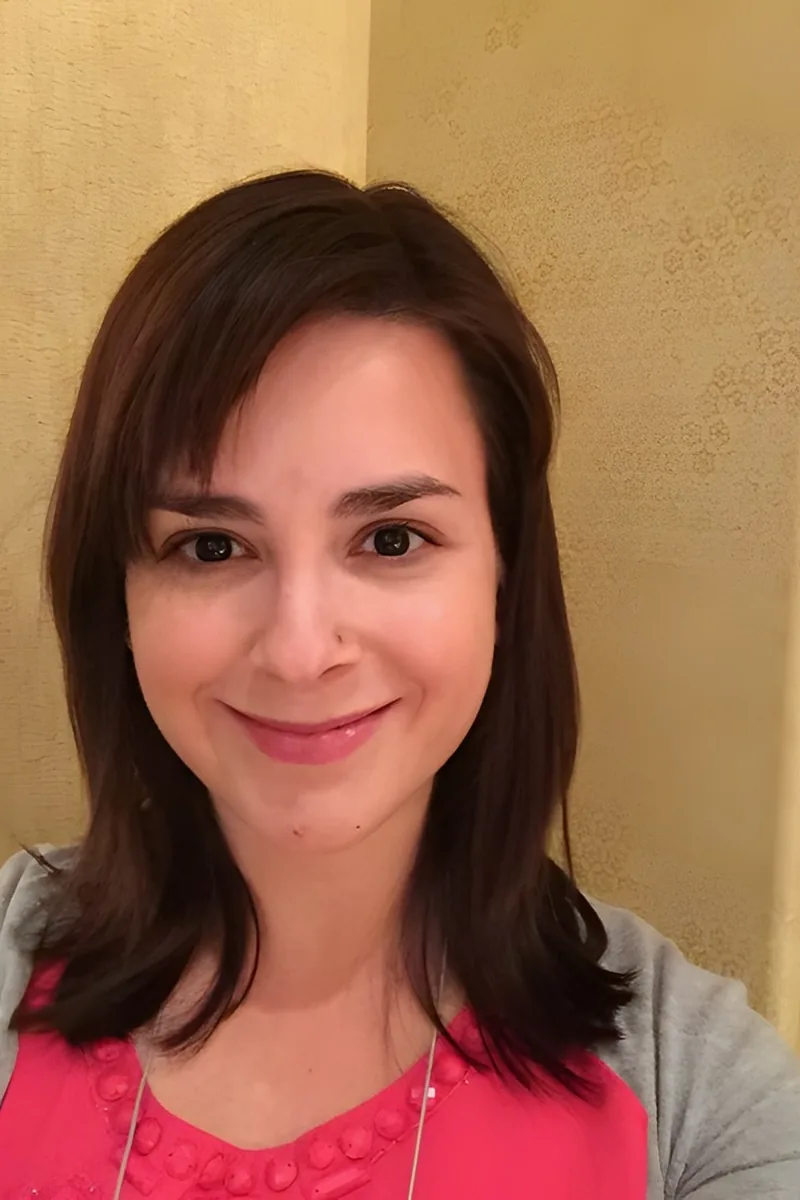
Doctoral-level research in clinical psychology demands constant fluency with statistical modeling, derivatives, and rates of change — concepts that sit at the heart of calculus. Shelley breaks down problems like related rates and integration by connecting each step to a concrete, real-world scenario so the logic behind the math clicks. Rated 5.0 by students.
Environmental health sciences at Johns Hopkins meant Rachel couldn't avoid calculus — modeling pollutant dispersion rates, analyzing dose-response curves, and interpreting the differential equations behind how contaminants move through ecosystems all required fluency with derivatives and integrals. Her public health background gives her a way to ground abstract calculus concepts in real-world systems, connecting each problem to something measurable and consequential.
Bryan's academic home is history and government, not mathematics, so he's straightforward that calculus isn't his deepest subject. That said, a 1580 SAT demonstrates serious quantitative ability, and his Dartmouth coursework in analytical reasoning gives him the tools to walk through early concepts like limits and derivative rules by treating each one as a logical argument to be understood piece by piece.
Honestly, calculus is a long way from costume design and theater — Laura doesn't pretend otherwise. But her MFA training built a habit of meticulous, step-by-step problem solving (patterning a period gown is essentially applied geometry), and she brings that same structured patience to walking through limits and early derivative concepts where slowing down and reading the notation carefully matters most.
Daniela's academic focus is English, not mathematics, so calculus isn't her deepest subject — but her 1560 SAT demonstrates she can handle rigorous quantitative problem-solving. She approaches early calculus topics like limits and derivative rules with the same close-reading instinct she brings to literature, breaking down dense notation into clear, logical steps until each piece makes sense on its own terms.
With both a bachelor's and master's in mathematics plus experience teaching calculus at the college level, Craig knows exactly which conceptual jumps trip students up — the transition from average to instantaneous rate of change, the leap from summation to formal integration, the moment related rates problems stop feeling mechanical. He builds each session around working through problems together, adjusting difficulty in real time so students develop their own problem-solving instincts. Rated 4.9 by students.
Neuroscience coursework at the University of San Diego puts Thomas squarely in calculus territory — modeling action potentials, analyzing rates of neural signal decay, and interpreting the math behind how biological systems change over time. That hands-on experience with derivatives and integrals in a scientific context means he teaches the material as something functional, not just procedural.
Perceptual psychology research at the PhD level involves serious quantitative modeling — signal detection curves, psychophysical thresholds, and the mathematical functions that describe how the brain processes sensory input. That background gives Katie a working fluency with the kind of rate-of-change and curve-behavior thinking that underpins derivatives and integrals, letting her ground abstract calculus rules in real experimental contexts. Rated 5.0 by students.
Katherine uses calculus daily in her economics PhD research at UNM, from optimization problems to interpreting derivatives as marginal rates of change. That constant, applied use means she can walk students through limits, integration techniques, and the chain rule with concrete examples that make the logic click. Rated 5.0 by students.
Every Calculus concept becomes easier once a student can visualize what's happening — why the integral accumulates area, or how a second derivative describes concavity. Matthew, who uses calculus regularly in his Statistics coursework, explains these ideas graphically and algebraically so that techniques like u-substitution and the chain rule feel like natural extensions of the theory.
Nursing coursework throws calculus at students in the context of drug dosage modeling, flow rates, and exponential decay — so Teresa knows firsthand how derivatives and integrals apply outside a pure math classroom. She breaks down concepts like the chain rule and related rates by tying them to concrete, real-world scenarios that make the logic click.
Evolutionary anthropology involves modeling population dynamics, allele frequency changes, and growth curves — all calculus-driven concepts that Uphoria encounters in her undergraduate coursework. That exposure to derivatives and integrals in biological contexts gives her a practical grip on rate-of-change problems, and she teaches the material by connecting abstract rules back to the real systems where they apply.
Erica's degrees are in English and Latin, not mathematics, so she's straightforward that calculus isn't her deepest area — but ten years of tutoring K-12 math means she's walked students through the conceptual buildup that leads to calculus and into its early territory. Her strength is in slowing down the leap from algebraic thinking to calculus thinking, unpacking what a limit actually means or why a rate of change behaves the way it does before any formulas enter the picture.
Biology at New Mexico Tech means Joshua has worked through calculus as a core tool — not just an abstract exercise — applying derivatives and integrals to model population growth, reaction rates, and other real-world systems. That applied perspective lets him explain concepts like the chain rule or integration by parts in ways that actually make sense beyond the textbook.
Earth & Planetary Sciences coursework puts calculus to work constantly — modeling seismic wave propagation, calculating rates of tectonic plate movement, and analyzing how temperature gradients drive mantle convection. Ethan brings that applied fluency to tutoring, connecting derivatives and integrals to physical systems where the math describes something you can actually visualize. Rated 5.0 by students.
Studio art training builds a surprising muscle for calculus — Issa's coursework in spatial reasoning, proportion, and the geometry of 3D forms means he already thinks in terms of curves, slopes, and how shapes change across dimensions. He applies that visual intuition to early calculus concepts like limits and derivatives, sketching out what's happening graphically before diving into the algebra. Rated 5.0 by students.
Physics majors don't just take calculus — they breathe it, using derivatives to describe motion and integrals to calculate work, energy, and flux across every course in the program. Jordan's BS in Physics from UNM means he teaches concepts like the chain rule or integration by parts with a physicist's intuition for what the math physically represents, connecting each technique to problems where rates of change and accumulation actually matter. Rated 4.7 by students.
A PhD in Law and a 1520 SAT show Emma can handle rigorous analytical and quantitative work, even though her degrees aren't in mathematics. She tackles early calculus concepts — particularly limits and derivative rules — the way a legal scholar tackles case law: dissecting each piece of reasoning until the underlying logic is airtight, not just memorized. Rated 5.0 by students.
Pre-med coursework at Barnard meant Jenny spent semesters inside calculus-heavy science classes — the kind where derivatives model reaction rates and integrals calculate areas under concentration curves. That science-applied math background lets her teach calculus concepts by connecting them to the quantitative problems she actually solved in her biology and chemistry courses, rather than presenting rules in isolation.
Four years of volunteering as an SAT tutor sharpened Renee's quantitative skills — her 1530 SAT confirms that — but her real strength is translating abstract notation into language that clicks, a skill she built as a Writing Consultant breaking down complex ideas for diverse learners. She applies that same clarity to early calculus concepts like limits and continuity, walking through the reasoning behind each step so the logic holds up long after the session ends.
Whether a student is seeing derivatives for the first time or wrestling with integration by parts, Justin connects each calculus concept to a physical picture — velocity from position, area under a curve, rates of change in real systems. That instinct comes from studying both physics and mathematics at Washington University before pursuing a PhD in computational math at the University of Chicago.
The jump to Calculus demands comfort with abstraction — understanding what a derivative actually represents, not just how to apply the power rule. Jessica tackles limits, integration techniques, and rate-of-change problems by connecting them to concrete scenarios, drawing on the quantitative reasoning she sharpened through her science-heavy coursework at Penn and in medical school.
Between a physics bachelor's and a PhD in biomedical engineering, Andrew has used calculus as a daily working language — from modeling tissue mechanics to solving the differential equations that describe biological systems. That depth means he can teach derivatives, integrals, and multivariable concepts not as isolated procedures but as tools with clear physical meaning. Rated 4.9 by students.
Three science degrees — including one in chemistry — mean Zosia has actually used calculus the way it was designed to be used: modeling reaction rates, solving kinetics problems, and interpreting how systems change over time. That applied fluency lets her teach derivatives and integrals as tools with purpose, connecting the mechanics of differentiation to the physical and chemical processes where they originate. Rated 4.9 by students.
Tackling limits, derivatives, and integrals requires building each concept on the last, and one shaky step can derail an entire semester. Kathy's quantitative training in economics at Duke kept her deep in applied calculus — optimization problems, rates of change, area under curves — and she teaches the reasoning behind each rule so students can handle problems they haven't seen before.
Limits, derivatives, and integrals all click faster when a student sees the underlying logic instead of just memorizing formulas. Brian studied math and economics at Caltech, where calculus wasn't just a course but the daily language of nearly every discipline — so he teaches it with an emphasis on why the chain rule or integration by parts works, not just when to apply it.
Mechanical engineering grad work is essentially applied calculus — Aaron uses derivatives to model thermal systems, integrals to analyze fluid flow, and differential equations to predict how structures respond to stress, every single day. That daily fluency means he can teach integration techniques or the chain rule by connecting them to problems where the math is doing real physical work. Rated 5.0 by students.
Elena's academic path runs through government, Spanish, and law — not mathematics — so calculus isn't her deepest subject. That said, a perfect 1600 SAT demonstrates serious quantitative ability, and her tutoring philosophy of listening to students work through problems and pinpointing exactly where their reasoning breaks down applies especially well to early calculus, where a single misunderstanding about limits or continuity can derail everything downstream.
Three BS degrees including one in Finance means Matt has worked through the calculus that underpins financial modeling — present value derivations, marginal cost optimization, and the continuous compounding formulas that rely on limits and exponentials. His 1530 SAT confirms the quantitative chops to back that up, and he teaches the material by connecting each rule to the business logic that makes it worth learning.
Perry's biology training at Rice meant heavy exposure to applied calculus — modeling population growth with differential equations, analyzing rates of change in biochemical reactions. He brings that real-world grounding to limits, derivatives, and integrals, making abstract concepts feel purposeful rather than purely theoretical.
Tom's PhD in American Studies and triple bachelor's degrees signal humanities, not math — but his 1520 SAT confirms he can handle serious quantitative work, and his tutoring spans pre-algebra through calculus. He approaches the subject the way a researcher approaches a dense argument: isolating exactly where the reasoning breaks down, whether that's the epsilon-delta definition of a limit or the logic connecting differentiation to integration.
Testimonials
Because the right Calculus tutor makes all the difference.
Average Session Rating – Based on 3.4M Learner Ratings
Other Albuquerque Tutors
Related Math Tutors in Albuquerque
Frequently Asked Questions
The shift from algebra and precalculus to Calculus requires thinking about change and rates rather than just solving equations. Many students struggle with the conceptual jump to limits and derivatives—it's not just about memorizing formulas, but understanding why those formulas work. Personalized tutoring helps students build this conceptual foundation, so they see Calculus as a logical extension of what they already know rather than an entirely new subject.
Word problems require translating real-world situations into mathematical language, then applying Calculus concepts—which is where many students get stuck. Tutors work with you to break down the problem-solving process: identifying what's given, determining what you're solving for, and selecting the right Calculus tool (derivative, integral, optimization, etc.). With guided practice, you'll develop strategies for approaching unfamiliar problem types with confidence.
In Calculus, the steps you take reveal whether you understand the underlying concepts or just got lucky with an answer. Teachers and tutors use your work to identify exactly where misconceptions happen—whether it's in applying the chain rule, setting up integrals, or justifying why a limit exists. When a tutor sees your work, they can target instruction to fix the specific gap, rather than just re-teaching the whole topic.
Your first session focuses on understanding where you are right now. A tutor will review recent assignments or exams to identify which concepts are solid and which need work—whether that's limits, derivatives, integrals, or applications. You'll discuss your goals (improving a grade, preparing for the AP exam, building confidence) so the tutor can create a personalized plan that targets your specific needs.
Yes. Albuquerque schools use different textbooks and pacing, and tutors are experienced working across various approaches—whether your class uses Stewart, Larson, or another standard Calculus text. What matters is that tutors understand the core concepts deeply enough to explain them in multiple ways, so they can match your teacher's approach while also clarifying ideas that aren't clicking.
Math anxiety often comes from feeling lost or behind, which Calculus can intensify quickly. Working 1-on-1 with a tutor creates a low-pressure space to ask questions without judgment, work through problems step-by-step, and build actual competence—which is the real antidote to anxiety. As you start seeing patterns and solving problems correctly, confidence grows naturally.
Absolutely. AP Calculus (AB or BC) has a specific scope and exam format, and tutors can target both conceptual understanding and test-taking strategy. Whether you need help with limits and derivatives, integration techniques, or learning to communicate your reasoning clearly on the free-response section, personalized instruction focuses on the skills that matter most for your exam.
Calculus is really about understanding how functions behave and change—and those ideas are connected across limits, derivatives, and integrals. Tutors help you see these patterns by working through multiple examples, asking guiding questions, and showing how a concept appears in different contexts. When you understand the big picture, individual problems become easier because you know which tool to reach for and why.
Let’s find your perfect tutor
Answer a few quick questions. We’ll recommend the right plan and match you with a top 5% tutor.