Award-Winning Finite Mathematics Tutors
serving Virginia Beach, VA
Finite Mathematics
Tutors in Virginia Beach
Private 1-on-1 tutoring, weekly live classes for academic support, test prep & enrichment, practice tests and diagnostics, and more to elevate grades and test scores.
Based on 3.4M Learner Ratings
UniversitiesSchools & Universities
DeliveredHours Delivered
ProficiencyGrowth in Proficiency
Who needs tutoring?
No obligation. Takes ~1 minute.
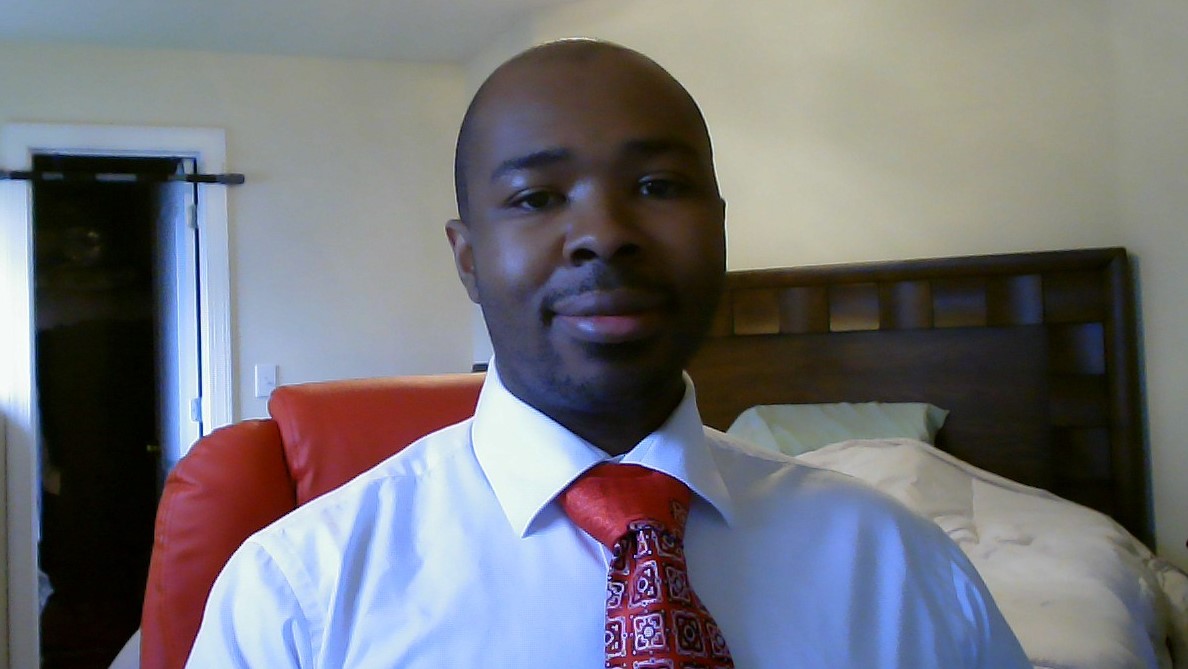
I have been coaching students to their best performance in math for seven years. I am fluent in all levels of math, primary, secondary, and freshman/sophomore university level. I am also fluent with the mathematics which one may find on the ACT, SAT, GRE, ASVAB, CLEP test and most standardized test. My background in Engineering also gives me a level of confidence with computer science and general sciences such as physics and chemistry. I have over a year of study in each myself. Overall, I have had much success working with students in various languages and levels of computer programming.
Mechanical engineering coursework runs on the same matrix operations, systems of equations, and optimization logic that finite mathematics tests — Michael just encountered them while modeling physical systems and solving statics problems. He unpacks linear programming setups by connecting each constraint to something concrete, which clicks for students who struggle when the math feels purely abstract. Rated 5.0 by students.
Katie's psychology degree from the University of Maryland included coursework in research methods and data analysis, giving her direct experience with the logic and set theory that underpin finite mathematics. She breaks down topics like matrices, linear programming, and combinatorics by connecting them to real decision-making scenarios. Her approach balances structured problem-solving with space for students to reason through solutions independently.
Emma's combination of a neurobiology major and economics minor at Harvard meant heavy exposure to the exact topics that define finite mathematics — probability, matrices, linear programming, and combinatorics. She teaches students to recognize which model fits a given problem, then walks through the setup step by step so the logic is clear. Her 5.0 rating speaks to how well that structured approach translates for students.
Until age 16, Viktor thought math was just blind memorization — then a series of teachers at the right moment revealed the logic underneath, and he ended up majoring in mathematics at UChicago. That conversion story matters for finite mathematics, where topics like counting techniques and set operations look arbitrary until someone shows you why the rules work the way they do. His 1600 SAT and current master's work in computer science at NYU keep him sharp on the discrete reasoning these courses demand.
Physics training builds a particular kind of comfort with matrices and systems of equations — Erik used them constantly for modeling physical systems, which translates directly into the matrix algebra and linear programming that finite mathematics courses test. He unpacks each problem by clarifying the structure first, making sure students see how to organize constraints or set up a payoff table before jumping into computation.
The jump from astrophysics to playwriting sounds dramatic, but Jacob's undergraduate work in astrophysics required exactly the kind of matrix algebra, probability, and systematic logic that finite mathematics courses test — he just happened to also write plays about it. He's sharp at unpacking problems where students need to set up a system of equations or figure out whether a counting problem calls for ordered or unordered selections, breaking the language of the question apart before touching any formulas.
Most finite mathematics students hit a wall not on the computation but on knowing which tool to reach for — is this a matrix problem, a linear programming setup, or a counting argument? Demirhan's master's degree in mathematics and years teaching college-level courses mean he can quickly diagnose where the confusion lives and unpack the underlying logic until the right approach becomes obvious. Rated 5.0 by students.
Most finite mathematics students already know basic algebra — the trouble starts when a problem asks them to build a matrix from scratch or figure out whether a counting scenario needs combinations or conditional probability. John's math degree gives him the formal grounding to explain the why behind each setup, and he's particularly effective at bridging the gap between arithmetic comfort and the abstract logic these courses actually test.
I am currently an adjunct professor of chemistry at a small liberal arts college in the Chicago area. Previously, I worked in the chemical industry for several years as a researcher, but I've found that the most satisfying moments have come when I am able to share my expertise with someone else. Similarly, I very much enjoyed the four semesters in the graduate school when I was a teaching assistant. It gave me the opportunity to work with students and help them develop an understanding for the subject. These are the primary reasons that I have decided to go into teaching.
Graduate-level biostatistics and plant biology research forced Dan to live inside the probability, matrix algebra, and data modeling that finite mathematics courses cover — except he was applying them to real population genetics and ecological datasets. He breaks down counting problems and probability setups by connecting them to the quantitative reasoning he uses daily, which tends to make abstract notation feel less arbitrary. Rated 5.0 by students.
Seven years of teaching across math levels from elementary through calculus gives Kate a clear read on which algebraic gaps cause students to stall when they hit finite math topics like counting techniques and probability setups. She's particularly effective at slowing down on the translation step — turning a dense word problem into a clean mathematical framework — which is where most finite mathematics students actually lose points. Rated 4.9 by students.
Engineering students at UIUC don't just encounter matrix operations and linear systems in a textbook — David uses them to design circuits and model signal processing, which gives him a concrete feel for the matrix algebra and optimization problems that finite mathematics courses throw at students. He's especially good at unpacking the logic behind setting up a problem, whether it's translating a scenario into a system of inequalities or deciding how to structure a counting argument. Rated 5.0 by students.
Currently pursuing a graduate degree in mathematics while holding an applied math bachelor's, Drisana has worked through the matrix algebra, linear programming, and probability that finite math courses pile on — and she's done it from both the theoretical and computational sides. She's especially sharp at unpacking the logic behind setting up systems of inequalities, where most students can follow the arithmetic but struggle to build the model from a word problem. Rated 5.0 by students.
Linear programming, matrix operations, and probability models can feel disconnected from the rest of a student's math experience, which is part of what makes finite mathematics so tricky. Alan's mathematics degree and teaching background let him tie these topics together into a coherent framework rather than treating each chapter as an isolated unit. He's particularly effective at translating word-heavy application problems into clear mathematical setups.
Testimonials
Because the right Finite Mathematics tutor makes all the difference.
Average Session Rating – Based on 3.4M Learner Ratings
Other Virginia Beach Tutors
Related Math Tutors in Virginia Beach
Frequently Asked Questions
Finite Mathematics is a course focused on practical, real-world applications of math rather than calculus. It typically covers topics like linear programming, matrices, probability, statistics, and financial mathematics. Many students take Finite Math as an alternative to Calculus or as a requirement for business, economics, or social science programs—it emphasizes problem-solving and decision-making over abstract theory.
Students often struggle with translating word problems into mathematical models, understanding when to apply different methods (like linear programming or matrix operations), and seeing how abstract concepts connect to real situations. Many also find the transition from procedural calculation to conceptual reasoning challenging—it's not just about getting an answer, but understanding why that method works and when to use it.
Tutors help students break down word problems into manageable steps: identifying what's being asked, determining which mathematical tools apply, and translating language into equations or models. Through personalized 1-on-1 instruction, students learn to recognize patterns in problem types and develop strategies for approaching unfamiliar scenarios, building confidence and independence rather than just memorizing solutions.
Rather than just showing procedures, tutors help students see the 'why' behind each method—why linear programming works, how matrices organize information, what probability actually measures. This deeper understanding helps students recognize which tools to use in different situations and adapt their problem-solving strategies, rather than relying on memorized steps that don't transfer to new problems.
Virginia Beach schools across its 2 school districts may use different textbooks and pacing guides for Finite Mathematics. Tutors connect with students to understand their specific curriculum, textbook, and teacher's approach, then tailor instruction to match what's being taught in class while filling gaps in understanding and building stronger problem-solving skills.
The first session is about understanding where you are and what you need. A tutor will review your current coursework, identify specific topics causing difficulty (whether it's setting up equations, understanding concepts, or test anxiety), and discuss your goals. This personalized assessment guides the tutoring plan so every session focuses on what matters most to your success.
Absolutely. Math anxiety often stems from feeling lost or unsupported, and personalized 1-on-1 instruction builds confidence by breaking concepts into understandable pieces and celebrating progress. When students see that they can solve problems and understand the reasoning behind them, anxiety decreases and they approach coursework with greater confidence and willingness to tackle challenging material.
Many students see meaningful progress within a few weeks as tutoring targets their specific weak areas and builds stronger problem-solving habits. However, sustained improvement depends on consistent practice and engagement—tutors help you develop strategies and understanding that stick, leading to better performance on assignments, quizzes, and exams over time rather than quick fixes.
Let’s find your perfect tutor
Answer a few quick questions. We’ll recommend the right plan and match you with a top 5% tutor.