Award-Winning Chemistry Tutors
serving Norfolk, VA
Chemistry
Tutors in Norfolk
Private 1-on-1 tutoring, weekly live classes for academic support, test prep & enrichment, practice tests and diagnostics, and more to elevate grades and test scores.
Based on 3.4M Learner Ratings
UniversitiesSchools & Universities
DeliveredHours Delivered
ProficiencyGrowth in Proficiency
Who needs tutoring?
No obligation. Takes ~1 minute.
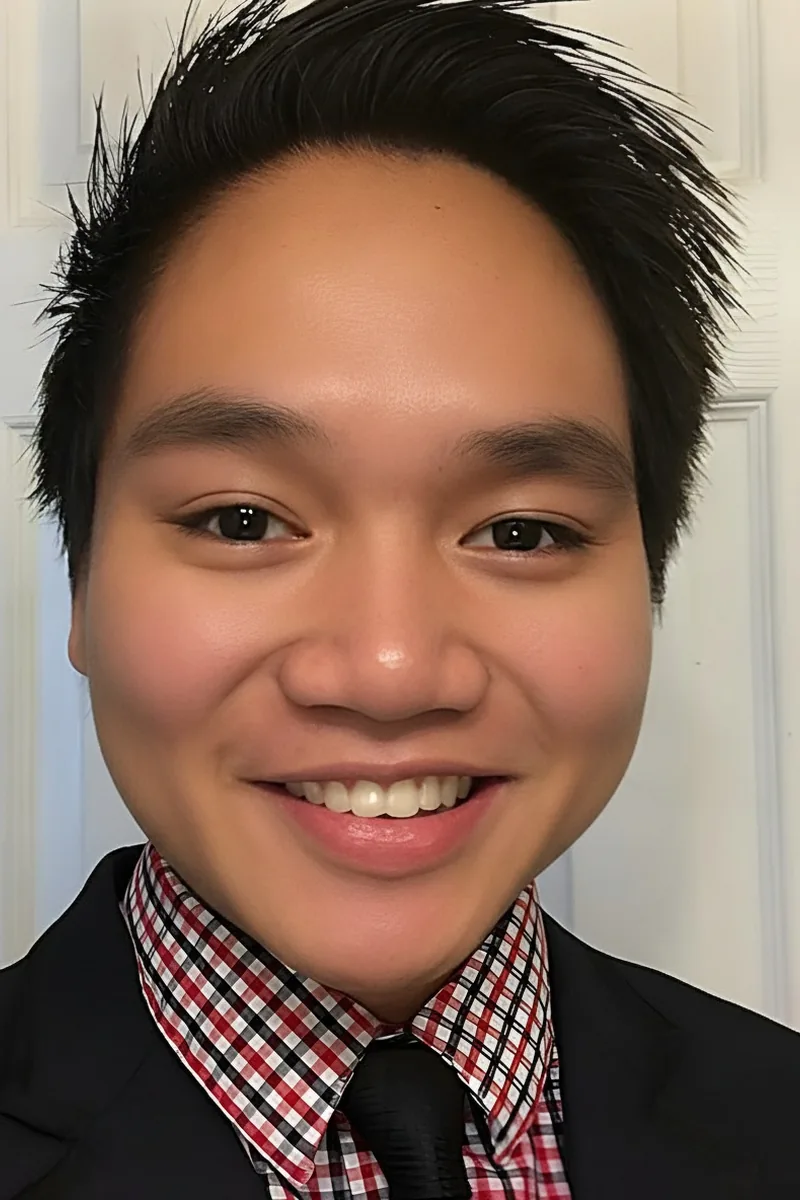
Between his bioinorganic research, his biochemistry degree, and his current role teaching chemistry courses at VCU, Joel has spent years explaining concepts like stoichiometry, molecular orbital theory, and acid-base equilibria to students at every level. He approaches each topic by building up from the atomic-level "why" so that problem-solving becomes intuitive rather than formulaic.

Architecture training at the graduate level requires a surprising amount of chemistry — understanding material properties, how concrete cures, why certain metals corrode, and how environmental conditions affect building envelopes. Christianna draws on that applied knowledge to make topics like chemical reactions, molecular structures, and properties of matter feel less abstract and more grounded in how substances actually behave in the real world. Rated 4.8 by students.
Stoichiometry, equilibrium, acid-base reactions — chemistry clicks once you stop treating each topic as its own island and start seeing the throughlines. Roshni's biology major in a BS/MD program at VCU means she uses chemistry daily and can connect abstract concepts like electron orbitals or thermodynamics to real applications in medicine and biochemistry. Rated 4.9 by students.
Between her chemistry minor and pre-med track at VCU, Shahad has worked through general chemistry from multiple angles — stoichiometry, equilibrium, thermodynamics, and acid-base reactions all show up repeatedly in her coursework. She explains mole conversions and balancing equations by tying each calculation back to what's physically happening at the molecular level.
Balancing equations and converting between moles, grams, and liters trips up nearly every chemistry student at some point — the key is building intuition for what those numbers actually represent. Brittany studies chemistry at UVA and brings that depth to foundational topics like atomic structure, periodic trends, and reaction types. She pinpoints exactly where a student's reasoning breaks down and works from there.
Balancing equations and memorizing periodic trends only gets a student so far in chemistry; the real challenge is understanding why atoms bond the way they do and how stoichiometry connects the microscopic to the measurable. Andrew's engineering background gives him a quantitative instinct for unit conversions, mole calculations, and gas law problems that many students find difficult to develop on their own. He unpacks each calculation step so the logic becomes repeatable.
I'm a graduate of the School of Engineering at Virginia Commonwealth University (2015). I have a Bachelor's of Science degree in Biomedical Engineering, and am pursuing a Masters Degree in Business Administration from the VCU School of Business. I've been a mentor for the past four years and am very active in my method of tutoring. I have helped several students with official tests and homework assignments.
I'm a current medical student at VCU School of Medicine, and a graduate of Johns Hopkins University. I received my Bachelor of Science in Molecular and Cellular Biology. I've had the pleasure of tutoring a diverse range of students for 5 years; while I tutor a broad set of subjects, I'm most passionate about biology, psychology, and chemistry. I'm a big proponent of ensuring understanding over memorization and teaching concepts that last for years to come (particularly for other students interested in medicine!) In my free time, I love to write poetry, edit essays, and gush about game writing with friends.
Having studied chemistry at James Madison University from organic synthesis to analytical techniques, Ava knows the full arc of the subject — which means she can trace a student's confusion in, say, equilibrium or acid-base titrations back to the specific foundational gap causing it. She's especially strong at demystifying the transition from memorizing formulas to actually reasoning through why a reaction favors products or shifts under stress.
I am currently a lead preschool teacher. I received my Bachelor's in Psychology from VCU and am looking to return to school to further my education. While in college, I worked as a Supplemental Instruction leader, teaching general biology and anatomy. I have also worked in an after school program with elementary age children, but I have my fondest memories volunteering as a counselor for Camp Kesem. In my own experience, I loved school and now I love teaching even more at all age levels! I especially enjoy the challenge of getting creative to discover what approach and mediums work best for each student. I am available for in person as well as online tutoring.
I am 22 years old and a recent graduate from Virginia Commonwealth University. I studied Biology and General Science as my majors, and Chemistry and Psychology as my minors when in college. These are my strongest tutoring subjects, however as a current applicant to medical school for the Fall 2018, I am also proficient in many levels of Mathematics up to Calculus 1 and used to be a Teacher's Assistant for College Algebra as well as an Academic Tutor at my university's Campus Learning Center for 3 semesters each. I am passionate about helping students achieve their full learning potential and hope to be able to assist your needs or your child's needs along their academic journey.
I am in graduate school and she is in undergraduate college, we have regular online sessions where I explain her the concepts as best as possible.
From the moment I began helping classmates in middle school study for math quizzes, I realized how much I enjoyed guiding others toward understanding. Over time, that spark grew into a genuine passion for education. What drives me most is witnessing the transformation in a student's confidencethe moment when confusion gives way to clarity, and they begin to believe in their own abilities. Tutoring, for me, is not simply about helping students achieve better grades; it's about empowering them to trust their capacity to learn and grow. My journey as a tutor began in high school, where I volunteered as a math tutor for underclassmen struggling with algebra and geometry. I worked one-on-one with students after school, helping them tackle difficult problems and build foundational skills. This early experience taught me how patience and consistent encouragement could make a lasting difference. In college, I served as a teaching assistant for general chemistry at the University of Virginia.
Hi, my name is Inaya, and I'm so excited to be a tutor! I have been tutoring for four years and in that time I have learned many different methods of tutoring. Some student need more hands on help and others just need to be guided into working on their own. Every kid is different and that is one of the greats parts of tutoring.
Balancing equations and predicting reaction products become far more intuitive when you understand the "why" behind electron behavior — that's the lens Katherine brings to chemistry. Her public health degree from UT Austin required deep coursework in general and organic chemistry, and she connects those concepts to real-world applications like drug interactions and environmental science.
Understanding chemistry means seeing the 'why' behind the math — why certain elements bond the way they do, why energy changes drive reactions forward, why solutions behave differently at varying concentrations. Donya earned her degree at the University of Maryland with heavy science coursework, and she uses that foundation to walk students through topics like stoichiometry, periodic trends, and acid-base equilibria in ways that build real intuition. She's particularly good at translating word problems into clear, solvable setups.
A solid grasp of mole conversions, Lewis structures, and acid-base equilibria sets the stage for everything else in chemistry. Abrahim earned his biology degree cum laude from UCLA with heavy chemistry coursework and now applies that knowledge in medical school, so he explains foundational concepts with precision and quickly identifies which specific skill — whether it's dimensional analysis or electron geometry — needs attention.
Stoichiometry, equilibrium, and acid-base reactions each demand a slightly different way of thinking, which is exactly what trips students up when a single exam covers all three. Aidan completed a full premed chemistry sequence at Notre Dame and breaks each problem type down to its core logic — dimensional analysis for stoich, ICE tables for equilibrium — so students know which tool to reach for and when.
Stoichiometry, equilibrium, and acid-base reactions all require a kind of disciplined reasoning that Jessica developed through years of medical training, where chemistry underpins everything from pharmacology to metabolic pathways. She breaks down each problem type into a clear sequence of decisions rather than a wall of formulas to memorize.
Stoichiometry, electron configurations, and equilibrium calculations all demand a specific kind of careful, step-by-step reasoning. As a pre-med biomedical engineering student at Yale, Ellie uses chemistry constantly — from biochemistry coursework to her research in the School of Medicine. She's particularly good at teaching students to set up dimensional analysis and reaction problems methodically so they stop making the small errors that tank exam scores.
Cognitive Studies at Vanderbilt covers a surprising amount of chemistry — neurotransmitter pathways, pharmacological mechanisms, and the molecular basis of perception all require solid command of bonding, functional groups, and reaction behavior. Vy draws on that foundation when teaching topics like molecular polarity and intermolecular forces, making the abstract feel grounded by connecting it to how chemicals actually interact in the brain. Holds a 5.0 rating.
Between stoichiometry, equilibrium, and thermodynamics, chemistry asks students to think in multiple registers — quantitative, conceptual, and visual — sometimes in the same problem. Kade's dual focus on biology and chemistry at Northwestern means he's constantly applying these ideas across disciplines, which gives him a practical lens for explaining everything from mole conversions to acid-base titrations.
Sanjana's applied math background at Harvard gives her a quantitative lens on chemistry — she's especially effective at breaking down stoichiometry, equilibrium calculations, and unit analysis into logical steps. She treats chemistry problem sets the way she treats math: find the pattern, set up the framework, then solve.
Understanding stoichiometry or molecular geometry becomes much easier when a student can visualize what's happening at the atomic level, not just balance numbers on a page. Emily's computational biology work at Cornell keeps her deeply engaged with chemical principles, and she brings that perspective to topics from bonding and Lewis structures through acid-base equilibria.
From stoichiometry and equilibrium to thermodynamics and acid-base chemistry, Josef approaches each topic by tying it back to observable phenomena he encountered in Cornell's research labs. He scored in the 99th percentile on the MCAT's Chemical and Physical Foundations section, which required exactly the kind of rapid, conceptual chemistry reasoning he now teaches.
Stoichiometry and mole conversions trip up most chemistry students because they look like pure math divorced from anything real. Caroline connects these calculations to tangible examples — like how much reactant a chemical plant actually needs — drawing on her years working at an ExxonMobil refinery. That industrial context makes balancing equations and predicting yields feel purposeful.
Premed coursework demands a deep understanding of chemistry, from thermodynamics and equilibrium to acid-base reactions and electrochemistry. Nishad tackles these topics by linking abstract concepts to tangible applications — explaining buffer systems through blood pH regulation, or teaching reaction kinetics through enzyme behavior.
Mechanical engineering at Harvard means Christopher lives in the overlap between chemistry and physics — material properties, thermodynamics, and reaction energetics show up constantly in his coursework. He breaks down topics like bonding, gas laws, and enthalpy calculations by tying them to tangible engineering problems, which gives abstract concepts a concrete anchor. Rated 4.8 by students.
Testimonials
Because the right Chemistry tutor makes all the difference.
Average Session Rating – Based on 3.4M Learner Ratings
Practice Chemistry
Free practice tests, flashcards, and AI tutoring for Chemistry
Other Norfolk Tutors
Related Science Tutors in Norfolk
Frequently Asked Questions
Varsity Tutors matches Norfolk students with expert Chemistry tutors for 1-on-1 instruction. We pair each student with a tutor based on their specific needs, learning style, and goals.
Whether you need homework help, exam prep, or want to get ahead, our Chemistry tutors are ready to help.
Common challenges include gaps from earlier material, difficulty with specific concepts, and trouble applying learning to new problems. These issues can snowball quickly in Chemistry.
A tutor identifies where you're stuck, fills in gaps, and provides targeted practice. The 1-on-1 format means you get help exactly where you need it.
Tutors work with your student's actual coursework—homework assignments, class notes, and upcoming tests. This keeps tutoring directly relevant to what's happening in the classroom.
When you share information about your student's school and curriculum, we can match you with a tutor who has relevant experience.
All tutors complete background checks, credential verification, and teaching evaluation. Many of our Chemistry tutors hold advanced degrees or have years of teaching experience.
You can review tutor profiles to find someone with the right background for your student's level and needs.
Many students see improved grades within a few weeks, along with better understanding of Chemistry concepts and more confidence tackling challenging material.
Tutors track progress and adjust their approach to ensure continued improvement.
Most students benefit from 1-2 sessions per week. More frequent sessions help if your student is significantly behind or has an important exam coming up.
Your tutor can recommend a schedule based on your student's specific situation and goals.
Tutoring is purchased in packages of hours, with rates varying by tutor experience. Varsity Tutors offers several options to fit different budgets and needs.
You can discuss pricing during your consultation to find what works best.
Your tutor will assess where your student is, discuss goals, and start working on priority areas. Most students bring current homework or upcoming test material to focus on.
By the end, you'll have a clear sense of how the tutor can help and a plan for moving forward.
Let’s find your perfect tutor
Answer a few quick questions. We’ll recommend the right plan and match you with a top 5% tutor.