Award-Winning Calculus Tutors
serving Lincoln, NE
Calculus
Tutors in Lincoln
Private 1-on-1 tutoring, weekly live classes for academic support, test prep & enrichment, practice tests and diagnostics, and more to elevate grades and test scores.
Based on 3.4M Learner Ratings
UniversitiesSchools & Universities
DeliveredHours Delivered
ProficiencyGrowth in Proficiency
Who needs tutoring?
No obligation. Takes ~1 minute.
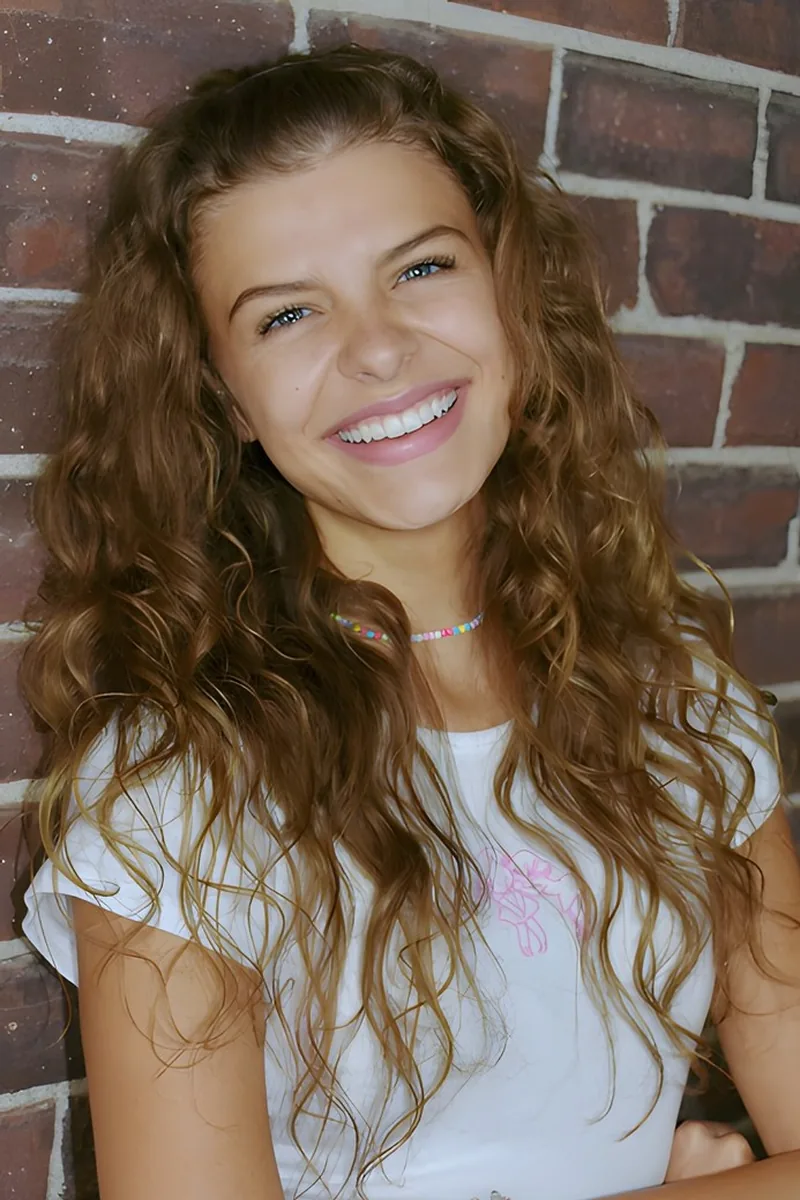
Scoring a 35 ACT composite puts Ingrid in the top percentile of quantitative reasoning, though her academic home at USC's Thornton School of Music means calculus isn't her primary lane. That said, music theory is built on patterns, intervals, and transformations — the same structural thinking that makes limits and early derivative concepts click when you stop treating them as formulas and start seeing how they behave.

3D animation is secretly applied calculus — Michaela uses derivatives and integrals daily to control motion curves, surface normals, and rate-of-change problems in her animation work. That real-world fluency means she can explain concepts like the chain rule or integration by parts through concrete, visual examples that make the abstract click.
An English major who also tutors math and works as a writing tutor for a general education curriculum, Rachel brings the same close-reading instinct to calculus — picking apart what a problem is actually asking before jumping to procedures. Her strength is in translating dense notation into plain language, which is especially useful for students who freeze at the sight of limit expressions or derivative formulas.
Geology and biochemistry both lean heavily on calculus — whether it's using integrals to model sediment accumulation over time or derivatives to track reaction rates in a lab. Aaron's dual-major coursework means he tackles problems like related rates and differential equations with a scientist's intuition for what the numbers actually describe. Rated 5.0 by students.
Neuroscience coursework at Vanderbilt put Avi through calculus in its most applied form — modeling action potential propagation, analyzing rates of neurotransmitter diffusion, and interpreting the curves that describe synaptic response over time. That hands-on experience with derivatives and integrals in biological contexts gives him a practical vocabulary for explaining what the math actually does, not just how to solve for it. His 34 ACT composite and 4.8 rating back up the quantitative chops.
Most calculus confusion isn't about the calculus itself — it's about shaky algebra or a vague understanding of functions underneath it. Edward diagnoses exactly where the breakdown is, whether a student is struggling with integration techniques, the chain rule, or setting up applied problems like volumes of revolution. Studying chemical engineering at Michigan, he tackles calculus problems in multiple contexts every week, which gives him a deep bench of examples to draw from.
I am my strongest and best self when helping others. As an enthusiastic, passionate, and dependable teacher, I am consistently working to share and engage with the material I love.
Engineering coursework forced Oluwatosin to use calculus daily — from analyzing circuit behavior with integrals to modeling signal decay with differential equations — so he teaches it as a living tool, not an abstract exercise. He digs into limit definitions, differentiation rules, and integration techniques with an emphasis on why each method works, which makes applying them to new problems far more intuitive.
Engineering students live in calculus — derivatives, integrals, and limits are tools Guillermo uses constantly in his coursework at the University of Nebraska–Lincoln. He breaks down concepts like the chain rule and related rates by connecting them to real problems rather than leaving them as abstract procedures. His 5.0 rating speaks to how well that approach lands.
Limits, derivatives, and integrals each demand a different kind of thinking, and rushing past one to reach the next is where most students lose the thread. Erika slows down at the conceptual transitions — like understanding what a derivative actually represents before drilling differentiation rules — so the later material doesn't feel like memorizing formulas in a vacuum.
Derivatives and integrals finally click when a student sees them as tools for measuring real change — velocity from position, area under a curve, rates of accumulation. Jeremy's engineering technology degree required calculus in applied contexts, so he teaches concepts like the chain rule and integration by parts through problems that actually mean something. He's deliberate about not rushing past a shaky foundation.
Studying classical Latin means parsing dense, rule-driven systems where every inflection carries meaning — and Zachary applies that same precision to unpacking calculus notation and the logic behind it. His math tutoring spans pre-algebra through calculus, so he knows exactly where students' algebraic foundations tend to crack under the weight of limits and derivatives, and he builds those connections explicitly. A 1480 SAT confirms the quantitative chops to back it up.
Understanding why the chain rule works — not just when to use it — changes everything about how a student handles integration by parts, u-substitution, and applications like volume of revolution. Matthew is a computer science undergrad who almost became a math major, and he brings that deep curiosity to every Calculus concept he teaches. He's especially sharp at translating word problems into the integrals and derivatives they're actually asking for.
Teaching across the full math spectrum from arithmetic through algebra 2 gives Erika an unusually clear picture of where students' foundations crack under the weight of calculus — she knows exactly which algebraic gaps cause chain rule errors or make integration by substitution feel impossible. Her 33 ACT composite confirms she can handle the quantitative rigor, and her approach zeroes in on building the connections between the algebra students already know and the calculus concepts that extend it.
Psychology research at the graduate level leans heavily on statistics, but James's coursework getting there — including the algebra and pre-calculus sequence — means he's walked the full path that leads into calculus and understands where students tend to lose the thread. He's particularly effective at slowing down the transition from algebraic manipulation to calculus reasoning, unpacking how a derivative connects back to the slope concepts students already know. Rated 5.0 by students.
Building algorithms in C++ and Java means Oen thinks natively in terms of iteration, convergence, and optimization — concepts that map directly onto limits, Riemann sums, and finding extrema in calculus. His computer science training at Grinnell gives him a knack for explaining the underlying logic of a derivative or integral as a precise, step-by-step process rather than a mysterious formula to accept on faith.
Pre-med students often ask when they'll actually use calculus — Natalie already knows, since her chemistry degree required applying integrals to thermodynamics problems and using derivatives to model reaction rates. That hands-on experience with calculus as a tool for solving real science problems means she teaches concepts like the chain rule and area under a curve with built-in context. Rated 4.8 by students.
Limits, derivatives, and integrals each demand a different kind of thinking, and students who try to memorize procedures without grasping the underlying logic tend to hit a wall at the chain rule or related rates. Asta unpacks each concept visually and algebraically so the reasoning behind techniques like u-substitution actually clicks. Her 35 ACT composite speaks to the quantitative rigor she brings.
Biology at Cornell means Josef worked through calculus where it actually lives — modeling enzyme kinetics, analyzing growth curves, and interpreting the rates of change that govern biological systems. His 1530 SAT confirms the quantitative chops to back that up, and he teaches derivatives and integrals by anchoring each concept in the kind of applied problem where the math stops feeling abstract. Rated 5.0 by students.
Ben's math degree from Penn means he's gone well beyond the standard calculus sequence — through multivariable calculus, linear algebra, and the rigorous proofs that tie them together — so he teaches concepts like the chain rule or integration by parts with a clear sense of where they lead. That depth shows up in how he unpacks problems: connecting each technique back to the underlying logic instead of treating it as a standalone trick. Rated 5.0 by students.
Philosophy at the University of Chicago is built on formal logic — the same structural reasoning that underpins proofs about limits, continuity, and the behavior of functions at boundary cases. Justin applies that logical rigor to calculus, breaking down each rule into a chain of reasoning rather than a formula to memorize, which is especially useful when students hit the conceptual wall around the chain rule or related rates. His 34 ACT and 5.0 tutoring rating back up the quantitative chops behind that approach.
Economics relies heavily on derivatives and integrals — marginal cost, consumer surplus, optimization under constraints — so Simon didn't just study calculus, he applied it daily throughout his degree. He's especially sharp at explaining the logic behind limit definitions and the chain rule, the two places where most students first lose the thread. That application-heavy perspective turns calculus from symbol manipulation into something students can actually visualize.
Lauren's degrees are in social sciences and French, so she's straightforward that calculus isn't her primary area — but her tutoring roster includes algebra and math broadly, meaning she's built a working fluency with the foundational reasoning that calculus demands. She takes a deliberate, concept-first approach to topics like continuity and rate of change, leaning on the same structured study methods that earned her a 5.0 rating across subjects.
Scoring a 34 on the ACT means Solange has the quantitative chops to handle calculus, even though her Harvard degrees are in sociology and women's studies. Her eight years of tutoring math at multiple levels give her a clear read on where students get stuck — particularly the conceptual shift from algebraic manipulation to thinking about instantaneous rates of change and accumulation. She breaks down the logic behind each new idea before diving into computation, so the notation stops feeling like a foreign language.
Dual-degree work in Applied Mathematics and Computer Science at Johns Hopkins means Sabira isn't just familiar with calculus — she uses it daily, from optimization algorithms to the linear algebra and multivariable calc that underpin machine learning models. That depth lets her trace a concept like the chain rule or integration by parts back to why it was invented in the first place, turning mechanical steps into intuition. Rated 5.0 by students.
As a biochemistry major at Rice, Michelle used calculus constantly — modeling reaction rates, analyzing enzyme kinetics, interpreting area-under-the-curve problems with real lab data. She teaches derivatives and integrals by connecting the mechanics of each rule to the reasoning behind it, so students understand when and why to apply techniques like chain rule or u-substitution.
Between a biology degree heavy on quantitative coursework and a perfect 36 ACT, Emily has the mathematical chops to teach calculus with real depth — not just procedure but the reasoning behind integration techniques and derivative applications. Her epidemiology training at Yale's School of Public Health meant working with rate-of-change models constantly, from disease transmission curves to survival analysis, so she can ground abstract calculus concepts in problems where the math actually drives decisions. Rated 5.0 by students.
Comparative literature at Princeton isn't a typical path to calculus, but the close-reading discipline Brittney developed there — pulling apart layered arguments piece by piece — maps surprisingly well onto unpacking limit definitions and derivative rules where every symbol carries specific meaning. Her 1440 SAT confirms solid quantitative reasoning, and she brings that same meticulous, notation-decoding approach to early calculus concepts. Rated 5.0 by students.
Philosophy, Politics, and Economics at Penn isn't a math degree, but the PPE program's quantitative economics track means Kevin has worked through optimization problems, marginal analysis, and the derivative-driven reasoning that underpins microeconomic theory. His 34 ACT composite backs up that quantitative ability, and he teaches calculus concepts by connecting them to the economic models where they actually do something — finding maximum profit, minimizing cost, interpreting what a rate of change means in context.
Testimonials
Because the right Calculus tutor makes all the difference.
Average Session Rating – Based on 3.4M Learner Ratings
Nearby Calculus Tutors
Other Lincoln Tutors
Related Math Tutors in Lincoln
Frequently Asked Questions
Varsity Tutors matches Lincoln students with expert Calculus tutors for 1-on-1 instruction. We pair each student with a tutor based on their specific needs, learning style, and goals.
Whether you need homework help, exam prep, or want to get ahead, our Calculus tutors are ready to help.
Common challenges include gaps from earlier material, difficulty with specific concepts, and trouble applying learning to new problems. These issues can snowball quickly in Calculus.
A tutor identifies where you're stuck, fills in gaps, and provides targeted practice. The 1-on-1 format means you get help exactly where you need it.
Tutors work with your student's actual coursework—homework assignments, class notes, and upcoming tests. This keeps tutoring directly relevant to what's happening in the classroom.
When you share information about your student's school and curriculum, we can match you with a tutor who has relevant experience.
All tutors complete background checks, credential verification, and teaching evaluation. Many of our Calculus tutors hold advanced degrees or have years of teaching experience.
You can review tutor profiles to find someone with the right background for your student's level and needs.
Many students see improved grades within a few weeks, along with better understanding of Calculus concepts and more confidence tackling challenging material.
Tutors track progress and adjust their approach to ensure continued improvement.
Most students benefit from 1-2 sessions per week. More frequent sessions help if your student is significantly behind or has an important exam coming up.
Your tutor can recommend a schedule based on your student's specific situation and goals.
Tutoring is purchased in packages of hours, with rates varying by tutor experience. Varsity Tutors offers several options to fit different budgets and needs.
You can discuss pricing during your consultation to find what works best.
Your tutor will assess where your student is, discuss goals, and start working on priority areas. Most students bring current homework or upcoming test material to focus on.
By the end, you'll have a clear sense of how the tutor can help and a plan for moving forward.
Let’s find your perfect tutor
Answer a few quick questions. We’ll recommend the right plan and match you with a top 5% tutor.