Award-Winning Writing Tutors
serving Aurora, CO
Writing
Tutors in Aurora
Private 1-on-1 tutoring, weekly live classes for academic support, test prep & enrichment, practice tests and diagnostics, and more to elevate grades and test scores.
Based on 3.4M Learner Ratings
UniversitiesSchools & Universities
DeliveredHours Delivered
ProficiencyGrowth in Proficiency
Who needs tutoring?
No obligation. Takes ~1 minute.
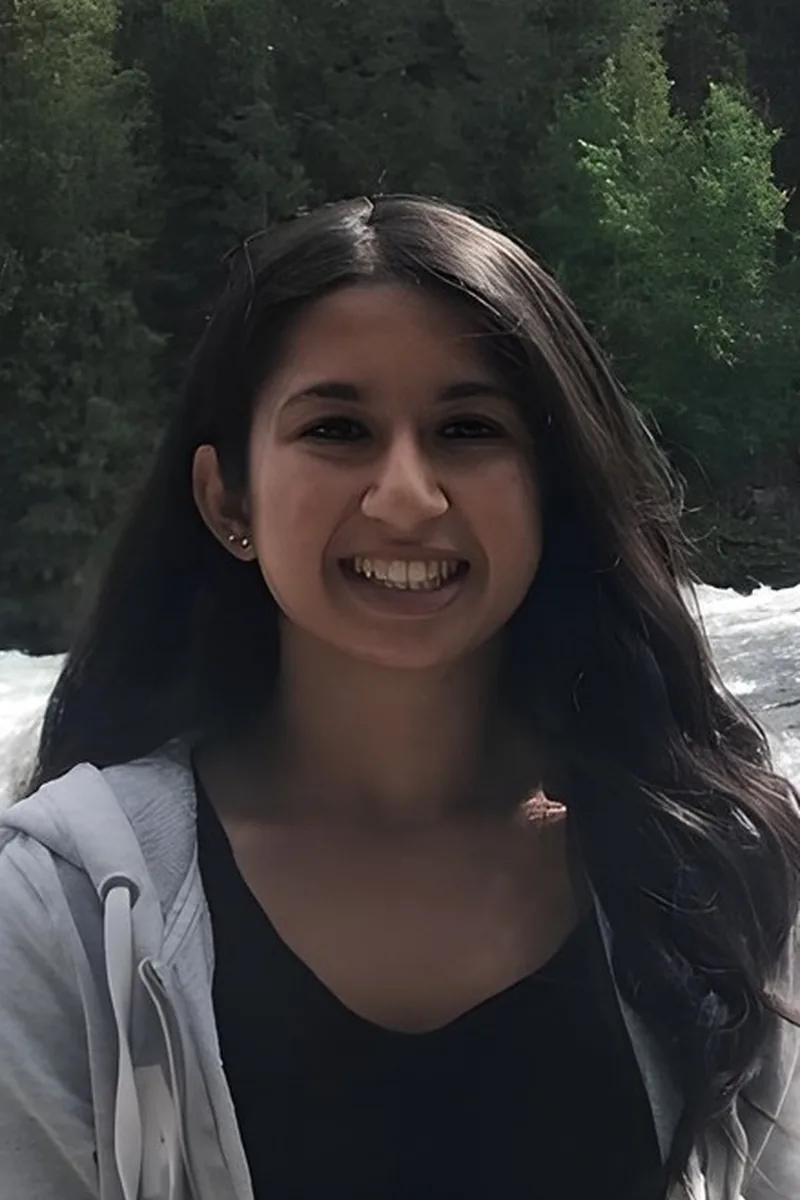
I am a student at the Georgia Institute of Technology studying Chemical Engineering. For the past several years, I have worked with students extensively. Through hosting events for younger kids to learn about STEM and for older teens to practice empathetic design, I know the importance of teaching students in ways that engage them rather than frustrate them, which I apply to my teaching. I have tutored high school students in a drop-in resource center in various subjects including math of all levels, chemistry, and English, making me adequately equipped in a variety of topics. I have also tutored several students long-term. Establishing relationships with students and exploring their unique learning styles is my favorite part of tutoring. I prioritize helping students discover HOW to learn in a manner that is the most effective for them, so they can begin to use those skills on their own throughout their education. Learning is a lifelong skill that requires practice for improvement; I strive to help my students gain confidence in their ability to learn.
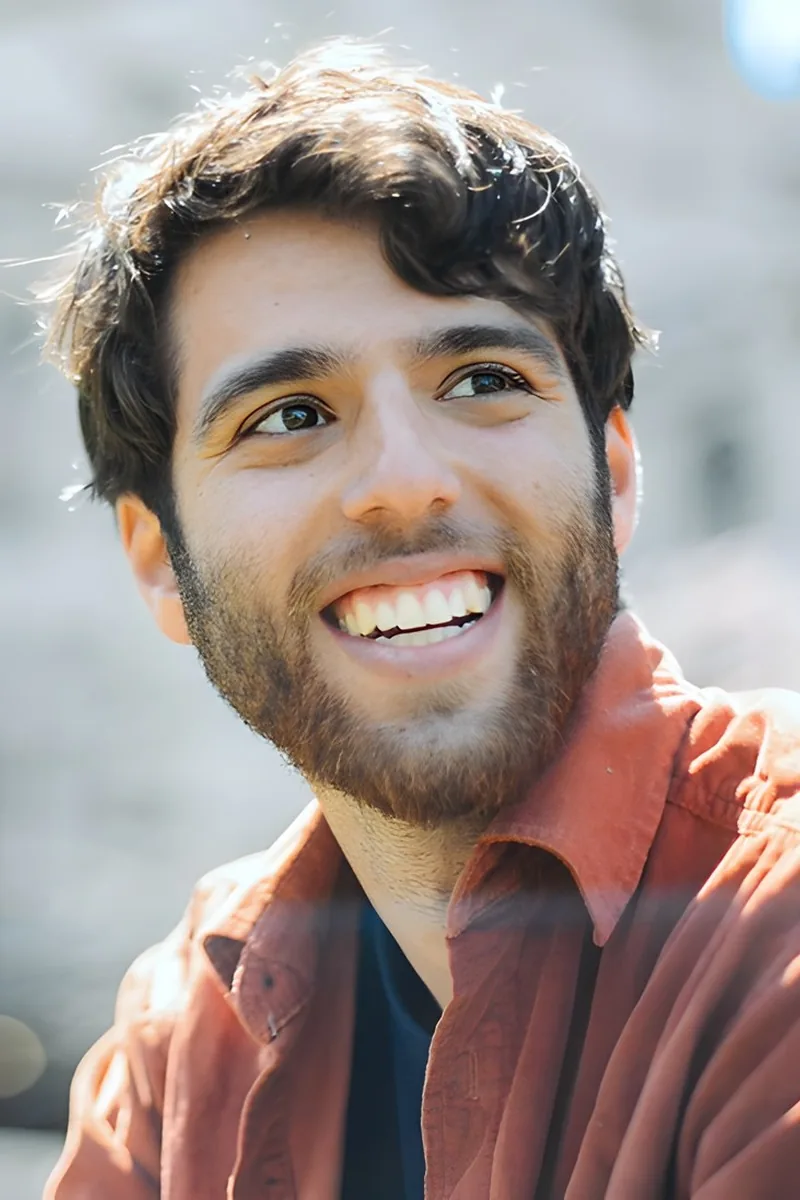
Eric's approach to writing comes from years of philosophy coursework, where every paper demanded a precise thesis defended with airtight reasoning. He applies that same discipline to any genre — persuasive essays, research papers, creative nonfiction — by teaching students to outline their argument before they write a single sentence. The terrible jokes he cracks along the way make revision feel less like surgery.
Teaching fiction at Washington University and facilitating pedagogy training for MFA students gave Erinrose an unusual dual perspective: she knows what makes a sentence work as a writer, and she knows how to explain why it works as a teacher. Whether a student is drafting a personal narrative, a research paper, or a short story, she tackles the writing process from brainstorming through final revision with real craft vocabulary — not vague advice like "show, don't tell."
Lacey treats writing as an act of thinking — her approach zeroes in on how to build a clear argument from a messy first draft, teaching students to identify their own thesis buried in freewriting and restructure paragraphs around it. Her background in history and philosophy of science means she's comfortable coaching writing across disciplines, from lab reports to personal narratives.
Most students know what they want to say but struggle to organize it on the page. Tara tackles that gap by teaching concrete techniques — outlining an argument before drafting, using topic sentences as signposts, and revising for cohesion rather than just grammar. Her interdisciplinary background across anthropology and museum studies means she's comfortable coaching writing for research papers, creative projects, and everything in between.
Good writing starts with having something specific to say and knowing how to organize it before a single sentence hits the page. Alicia teaches outlining, thesis development, and paragraph architecture across genres — from argumentative essays to personal narratives — drawing on years of classroom teaching experience to pinpoint exactly where a student's process needs strengthening.
Heidi approaches writing the way her journalism program at CU Boulder taught her: start with a clear claim, support it with specific evidence, and cut anything that doesn't earn its place. She's especially effective at breaking down the brainstorming-to-final-draft process so it feels manageable rather than overwhelming. Whether the assignment is a personal narrative or an argumentative essay, she zeroes in on structure and voice.
Getting ideas out of a student's head and onto the page is often the hardest part, and Emma's teaching background gives her a toolkit of strategies — outlining, freewriting, graphic organizers — tailored to how each student thinks. She walks writers through everything from constructing a solid thesis to varying sentence structure for impact. Rated 5.0 by her students.
Seth's graduate work in theology required constant writing — constructing sustained arguments from primary sources, defending interpretations, and revising through multiple drafts. He brings that discipline to student writing, whether the assignment is a five-paragraph essay or a research paper, by zeroing in on thesis clarity and evidence selection.
Transitioning from engineering to graduate humanities meant Cody had to rebuild his writing from the ground up — learning to construct arguments, develop voice, and write for audiences beyond a technical readership. That process gives him a clear memory of what it takes to improve as a writer. He teaches outlining and revision as concrete, repeatable skills rather than mysterious talents.
Philosophy training rewires how you think about writing — every paragraph becomes an argument, every sentence a claim that needs support. Paige brings that discipline to essay structure, thesis development, and revision, teaching students to build pieces where each idea earns its place on the page. Rated 5.0 by students.
Clear writing starts with clear thinking, which is why Hannah spends time on outlining and thesis development before a student types a single sentence. She tackles common sticking points like building body paragraphs around evidence rather than summary, and crafting introductions that do real analytical work. Her training across both the sciences and humanities means she's comfortable coaching writing in virtually any discipline.
I am a undergraduate student who is willing to help other students in subjects that they may be experiencing difficulties in.
Clear writing starts with knowing what you actually want to say — and Rosemary treats outlining and thesis development as the real work, not just a box to check before drafting. Her environmental biology background means she's equally comfortable coaching narrative essays and data-driven research papers. She breaks revision into concrete steps: structure first, then argument, then sentence-level polish.
Good writing isn't just about having ideas — it's about structuring an argument so each paragraph builds toward something. Katie teaches the mechanics of that process, from crafting thesis statements to tightening transitions, drawing on her experience writing across both scientific and humanities disciplines. She's especially effective at getting students who say they 'hate writing' to actually engage with revision.
Getting ideas onto the page is one challenge; organizing them into something a reader actually wants to follow is another. Carson tackles both sides of the writing process, walking students through thesis development, paragraph transitions, and revision strategies rooted in his English background. Whether the assignment is a personal narrative or an argumentative essay, he teaches students to write with intention.
Getting ideas out of your head and onto the page is often the hardest part, so Jalonna starts with structured brainstorming techniques before any drafting begins. She then walks through organization, paragraph development, and revision — building each piece from outline to polished final draft. Students at every level, from middle school to college, have benefited from her step-by-step process.
Every writing problem is really a thinking problem — a thesis that hasn't been sharpened, a paragraph that drifts from its claim, an introduction that buries the point. Sarah's teaching spans high school essays to graduate-level academic writing, and she tackles each piece by first identifying what the writer is actually trying to say, then restructuring around that idea.
I am an experienced tutor who is passionate about math and science education. I have a deep understanding of math and science. I recently graduated from Brown University with a Bachelor of Science in Mathematics, coursework in both the physical and natural sciences, and a GPA of 3.87. I also studied at an IB high school and graduated with the highest marks in my class.
I am a recent graduate of the University of Kentucky with a Master of Science in Animal Nutrition. I received my Bachelor of Science in Animal Sciences from Cornell University. While I tutor various subjects, I am most passionate about tutoring math and feel that our school systems often fail students when it comes to math. I do not believe that some people simply "can't do math." I believe that some may need extra time and help, but everyone can do math. With patience and hard work, any student can learn. I also enjoy tutoring Spanish, which I have studied since I was in elementary. During undergrad, I even studied abroad in Barcelona and lived with a host family. In my spare time, I enjoy reading, dancing, TV/movies, and knitting.
I am a graduate of the University of Colorado at Boulder. I received my Bachelor of Arts in Biochemistry as well as MCD (Molecular, Cellular, and Developmental) Biology while minoring in Chemistry in 2015. I love exploring all of the cool things that this world has to offer. By dabbling in a little of everything I can set my sights on what really holds my attention. My primary interests lie in the sciences, where learning what makes our world turn drives my passion for knowledge.
I am a certified teacher in English as a foreign language, certified to teach high school science abroad, and have developed my own independent program to teach elementary school children. I have tutored in all levels of algebra as well as geometry. I have 4 years of experience teaching biology, from AP/Honors level biology to 3rd grade level "Making Neuroscience Fun" programs.
I am a neuroscience and psychology double major from CU Boulder working to go to PA school down the road. I am originally from the East coast, but definitely prefer the hiking here. I was a learning assistant (basically student focused teacher aid) at CU, and took a course to learn more effective pedagogy. Afterwards, I was asked to be a mentor, and continued trying to help as much as I can.
I am not tutoring, I am studying to be an EMT. I also love backpacking and adventuring.
I am a current student at the Colorado School of Mines, studying to double major in Applied Mathematics and Engineering Physics. I have been tutoring students professionally for one year, but also through my schools for 5 years now. I tutor most kinds of Math and Science, and love doing so; being able to help spread understanding of a difficult concept never fails to bring me joy. As a current student, I understand how lecturing is often not the most effective (or interesting) way to learn, so I like to be very interactive and ask a lot of questions in my teaching, almost like a conversation between the student and myself.
I am a freshman at the University of Colorado Boulder majoring in astrophysics and chemistry with a 4.00 GPA. I have been passionate about science and STEM topics my whole life, focusing on them in both high school and college classes. In my free time, you can usually find me exploring forest preserves by day and surveying the skies with my telescope by night.
I am currently an undergraduate studying Computer Science at the University of Kansas, and am also a member of the KU Honors Program. As a native of Colorado, I love the great outdoors and have done everything from skydiving to climbing a few "14ers". I place great value on education and see the importance in attaining a deep understanding of academic subjects. I have a casual teaching style and do my best to teach my students the value of what they are learning. I specialize in Math and ACT and SAT prep.
Clarity in writing comes from knowing what you actually want to say — and Michelle treats revision as the place where that discovery happens. She teaches students to restructure arguments, tighten prose, and eliminate filler by working through their own drafts line by line. Her dual interests in neuroscience and literature at Duke give her range across analytical and creative writing styles.
Getting ideas onto the page is only half the challenge; organizing them into an argument that actually builds is where most writers stall. Talia teaches outlining techniques and paragraph architecture — topic sentences that do real work, evidence integration, transitions that aren't just "furthermore" — drawn from her own extensive writing across political science and history coursework.
Trained in comparative literature at Columbia, Jacob treats writing as a craft with movable parts — thesis construction, evidence integration, paragraph architecture, and revision strategy each get dedicated attention. He's particularly sharp at teaching students how to move from a rough idea to a polished argument without losing their own voice in the process.
Strong writing starts with a clear claim and evidence that actually supports it — skills Richard hones daily as a Government concentrator at Harvard. He breaks down the writing process into manageable steps, from outlining an argument to refining sentence-level style, so students learn to produce polished drafts independently rather than relying on vague inspiration.
At the University of Chicago, every assignment was essentially a writing assignment — seminar papers, policy analyses, research proposals — which gave Asta deep practice in adapting voice and structure to different audiences. She teaches students how to outline before they draft, build paragraphs around single claims, and revise with purpose rather than just fixing commas.
Learning to write well means learning to revise — to see your own sentences critically and understand why one version of a paragraph is clearer than another. Ayako tackles everything from thesis construction and paragraph transitions to tone and word choice, drawing on her English coursework at Trinity College Dublin. She's 5.0-rated and treats each student's voice as something to sharpen, not replace.
Getting ideas onto the page is only half the challenge; organizing them into a clear, persuasive argument is where most young writers stall out. Jessica breaks the writing process into concrete, repeatable steps — brainstorming, outlining, drafting topic sentences that actually control a paragraph — so students build a method they can use independently. Her 5.0 rating speaks to how well that structured approach works.
Strong writing starts with having something specific to say and then organizing it so a reader can follow without effort. Jackie tackles both sides of that equation — she teaches outlining and thesis construction alongside sentence-level skills like varying syntax, eliminating filler, and choosing precise verbs over adverb-heavy workarounds. Her Business Communications background at Vanderbilt adds a practical edge for students learning to write persuasively.
Crafting a clear argument, structuring paragraphs that actually build on each other, finding the right word when "good" won't cut it — these are the skills Hannah teaches as an MFA candidate in Creative Writing at Temple University. She breaks down the revision process so students learn to read their own drafts critically and strengthen them independently.
Years as a writing consultant taught Renee that the hardest part of writing isn't grammar — it's figuring out what you're actually trying to argue. She walks students through the full arc from messy brainstorm to polished draft, with particular attention to building paragraphs that each do real work toward a central claim.
Clear writing starts with clear thinking, and Vansh tackles both at once. He walks students through the process of building an argument from a working thesis outward, teaching them how to structure body paragraphs around specific evidence rather than vague claims. His finance background adds a practical edge — he values precision and economy in every sentence.
Whether the assignment is a persuasive essay, a research paper, or a reflective narrative, Emily teaches students to build an argument from the ground up: claim, evidence, analysis, structure. Her Yale training spanned lab reports in cellular biology and literary essays in French, so she's comfortable coaching writing across genres and disciplines. Rated 5.0 by students.
Testimonials
Because the right Writing tutor makes all the difference.
Average Session Rating – Based on 3.4M Learner Ratings
Nearby Writing Tutors
Other Aurora Tutors
Related English Tutors in Aurora
Frequently Asked Questions
Varsity Tutors matches Aurora students with expert Writing tutors for 1-on-1 instruction. We pair each student with a tutor based on their specific needs, learning style, and goals.
Whether you need homework help, exam prep, or want to get ahead, our Writing tutors are ready to help.
Common challenges include gaps from earlier material, difficulty with specific concepts, and trouble applying learning to new problems. These issues can snowball quickly in Writing.
A tutor identifies where you're stuck, fills in gaps, and provides targeted practice. The 1-on-1 format means you get help exactly where you need it.
Tutors work with your student's actual coursework—homework assignments, class notes, and upcoming tests. This keeps tutoring directly relevant to what's happening in the classroom.
When you share information about your student's school and curriculum, we can match you with a tutor who has relevant experience.
All tutors complete background checks, credential verification, and teaching evaluation. Many of our Writing tutors hold advanced degrees or have years of teaching experience.
You can review tutor profiles to find someone with the right background for your student's level and needs.
Many students see improved grades within a few weeks, along with better understanding of Writing concepts and more confidence tackling challenging material.
Tutors track progress and adjust their approach to ensure continued improvement.
Most students benefit from 1-2 sessions per week. More frequent sessions help if your student is significantly behind or has an important exam coming up.
Your tutor can recommend a schedule based on your student's specific situation and goals.
Tutoring is purchased in packages of hours, with rates varying by tutor experience. Varsity Tutors offers several options to fit different budgets and needs.
You can discuss pricing during your consultation to find what works best.
Your tutor will assess where your student is, discuss goals, and start working on priority areas. Most students bring current homework or upcoming test material to focus on.
By the end, you'll have a clear sense of how the tutor can help and a plan for moving forward.
Let’s find your perfect tutor
Answer a few quick questions. We’ll recommend the right plan and match you with a top 5% tutor.