Award-Winning College Physics Tutors
serving Aurora, CO
College Physics
Tutors in Aurora
Private 1-on-1 tutoring, weekly live classes for academic support, test prep & enrichment, practice tests and diagnostics, and more to elevate grades and test scores.
Based on 3.4M Learner Ratings
UniversitiesSchools & Universities
DeliveredHours Delivered
ProficiencyGrowth in Proficiency
Who needs tutoring?
No obligation. Takes ~1 minute.

Biomedical engineering at UVA means Colton spent four years where physics meets the human body — modeling forces on prosthetics, analyzing fluid flow through vessels, and applying circuit theory to bioelectrical systems. He also TA'd courses in cell biology and MATLAB, so he's comfortable walking students through both the conceptual reasoning and the computational side of calculus-based physics problems. Rated 4.7 by students.
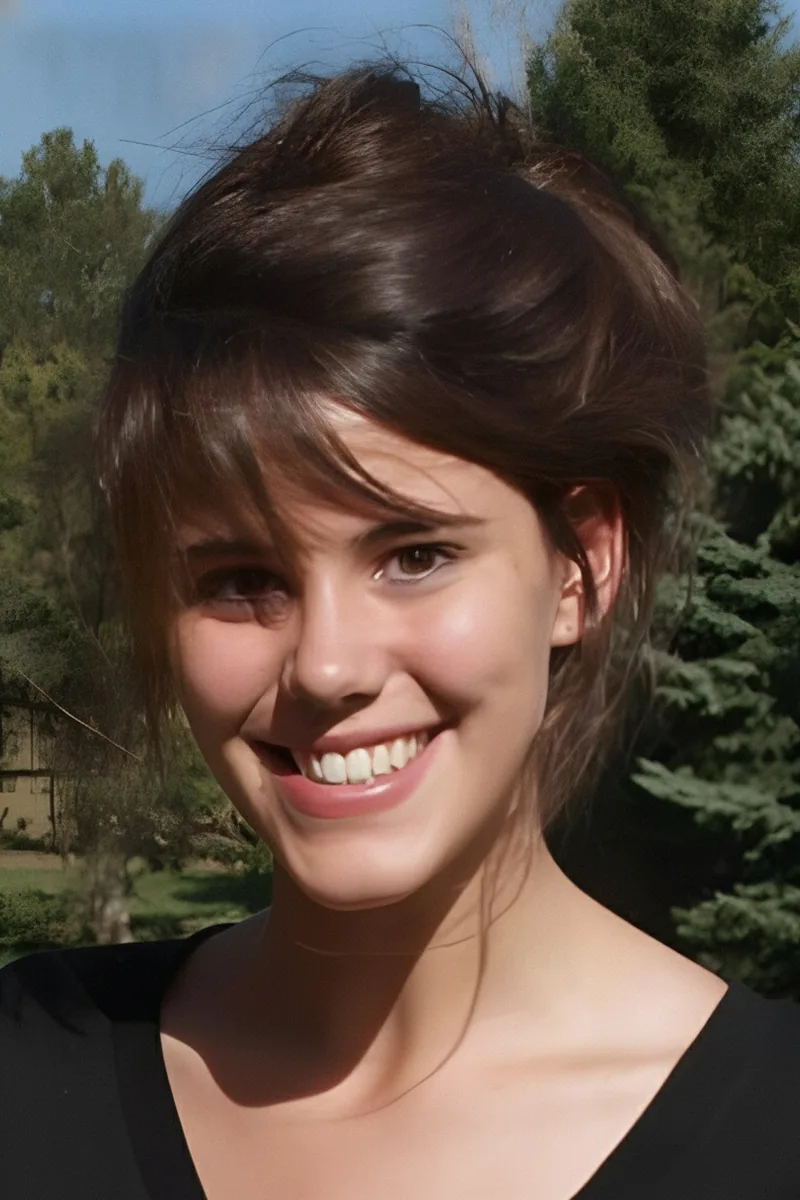
Studying physical therapy at UCD means Michelle regularly applies physics to the human body — analyzing force vectors in joint movement, understanding torque during gait, and calculating work done by muscle groups — which gives her a practical anchor for the mechanics topics that dominate introductory college physics. Her biology degree from Trinity and a 4.8 tutoring rating back up her emphasis on conceptual problem-solving: mapping out the physics of a scenario before plugging anything into an equation.
Studying engineering physics at Colorado School of Mines means Jude is taking the same calculus-based physics courses his students are — mechanics, E&M, waves, thermo — and solving the same style of problems week after week. That proximity to the material keeps his instincts sharp on exactly where a problem setup falls apart, whether it's misidentifying the system in a free-body diagram or botching a line integral through a non-uniform field. He scored a 36 ACT and holds a 4.9 tutoring rating.
Few tutors bring the depth of a dedicated Engineering Physics program to college-level physics. Cody tackles topics like Lagrangian mechanics, Maxwell's equations, and quantum fundamentals with the rigor of someone who studied them as core coursework at Colorado School of Mines. He also uses Mathematica to visualize complex systems, which is especially useful for students in calculus-based physics sequences.
Studying astrophysics and chemistry at CU Boulder means Graham lives inside the calculus-based physics that makes college courses demanding — orbital mechanics, electromagnetic radiation, thermodynamic processes in stellar atmospheres — and carries a 4.0 GPA through it. He breaks problems down by identifying the governing principle first, whether that's a conservation law or a field equation, then walks through the math step by step so the physics stays visible. Rated 5.0 by students.
Evan's physics degree means he didn't just pass college physics — he kept going, tackling thermodynamics, special relativity, and upper-division mechanics well beyond the introductory sequence. That depth lets him trace a tricky concept like rotational inertia or wave superposition back to the underlying principle instead of just drilling the formula. Rated 5.0 by students.
Between earning a mechanical engineering bachelor's and pursuing his master's, Aaron has taken calculus-based physics from every angle — statics, dynamics, thermodynamics, fluid mechanics — and now applies those principles daily in graduate-level research and coursework. He breaks down problems by teaching students to sketch the physical situation first, identify constraints, and only then select the right conservation law or force equation. Holds a 5.0 rating.
Studying computer science and applied math at Harvard means Derek uses physics constantly — from electromagnetism in circuit design to mechanics in computational modeling. He tackles college-level topics like Lagrangian dynamics and wave equations by connecting the math to physical intuition, making dense derivations feel less abstract.
A chemistry degree from Yale means Zosia spent years in courses where physics does the heavy lifting — thermodynamics driving reaction spontaneity, quantum mechanics explaining atomic structure, electrostatics governing molecular interactions — so she knows these concepts from the inside out. She's particularly effective at teaching students to translate word-heavy problem statements into clean free-body diagrams or energy bar charts before touching an equation. Rated 4.9 by students.
Studying civil engineering at Cornell means Ryan solves physics problems for a living — calculating load distributions, analyzing force vectors in structural systems, and applying fluid mechanics principles that come straight out of college physics coursework. He scored a 35 ACT, which speaks to the quantitative precision he brings when breaking down mechanics or electromagnetism problems step by step. Rated 4.7 by students.
Three years of tutoring introductory physics while completing dual bachelor's degrees in physics and mathematics gave Justin a detailed map of exactly where students lose the thread — the jump from one-dimensional kinematics to rotational analogs, the shift from intuitive force reasoning to formal energy methods. His PhD in Computational Mathematics at the University of Chicago deepened that foundation, adding fluency with the differential equations and vector calculus that make the leap from algebra-based to calculus-based physics so steep. Rated 5.0 by students.
A bio-organic chemistry degree means Alex spent semesters in calculus-based physics courses where thermodynamics, electromagnetism, and mechanics weren't electives — they were prerequisites for understanding molecular behavior. That chemistry-physics overlap gives him a knack for unpacking energy conservation and electric potential in ways that click for students who think in terms of atoms and reactions rather than pulleys and ramps.
College-level physics ramps up fast, and the jump from textbook examples to exam problems can be brutal. Bryan earned his B.S. in Physics and tackles that gap by teaching problem-solving frameworks — symmetry arguments in electrostatics, constraint equations in multi-body dynamics — that transfer across chapters instead of requiring a new trick every week.
Biomedical engineering at Brown means Phillip solves physics problems with real biological stakes — modeling fluid flow through vessels, analyzing stress on implant materials, calculating electrical signals in tissue. That daily overlap with mechanics, thermodynamics, and electromagnetism gives him a practical fluency that makes college physics problem sets feel less abstract and more like puzzles with actual answers. Rated 5.0 by students.
Molecular biology might seem like a different world from physics, but Agustin's coursework lives in the overlap — diffusion equations, fluid dynamics in cellular transport, and the thermodynamics behind protein folding all demand real physics fluency. He pairs that life-sciences perspective with strong quantitative chops (1560 SAT) to break down mechanics and energy problems in ways that click for students who think more naturally in biological terms than abstract force diagrams.
Biomedical engineering at Johns Hopkins means Christine solves physics problems daily that most students only see in textbooks — fluid dynamics in blood flow, pressure gradients across membranes, mechanics of prosthetic joints — giving her a concrete, application-heavy lens for the material. She's particularly strong on the thermodynamics and mechanics portions of college physics, where her coursework overlaps most directly with standard problem sets. Holds a 5.0 rating.
Studying computer science at MIT means Brice lives inside the math and physics that most students only encounter on problem sets — his coursework regularly demands fluency in mechanics, wave behavior, and electromagnetism as foundations for everything from signal processing to computational modeling. He breaks physics problems into the same kind of step-by-step logical structure he'd use to debug code, which makes tangled multi-concept questions feel systematic rather than overwhelming. Rated 4.9 by students.
Studying mechanical engineering at Harvard means Christopher applies physics daily — from free-body diagrams and torque calculations to thermodynamic cycles and fluid dynamics. He breaks down multi-step problems by identifying which conservation law applies and walking through the math from there, so the problem-solving process becomes repeatable rather than mysterious.
Testimonials
Because the right College Physics tutor makes all the difference.
Average Session Rating – Based on 3.4M Learner Ratings
Nearby College Physics Tutors
Other Aurora Tutors
Related Science Tutors in Aurora
Frequently Asked Questions
Varsity Tutors matches Aurora students with expert College Physics tutors for 1-on-1 instruction. We pair each student with a tutor based on their specific needs, learning style, and goals.
Whether you need homework help, exam prep, or want to get ahead, our College Physics tutors are ready to help.
Common challenges include gaps from earlier material, difficulty with specific concepts, and trouble applying learning to new problems. These issues can snowball quickly in College Physics.
A tutor identifies where you're stuck, fills in gaps, and provides targeted practice. The 1-on-1 format means you get help exactly where you need it.
Tutors work with your student's actual coursework—homework assignments, class notes, and upcoming tests. This keeps tutoring directly relevant to what's happening in the classroom.
When you share information about your student's school and curriculum, we can match you with a tutor who has relevant experience.
All tutors complete background checks, credential verification, and teaching evaluation. Many of our College Physics tutors hold advanced degrees or have years of teaching experience.
You can review tutor profiles to find someone with the right background for your student's level and needs.
Many students see improved grades within a few weeks, along with better understanding of College Physics concepts and more confidence tackling challenging material.
Tutors track progress and adjust their approach to ensure continued improvement.
Most students benefit from 1-2 sessions per week. More frequent sessions help if your student is significantly behind or has an important exam coming up.
Your tutor can recommend a schedule based on your student's specific situation and goals.
Tutoring is purchased in packages of hours, with rates varying by tutor experience. Varsity Tutors offers several options to fit different budgets and needs.
You can discuss pricing during your consultation to find what works best.
Your tutor will assess where your student is, discuss goals, and start working on priority areas. Most students bring current homework or upcoming test material to focus on.
By the end, you'll have a clear sense of how the tutor can help and a plan for moving forward.
Let’s find your perfect tutor
Answer a few quick questions. We’ll recommend the right plan and match you with a top 5% tutor.