Award-Winning Pre-Calculus Tutors
serving Appleton, WI
Pre-Calculus
Tutors in Appleton
Private 1-on-1 tutoring, weekly live classes for academic support, test prep & enrichment, practice tests and diagnostics, and more to elevate grades and test scores.
Based on 3.4M Learner Ratings
UniversitiesSchools & Universities
DeliveredHours Delivered
ProficiencyGrowth in Proficiency
Who needs tutoring?
No obligation. Takes ~1 minute.

Competition math throughout high school taught Tracy to see pre-calculus topics like sequences, series, and trigonometric manipulations as puzzles with elegant internal logic — not just procedural hurdles before calculus. Her triple economics degree means she also knows how these tools land in practice, since exponential models and rate-of-change reasoning show up constantly in economic analysis. A 36 ACT and 4.9 rating confirm she delivers on both the conceptual and practical sides.
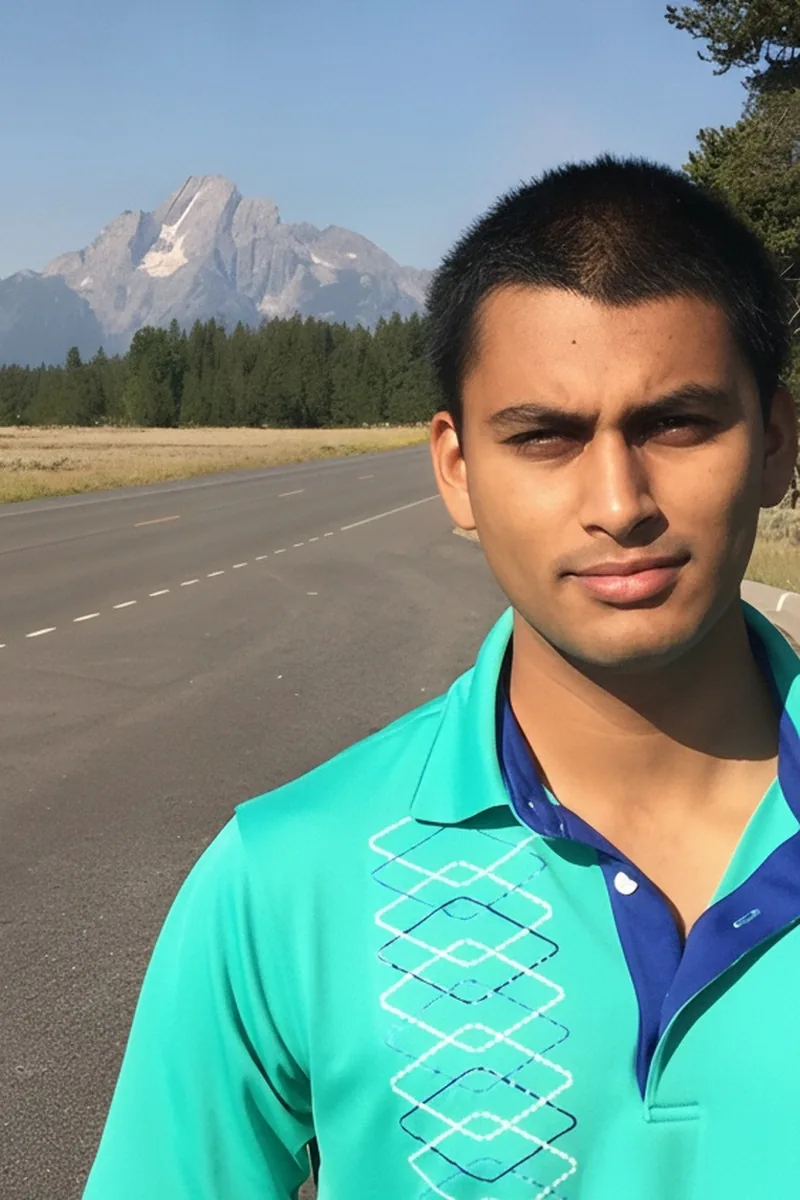
The jump to pre-calculus is where trigonometric identities, limits intuition, and function transformations all converge, and students who memorize without understanding hit a ceiling fast. Karann approaches these topics through the lens of mathematical modeling, connecting abstract function behavior to the kind of quantitative work she does in her doctoral research at Wisconsin-Madison.
Sophie's applied math coursework at Brown keeps her immersed in the function behavior and trigonometric reasoning that pre-calculus is built around — she's not dusting off old notes to teach this material. She zeroes in on the conceptual jumps that trip students up most, like moving from memorizing the unit circle to actually understanding how angle relationships generate the graphs of sine and cosine. Her 1570 SAT and 4.8 rating back up the mathematical instincts she brings to each session.
The leap from algebra to calculus hinges on pre-calc concepts like limits, trigonometric identities, and the behavior of rational functions — topics that punish shaky intuition. Matt's engineering training required fluency in all of these, and he connects each concept to concrete problems so the logic sticks before students ever walk into a calculus classroom.
The jump from algebra to pre-calculus is really a shift in how students have to think about functions — suddenly they're composing, inverting, and transforming them instead of just solving for x. Thomas's math and stats training at Carleton built exactly that kind of abstract reasoning, and he's especially sharp at making the transition from concrete algebraic steps to the more fluid functional thinking pre-calc demands. Holds a 5.0 rating from students.
Alexander's 35 ACT and 1570 SAT point to someone who didn't just survive pre-calculus — he internalized it. He teaches the course with a focus on polynomial and rational function behavior, breaking down how end behavior, zeros, and asymptotes connect so students can sketch and interpret graphs without relying on a calculator. His political science background also means he's comfortable translating quantitative reasoning into plain language when a concept isn't landing.
The jump into Pre-Calculus is where trigonometric identities, polar coordinates, and the unit circle start demanding a different kind of mathematical thinking. Elizabeth bridges that gap by connecting each new concept back to the algebra and geometry students already know, making topics like conic sections and sequences feel like logical extensions rather than brand-new territory. Her math degree from Johns Hopkins and seven years of high school teaching make her especially effective at preparing students for the rigor of calculus.
The jump into trigonometric identities, limits, and rational functions can feel overwhelming without someone who can explain why each piece matters for what comes next. Abhinav's neuroscience coursework at Tulane keeps him actively using pre-calculus concepts, so he teaches them with the fluency of someone who applies them daily rather than recites them from memory.
The jump to pre-calculus trips up a lot of students because it demands fluency with trigonometric identities, limits intuition, and function transformations all at once. Michael breaks these topics into manageable pieces, drawing on the same mathematical toolkit he built through his physics degree. He's especially effective at demystifying unit circle reasoning and connecting it to graphing behavior.
As a speech-language pathologist who teaches math at every level from pre-algebra through calculus, Mary has an unusual gift for breaking down the language of mathematics itself — explaining what a limit actually means, why a rational function behaves near an asymptote, or how to read the structure of a composite function. That communication expertise, sharpened by years of making abstract concepts accessible to diverse learners, translates directly into pre-calculus sessions where precise vocabulary and clear reasoning matter as much as computation. Her 34 ACT confirms the quantitative skill behind the teaching.
A PhD in math means Aaron doesn't just teach pre-calculus procedures — he understands the underlying architecture connecting trigonometric identities, sequences, and function composition at a level most tutors can't access. He treats each topic as a puzzle worth exploring, often surprising students by revealing elegant connections between ideas that initially seem unrelated, like how inverse functions mirror the logic of solving equations backward. Rated 5.0 by students.
Double-majoring in applied math and finance at UW-Madison means Connor is actively working through the theory and application sides of the exact material pre-calculus covers — polynomial behavior, rational expressions, and the trigonometric reasoning that bridges algebra to calculus. He's especially sharp at showing how transformations and compositions of functions follow predictable patterns once students stop treating each problem type as its own isolated topic. Holds a 5.0 rating and a 33 ACT.
Jeffry's biology degree means he's built fluency with the exponential and logarithmic models that pre-calculus students often find most disorienting — population growth curves, decay functions, dose-response relationships — and he teaches those function families by connecting them to the biological data where they actually show up. He's especially sharp at bridging the gap between algebraic mechanics and the kind of functional reasoning calculus will demand, walking through transformations and compositions step by step. Rated 4.9 by students, with a 31 ACT confirming the quantitative grounding.
The jump from algebra to pre-calculus — where limits, composite functions, and rational expressions all converge — is one of the steepest in high school math. Maya's biology coursework at DePaul demanded constant work with logarithmic and exponential models, giving her a concrete handle on the exact function families that dominate pre-calc. She connects each new concept back to something students already understand so the progression feels logical rather than overwhelming.
Pre-calc is where algebraic skills and trigonometric reasoning have to work together for the first time, and gaps from earlier courses tend to surface fast. Ian zeroes in on the specific concept causing trouble — whether that's composite functions, polar coordinates, or limits intuition — and rebuilds understanding from there rather than re-teaching the entire curriculum.
The bridge between algebra and calculus is where most of the conceptual heavy lifting happens — trigonometric identities, limits, and function transformations all converge in Pre-Calculus. Casey approaches these topics with the logical precision of a computer science student who uses mathematical thinking daily. He's particularly effective at unpacking how different function families behave and why that matters once calculus begins.
Sarah's CS degree with a math emphasis at UW-Madison means she's constantly working with the polynomial, rational, and trigonometric structures that pre-calculus is built around — they're prerequisites for everything from algorithm analysis to linear algebra. She zeros in on how function transformations and compositions actually work mechanically, building each idea from the algebra students already have so the jump to calculus feels like a natural next step. Rated 4.9 by students.
The jump to Pre-Calculus is where students suddenly need to think about functions as objects — transforming them, composing them, analyzing their behavior. Almira's math background, strong enough to test out of college math entirely, means she can unpack topics like rational functions and limit intuition in ways that prepare students for what calculus will actually demand.
My name is Mika and I recently graduated from Case Western Reserve University in Cleveland where I studied Economics, Math, and Spanish. I want to help you get the best grades, knowledge, and love of learning possible!
Systems design and automation work after earning an electrical engineering degree means Wei has spent years relying on the exact math pre-calculus covers — sinusoidal modeling for signal analysis, complex number operations for circuit behavior, and polynomial functions for system response curves. He teaches these topics as someone who debugs real systems with them, connecting the algebra students already know to the functional reasoning calculus will demand. Rated 5.0 by students.
The jump from trig identities to limits and continuity catches a lot of students off guard in Pre-Calculus, but it's exactly the transition Joseph loves teaching. His math degree from UW-Madison means he understands where every Pre-Calc topic is headed — so he teaches polynomial behavior, rational functions, and series with an eye toward what calculus will actually demand.
What makes pre-calculus click is seeing how each new function family — polynomial, rational, exponential, logarithmic — follows its own internal logic, and India's math-and-science emphasis at Madison College means she's actively building that conceptual map right now. She's close enough to the material to remember exactly where the confusion hits, especially around graph transformations and connecting algebraic rules to visual behavior. Rated 4.8 by students.
Four years of soccer coaching built Eric's instinct for reading when someone's lost and adjusting on the fly — a skill that translates directly to teaching pre-calculus, where a shaky grasp of one transformation or identity can quietly derail everything that follows. He digs into the specific algebra-to-functions transition that trips students up most, particularly rational expressions and their asymptotic behavior, making sure each concept locks in before layering on the next. His physics and calculus background means he always knows exactly where these pre-calc ideas are headed.
One of the most important things in tutoring math is to make sure students understand why a mathematical procedure works, not just how to do it. When student know how to do the procedure, but don't understand why it works, they will forget the procedure or misapply it, or worse, they may begin to hate math, not because they can't do it, but because they don't understand its relevance.
Mechanical engineering at Marquette means Brendan is actively working through the calculus sequence that pre-calculus directly feeds into — so he knows exactly which skills in trigonometric manipulation, function composition, and limit intuition students will need to have locked down before they get there. He tackles the course with an engineer's emphasis on spatial reasoning, making topics like parametric equations and graph transformations concrete by tying them to the physical systems he's modeling in his own coursework. Rated 5.0 by students.
Most pre-calculus students hit a wall not because the individual topics are hard, but because nobody connects the dots between polynomial behavior, trig identities, and the function analysis that calculus will demand — Steven spends his sessions building those bridges explicitly. His teaching spans everything from pre-algebra through AP Calculus AB, so he knows exactly which algebraic instincts need reinforcing before a student can confidently tackle rational functions or composite transformations. Holds a 5.0 rating from students.
I am currently studying at Northwestern University, on the track to a Bachelor of Arts in Statistics with a double major in Mathematical Methods in the Social Sciences, which is just a fancy way of saying math-based economics, and a minor in Legal Studies as well as Marketing. After my undergraduate studies, I plan on working in consulting for a few years before attending law school. Finally, I hope to combine my law studies with my consulting work to become a well-rounded corporate lawyer. At Northwestern, I provide SAT tutoring to Chicago-area juniors and seniors. In high school, I tutored third through fifth graders in basic reading and writing skills and developed their interpersonal skills through group crafts and teamwork activities. While I am open to tutoring a broad range of subjects and tests, I am most passionate about Math, Statistics, Economics, and US History. In my experience helping students prepare for the SAT, I have found that interactive activities and group work really help! I am a firm believer in the work-hard-play-hard mindset and find it to be absolutely necessary for a balanced lifestyle, and I try to impart this appreciation to all of my students. While I encourage my students to keep up with their studies and work hard, I also believe that studying needs to be balanced out with interests and fun.
The jump from algebra to pre-calculus is where many students first encounter math that requires holding multiple ideas in tension — a rational function's behavior near an asymptote, or the way a single angle connects a triangle to a point on the unit circle. Taylor's math degree means she can trace each of these ideas back to the algebraic roots students already understand, then build forward deliberately. Her 35 ACT and 5.0 rating confirm the precision she brings to that bridge-building work.
The jump from algebra to calculus hinges on how well a student internalizes pre-calc concepts like limits of sequences, trigonometric identities, and the behavior of rational and logarithmic functions. Mingxi spent her time at UW-Madison tutoring students across the full math sequence, so she knows precisely where pre-calc gaps cause trouble in later courses. She teaches each concept with an eye toward what's coming next.
Tim's computational neuroscience work at MIT sits right at the intersection where pre-calculus stops being abstract — he uses trigonometric models for neural oscillations, exponential decay for signal processing, and function composition to build the simulations his research depends on. That daily fluency means he can trace a topic like polar coordinates or logarithmic properties back to the intuition underneath it, not just the procedure on the page. His 34 ACT and 4.9 rating reflect the precision he brings to each session.
Mechanical engineering at Harvard means Christopher spends most of his time in calculus and differential equations — but he knows exactly which pre-calculus skills hold that work together, especially fluency with trigonometric graphs, composite functions, and the algebraic manipulation that makes limits possible later. He teaches each topic by gradually removing scaffolding until a student can tackle problems independently, flagging the specific mistakes that tend to snowball in calculus. His 35 ACT and 4.8 rating reflect a tutor who's recently built the same bridge his students are crossing now.
Trigonometric identities, logarithmic functions, and the behavior of rational expressions all land differently when a student can see what's happening on a graph. Dylan leans heavily on visual and graphical reasoning to make Pre-Calculus concepts intuitive rather than procedural — an approach sharpened by his physics and math coursework at Vanderbilt. He's particularly effective at bridging the gap between algebraic manipulation and the conceptual thinking calculus will demand.
Eric's ecology and evolutionary biology background means he's modeled population dynamics with logistic curves, analyzed species distributions using exponential and logarithmic functions, and applied periodic models to seasonal data — all core pre-calculus material in a research context. He zeroes in on how function families actually behave, teaching students to read a graph's story through its asymptotes, end behavior, and transformations rather than treating each topic as an isolated formula to memorize. His 1520 SAT and 32 ACT confirm the quantitative range behind that approach.
What separates students who survive pre-calculus from those who actually understand it is whether they've internalized the *why* behind each technique — and Daniel, as an applied mathematics major, learned every concept the hard way, by sitting down and working through the logic piece by piece. That deliberate approach makes him especially effective at breaking down topics like rational functions and graph transformations, since he teaches the reasoning he had to build for himself rather than skipping steps that feel obvious. Rated 4.7 by students.
Molecular biophysics at Brown throws Srini into the deep end of mathematical modeling — fitting protein folding kinetics to exponential curves, analyzing oscillatory molecular dynamics with trig functions, mapping multivariable relationships through composition. That daily immersion means he teaches pre-calculus topics like function transformations and logarithmic properties as tools he actively uses, not abstract concepts he's reciting from a textbook. A 1600 SAT and 35 ACT confirm the mathematical fluency behind his approach.
Teaching three Duke courses — including Electricity and Magnetism for engineers — means Florence regularly watches students stumble on the same pre-calculus weak spots: shaky unit circle intuition, mishandled function compositions, and half-understood logarithmic properties that quietly derail later work. She tackles those specific breakdowns head-on, rebuilding the algebraic reasoning underneath each concept so the jump to calculus feels like a natural next step rather than a cliff. Holds a 5.0 rating and a 36 ACT.
Holding degrees in both mechanical and electrical engineering, Steve has spent years in the territory where pre-calculus stops being coursework and starts being the toolkit — trigonometric analysis for signal processing, polynomial modeling for system dynamics, vectors and complex numbers for circuit design. He teaches the course knowing exactly which skills will matter most when students hit calculus and engineering-track courses, and builds each lesson around that forward view. Rated 4.9 by students.
Studying molecular biology at Yale means Maxwell constantly encounters the mathematical scaffolding that pre-calculus builds — exponential models for gene expression kinetics, logarithmic scales for concentration data, and trigonometric functions underlying structural biology. He zeros in on how these function families actually behave and transform, connecting the symbolic manipulation back to intuition so students aren't just memorizing identities in isolation. His 33 ACT and 5.0 rating back that up.
Materials science relies heavily on the mathematics pre-calculus teaches — modeling crystal lattice structures with trigonometry, describing diffusion rates through exponential functions, analyzing stress-strain curves as polynomial behavior. Jennifer brings that applied perspective to her tutoring, connecting abstract function families to the physical phenomena they actually describe. Her 1550 SAT and 5.0 rating confirm the quantitative depth behind her explanations.
The jump to pre-calculus is where students suddenly need to think about trigonometric identities, limits of sequences, and polar coordinates all at once. Margaret tackles each of these by connecting them back to algebraic reasoning students already have, rather than treating every unit as brand new. Rated 4.9 by students, she's especially effective at demystifying the transition into calculus-level thinking.
Testimonials
Because the right Pre-Calculus tutor makes all the difference.
Average Session Rating – Based on 3.4M Learner Ratings
Practice Pre-Calculus
Free practice tests, flashcards, and AI tutoring for Pre-Calculus
Nearby Pre-Calculus Tutors
Other Appleton Tutors
Related Math Tutors in Appleton
Frequently Asked Questions
Varsity Tutors matches Appleton students with expert Pre-Calculus tutors for 1-on-1 instruction. We pair each student with a tutor based on their specific needs, learning style, and goals.
Whether you need homework help, exam prep, or want to get ahead, our Pre-Calculus tutors are ready to help.
Common challenges include gaps from earlier material, difficulty with specific concepts, and trouble applying learning to new problems. These issues can snowball quickly in Pre-Calculus.
A tutor identifies where you're stuck, fills in gaps, and provides targeted practice. The 1-on-1 format means you get help exactly where you need it.
Tutors work with your student's actual coursework—homework assignments, class notes, and upcoming tests. This keeps tutoring directly relevant to what's happening in the classroom.
When you share information about your student's school and curriculum, we can match you with a tutor who has relevant experience.
All tutors complete background checks, credential verification, and teaching evaluation. Many of our Pre-Calculus tutors hold advanced degrees or have years of teaching experience.
You can review tutor profiles to find someone with the right background for your student's level and needs.
Many students see improved grades within a few weeks, along with better understanding of Pre-Calculus concepts and more confidence tackling challenging material.
Tutors track progress and adjust their approach to ensure continued improvement.
Most students benefit from 1-2 sessions per week. More frequent sessions help if your student is significantly behind or has an important exam coming up.
Your tutor can recommend a schedule based on your student's specific situation and goals.
Tutoring is purchased in packages of hours, with rates varying by tutor experience. Varsity Tutors offers several options to fit different budgets and needs.
You can discuss pricing during your consultation to find what works best.
Your tutor will assess where your student is, discuss goals, and start working on priority areas. Most students bring current homework or upcoming test material to focus on.
By the end, you'll have a clear sense of how the tutor can help and a plan for moving forward.
Let’s find your perfect tutor
Answer a few quick questions. We’ll recommend the right plan and match you with a top 5% tutor.