Award-Winning SAT Math Tutors
serving Appleton, WI
SAT Math
Tutors in Appleton
Private 1-on-1 tutoring, weekly live classes for academic support, test prep & enrichment, practice tests and diagnostics, and more to elevate grades and test scores.
Based on 3.4M Learner Ratings
UniversitiesSchools & Universities
DeliveredHours Delivered
ProficiencyGrowth in Proficiency
Who will be getting tutoring?
No obligation. Takes ~1 minute.

Tracy scored 1540 on the SAT and brings an economics-trained eye for data interpretation and problem-solving to every math section strategy. She breaks down topics like quadratic modeling, systems of inequalities, and passport-to-advanced-math questions into repeatable patterns so students stop second-guessing themselves on test day. Rated 4.9 by students.
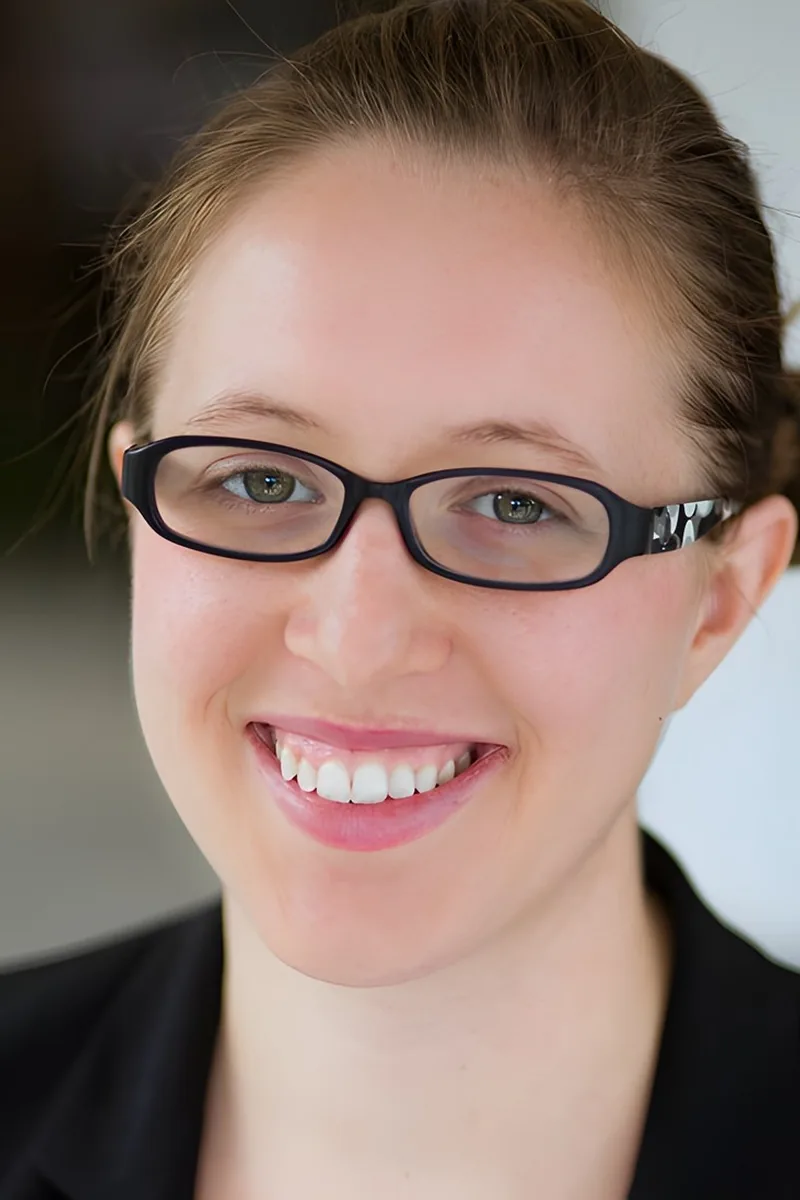
Theater people know how to read a room — and Amber reads a math problem the same way, quickly identifying what the SAT is actually testing beneath its layered, deliberately tricky phrasing. Her 1570 SAT means she's crushed the exam herself, and she zeroes in on the geometry and trigonometry questions that many arts-oriented students assume they can't master, proving otherwise through targeted practice. Rated 5.0 by students.
Scoring a 1560 on the SAT means Karann knows exactly where the tricky questions hide — especially in the no-calculator section where algebra manipulation and data interpretation separate good scores from great ones. She breaks down each problem type so students learn to spot the fastest path to an answer rather than grinding through every calculation.
Patrick's double major in English Literature and Linguistics at UChicago isn't the obvious SAT Math background — but his 1560 SAT proves the quantitative chops are there, and his linguist's instinct for decoding structure is exactly what the test's deliberately tricky word problems demand. He teaches students to treat convoluted problem stems like sentences to parse: identify the subject (what's being solved for), strip out the modifiers (irrelevant context), and translate what remains into clean algebra.
I am a junior at the University of Wisconsin-Madison, majoring in Materials Science & Engineering with a certificate in German. I graduated in 2017 from Sartell High School in Sartell, Minnesota. I've been working as a camp counselor teaching German for two years, which has given me a lot of experience teaching others. I have always been especially proficient in foreign languages and look forward to tutoring language students. In my spare time, I enjoy reading, petting dogs, and spending time with friends.
A biology major at UCLA doesn't escape statistics, experimental design, or quantitative reasoning — and Joseph channels that background into SAT Math prep, particularly the data-analysis and modeling questions where interpreting tables and graphs matters as much as computation. His 1530 SAT means he's proven he can execute under timed pressure, and he teaches students to identify which of the four answer choices the test-makers designed as traps before committing to a solve. Rated 4.9 by students.
I am a current sophomore at Brown University, where I study Applied Math and Urban Studies. I have tutored in a high school ESL classroom, as a private tutor, in a local community center, and on online platforms. I love tutoring all subjects, and I'm especially passionate about teaching math. As a tutor, I work to meet each student where they're at by helping them find connections between existing knowledge and new subjects. I believe every student can find passion, motivation, and empowerment in education, and I love helping students develop the knowledge and skills to get there.
The SAT Math section leans heavily on algebra — and Alexander's 1570 SAT means he's already proven he can move through those linear systems, inequalities, and quadratic setups at speed and under pressure. His political science background also sharpened his ability to pull meaning from data tables and statistical claims, which maps neatly onto the section's problem-solving and data-analysis questions. Rated 4.8 by students.
Miriam scored a 1570 on the SAT and approaches the Math section by teaching students to recognize which tool — algebra, geometry, or data analysis — each question is actually testing. That pattern recognition turns tricky word problems into straightforward calculations, especially in the no-calculator section where efficiency matters most. Rated 4.9 by students.
Professional journalism requires fast, precise numerical reasoning — budgets, data points, poll numbers — and Olivia brings that same no-nonsense clarity to SAT Math, where she scored 1580 and knows the test's geometry and coordinate-plane questions inside out. She teaches students to treat each problem like a deadline: read it once, identify the fastest approach, execute without second-guessing.
I am a bilingual school-based speech-language pathologist in Milwaukee. I have been working in the schools for over 4 years supporting Spanish speaking students with communication disorders. I completed my Master's in speech-language pathology from Marquette University in 2016. I have also tutored students of all grade levels in Spanish, math, reading and writing for over 8 years, and enjoy supporting learners so they can be successful at school and work towards their goals for the future. I work on a daily basis to support English language learners and students with special needs, and have tutored students from many diverse backgrounds. My approach to tutoring is identifying each individual's strengths and skills, and teaching specific strategies so the student can feel empowered to support their own learning. I am patient, thorough, and receptive to how each student learns best.
Heart of Algebra, Passport to Advanced Math, Problem Solving and Data Analysis — each SAT Math category has its own patterns, and Matt knows which ones trip students up most. His 1480 SAT score and engineering math background give him a sharp eye for the conceptual shortcuts the test rewards, especially on quadratic and systems-of-equations problems where algebraic manipulation saves minutes.
Nicole earned a 1500 SAT composite, and her math instruction zeroes in on the specific traps the College Board builds into Heart of Algebra and Passport to Advanced Math questions — things like misread negative signs, domain restrictions, and unit conversion errors that cost points even when students understand the underlying concept. She walks through each problem type with a focus on eliminating careless mistakes before test day.
I am an incoming sophomore at the University of Wisconsin-Madison, originally from San Diego, CA. I'm currently pursuing a double major in international studies and political science, with a certificate in Mandarin. I have been both been a member, and later in charge, of tutoring programs at a local K-8 school tutoring math, writing, and reading. During this time, I also tutored fellow peers in various subjects, including history and government which I have always loved. Personally, I have had most enjoyed tutoring writing and math, but I am more than happy to help however I can. When approaching tutoring any subject it may be, I would describe my approach as enjoyable, throughout, and cooperative. I'm not here to stand on a pedestal or look down upon anyone in any way, but to simply lend all the knowledge I have and work together towards achieving all desired goals in an entertaining and effective way.
Grant earned a 1490 SAT and treats the math section as a pattern-recognition exercise. Once students learn to spot whether a problem is testing quadratic structure, proportional reasoning, or statistical interpretation, they stop overthinking and start solving efficiently. He walks through both the calculator and no-calculator sections with an emphasis on strategic shortcuts that save real time.
I am looking forward to meeting you at our first session.
I am interested in making physics and math relatable to people who are not naturally adept at it. I have taken the SAT, the general GRE and the physics GRE subject tests.
Graduate school in urban planning means Danny spends his days crunching demographic data, interpreting survey results, and building quantitative models — all skills that map onto the SAT Math section's geometry and data-analysis questions. He takes a scaffolded approach: walking through a problem type step by step first, then stepping back so students build the confidence to tackle similar questions independently under timed conditions.
I am a passionate tutor of several subjects, with an emphasis on high school math. I attended Johns Hopkins University and spent a semester abroad in Seville, Spain. Since graduating in 2014 with a Bachelor of Science in Applied Mathematics, I have worked in software development, education, and the performing arts -- I like a bit of variety to keep life interesting! I am currently pursuing a Master's degree in Educational Policy at the University of Wisconsin-Madison. My personal interests include dance, cooking, and podcasts.
I am attending a lecture about The Great Gatsby, I will be eager if the speaker tells of the beauty she sees, rather than a quick and dirty type of analysis. I regularly talk to people who admit math wasn't their favorite subject in school. Some were self-conscious. Some had gaps they never filled. Some just didn't care. Whatever the case, I admit to them that math is my favorite art form with as much room for expression as sculpting or jazz. I claim that mathematicians are half artists, half observers of fine art. My conversants often tell me it is an epiphany for them to think of math as such, and that it helps heal their math wound. A marvelous way I have found to unveil beauty in the classroom is by using surprise. I like to present ideas from a simple perspective, discuss them briefly, then release a theorem. Thales' theorem (the diameter of a circle subtends a right angle to any point on the circumference) is a great example, especially with the aid of Java applets. After playing a bit with triangles by moving points around in a worksheet, it's surprising to be able to connect two structures as basic as a right triangle and a diameter. Next in importance to marveling at beauty, I want students to learn to think critically to solve problems. Understandably, some students have never had guidance past high school drills. All the more, problem solving should be emphasized and revisited throughout college curriculum. I have many years of experience in problem solving competitions and a collection of principles regarding problem solving that I like to follow. One is about inverse problems. Consider the following: if baseball cards are five cents apiece and shipping costs fifty cents, how many cards will one dollar buy? After making the arithmetic clear, students had better know how to calculate the forward problem, i.e. "How much will x number of cards cost?" I'm depending on them knowing the forward problem because we covered it last week, but it is important to bring it out in more than just a mention so the students have a comfortable base to start. It's like revisiting rational numbers before diving into irrationals. They are intrinsically tied, and it gives the class confidence to start with old material.
Industrial engineering is basically applied optimization — figuring out the most efficient path through a complex system — and Cole treats SAT Math the same way, teaching students to recognize which of the section's 38 questions reward algebraic setup versus back-solving versus plugging in answer choices. His 1410 SAT and dual IE degrees mean the underlying math (linear systems, inequalities, rate problems) is second nature, so sessions stay focused on test strategy and pacing rather than relearning content. Rated 4.9 by students.
Emily's 1590 SAT score speaks for itself, but what makes her effective on SAT Math specifically is how she categorizes problems. She teaches students to distinguish between questions that reward algebraic manipulation and ones where plugging in values or back-solving is faster — a distinction that can recover five or ten minutes on test day. Her Cornell math and CS coursework keeps her sharp on the harder quadratic and function-based problems.
I am happy to accommodate and work with learners on the spectrum.
Classics and philosophy trained Austin to think in precise logical structures — the same skill that untangles the SAT Math section's deliberately tricky word problems, where understanding what's being asked matters as much as knowing the math. His 1570 SAT means he's already cracked the test at a near-perfect level, and he teaches students to convert convoluted phrasing into straightforward algebraic setups before solving anything.
I am excited to help anyone who might need it!
Premed coursework at Cornell means Sharan regularly tackles quantitative problems under exam pressure — and she channels that same discipline into SAT Math prep, particularly the data-analysis and algebraic modeling questions where sloppy setup costs more points than weak math skills. Her 1540 SAT confirms she knows how the test actually works, and she teaches students to build a systematic checklist for each problem type so nothing gets skipped when the clock is running. Rated 5.0 by students.
I'm a graduate of Columbia University with a B.A. in History. I'm passionate about history and English, but I'm a competent math tutor as well. I have received outstanding scores on my SAT and AP tests, and am confident in my ability to pass on these skills to the next generation.
Scoring well on SAT Math often comes down to recognizing which tool a problem is really testing — is it a systems question disguised as a word problem, or a quadratic hidden in a table? Astoria's 1530 SAT composite and science-heavy coursework at WashU give her sharp instincts for the algebraic and data-analysis concepts that dominate this section. She teaches students to read problems strategically so they spend less time second-guessing their approach.
I am currently a resident physician at Northwestern Hospital.
John's approach to SAT Math zeroes in on the difference between knowing algebra and knowing how the SAT tests algebra — things like rewriting equations to match answer choices or catching unit conversion traps in word problems. With a 1420 SAT and deep experience across calculus, geometry, and college algebra, he connects each practice problem to the specific concept being tested so students build real recognition, not just test-day luck.
I'm eager to teach students how to make connections and understand any part of the world they need!
Scoring well on SAT Math requires recognizing which tool fits each problem before time pressure kicks in — is this a substitution question disguised as a word problem, or a ratio question hiding inside a geometry setup? Rachel earned a 1600 and knows the test's architecture inside and out. She teaches students to categorize problems on sight so they spend their energy solving, not figuring out where to start.
I am a lifelong learner, teacher, and researcher in the field of physics. I received a PhD in Physics from the University of Michigan and a BS in Physics from Rice University. I have four years of physics teaching experience at the University of Michigan, primarily undergraduate laboratory courses with an emphasis on electromagnetism, circuits, waves, optics, and real-world applications of these and other physical phenomena. Many of these courses, including one I helped design, focused on helping non-STEM students master physics concepts that may be difficult to grasp in a standard classroom setting. I have tutored in a variety of subjects since high school, but most recently I have spent several years helping students understand concepts and succeed in coursework throughout a large variety of college-level physics topics, from basic mechanics to advanced electrodynamics and special relativity.
Testimonials
Because the right SAT Math tutor makes all the difference.
Average Session Rating – Based on 3.4M Learner Ratings
Practice SAT Math
Free practice tests, flashcards, and AI tutoring for SAT Math
Nearby SAT Math Tutors
Other Appleton Tutors
Related Test Prep Tutors in Appleton
Frequently Asked Questions
Varsity Tutors matches Appleton students with expert SAT Math tutors for 1-on-1 instruction. We pair each student with a tutor based on their specific needs, learning style, and goals.
Whether you need homework help, exam prep, or want to get ahead, our SAT Math tutors are ready to help.
Common challenges include gaps from earlier material, difficulty with specific concepts, and trouble applying learning to new problems. These issues can snowball quickly in SAT Math.
A tutor identifies where you're stuck, fills in gaps, and provides targeted practice. The 1-on-1 format means you get help exactly where you need it.
Tutors work with your student's actual coursework—homework assignments, class notes, and upcoming tests. This keeps tutoring directly relevant to what's happening in the classroom.
When you share information about your student's school and curriculum, we can match you with a tutor who has relevant experience.
All tutors complete background checks, credential verification, and teaching evaluation. Many of our SAT Math tutors hold advanced degrees or have years of teaching experience.
You can review tutor profiles to find someone with the right background for your student's level and needs.
Many students see improved grades within a few weeks, along with better understanding of SAT Math concepts and more confidence tackling challenging material.
Tutors track progress and adjust their approach to ensure continued improvement.
Most students benefit from 1-2 sessions per week. More frequent sessions help if your student is significantly behind or has an important exam coming up.
Your tutor can recommend a schedule based on your student's specific situation and goals.
Tutoring is purchased in packages of hours, with rates varying by tutor experience. Varsity Tutors offers several options to fit different budgets and needs.
You can discuss pricing during your consultation to find what works best.
Your tutor will assess where your student is, discuss goals, and start working on priority areas. Most students bring current homework or upcoming test material to focus on.
By the end, you'll have a clear sense of how the tutor can help and a plan for moving forward.
Let’s find your perfect tutor
Answer a few quick questions. We’ll recommend the right plan and match you with a top 5% tutor.