Award-Winning Microeconomics Tutors
serving Chesapeake, VA
Microeconomics
Tutors in Chesapeake
Private 1-on-1 tutoring, weekly live classes for academic support, test prep & enrichment, practice tests and diagnostics, and more to elevate grades and test scores.
Based on 3.4M Learner Ratings
UniversitiesSchools & Universities
DeliveredHours Delivered
ProficiencyGrowth in Proficiency
Who needs tutoring?
No obligation. Takes ~1 minute.

Cole's master's thesis at the University of Amsterdam focused on monetary policy and banking — work that required building up from micro-level foundations like how individual banks optimize lending decisions and how interest rate changes ripple through firm behavior. That research depth means he can teach concepts like price discrimination, cost minimization, and strategic interaction with the kind of precision that comes from having used them analytically, not just memorized them for an exam. Rated 5.0 by students.
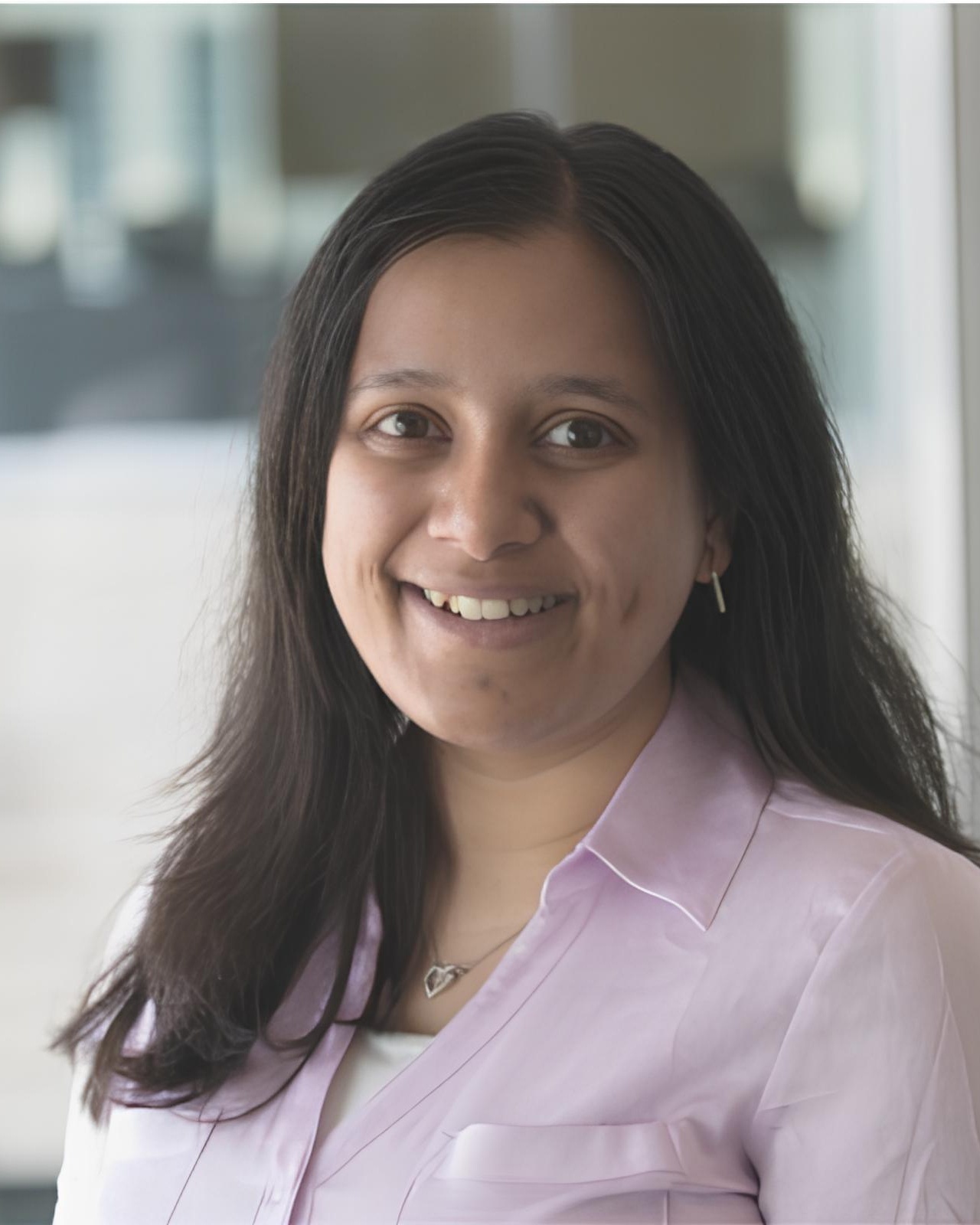
Hi! I'm Utkarsha, and I genuinely enjoy helping students of all levels and learning styles better know subjects they would like help with. Whether you want to know math, English, Tableau, data science, or economics better, or are prepping for the SAT, I'm here to make it understandable and even enjoyable until you're confident! As a math major & an econ minor with a near-perfect SAT score (Math 800, English 780), I'm excited to share my know-how and deep understanding in these subjects. Throughout my years of experience in tutoring, I've successfully coached over 100 students to improve their math class grades (in all levels from elementary school math to college) and reach near-perfect SAT scores via my unique personalized guidance on core content and test-taking strategies. That's because my tutoring approach is focused on bridging the gap between where you're at and where you want to reach in terms of what you know. Let's work together to reach (or even exceed) your goals!
Studying finance at Boston College means Andy works with microeconomic principles daily — how firms price products, why markets allocate resources the way they do, and what happens when they don't. He brings that applied lens to concepts like profit maximization and market structures, grounding abstract graphs in the kind of real business reasoning that makes them click. Rated 5.0 by students.
I am currently working in a Bronx Public School as a teaching apprentice in Algebra. I have four years of experience tutoring one on one with students of all ages.
The math behind microeconomics — setting up Lagrangians for constrained optimization, deriving demand from utility functions, finding equilibrium prices algebraically — is where most students hit a wall. Thomas's math and stats training at Carleton means he can teach both the economic intuition and the calculus simultaneously, so a concept like profit maximization isn't just "set MC equal to MR" but a problem a student can actually solve and interpret. Rated 5.0 by students.
Consumer choice theory, production functions, and market structures like oligopoly all require students to think in graphs and marginal terms simultaneously. Idara's engineering management training at Stanford built exactly that kind of analytical fluency, and her finance career keeps her sharp on how firms actually make the pricing and output decisions microeconomics describes.
Supply and demand curves are just the starting point — the real challenge in microeconomics is applying them to consumer theory, production costs, and market structures like oligopoly and monopolistic competition. Ezra's economics degree gives him deep fluency with these models, and his finance background means he can connect textbook graphs to actual pricing and strategy decisions students find intuitive.
Elasticity is where most microeconomics students first feel lost — the formulas seem straightforward, but applying them to tax incidence or consumer surplus problems requires real conceptual understanding. Mustafa tackles these topics by working through progressively harder problems and explaining the economic intuition at each step. Four years of tutoring have given him a sharp sense of where students get stuck between "I memorized it" and "I actually get it."
The jump from basic supply-and-demand to consumer theory, production functions, and market structures trips up a lot of students because the math and the intuition have to work together. Eric unpacks each model — indifference curves, marginal cost pricing, game theory matrices — by tying the algebra back to the economic story it tells. His Business Administration training gives him a practical lens on how firms actually make these decisions.
Mary's PhD in Chemistry from the University of Chicago means she spent years doing the kind of constrained optimization and quantitative modeling that microeconomics relies on — minimizing costs, maximizing outputs, interpreting how variables shift on a graph. She pairs that analytical rigor with MBA coursework that gave her direct exposure to firm behavior, pricing strategy, and market dynamics. It's a combination that lets her teach both the calculus behind profit maximization and the business logic that makes it meaningful.
Supply and demand curves are just the starting point — Zeeshan digs into the mechanics behind consumer choice theory, price discrimination, and market structures like oligopoly and monopolistic competition. His PhD research at Vanderbilt keeps him immersed in microeconomic modeling daily, so he can unpack concepts like elasticity or game theory with real-world precision.
Marginal cost curves, consumer surplus, and game theory matrices can feel abstract until someone shows you the math driving each one. Rahi tackles microeconomics by walking through the calculus behind optimization — profit maximization, utility functions, price discrimination — so students can solve problems confidently instead of memorizing graph shapes.
Marginal cost curves and consumer surplus diagrams start making sense once someone explains the decision-making logic underneath them. Jay approaches microeconomics from his background as an econ major, unpacking topics like market failures, production functions, and elasticity by first asking what a rational actor would actually do in a given scenario — then showing how the math and graphs formalize that reasoning.
I am also a first year medical student at the Tufts University School of Medicine in Boston. I have extensive experience with premedical classes and have taken and tutored the MCAT exam. I placed in the 97th percentile of the MCAT exam and I understand what the test takers want students to know and how to bridge the gap between knowing the material and doing well on the test. I am always excited when a student finally has that "ah-ha" moment and declares that they now can see how all of these seemingly separate scientific topics are actually all related. The MCAT no longer seems scary, but turns into a means of truly learning this material and providing a strong foundation for the future.
Testimonials
Because the right Microeconomics tutor makes all the difference.
Average Session Rating – Based on 3.4M Learner Ratings
Other Chesapeake Tutors
Related Business Tutors in Chesapeake
Frequently Asked Questions
Varsity Tutors matches Chesapeake students with expert Microeconomics tutors for 1-on-1 instruction. We pair each student with a tutor based on their specific needs, learning style, and goals.
Whether you need homework help, exam prep, or want to get ahead, our Microeconomics tutors are ready to help.
Common challenges include gaps from earlier material, difficulty with specific concepts, and trouble applying learning to new problems. These issues can snowball quickly in Microeconomics.
A tutor identifies where you're stuck, fills in gaps, and provides targeted practice. The 1-on-1 format means you get help exactly where you need it.
Tutors work with your student's actual coursework—homework assignments, class notes, and upcoming tests. This keeps tutoring directly relevant to what's happening in the classroom.
When you share information about your student's school and curriculum, we can match you with a tutor who has relevant experience.
All tutors complete background checks, credential verification, and teaching evaluation. Many of our Microeconomics tutors hold advanced degrees or have years of teaching experience.
You can review tutor profiles to find someone with the right background for your student's level and needs.
Many students see improved grades within a few weeks, along with better understanding of Microeconomics concepts and more confidence tackling challenging material.
Tutors track progress and adjust their approach to ensure continued improvement.
Most students benefit from 1-2 sessions per week. More frequent sessions help if your student is significantly behind or has an important exam coming up.
Your tutor can recommend a schedule based on your student's specific situation and goals.
Tutoring is purchased in packages of hours, with rates varying by tutor experience. Varsity Tutors offers several options to fit different budgets and needs.
You can discuss pricing during your consultation to find what works best.
Your tutor will assess where your student is, discuss goals, and start working on priority areas. Most students bring current homework or upcoming test material to focus on.
By the end, you'll have a clear sense of how the tutor can help and a plan for moving forward.
Let’s find your perfect tutor
Answer a few quick questions. We’ll recommend the right plan and match you with a top 5% tutor.