Award-Winning Microeconomics Tutors
serving Richmond, VA
Microeconomics
Tutors in Richmond
Private 1-on-1 tutoring, weekly live classes for academic support, test prep & enrichment, practice tests and diagnostics, and more to elevate grades and test scores.
Based on 3.4M Learner Ratings
UniversitiesSchools & Universities
DeliveredHours Delivered
ProficiencyGrowth in Proficiency
Who needs tutoring?
No obligation. Takes ~1 minute.

Cole's master's thesis at the University of Amsterdam focused on monetary policy and banking — work that required building up from micro-level foundations like how individual banks optimize lending decisions and how interest rate changes ripple through firm behavior. That research depth means he can teach concepts like price discrimination, cost minimization, and strategic interaction with the kind of precision that comes from having used them analytically, not just memorized them for an exam. Rated 5.0 by students.
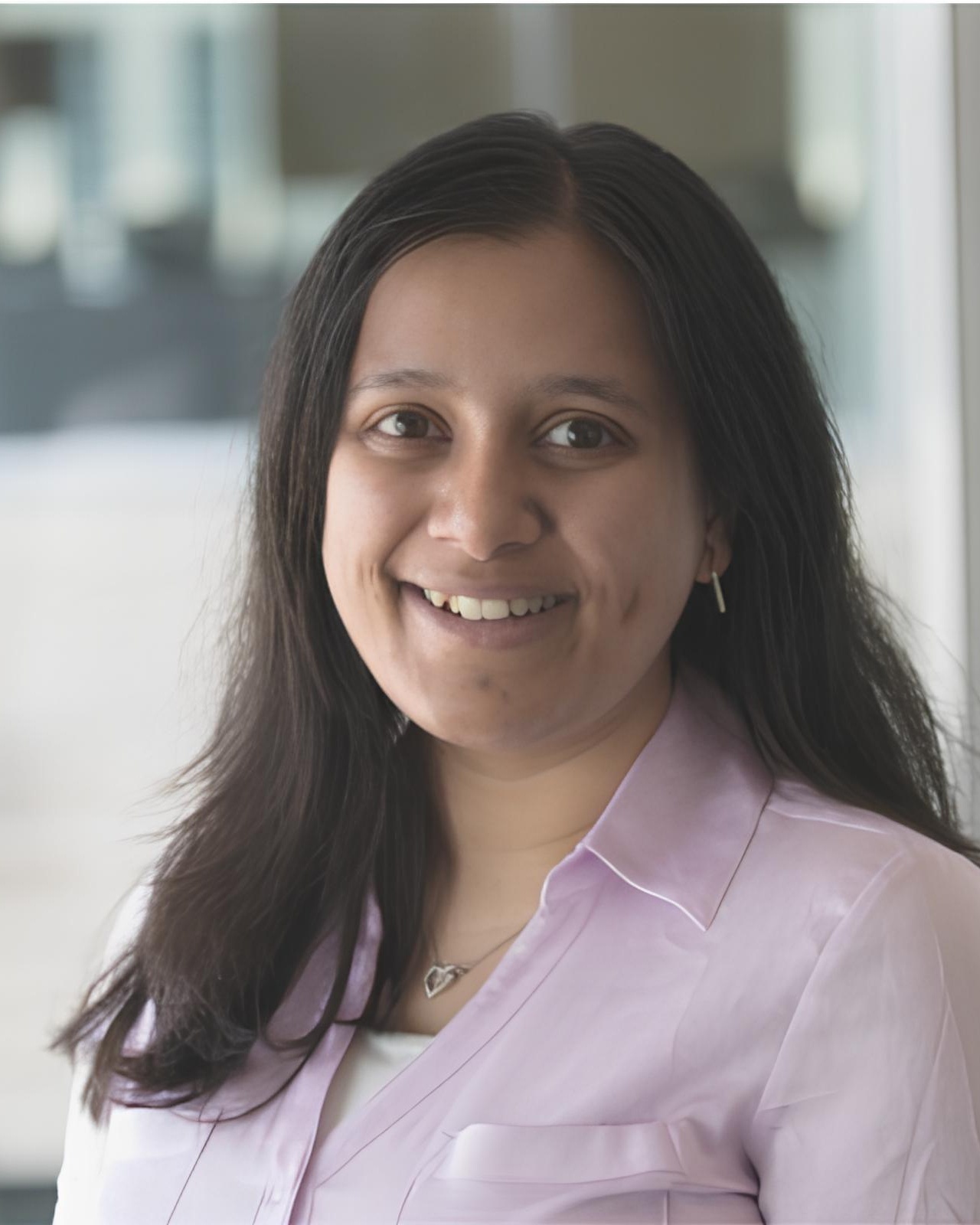
Hi! I'm Utkarsha, and I genuinely enjoy helping students of all levels and learning styles better know subjects they would like help with. Whether you want to know math, English, Tableau, data science, or economics better, or are prepping for the SAT, I'm here to make it understandable and even enjoyable until you're confident! As a math major & an econ minor with a near-perfect SAT score (Math 800, English 780), I'm excited to share my know-how and deep understanding in these subjects. Throughout my years of experience in tutoring, I've successfully coached over 100 students to improve their math class grades (in all levels from elementary school math to college) and reach near-perfect SAT scores via my unique personalized guidance on core content and test-taking strategies. That's because my tutoring approach is focused on bridging the gap between where you're at and where you want to reach in terms of what you know. Let's work together to reach (or even exceed) your goals!
Supply-and-demand diagrams are easy until you hit consumer and producer surplus, deadweight loss from price controls, or the math behind profit maximization in different market structures. Rohan digs into the logic behind each model so students can derive answers rather than memorize curve shifts. His economics degree means he connects introductory micro concepts to the bigger analytical framework they feed into.
Marginal cost curves and consumer surplus diagrams start making sense once someone explains the decision-making logic underneath them. Jay approaches microeconomics from his background as an econ major, unpacking topics like market failures, production functions, and elasticity by first asking what a rational actor would actually do in a given scenario — then showing how the math and graphs formalize that reasoning.
Elasticity, marginal cost curves, game theory matrices — microeconomics is deceptively math-heavy for a social science. Ryan earned his bachelor's degree in economics and tackles micro by grounding every graph and equation in the real-world decision it represents, so students can reason through unfamiliar problems on exams instead of relying on memorized steps.
With an applied math degree and PhD-level engineering work, Professor Florence tackles microeconomics from a deeply quantitative angle — the kind that makes optimization problems, constrained utility maximization, and cost function analysis feel like natural extensions of calculus rather than foreign territory. She teaches the mathematical machinery behind economic models so students understand what they're solving, not just how to push symbols around on an exam.
Supply and demand curves are intuitive until you hit market failures, game theory, and the math behind consumer optimization — that's where microeconomics gets interesting and where most students need a push. Mosab teaches AP Microeconomics with an emphasis on connecting graphical analysis to the underlying logic, so students can tackle free-response questions with real confidence rather than memorized diagrams.
The math behind microeconomics — setting up Lagrangians for constrained optimization, deriving demand from utility functions, finding equilibrium prices algebraically — is where most students hit a wall. Thomas's math and stats training at Carleton means he can teach both the economic intuition and the calculus simultaneously, so a concept like profit maximization isn't just "set MC equal to MR" but a problem a student can actually solve and interpret. Rated 5.0 by students.
The jump from basic supply-and-demand to consumer theory, production functions, and market structures trips up a lot of students because the math and the intuition have to work together. Eric unpacks each model — indifference curves, marginal cost pricing, game theory matrices — by tying the algebra back to the economic story it tells. His Business Administration training gives him a practical lens on how firms actually make these decisions.
Elasticity is where most microeconomics students first feel lost — the formulas seem straightforward, but applying them to tax incidence or consumer surplus problems requires real conceptual understanding. Mustafa tackles these topics by working through progressively harder problems and explaining the economic intuition at each step. Four years of tutoring have given him a sharp sense of where students get stuck between "I memorized it" and "I actually get it."
Supply and demand curves are just the starting point — microeconomics gets interesting when students tackle consumer theory, elasticity, and market structures like oligopoly and monopolistic competition. Katherine's economics degree from Penn and her day job in management consulting mean she can ground these models in real business decisions, making abstract graphs feel intuitive.
Studying finance at Boston College means Andy works with microeconomic principles daily — how firms price products, why markets allocate resources the way they do, and what happens when they don't. He brings that applied lens to concepts like profit maximization and market structures, grounding abstract graphs in the kind of real business reasoning that makes them click. Rated 5.0 by students.
Elasticity, marginal cost curves, market structures, welfare analysis — microeconomics is built on deceptively simple ideas that get complicated fast. Stephen's PhD research at Rice and his current teaching at Fordham keep him immersed in exactly these concepts, and his market research career means he can show students how firms actually use pricing strategy and cost analysis outside the classroom.
Consumer choice theory, production functions, and game theory matrices each demand a slightly different way of thinking — and that's where most micro students get stuck. Albert tackles each framework on its own terms, drawing on his MBA economics training to show why firms price-discriminate, how externalities distort market outcomes, and what happens when you shift from perfect competition to oligopoly.
Testimonials
Because the right Microeconomics tutor makes all the difference.
Average Session Rating – Based on 3.4M Learner Ratings
Other Richmond Tutors
Related Business Tutors in Richmond
Frequently Asked Questions
Microeconomics focuses on how individual consumers, workers, and businesses make decisions about production, pricing, and resource allocation. Students study it to understand real-world economic behavior—from why prices change at local businesses to how wages are determined—and it's a foundational course for economics majors, business programs, and AP/college-level economics curricula.
Many students struggle with abstract concepts like elasticity, marginal analysis, and supply-demand equilibrium because they require strong mathematical reasoning and the ability to think in terms of rates of change. Additionally, translating real-world scenarios into graphs and equations—and understanding why a particular model applies—can be confusing without clear, step-by-step guidance tailored to how each student learns best.
In a classroom with a 14:1 student-teacher ratio, instructors must move at one pace for everyone, which means struggling students may fall behind and advanced students may not be challenged enough. Personalized 1-on-1 instruction allows tutors to identify exactly where you're getting stuck—whether it's understanding utility functions, elasticity calculations, or graph interpretation—and adjust explanations and practice problems to match your learning style and pace.
Tutors for students in Richmond can help with all core microeconomics topics including supply and demand, consumer and producer surplus, elasticity, production costs, perfect competition, monopolies and oligopolies, factor markets, and game theory. Whether you're in AP Microeconomics, college introductory micro, or intermediate microeconomics, personalized instruction can strengthen your grasp of foundational concepts and advanced applications.
During an initial session, a tutor will assess your current understanding of microeconomics concepts, identify specific areas where you need support, and learn about your learning style and goals—whether that's improving your grade, preparing for an exam, or mastering difficult topics. This information helps the tutor create a personalized plan and select the right teaching strategies and practice materials for you.
Yes—graph interpretation and construction are critical skills in microeconomics, and many students find them challenging. Tutors can break down how to read supply-demand curves, cost curves, and utility graphs; explain what shifts mean and why they occur; and guide you through drawing and labeling graphs correctly. With practice and personalized feedback, you'll build confidence translating between equations, real-world scenarios, and visual representations.
Tutors can help you master high-yield topics, practice with released exam questions and past papers, and develop test-taking strategies specific to microeconomics—like quickly identifying which model applies to a scenario or avoiding common calculation errors. Regular practice with feedback, spaced over weeks before the exam, helps reinforce concepts and builds the speed and accuracy you'll need on test day.
Varsity Tutors connects you with experienced tutors who specialize in microeconomics and understand the curriculum for Richmond-area schools and standardized exams. You can share your specific needs, schedule, and learning preferences, and we'll match you with a tutor who fits your goals—whether you need help with a single tough concept or ongoing support through the course.
Let’s find your perfect tutor
Answer a few quick questions. We’ll recommend the right plan and match you with a top 5% tutor.