Award-Winning AP Computer Science Principles Tutors
serving Killeen, TX
AP Computer Science Principles
Tutors in Killeen
Private 1-on-1 tutoring, weekly live classes for academic support, test prep & enrichment, practice tests and diagnostics, and more to elevate grades and test scores.
Based on 3.4M Learner Ratings
UniversitiesSchools & Universities
DeliveredHours Delivered
ProficiencyGrowth in Proficiency
Who needs tutoring?
No obligation. Takes ~1 minute.
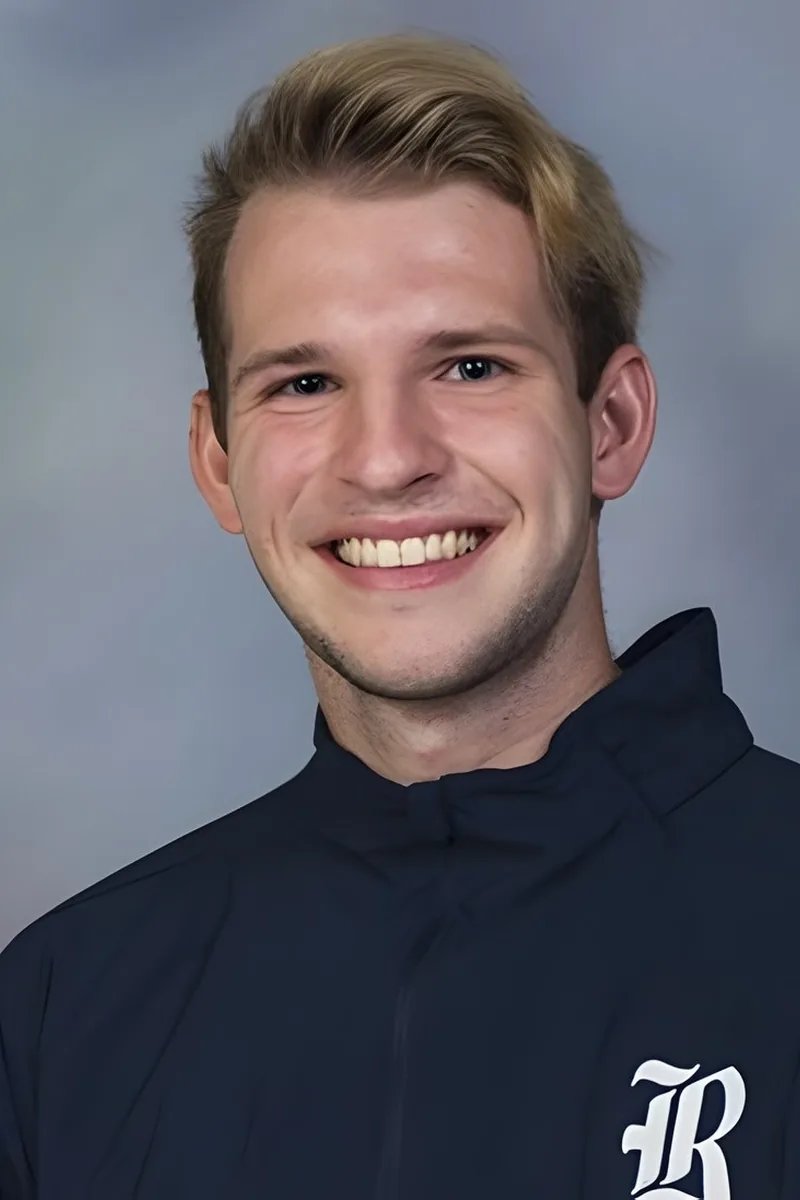
Studying neuroscience at Rice means Brett regularly writes code to analyze brain imaging data and model biological systems — practical computing experience that maps directly onto AP CSP's emphasis on data analysis, algorithms, and the real-world impact of technology. He teaches the pseudocode logic and abstraction concepts the exam tests by grounding them in problems students can actually picture. Rated 5.0 by students.

Payton is a Computer Science major at Texas A&M who codes in Python, C++, and Haskell — but AP CSP's exam cares more about pseudocode reasoning and explaining computational ideas in plain English than writing compilable programs. She teaches students to bridge that gap, translating real programming instincts into the kind of clear, structured responses the Create Task and multiple-choice questions actually reward. Rated 4.9 by students.
Software engineering internships at Apple and Microsoft gave Jerry a firsthand view of how the concepts in AP CSP — abstraction, algorithm design, data representation — actually play out in production code. He uses that industry context to make the Create Performance Task feel like a real development project rather than a classroom exercise, which sharpens both the programming and the written-response components. Rated 4.9 by students.
Electrical engineering taught Jake to think in systems — how signals move, how data gets encoded, how layers of abstraction stack to make hardware and software talk to each other. That mindset maps directly onto AP CSP's trickiest material, from binary representation to internet protocols to algorithm tracing in pseudocode. He also teaches across five programming languages, so the Create Task's coding component comes naturally.
Six semesters as a teaching assistant for digital logic at Cornell gave Alexander a deep intuition for how computers actually think — the binary, the abstraction layers, the logic gates underneath every algorithm. He brings that hardware-level understanding to AP CSP's big ideas, especially when explaining how the internet and data representation work under the hood. Rated 5.0 by students.
Most AP CSP students can parrot definitions of abstraction and algorithms but freeze when a pseudocode trace asks them to actually step through the logic. Marc codes in Python, JavaScript, and C++ as part of his Computer Science studies at UT Austin, so he teaches students to read pseudocode the way a programmer reads real code — tracking variables, spotting loop behavior, and predicting outputs with confidence. Rated 5.0 by students.
Industry experience at Microsoft and the National Institutes of Health gave Snipta a front-row seat to how computing decisions — from data privacy to algorithmic bias — play out in the real world, which is exactly the kind of reasoning AP CSP's exam and Create Task reward. Her computer science degree covers the technical side, but it's the cognitive science training that sharpens how she teaches the course's trickiest skill: explaining computational ideas in plain, precise language.
Miguel's dual CS and English degree is a rare combination for AP CSP, where half the battle is writing code and the other half is explaining it — the Create Task's written responses demand the same clarity and structure as a well-argued essay. He teaches students to translate their algorithmic thinking into the precise language the rubric rewards, bridging the gap between understanding abstraction and actually articulating it on paper. Rated 4.9 by students.
Lloyd's data science coursework at the University of Rochester — pulling real datasets apart with Python and R, building models, and communicating results — mirrors exactly the kind of computational thinking AP CSP tests on its exam and Create Task. He knows how to make topics like data representation and algorithmic efficiency feel concrete, because he uses them daily rather than teaching them in the abstract. His 1550 SAT and fluency across multiple programming languages mean he can meet the course at any level, from a student's first pseudocode trace to polishing a Create Task submission.
As a CS major at Texas A&M who codes in Java, Python, and SQL, Daniel teaches AP CSP's pseudocode and algorithm questions by mapping them to real programming logic — showing students what abstraction actually looks like in practice. He also tackles the Create Task as a structured project, breaking the planning, coding, and written response into clear phases so nothing gets left to the last minute.
Between coding in Java and C++ and studying sociology, Jacob sits at an interesting intersection for AP CSP — a course that tests both programming logic and the human side of computing, like data privacy and algorithmic bias. He walks students through the Create Task with a developer's eye, tackling pseudocode documentation and rubric requirements step by step. Rated 5.0 by students.
Multiple summers interning as a working programmer give Bennet a practical vocabulary for the concepts AP CSP tests — when he explains how algorithms handle data or why abstraction matters, he's drawing on code he's actually shipped, not just textbook definitions. His 5.0 rating speaks to how well that real-world grounding translates when students need to nail both the multiple-choice reasoning and the Create Task's written components.
Petroleum engineering at UT Austin means Akhil codes in Python and Java to solve real problems — simulations, data analysis, optimization — which grounds AP CSP's Big Ideas in something more tangible than textbook definitions. He tackles the course's internet and data units by connecting them to the large-scale systems engineers actually rely on, making topics like protocols and binary encoding click faster.
Most AP CSP tutors come from a CS background, but Matthew's path through music, history, and a Master of Arts in Teaching gives him a different edge — he's spent years in Kentucky classrooms turning sprawling, unfamiliar curricula into something students can actually follow. That skill matters in a course where a student might jump from binary data representation to cybersecurity ethics to pseudocode tracing in a single week, and where the Create Task demands both technical thinking and clear written explanation.
Financial mathematics and computer science intersect constantly — Neel's coursework at UT Austin has him building programs in Java and Python to model the same kinds of data patterns and algorithmic processes that AP CSP tests on paper. That crossover means he can take the course's more abstract Big Ideas, like how data gets compressed or why certain algorithms outperform others, and anchor them in concrete problems students can actually visualize. Rated 5.0 by students.
I'm a Computer Science student who's been teaching all my life. From tennis camps for kids to an engineering physics class for college kids, I really enjoy helping someone discover for themselves what they are capable of! Please let me know if there's anything you'd like me to help you with.
Having tutored everything from basic programming constructs to finite automata and computational theory, Andrew brings unusual depth to a course most students treat as surface-level. He digs into the algorithmic thinking and pseudocode reasoning behind AP CSP's exam questions, showing students how concepts like abstraction and data representation connect to the real CS pipeline he studied in his degree. Rated 5.0 by students.
Joshua scored a 5 on the AP Computer Science A exam, which means the Principles course's pseudocode and algorithm questions draw on knowledge he's already internalized at a deeper level. He teaches the Create Task as a scaled-down version of real software development — planning, building, and documenting — using his hands-on experience in Java, Python, and JavaScript to show students what clean, explainable code actually looks like.
AP CSP covers a surprisingly wide range — the internet, data analysis, cybersecurity, and the societal impacts of computing — without going deep into any single programming language. Samuel connects these broad topics back to concrete examples from his own CS studies at Florida Tech, making the create task and multiple-choice exam feel far more manageable. Rated 5.0 by students.
Ritesh's physics training at Cornell actually maps neatly onto AP CSP — both demand thinking about systems in layers, whether that's abstraction in computing or modeling forces in mechanics. He teaches the pseudocode and algorithm-tracing portions by treating them like physics problem-solving: break the system into parts, track what changes at each step, and verify the output makes sense.
I'm always up for the challenge of changing my methods of instruction and breaking down topics to foster a deeper understanding of a subject. On a different note, I generally spend my spare time playing lacrosse or running outdoors when possible. I also play the violin with a school quartet, and teach lessons to beginning students working through the Suzuki program.
Daniel's biomedical engineering coursework at Rice means he writes algorithms to process real biological data — exactly the kind of computational thinking AP CSP tests through its Big Ideas on data analysis and abstraction. He brings that applied perspective to the Create Task, coaching students to plan, build, and document projects that hit every rubric criterion without overcomplicating the code.
Intensely curious, I am interested in STEM subjects and the liberal arts. I tutor to help you reach your educational goals and because it's immensely gratifying to see my students succeed.
Giovanni's dual training in mathematics and computer science at Emory means he can teach the algorithmic thinking in AP CSP from both a coding perspective and a pure logic perspective — particularly useful when students hit pseudocode trace problems or need to reason through abstraction layers on the exam. He also brings hands-on experience in Java and Python, which gives him a practical toolkit for coaching students through the Create Task from initial design to final written response. Rated 5.0 by students.
Cindy doesn't come from a traditional CS background, but her 36 ACT and analytical training as a Harvard English student give her a sharp edge on AP CSP's most underestimated challenge: the written responses. The Create Task and exam both reward students who can explain computational ideas — abstraction, algorithms, data patterns — in clear, precise language, and that's exactly the skill set she brings to every session.
Matthew codes in Java, C++, Python, and JavaScript — so when AP CSP asks students to reason about algorithms or explain how a program works in pseudocode, he can ground those abstractions in actual programming logic most students haven't seen yet. His Harvard math and CS coursework also means he's sharp on the data analysis and binary representation questions that trip up students who only studied the vocabulary. Rated 4.9 by students.
Susanna codes in Java, Python, and MATLAB — but for AP CSP, she shifts gears from syntax to the bigger questions: how does data move across the internet, why does abstraction matter, and what makes an algorithm efficient? Her physics training at UC Berkeley means she's used to translating messy real-world problems into clean logical models, which is exactly the skill the Create Task and exam reward.
Most AP CSP students get tripped up not by the technical content but by the exam's pseudocode — reading and tracing algorithms written in a language nobody actually codes in. Maxwell's math and physics training means he thinks naturally in abstractions and logical structures, so he can teach students to parse those pseudocode questions the way he'd parse a proof: step by step, tracking what changes and why. Rated 5.0 by students.
Testimonials
Because the right AP Computer Science Principles tutor makes all the difference.
Average Session Rating – Based on 3.4M Learner Ratings
Nearby AP Computer Science Principles Tutors
Other Killeen Tutors
Related Technology and Coding Tutors in Killeen
Frequently Asked Questions
Varsity Tutors matches Killeen students with expert AP Computer Science Principles tutors for 1-on-1 instruction. We pair each student with a tutor based on their specific needs, learning style, and goals.
Whether you need homework help, exam prep, or want to get ahead, our AP Computer Science Principles tutors are ready to help.
Common challenges include gaps from earlier material, difficulty with specific concepts, and trouble applying learning to new problems. These issues can snowball quickly in AP Computer Science Principles.
A tutor identifies where you're stuck, fills in gaps, and provides targeted practice. The 1-on-1 format means you get help exactly where you need it.
Tutors work with your student's actual coursework—homework assignments, class notes, and upcoming tests. This keeps tutoring directly relevant to what's happening in the classroom.
When you share information about your student's school and curriculum, we can match you with a tutor who has relevant experience.
All tutors complete background checks, credential verification, and teaching evaluation. Many of our AP Computer Science Principles tutors hold advanced degrees or have years of teaching experience.
You can review tutor profiles to find someone with the right background for your student's level and needs.
Many students see improved grades within a few weeks, along with better understanding of AP Computer Science Principles concepts and more confidence tackling challenging material.
Tutors track progress and adjust their approach to ensure continued improvement.
Most students benefit from 1-2 sessions per week. More frequent sessions help if your student is significantly behind or has an important exam coming up.
Your tutor can recommend a schedule based on your student's specific situation and goals.
Tutoring is purchased in packages of hours, with rates varying by tutor experience. Varsity Tutors offers several options to fit different budgets and needs.
You can discuss pricing during your consultation to find what works best.
Your tutor will assess where your student is, discuss goals, and start working on priority areas. Most students bring current homework or upcoming test material to focus on.
By the end, you'll have a clear sense of how the tutor can help and a plan for moving forward.
Let’s find your perfect tutor
Answer a few quick questions. We’ll recommend the right plan and match you with a top 5% tutor.