Award-Winning AP Computer Science Principles Tutors
serving McAllen, TX
AP Computer Science Principles
Tutors in McAllen
Private 1-on-1 tutoring, weekly live classes for academic support, test prep & enrichment, practice tests and diagnostics, and more to elevate grades and test scores.
Based on 3.4M Learner Ratings
UniversitiesSchools & Universities
DeliveredHours Delivered
ProficiencyGrowth in Proficiency
Who needs tutoring?
No obligation. Takes ~1 minute.
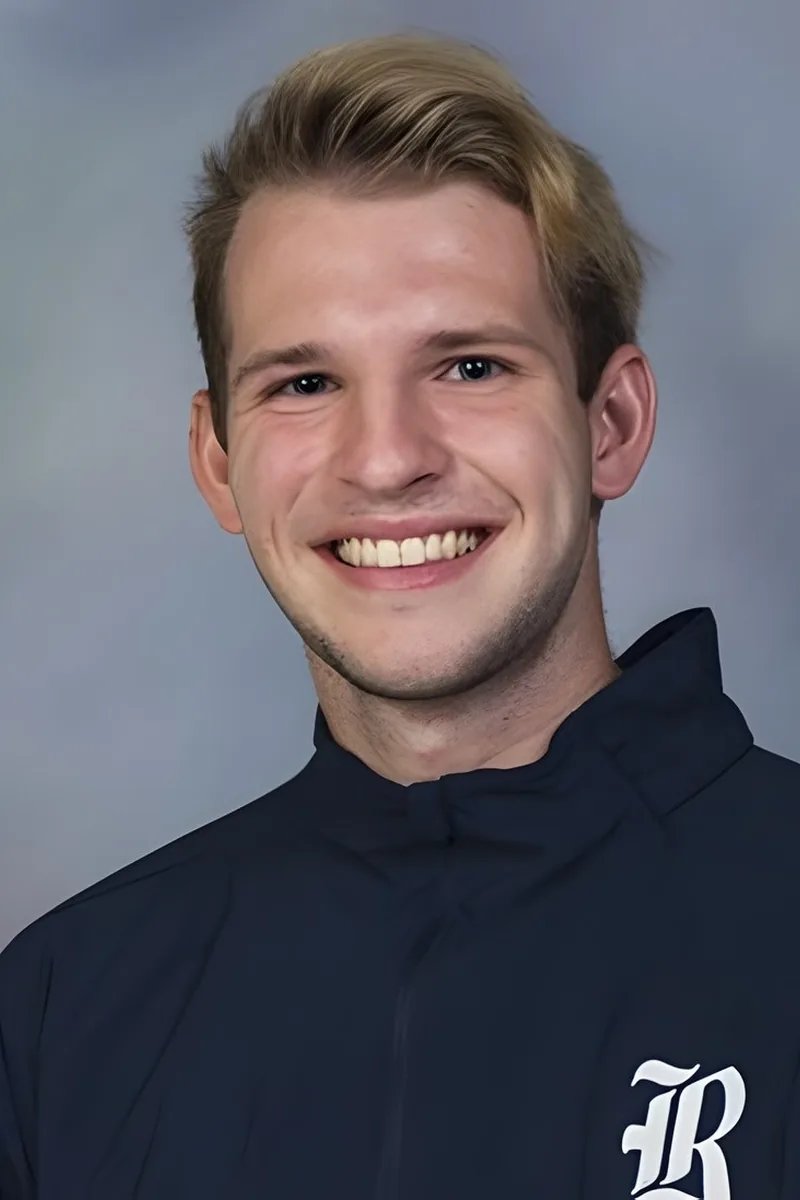
Studying neuroscience at Rice means Brett regularly writes code to analyze brain imaging data and model biological systems — practical computing experience that maps directly onto AP CSP's emphasis on data analysis, algorithms, and the real-world impact of technology. He teaches the pseudocode logic and abstraction concepts the exam tests by grounding them in problems students can actually picture. Rated 5.0 by students.
Payton is a Computer Science major at Texas A&M who codes in Python, C++, and Haskell — but AP CSP's exam cares more about pseudocode reasoning and explaining computational ideas in plain English than writing compilable programs. She teaches students to bridge that gap, translating real programming instincts into the kind of clear, structured responses the Create Task and multiple-choice questions actually reward. Rated 4.9 by students.
Software engineering internships at Apple and Microsoft gave Jerry a firsthand view of how the concepts in AP CSP — abstraction, algorithm design, data representation — actually play out in production code. He uses that industry context to make the Create Performance Task feel like a real development project rather than a classroom exercise, which sharpens both the programming and the written-response components. Rated 4.9 by students.
Electrical engineering taught Jake to think in systems — how signals move, how data gets encoded, how layers of abstraction stack to make hardware and software talk to each other. That mindset maps directly onto AP CSP's trickiest material, from binary representation to internet protocols to algorithm tracing in pseudocode. He also teaches across five programming languages, so the Create Task's coding component comes naturally.
Most AP CSP students can parrot definitions of abstraction and algorithms but freeze when a pseudocode trace asks them to actually step through the logic. Marc codes in Python, JavaScript, and C++ as part of his Computer Science studies at UT Austin, so he teaches students to read pseudocode the way a programmer reads real code — tracking variables, spotting loop behavior, and predicting outputs with confidence. Rated 5.0 by students.
Miguel's dual CS and English degree is a rare combination for AP CSP, where half the battle is writing code and the other half is explaining it — the Create Task's written responses demand the same clarity and structure as a well-argued essay. He teaches students to translate their algorithmic thinking into the precise language the rubric rewards, bridging the gap between understanding abstraction and actually articulating it on paper. Rated 4.9 by students.
Industry experience at Microsoft and the National Institutes of Health gave Snipta a front-row seat to how computing decisions — from data privacy to algorithmic bias — play out in the real world, which is exactly the kind of reasoning AP CSP's exam and Create Task reward. Her computer science degree covers the technical side, but it's the cognitive science training that sharpens how she teaches the course's trickiest skill: explaining computational ideas in plain, precise language.
Six semesters as a teaching assistant for digital logic at Cornell gave Alexander a deep intuition for how computers actually think — the binary, the abstraction layers, the logic gates underneath every algorithm. He brings that hardware-level understanding to AP CSP's big ideas, especially when explaining how the internet and data representation work under the hood. Rated 5.0 by students.
As a CS major at Texas A&M who codes in Java, Python, and SQL, Daniel teaches AP CSP's pseudocode and algorithm questions by mapping them to real programming logic — showing students what abstraction actually looks like in practice. He also tackles the Create Task as a structured project, breaking the planning, coding, and written response into clear phases so nothing gets left to the last minute.
Lloyd's data science coursework at the University of Rochester — pulling real datasets apart with Python and R, building models, and communicating results — mirrors exactly the kind of computational thinking AP CSP tests on its exam and Create Task. He knows how to make topics like data representation and algorithmic efficiency feel concrete, because he uses them daily rather than teaching them in the abstract. His 1550 SAT and fluency across multiple programming languages mean he can meet the course at any level, from a student's first pseudocode trace to polishing a Create Task submission.
Between coding in Java and C++ and studying sociology, Jacob sits at an interesting intersection for AP CSP — a course that tests both programming logic and the human side of computing, like data privacy and algorithmic bias. He walks students through the Create Task with a developer's eye, tackling pseudocode documentation and rubric requirements step by step. Rated 5.0 by students.
Multiple summers interning as a working programmer give Bennet a practical vocabulary for the concepts AP CSP tests — when he explains how algorithms handle data or why abstraction matters, he's drawing on code he's actually shipped, not just textbook definitions. His 5.0 rating speaks to how well that real-world grounding translates when students need to nail both the multiple-choice reasoning and the Create Task's written components.
Petroleum engineering at UT Austin means Akhil codes in Python and Java to solve real problems — simulations, data analysis, optimization — which grounds AP CSP's Big Ideas in something more tangible than textbook definitions. He tackles the course's internet and data units by connecting them to the large-scale systems engineers actually rely on, making topics like protocols and binary encoding click faster.
Financial mathematics and computer science intersect constantly — Neel's coursework at UT Austin has him building programs in Java and Python to model the same kinds of data patterns and algorithmic processes that AP CSP tests on paper. That crossover means he can take the course's more abstract Big Ideas, like how data gets compressed or why certain algorithms outperform others, and anchor them in concrete problems students can actually visualize. Rated 5.0 by students.
Most AP CSP tutors come from a CS background, but Matthew's path through music, history, and a Master of Arts in Teaching gives him a different edge — he's spent years in Kentucky classrooms turning sprawling, unfamiliar curricula into something students can actually follow. That skill matters in a course where a student might jump from binary data representation to cybersecurity ethics to pseudocode tracing in a single week, and where the Create Task demands both technical thinking and clear written explanation.
I'm a Computer Science student who's been teaching all my life. From tennis camps for kids to an engineering physics class for college kids, I really enjoy helping someone discover for themselves what they are capable of! Please let me know if there's anything you'd like me to help you with.
Nikitha earned her CS degree from Michigan writing actual code — which gives her a practical lens on AP CSP's more conceptual terrain, where students often stumble because the material feels too broad to pin down. She zeroes in on the impact-of-computing and cybersecurity threads that many tutors gloss over, tying them back to real design decisions she encountered in her own coursework. Rated 5.0 by students.
Derek scored 5s on both AP Computer Science A and AP Physics C while taking 16 APs at the high school level, so he knows how to manage the breadth of a course like AP CSP without letting any Big Idea slip through the cracks. Now studying CS at Harvard with an applied math minor, he digs into the algorithmic thinking and pseudocode reasoning that drive the multiple-choice section — and coaches students through the Create Task with the structured planning habits that come from building real software projects.
Studying both neuroscience and computer science at Duke means Ankit lives at the intersection AP CSP actually tests — how computing shapes real-world systems, from brain imaging pipelines to cybersecurity ethics. He digs into the algorithmic thinking and data representation questions that trip students up on the multiple-choice section, and coaches the Create Task from initial planning through the written response. Rated 4.8 by students.
Joshua scored a 5 on the AP Computer Science A exam, which means the Principles course's pseudocode and algorithm questions draw on knowledge he's already internalized at a deeper level. He teaches the Create Task as a scaled-down version of real software development — planning, building, and documenting — using his hands-on experience in Java, Python, and JavaScript to show students what clean, explainable code actually looks like.
Computer engineering at Georgia Tech means Yash lives in the space where hardware meets software — exactly the kind of systems-level thinking that makes AP CSP's Big Ideas about the internet, abstraction, and data representation feel intuitive rather than abstract. He teaches students to trace pseudocode and reason through algorithm questions the way an engineer debugs a circuit: step by step, with nothing assumed. Rated 5.0 by students.
Teaching discrete math at Penn means Keenan spends his weeks translating abstract computational thinking into language undergraduates actually absorb — a skill that maps directly onto AP CSP's pseudocode reasoning and algorithm analysis questions. His philosophy degree also gives him an unusual edge on the exam's societal-impact questions, where students need to construct clear written arguments about data privacy, bias in algorithms, and computing ethics. Rated 5.0 by students.
Ronit studies computer science at Yale and knows AP CSP's curriculum from the student side — which Big Ideas actually trip people up on the multiple-choice and where the Create Task rubric quietly punishes vague written responses. He digs into the explanatory writing piece that most students underestimate, teaching how to describe an algorithm's purpose and trace through pseudocode with the precision the exam expects. Rated 5.0 by students.
Irene's PhD in Mathematics and Computer Science means she understands the computational thinking that underpins AP CSP — not just the vocabulary, but the discrete math and logic behind how algorithms work and why abstraction matters. She unpacks pseudocode problems by connecting them to the mathematical structures students rarely see in a survey course, which makes exam questions feel less like guesswork.
I'm a professional software engineer at a top tech company in New York City. I have a strong passion for software development, most notably in the areas of full-stack web development, iOS development, Artificial intelligence, large scale distributed systems, and micro services.
I am a recent graduate with a master's in electrical engineering from Case Western Reserve University. I won the Bill and Melinda Gates Millennium Scholarship which covers full tuition up to Ph.D. I was on the Dean's List for three consecutive years. Additionally, I won the OZY Media Genius Award in 2015 to work on high-temperature superconductors. I currently work as a Technology Analyst at Accenture. I am also seriously considering whether I should go for a Ph.D. or not.
I am graduated from Penn State University in Industrial Engineering in 2017. I've tutored ever since I was in high school, and I love helping people! I like to help my students understand math (and other topics) instead of just doing it blindly. My goal is to help my students improve their math (and other topics) and build skills that will help them find learning easier in the future! Fun fact, I used to work for Disney and I like to salsa dance!
Samuel's applied math training at Caltech intersects directly with AP CSP's algorithm and data units — he can trace how a sorting algorithm's efficiency scales or why lossy compression works because he uses that math daily. He also taught a discrete mathematics course through PACT, which means pseudocode logic and combinatorial reasoning come naturally when prepping students for both the multiple-choice exam and the Create Task.
Testimonials
Because the right AP Computer Science Principles tutor makes all the difference.
Average Session Rating – Based on 3.4M Learner Ratings
Nearby AP Computer Science Principles Tutors
Other McAllen Tutors
Related Technology and Coding Tutors in McAllen
Frequently Asked Questions
AP Computer Science Principles covers five core units: creative development (designing programs and apps), data (collecting, processing, and analyzing information), algorithms and programming (writing code and solving problems), computer systems and networks (how computers work together), and impact of computing (social and ethical implications). The course emphasizes both technical skills and computational thinking, making it accessible for students without prior programming experience. For students in McAllen, understanding this broad curriculum helps identify which areas might need extra focus during tutoring.
Score improvement depends on your starting point and how actively you engage with tutoring. Students who work consistently with a tutor typically see gains of 1-3 points on the AP scale (out of 5), though some students improve more significantly. The AP Computer Science Principles exam rewards both the multiple-choice section and the through-course assessments (Create Task and Explore Task), so tutoring that addresses all components tends to be most effective. Your tutor can assess your current strengths and weaknesses to set realistic goals based on your specific situation.
Many students struggle with the programming section, especially if they're new to coding—understanding syntax, debugging code, and thinking algorithmically takes practice. The Create Task (a through-course assessment) also challenges students who aren't sure how to document their work effectively or explain their program's purpose clearly. Additionally, the exam's focus on the social and ethical impacts of computing can feel abstract without guidance on how to analyze real-world computing scenarios. A tutor can break down these concepts and help you practice each component systematically.
Your first session typically involves getting to know your tutor and assessing where you stand with the material. Your tutor will likely ask about your programming background, which AP Computer Science Principles units you find most challenging, and what your score goals are. They may also review sample problems or past exam questions to identify specific gaps. This foundation helps your tutor create a personalized study plan tailored to your needs and timeline before the AP exam.
Practice tests are essential for AP Computer Science Principles because they help you get comfortable with the exam format, manage your time effectively, and identify which units need more study. Taking full-length practice tests under timed conditions reveals whether pacing is an issue and shows you exactly what types of questions appear on the exam. Your tutor can review your practice test results to pinpoint weak areas—whether that's multiple-choice reasoning, Create Task documentation, or understanding computing impacts—and adjust your study plan accordingly.
Most students benefit from starting tutoring 2-3 months before the exam, though this depends on your current level and how much you're studying independently. If you're just beginning to understand programming or the Create Task, starting earlier gives you time to build foundational skills. Even 4-6 weeks of focused tutoring can help if you're already familiar with most material and need help with specific weak areas or test-taking strategies. Your tutor can recommend a schedule based on your starting point and goals.
Look for tutors with strong programming experience and familiarity with the AP Computer Science Principles curriculum specifically. Ideally, they've taught or tutored AP CSP before and understand both the multiple-choice section and the through-course assessments (Create and Explore Tasks). It's also helpful if they can explain computer science concepts clearly and relate them to real-world applications, since the exam emphasizes computing's social and ethical impact. Varsity Tutors connects you with expert tutors who have experience with AP Computer Science Principles and can tailor instruction to your learning style.
Tutoring builds confidence by helping you master the material and become familiar with the exam format through repeated practice. When you understand the concepts and know what to expect on test day, anxiety naturally decreases. Your tutor can also teach you test-taking strategies specific to AP Computer Science Principles—like how to approach multiple-choice questions efficiently and how to manage time during the Create Task—so you feel prepared and in control. Regular practice with feedback helps you trust your abilities when you sit down for the actual exam.
Let’s find your perfect tutor
Answer a few quick questions. We’ll recommend the right plan and match you with a top 5% tutor.