Award-Winning AP Computer Science Principles Tutors
serving Fort Worth, TX
AP Computer Science Principles
Tutors in Fort Worth
Private 1-on-1 tutoring, weekly live classes for academic support, test prep & enrichment, practice tests and diagnostics, and more to elevate grades and test scores.
Based on 3.4M Learner Ratings
UniversitiesSchools & Universities
DeliveredHours Delivered
ProficiencyGrowth in Proficiency
Who needs tutoring?
No obligation. Takes ~1 minute.
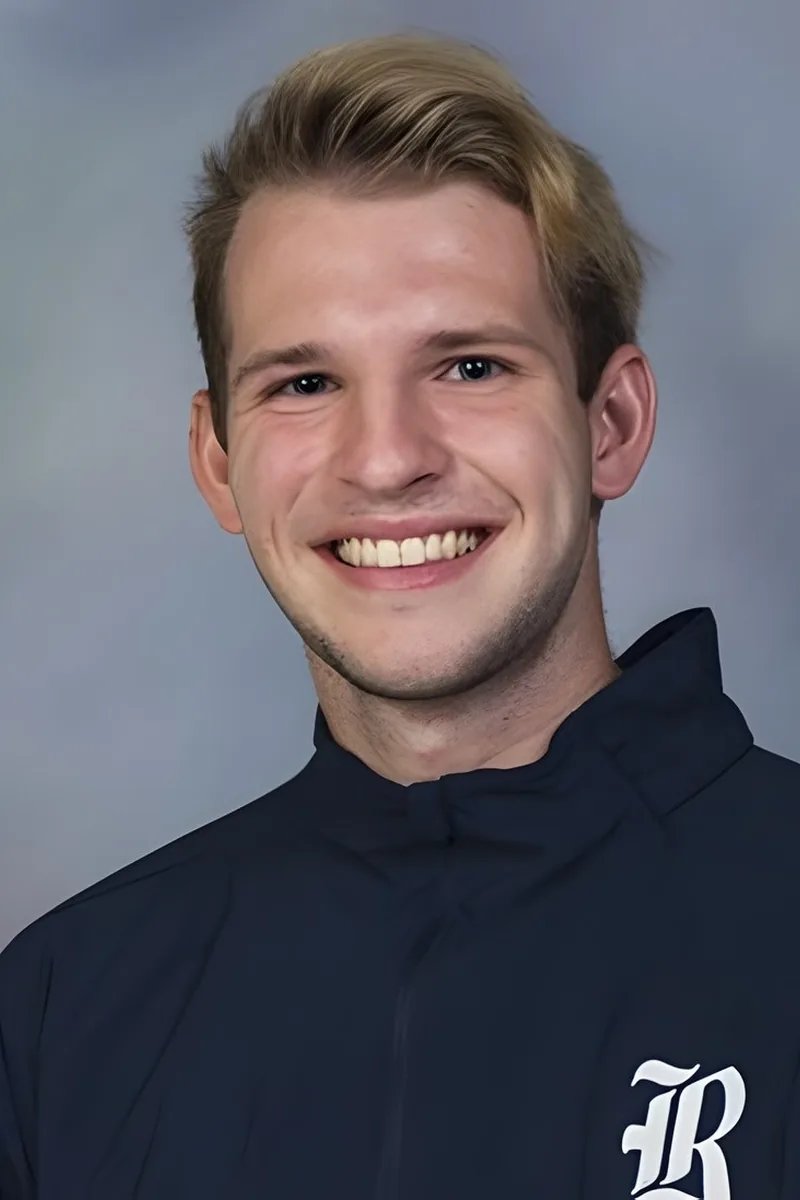
Studying neuroscience at Rice means Brett regularly writes code to analyze brain imaging data and model biological systems — practical computing experience that maps directly onto AP CSP's emphasis on data analysis, algorithms, and the real-world impact of technology. He teaches the pseudocode logic and abstraction concepts the exam tests by grounding them in problems students can actually picture. Rated 5.0 by students.
Payton is a Computer Science major at Texas A&M who codes in Python, C++, and Haskell — but AP CSP's exam cares more about pseudocode reasoning and explaining computational ideas in plain English than writing compilable programs. She teaches students to bridge that gap, translating real programming instincts into the kind of clear, structured responses the Create Task and multiple-choice questions actually reward. Rated 4.9 by students.
Software engineering internships at Apple and Microsoft gave Jerry a firsthand view of how the concepts in AP CSP — abstraction, algorithm design, data representation — actually play out in production code. He uses that industry context to make the Create Performance Task feel like a real development project rather than a classroom exercise, which sharpens both the programming and the written-response components. Rated 4.9 by students.
Electrical engineering taught Jake to think in systems — how signals move, how data gets encoded, how layers of abstraction stack to make hardware and software talk to each other. That mindset maps directly onto AP CSP's trickiest material, from binary representation to internet protocols to algorithm tracing in pseudocode. He also teaches across five programming languages, so the Create Task's coding component comes naturally.
Six semesters as a teaching assistant for digital logic at Cornell gave Alexander a deep intuition for how computers actually think — the binary, the abstraction layers, the logic gates underneath every algorithm. He brings that hardware-level understanding to AP CSP's big ideas, especially when explaining how the internet and data representation work under the hood. Rated 5.0 by students.
Most AP CSP students can parrot definitions of abstraction and algorithms but freeze when a pseudocode trace asks them to actually step through the logic. Marc codes in Python, JavaScript, and C++ as part of his Computer Science studies at UT Austin, so he teaches students to read pseudocode the way a programmer reads real code — tracking variables, spotting loop behavior, and predicting outputs with confidence. Rated 5.0 by students.
Industry experience at Microsoft and the National Institutes of Health gave Snipta a front-row seat to how computing decisions — from data privacy to algorithmic bias — play out in the real world, which is exactly the kind of reasoning AP CSP's exam and Create Task reward. Her computer science degree covers the technical side, but it's the cognitive science training that sharpens how she teaches the course's trickiest skill: explaining computational ideas in plain, precise language.
Miguel's dual CS and English degree is a rare combination for AP CSP, where half the battle is writing code and the other half is explaining it — the Create Task's written responses demand the same clarity and structure as a well-argued essay. He teaches students to translate their algorithmic thinking into the precise language the rubric rewards, bridging the gap between understanding abstraction and actually articulating it on paper. Rated 4.9 by students.
Lloyd's data science coursework at the University of Rochester — pulling real datasets apart with Python and R, building models, and communicating results — mirrors exactly the kind of computational thinking AP CSP tests on its exam and Create Task. He knows how to make topics like data representation and algorithmic efficiency feel concrete, because he uses them daily rather than teaching them in the abstract. His 1550 SAT and fluency across multiple programming languages mean he can meet the course at any level, from a student's first pseudocode trace to polishing a Create Task submission.
As a CS major at Texas A&M who codes in Java, Python, and SQL, Daniel teaches AP CSP's pseudocode and algorithm questions by mapping them to real programming logic — showing students what abstraction actually looks like in practice. He also tackles the Create Task as a structured project, breaking the planning, coding, and written response into clear phases so nothing gets left to the last minute.
Between coding in Java and C++ and studying sociology, Jacob sits at an interesting intersection for AP CSP — a course that tests both programming logic and the human side of computing, like data privacy and algorithmic bias. He walks students through the Create Task with a developer's eye, tackling pseudocode documentation and rubric requirements step by step. Rated 5.0 by students.
Petroleum engineering at UT Austin means Akhil codes in Python and Java to solve real problems — simulations, data analysis, optimization — which grounds AP CSP's Big Ideas in something more tangible than textbook definitions. He tackles the course's internet and data units by connecting them to the large-scale systems engineers actually rely on, making topics like protocols and binary encoding click faster.
Multiple summers interning as a working programmer give Bennet a practical vocabulary for the concepts AP CSP tests — when he explains how algorithms handle data or why abstraction matters, he's drawing on code he's actually shipped, not just textbook definitions. His 5.0 rating speaks to how well that real-world grounding translates when students need to nail both the multiple-choice reasoning and the Create Task's written components.
Most AP CSP tutors come from a CS background, but Matthew's path through music, history, and a Master of Arts in Teaching gives him a different edge — he's spent years in Kentucky classrooms turning sprawling, unfamiliar curricula into something students can actually follow. That skill matters in a course where a student might jump from binary data representation to cybersecurity ethics to pseudocode tracing in a single week, and where the Create Task demands both technical thinking and clear written explanation.
Financial mathematics and computer science intersect constantly — Neel's coursework at UT Austin has him building programs in Java and Python to model the same kinds of data patterns and algorithmic processes that AP CSP tests on paper. That crossover means he can take the course's more abstract Big Ideas, like how data gets compressed or why certain algorithms outperform others, and anchor them in concrete problems students can actually visualize. Rated 5.0 by students.
I'm a Computer Science student who's been teaching all my life. From tennis camps for kids to an engineering physics class for college kids, I really enjoy helping someone discover for themselves what they are capable of! Please let me know if there's anything you'd like me to help you with.
Manideep's day-to-day at Northwestern splits between biology coursework and programming in Python for data analysis, which maps directly onto AP CSP's emphasis on how computing intersects with other fields. He teaches the algorithmic thinking and data representation concepts by tying them to problems he's actually solved — like modeling biological datasets — so the exam's Big Ideas feel grounded rather than abstract. Rated 5.0 by students.
Jackson studies computer science at Haverford and codes in both Java and Python, which means he can walk students through the Create Task in whichever language their class uses — and explain the pseudocode logic the exam actually tests. His 5.0 rating comes from making the non-coding half of AP CSP click too, connecting topics like data compression and internet protocols to real programming decisions rather than leaving them as abstract vocabulary to memorize.
I'm always up for the challenge of changing my methods of instruction and breaking down topics to foster a deeper understanding of a subject. On a different note, I generally spend my spare time playing lacrosse or running outdoors when possible. I also play the violin with a school quartet, and teach lessons to beginning students working through the Suzuki program.
Evan's game development work in Unity — building systems that rely on abstraction layers, event-driven logic, and efficient data handling — maps directly onto the computational thinking AP CSP tests. He uses his own projects to show students how pseudocode translates into real design decisions, which makes the Create Task feel like building something instead of checking rubric boxes. His 34 ACT reflects the kind of cross-disciplinary reasoning this exam rewards.
Susanna codes in Java, Python, and MATLAB — but for AP CSP, she shifts gears from syntax to the bigger questions: how does data move across the internet, why does abstraction matter, and what makes an algorithm efficient? Her physics training at UC Berkeley means she's used to translating messy real-world problems into clean logical models, which is exactly the skill the Create Task and exam reward.
I am graduated from Penn State University in Industrial Engineering in 2017. I've tutored ever since I was in high school, and I love helping people! I like to help my students understand math (and other topics) instead of just doing it blindly. My goal is to help my students improve their math (and other topics) and build skills that will help them find learning easier in the future! Fun fact, I used to work for Disney and I like to salsa dance!
Lance studied both theoretical mathematics and computer science as an undergraduate before entering medical school, which means he's written real code in Java, C, and SQL — not just traced pseudocode on a worksheet. That practical depth lets him teach AP CSP's algorithmic thinking and abstraction concepts through actual programming logic, giving students a clearer mental model when they hit the Create Task or encounter unfamiliar algorithm-tracing questions on the exam.
Bryan codes in Java, C++, Python, and JavaScript daily as a CS major at Penn, which means the programming and algorithm design portions of AP CSP come naturally — but he's equally sharp on the conceptual side, like explaining how data travels across the internet or why abstraction matters in system design. He scored a 35 ACT and holds a 5.0 tutoring rating, and he's particularly effective at coaching students through the written response component of the Create Task, where clear technical communication counts as much as the code itself.
Adel's PhD in mechanical engineering required extensive work in Java and computational modeling — skills that translate directly to the algorithmic thinking and pseudocode analysis at the heart of AP CSP. He unpacks topics like data representation and abstraction by tying them to engineering simulations where those concepts have real consequences. Rated 4.8 by students.
Biomedical engineering at Cornell means Annie writes Python and MATLAB to process real research data — skills that map directly onto AP CSP's emphasis on programming, data analysis, and algorithmic thinking. She teaches the Create Task as a scaled-down version of the same design process she uses in lab: define the problem, plan the logic, build iteratively, then explain your choices clearly. Rated 4.9 by students.
Giovanni's dual training in mathematics and computer science at Emory means he can teach the algorithmic thinking in AP CSP from both a coding perspective and a pure logic perspective — particularly useful when students hit pseudocode trace problems or need to reason through abstraction layers on the exam. He also brings hands-on experience in Java and Python, which gives him a practical toolkit for coaching students through the Create Task from initial design to final written response. Rated 5.0 by students.
Matthew codes in Java, C++, Python, and JavaScript — so when AP CSP asks students to reason about algorithms or explain how a program works in pseudocode, he can ground those abstractions in actual programming logic most students haven't seen yet. His Harvard math and CS coursework also means he's sharp on the data analysis and binary representation questions that trip up students who only studied the vocabulary. Rated 4.9 by students.
Testimonials
Because the right AP Computer Science Principles tutor makes all the difference.
Average Session Rating – Based on 3.4M Learner Ratings
Nearby AP Computer Science Principles Tutors
Other Fort Worth Tutors
Related Technology and Coding Tutors in Fort Worth
Frequently Asked Questions
AP Computer Science Principles covers five big ideas: creative development, data, algorithms, programming, and computing systems. The course emphasizes computational thinking and real-world applications rather than heavy coding syntax. For students in Fort Worth, understanding these foundational concepts early helps build confidence before tackling the exam's performance tasks and multiple-choice sections.
Score improvement depends on your starting point and study consistency, but students who work with tutors typically see gains of 1-2 points on the AP scale (1-5). The most significant improvements come from targeted practice on the Create Performance Task and Explore Performance Task, which together account for 50% of your grade. A tutor can help you identify which concepts are holding you back and develop a personalized study plan to address them.
The performance tasks make up 50% of your AP score—the Create Task (30%) and Explore Task (20%)—while the multiple-choice section accounts for the other 50%. These tasks require you to demonstrate computational thinking, program development, and data analysis skills over several weeks. Tutors can guide you through the task requirements, help you plan your project, and review your work before submission to ensure you're meeting all scoring criteria.
Many students struggle with the Create Performance Task because it requires sustained independent work and clear documentation of your process—not just a working program. Others find the multiple-choice section tricky because questions test conceptual understanding and real-world application rather than memorization. Time management is another challenge: balancing the performance tasks with regular coursework while preparing for the exam. A tutor can help you develop a realistic timeline and break down complex tasks into manageable steps.
For the multiple-choice section, read questions carefully—they often test whether you understand why something works, not just what it does. Practice eliminating obviously wrong answers and manage your time (about 1 minute per question). For the performance tasks, start early, document your thinking thoroughly, and test your work repeatedly. Tutors can help you practice under timed conditions, review past exam questions, and develop strategies for explaining your computational thinking clearly.
Most students benefit from consistent preparation throughout the school year, with focused review starting 6-8 weeks before the exam in May. Since the performance tasks span several weeks and require substantial planning, starting them early (often in January or February) gives you time to revise and improve. If you're joining tutoring mid-year, even 8-10 weeks of targeted work on weak areas and practice tests can make a meaningful difference in your score.
Look for tutors who have experience with the AP Computer Science Principles curriculum, understand the specific requirements of the Create and Explore tasks, and can explain both the technical concepts and the broader computational thinking principles. Ideally, they've worked with students preparing for this exam and understand common misconceptions. Varsity Tutors connects you with expert tutors in Fort Worth who can tailor their approach to your learning style and help you master both the conceptual and practical aspects of the course.
Your first session is typically a diagnostic conversation where a tutor learns about your current understanding, identifies which concepts or tasks feel most challenging, and discusses your goals for the exam. They may review your course progress, ask about your programming experience, and assess your comfort with the performance task requirements. From there, you'll develop a personalized study plan that focuses on your specific needs—whether that's building coding confidence, mastering the performance tasks, or strengthening test-taking strategies.
Let’s find your perfect tutor
Answer a few quick questions. We’ll recommend the right plan and match you with a top 5% tutor.