Award-Winning Pre-Calculus Tutors
serving Killeen, TX
Pre-Calculus
Tutors in Killeen
Private 1-on-1 tutoring, weekly live classes for academic support, test prep & enrichment, practice tests and diagnostics, and more to elevate grades and test scores.
Based on 3.4M Learner Ratings
UniversitiesSchools & Universities
DeliveredHours Delivered
ProficiencyGrowth in Proficiency
Who needs tutoring?
No obligation. Takes ~1 minute.
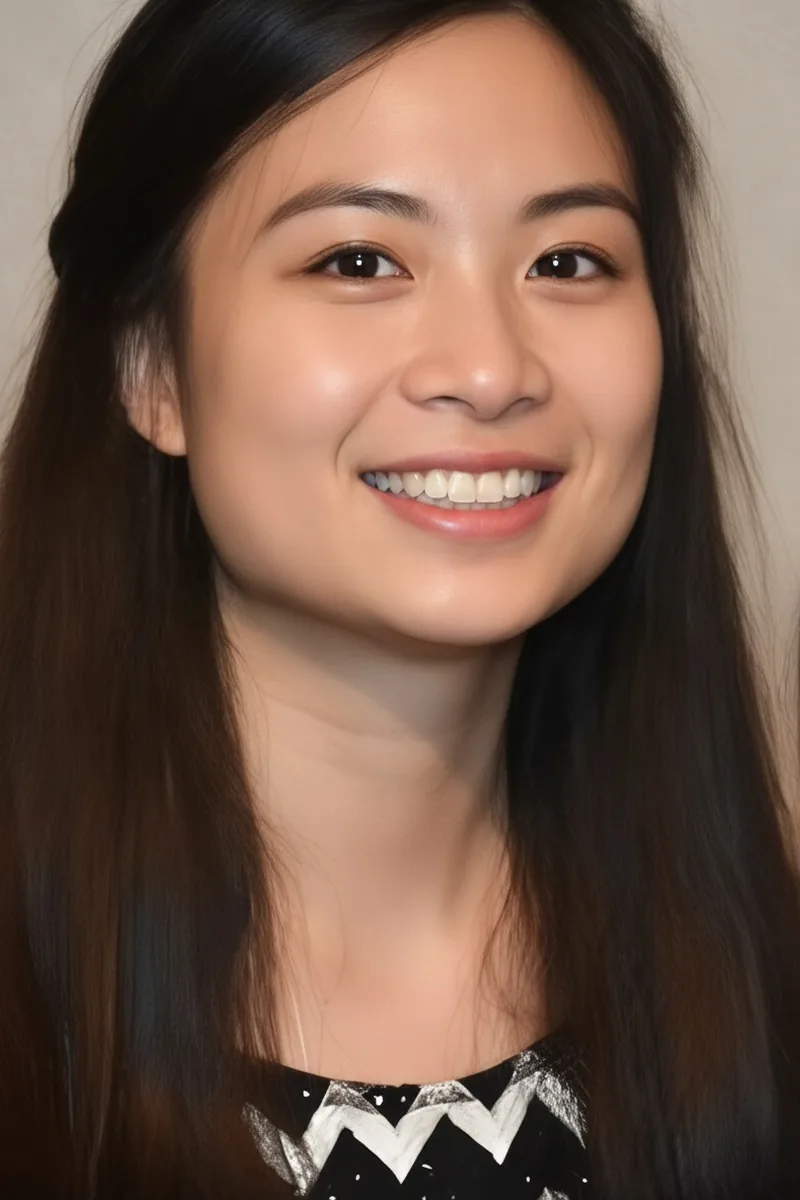
Second-year medical school at Baylor means Michelle is neck-deep in the quantitative reasoning that pre-calculus builds — rate-of-change intuition for physiology, logarithmic models for acid-base chemistry, and exponential functions for everything from bacterial growth to drug clearance. Her biochemistry degree from Rice cemented the algebraic and trigonometric groundwork she now draws on daily, so she teaches these topics as someone who genuinely needed them to stick. A 1570 SAT confirms the mathematical precision behind her approach.
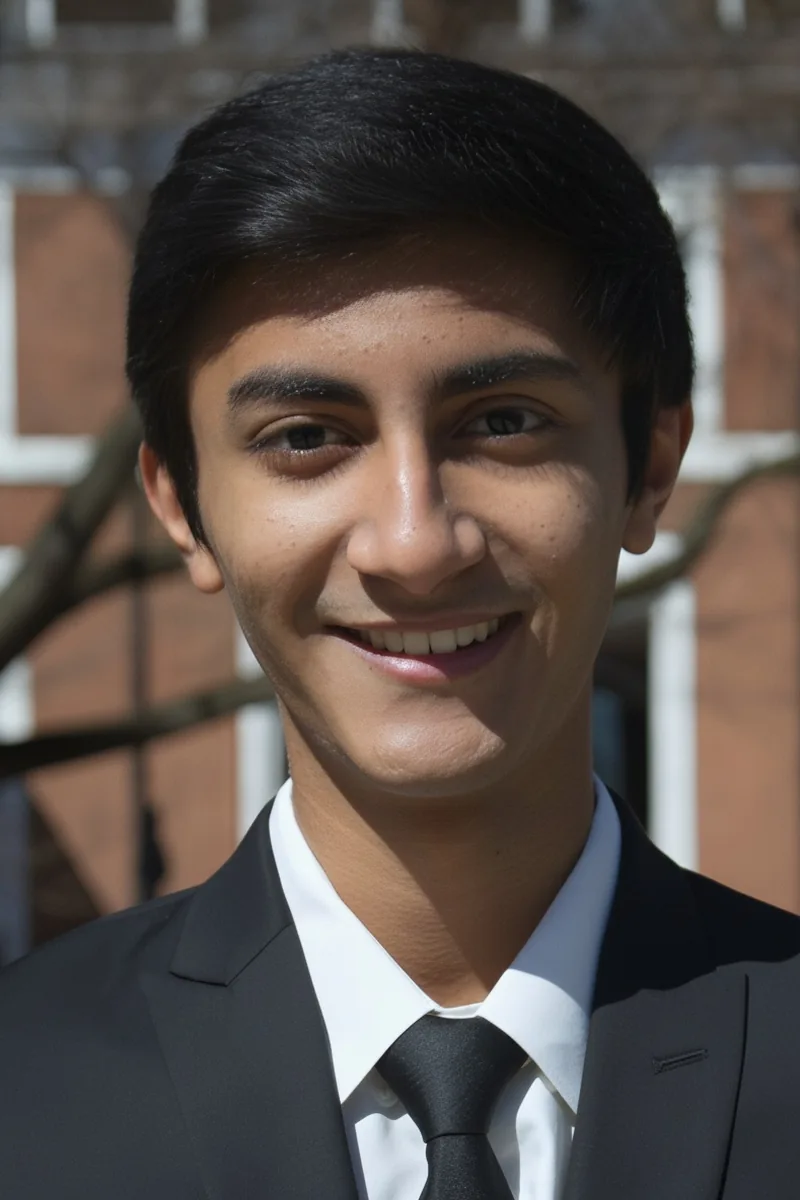
Differential equations, calculus, and physics all live on Bidyut's teaching roster — which means he knows exactly which pre-calculus skills (and which specific weak spots) will matter most once students move forward. His biomedical engineering training at Johns Hopkins keeps him fluent in the trigonometric, exponential, and composite function reasoning that pre-calc demands, and he teaches those topics by connecting them to the applied problems where sloppy understanding actually costs you. A 36 ACT and 5.0 rating back up the depth he brings.
Cognitive science at Rice trained Adam to think about how people learn abstract patterns — which is exactly what pre-calculus demands when students hit the wall between comfortable algebra and the conceptual leap to limits and derivatives. He zeroes in on building intuition around function transformations and trigonometric reasoning, connecting each new idea to the cognitive scaffolding that makes it stick. His 34 ACT confirms the quantitative chops behind that approach.
William's computer science coursework at Rice means he regularly implements the functions, transformations, and trigonometric relationships that pre-calculus students are still learning to read on paper — he's coded them, graphed them, and debugged them. That hands-on fluency lets him explain topics like composite functions or logarithmic behavior by tracing the logic step by step, so the algebra feels like it's going somewhere. His 1540 SAT confirms the mathematical precision behind his approach.
Teaching game theory to advanced middle schoolers in Hong Kong meant Carter had to make concepts like optimization, strategic equilibrium, and functional reasoning accessible — skills that map directly onto the pre-calculus toolkit of analyzing function behavior, interpreting graphs, and building toward limits. His economics degree from Brown kept him deep in the quantitative side of social science, where polynomial and logarithmic models aren't abstract exercises but everyday working tools. Holds a 5.0 rating and a 1570 SAT.
Computational mathematics at Rice means Vinson isn't just passing through pre-calculus topics — he's building on them daily, using the same function families, limit intuitions, and trigonometric structures in his upper-level coursework. He's particularly sharp at demystifying the shift from algebraic manipulation to functional thinking, especially when students hit the wall around rational functions and their asymptotic behavior. Rated 4.8 with a 36 ACT behind him.
Having TA'd Calculus I and II at Rice, Sakibul knows exactly which pre-calculus skills — polynomial end behavior, trig identities, rational function analysis — make or break a student's transition into calculus, and he teaches backward from those pressure points. His graduate work in computational and applied mathematics keeps these concepts active in his daily problem-solving, so he explains them with the fluency of current use rather than distant memory.
Mathematical economic analysis — Kenan's concentration — lives in the space where pre-calculus concepts like optimization, rate-of-change intuition, and logarithmic modeling become practical tools for understanding markets and policy. He teaches topics like function transformations and asymptotic behavior by connecting them to the economic models where they actually matter, giving students a reason to care about what the algebra is doing. His 1530 SAT confirms the quantitative grounding behind that approach.
The jump into pre-calculus means juggling trigonometric identities, polar coordinates, and limits for the first time — often all in the same semester. Layla's biomedical engineering coursework at Brown requires exactly this kind of math daily, so she teaches these topics as interconnected tools rather than isolated chapters. Her 5.0 rating speaks to how clearly she makes that web of concepts click.
Having gone through the IB program — which compresses pre-calculus ideas like polar form, sequences, and function transformations into a rigorous two-year gauntlet — Kinjal knows exactly where students hit walls and why. Her biology degree at Texas A&M kept those skills sharp through pharmacokinetic modeling and statistical analysis, so she teaches topics like exponential behavior and composite functions as tools she's actually had to wield. A 1550 SAT and 5.0 rating round out the picture.
Working in a UTHealth research lab, Emily regularly encounters the exponential and logarithmic relationships that form the backbone of pre-calculus — modeling reaction rates, analyzing growth curves, and interpreting data that behaves nonlinearly. Her triple-major background in biochemistry and cell biology means she can trace each function family back to a real phenomenon, turning abstract graphs into something students can visualize. She's especially sharp at bridging the gap between the algebra students already know and the functional reasoning calculus will demand.
A PhD chemical engineer doesn't forget the math that got him there — Steven still thinks in terms of the rate equations, equilibrium models, and periodic functions that pre-calculus introduces, because his entire career was built on them. He zeroes in on the conceptual bridge between algebra and calculus, particularly how logarithmic and exponential relationships actually behave rather than just how to manipulate them on paper. Rated 4.9 by students.
The jump from algebra to pre-calculus is where a lot of students lose their footing — suddenly they're dealing with trigonometric identities, composite functions, and logarithmic properties that don't yield to the same plug-and-chug strategies. Eric's economics and computer science coursework at Dartmouth keeps him actively using these tools for modeling and analysis, so he teaches them as building blocks with clear purpose rather than isolated chapters. His 34 ACT and 5.0 rating back that up.
Most tutors on this page come from STEM backgrounds — Molly's angle is different. Her communication training sharpens the skill pre-calculus students underestimate most: translating word problems into the right function model, whether that's setting up a logarithmic equation from a decay scenario or interpreting what a rational function's asymptote actually means in context. She also teaches algebra, calculus, and SAT math, so she knows the full arc these concepts follow.
Mechanical engineering at Rice means Ashton is constantly leaning on the pre-calculus toolkit — trigonometric functions for force resolution, parametric equations for motion paths, and polynomial modeling for system behavior — so he teaches these topics with the comfort of daily use. He zeroes in on how transformations and function composition actually work mechanically, building each idea from the algebra students already have rather than layering on disconnected rules. His 32 ACT and 1440 SAT confirm the quantitative grounding behind that approach.
A doctorate in mechanical engineering means Sungae has spent years solving differential equations, optimizing systems, and modeling physical behavior — all of which start with the pre-calculus toolkit of trigonometric functions, parametric relationships, and limits of sequences. She zeroes in on the conceptual bridges that connect familiar algebra to unfamiliar territory, particularly when students hit walls around rational functions or the unit circle. Her teaching range from pre-algebra through calculus means she can pinpoint exactly where a gap started and close it before moving forward.
Chemical engineering at the undergraduate level means Jonathan spent semesters steeped in the exact pre-calculus toolkit — trigonometric manipulation for wave equations, logarithmic and exponential models for reaction kinetics, and polar-coordinate work that most students only glimpse in passing. He teaches these topics by connecting them to the problem-solving framework he used in engineering: identify what you know, figure out what tools apply, and build toward the answer step by step. His 1550 SAT confirms the quantitative precision behind that approach.
Three science degrees — including bioengineering — mean Casey has spent years watching pre-calculus concepts like trigonometric modeling, exponential growth, and function composition show up as essential tools in physics, physiology, and systems biology. Rather than teaching these topics in isolation, she connects each one to the applied problems where it actually matters, making the jump from algebra to calculus feel like a natural progression. She's also the kind of tutor who'll stay on a late-night call before an exam if that's what it takes.
Graduating early from the Texas Academy of Mathematics and Science with two years of college credits means Michael tackled pre-calculus material younger than most — and then immediately put it to work in university-level statistics courses at Rice. He's particularly sharp on the function behavior and transformations that bridge algebra to calculus, teaching students to read graphs and manipulate expressions with the confidence that comes from daily statistical modeling. Holds a 5.0 rating and a 1560 SAT.
As a mechanical engineering student at Brown, Chelsea encounters the full spectrum of pre-calculus concepts — trigonometric functions in force analysis, parametric curves in motion modeling, rational expressions in system design — as working tools rather than textbook abstractions. She zeroes in on the algebra-to-functions transition that trips up most students, teaching how to read and manipulate graphs of composites and inverses with the structural thinking her engineering training demands. Her 1530 SAT reflects the quantitative precision she brings to each session.
Pre-calc is where algebraic skills, trigonometric reasoning, and the concept of limits all start converging, and gaps from earlier courses suddenly become visible. Samantha pinpoints those gaps fast — her two years in Princeton's McGraw Tutoring program means she's seen exactly which pre-calc weaknesses trip students up once they hit calculus, and she addresses them head-on.
Most pre-calculus students hit a wall when the course shifts from computation to conceptual reasoning — suddenly they're expected to analyze function behavior, interpret transformations, and connect algebraic rules to graphical intuition. Logan's physics background means he learned these ideas as tools for describing real motion and change, which gives him a concrete vocabulary for explaining why a rational function has an asymptote or how periodicity emerges from circular motion. He also teaches calculus and applied math, so he knows exactly which pre-calc skills need to be airtight before moving on.
The jump to pre-calculus is where many students first encounter trigonometric identities, limits concepts, and the behavior of rational and exponential functions all at once. Thomas approaches each topic by building the graphical intuition behind it — showing what a function actually does before diving into the algebra. His background in medical and public health coursework kept him using these tools long after the class ended.
Trigonometric identities, limits, and the behavior of polynomial and rational functions all click faster when a student understands the 'why' behind the rules. Roni connects pre-calculus concepts to the engineering applications he encounters at Brown, giving students an intuitive sense of how function transformations and unit circle reasoning actually work.
The jump to pre-calculus is where limits, trigonometric identities, and function transformations start demanding real conceptual fluency. Alexander's advanced math coursework at Rice built directly on these foundations, so he knows exactly which pre-calc skills matter most when students move into calculus and beyond.
Mohamed's mechanical engineering work in robotics at Penn means he's constantly solving problems that trace straight back to pre-calculus — parametric motion, trigonometric decomposition of forces, and the polynomial and rational function behavior that governs how physical systems respond. He teaches these topics by connecting them to the engineering intuition he's built, walking through why a transformation reshapes a graph or how an identity simplifies a real calculation. Holds a 5.0 rating from students.
Oldest of five kids, Nathan has been breaking down tricky concepts for younger learners long before he started tutoring formally — and his dual study of History and Neuroscience at Rice sharpened the analytical thinking that pre-calculus demands when students hit sequences, series, and the shift from concrete algebra to abstract function behavior. His 1530 SAT confirms the quantitative skill behind his teaching, and his 5.0 rating confirms it actually lands.
The jump to pre-calculus is where many students first encounter functions as abstract objects — transformations, compositions, and the unit circle can feel disconnected from anything they've done before. Emina walks through each concept with concrete examples, building the kind of graphical intuition that makes limits and derivatives feel natural when calculus arrives.
The jump into Pre-Calculus trips students up because it layers multiple concepts — trigonometric identities, polar coordinates, and limits — on top of skills they may not have fully locked in. As an Applied Mathematics student at Texas A&M, Matthew connects each new Pre-Calc topic back to the algebra underneath it, making the transition to calculus far less intimidating.
Biomedical engineering at Rice means Aurnab hits pre-calculus concepts like parametric equations and trigonometric modeling every semester — they're baked into coursework on biomechanics and signal processing. He zeroes in on the conceptual jumps that trip students up, particularly the shift from manipulating expressions to thinking in terms of function behavior and transformations. A 36 ACT and 1590 SAT confirm he's operating at the top of the quantitative range.
The leap from trig identities and polynomial behavior to limits and derivatives catches a lot of students off guard in pre-calc. Lila treats this course as genuine preparation for calculus, spending time on why asymptotic behavior and rate of change matter — not just how to solve the homework problem in front of you.
The jump to pre-calculus — limits, trigonometric identities, polar coordinates — demands a level of algebraic fluency that catches many students off guard. Claire teaches across every level of math from elementary through calculus, so she's skilled at pinpointing exactly which earlier gaps are causing trouble and closing them fast.
The jump to Pre-Calculus is where many students first encounter function transformations, rational expressions, and the unit circle all at once. Alisa tutored Pre-Calculus extensively through UT Dallas' drop-in program, which means she's seen — and untangled — nearly every sticking point the course throws at students. She treats each topic as preparation for calculus, not just a standalone chapter to survive.
Natalie's double major in Biochemistry and English at Rice means she toggles between quantitative and verbal reasoning daily — a combination that's surprisingly useful for pre-calculus, where students need to interpret what a problem is asking before they can model it with the right function family. She's especially sharp on the algebraic manipulation side, breaking down how to simplify rational expressions or set up piecewise definitions so the logic is visible at every step. Her 1560 SAT confirms the math fluency behind that approach.
Trigonometric identities, polar coordinates, and the behavior of rational functions all click faster when a student understands the 'why' behind each rule. Siyu breaks pre-calculus into visual, intuitive pieces — connecting graphs to equations so the jump to calculus feels natural rather than overwhelming. Rated 4.9 by students.
Biomedical engineering at the undergraduate level is where pre-calculus concepts stop being theoretical — parametric equations describe catheter paths, sinusoidal functions model cardiac rhythms, and logarithmic scales quantify signal intensity. Yaajnavalki draws on that applied training to teach topics like function transformations and trigonometric identities as tools with real engineering consequences, not just abstract exercises before calculus. His 33 ACT and 4.8 rating reflect the quantitative grounding behind that perspective.
Biochemistry and psychology both demand comfort with the math that lives in pre-calculus — exponential models for reaction kinetics, logarithmic scales for psychophysical data, trigonometric functions for waveform analysis in neuroscience. Nathaniel draws on that dual background to teach function behavior and graph transformations as tools with real purposes, not just abstract exercises before calculus. His 33 ACT and 5.0 rating confirm he delivers on that approach.
The jump into pre-calculus often feels like juggling — trigonometric identities, polynomial behavior, and limits intuition all at once. Jack's math minor at UChicago means he's recently worked through these exact topics at a rigorous level and can unpack why, say, a rational function behaves the way it does near an asymptote. His 5.0 rating speaks to how clearly he communicates that understanding.
I am a graduate of UC San Diego with a Bachelors in Neuroscience through the Psychology department. After graduating, I went to Michigan Technological University and did some graduate work, before moving to Texas to be closer to my parents. I did my alternative certification program through Texas Teachers and am highly qualified to teach Science for grades 7-12. I have been a teacher in public and charter schools for the last four years, and have tutoring experience extending over ten years behind me as well.
Trig identities, rational functions, and the unit circle all converge in Pre-Calculus, making it one of the most concept-dense courses before college math. Christina approaches each topic by connecting it forward — showing how a limit definition or a polar coordinate will reappear in calculus and physics — so the material sticks instead of feeling like disconnected formulas.
Testimonials
Because the right Pre-Calculus tutor makes all the difference.
Average Session Rating – Based on 3.4M Learner Ratings
Practice Pre-Calculus
Free practice tests, flashcards, and AI tutoring for Pre-Calculus
Nearby Pre-Calculus Tutors
Other Killeen Tutors
Related Math Tutors in Killeen
Frequently Asked Questions
Varsity Tutors matches Killeen students with expert Pre-Calculus tutors for 1-on-1 instruction. We pair each student with a tutor based on their specific needs, learning style, and goals.
Whether you need homework help, exam prep, or want to get ahead, our Pre-Calculus tutors are ready to help.
Common challenges include gaps from earlier material, difficulty with specific concepts, and trouble applying learning to new problems. These issues can snowball quickly in Pre-Calculus.
A tutor identifies where you're stuck, fills in gaps, and provides targeted practice. The 1-on-1 format means you get help exactly where you need it.
Tutors work with your student's actual coursework—homework assignments, class notes, and upcoming tests. This keeps tutoring directly relevant to what's happening in the classroom.
When you share information about your student's school and curriculum, we can match you with a tutor who has relevant experience.
All tutors complete background checks, credential verification, and teaching evaluation. Many of our Pre-Calculus tutors hold advanced degrees or have years of teaching experience.
You can review tutor profiles to find someone with the right background for your student's level and needs.
Many students see improved grades within a few weeks, along with better understanding of Pre-Calculus concepts and more confidence tackling challenging material.
Tutors track progress and adjust their approach to ensure continued improvement.
Most students benefit from 1-2 sessions per week. More frequent sessions help if your student is significantly behind or has an important exam coming up.
Your tutor can recommend a schedule based on your student's specific situation and goals.
Tutoring is purchased in packages of hours, with rates varying by tutor experience. Varsity Tutors offers several options to fit different budgets and needs.
You can discuss pricing during your consultation to find what works best.
Your tutor will assess where your student is, discuss goals, and start working on priority areas. Most students bring current homework or upcoming test material to focus on.
By the end, you'll have a clear sense of how the tutor can help and a plan for moving forward.
Let’s find your perfect tutor
Answer a few quick questions. We’ll recommend the right plan and match you with a top 5% tutor.