Award-Winning Literature Tutors
serving Eugene, OR
Literature
Tutors in Eugene
Private 1-on-1 tutoring, weekly live classes for academic support, test prep & enrichment, practice tests and diagnostics, and more to elevate grades and test scores.
Based on 3.4M Learner Ratings
UniversitiesSchools & Universities
DeliveredHours Delivered
ProficiencyGrowth in Proficiency
Who needs tutoring?
No obligation. Takes ~1 minute.
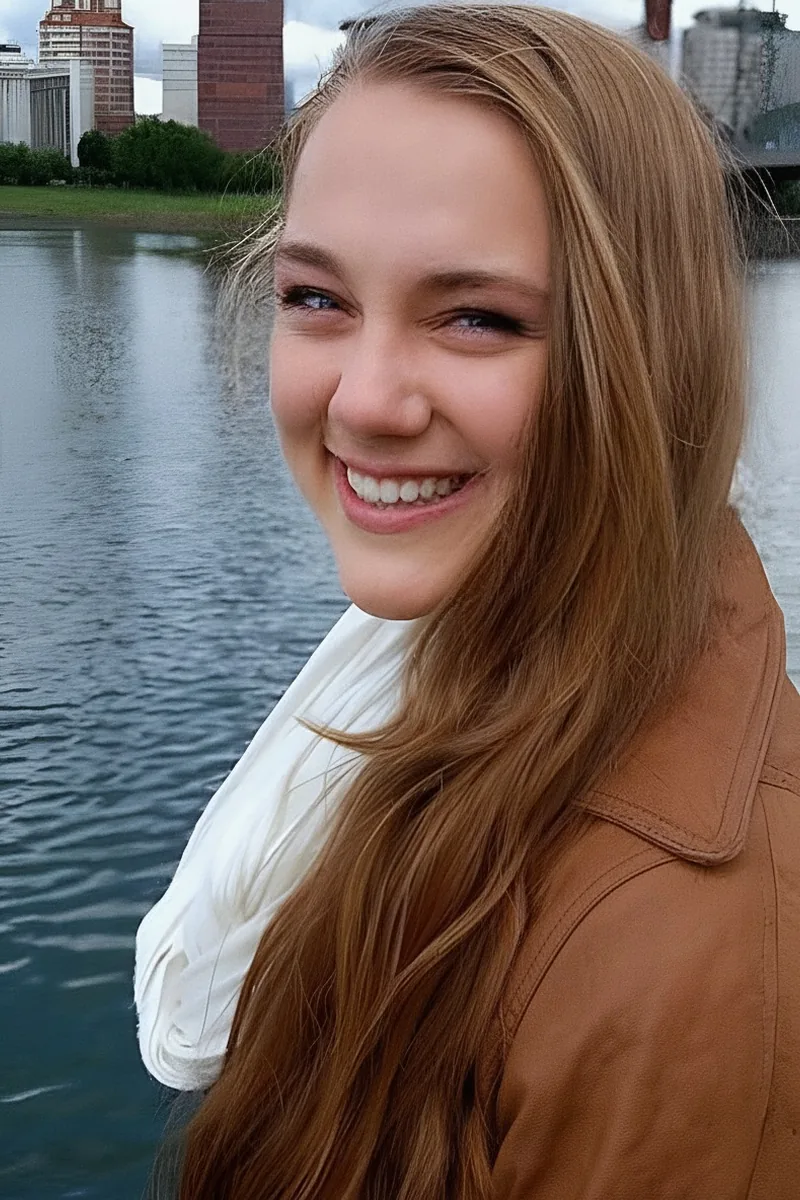
Reading a novel and analyzing a novel are two different skills, and Sarah's English degree was built on the second. She teaches students to dig into how literary devices — unreliable narration, symbolism, shifts in point of view — create meaning, then translate that analysis into arguments that hold up in essays and class discussion.

Few tutors bring a Columbia comparative literature degree and a Berkeley M.A. to a literature session. Jacob teaches students to do genuine close reading — tracking imagery, narrative voice, and structural choices across a text — then translate those observations into analytical arguments. Whether the assignment involves Shakespeare, Toni Morrison, or a poetry explication, he connects the reading to the writing.
A self-described bookworm with a PhD in Psychological and Brain Sciences, Tashina reads literature through the lens of human motivation and cognition — which makes character analysis and thematic interpretation feel grounded rather than abstract. She teaches students to build close-reading arguments by pulling specific evidence from the text and connecting it to larger literary patterns.
Analyzing literature requires the same skill Michael uses in computer science: taking something complex, identifying its structure, and explaining how the pieces create meaning. He's particularly sharp at teaching students to build arguments around literary devices — how an author's use of motif or narrative perspective creates a specific effect — and then support those arguments with close textual evidence. That analytical rigor turns vague "I think the theme is..." responses into precise, graded-well essays.
Analytical thinking transfers across disciplines, and Daniel's engineering and research training gives him a sharp eye for how arguments are built in literary texts — identifying motifs, tracing character development, and connecting structure to meaning. He approaches close reading almost like a scientist examining data, teaching students to ground every interpretation in textual evidence.
Reading literature well means constructing an interpretation and defending it with evidence from the text — skills that overlap heavily with philosophical analysis. Moya teaches students to move past plot summary and dig into how an author's choices around imagery, structure, and voice build meaning on the page.
Literary analysis clicks when students stop summarizing plot and start interrogating how an author builds meaning through structure, diction, and imagery. Dylan approaches texts by asking pointed questions — why does this metaphor appear here, what does this narrator's unreliability reveal — that train students to construct original arguments rather than repeat class discussion. His background in education and essay writing gives him a knack for teaching the close-reading skills that transfer across genres and time periods.
Reading literature well means slowing down enough to notice what an author is doing with structure, imagery, and point of view — not just what happens in the plot. Owen's interdisciplinary coursework at Brown trained him to analyze texts across genres, and he teaches students to build interpretive arguments grounded in specific textual evidence rather than vague impressions.
Biology trained Caitlyn to read carefully and build claims from evidence — skills that transfer directly to literary analysis, where every passage is data waiting to be interpreted. She's especially good at walking students through the leap from 'I noticed this metaphor' to 'here's a thesis I can defend in a five-paragraph essay.' Rated 5.0 by students.
Studying Folklore & Mythology at the college level means reading across centuries, cultures, and genres — exactly the kind of wide-angle literary training that makes Cynthia effective at unpacking everything from Shakespeare's tragedies to Toni Morrison's symbolism. She teaches students to build interpretive arguments by grounding claims in textual evidence rather than surface-level summary.
Before heading to Stanford for his master's, Andrew spent a year at Nike writing technical reports where clarity and precision in language were non-negotiable — habits that sharpen how he reads literary texts, where an author's word choices carry just as much deliberate weight. He teaches students to slow down with a passage, identify how elements like tone shifts or recurring imagery create meaning, and then build that analysis into a cohesive, well-supported essay.
Reading a novel closely means asking uncomfortable questions about unreliable narrators, structural choices, and what the text leaves unsaid. Thea's own award-winning fiction informs how she teaches literary analysis — she knows how authors build meaning at the sentence level, which gives her students a concrete toolkit for writing about theme, symbolism, and point of view.
Reading Homer, Dante, Dostoevsky, and Woolf cover to cover is a normal semester in Notre Dame's Great Books program, and Madeleine has done it for four years. She teaches students to dig into literary devices like unreliable narration, symbolic imagery, and shifts in point of view — the kind of close reading that turns a vague response into a sharp analytical essay.
Reading a novel closely — tracking symbolism in Morrison, unreliable narration in Nabokov, or the politics buried in a Shakespeare comedy — is a skill Luke has practiced for nearly a decade as both a fiction writer and an English Honors graduate. He teaches students to build interpretive arguments from textual evidence rather than summary, turning vague impressions into sharp literary analysis.
Reading literature well means learning to ask better questions — why does the narrator withhold information, what does a recurring image accumulate, how does sentence rhythm shape tone. Luke unpacks these craft-level choices in poetry, short fiction, and novels, teaching students to build interpretive arguments grounded in textual evidence. His interdisciplinary background in architecture and the arts gives him a sharp eye for how form and content interact.
Reading literature well means learning to sit with ambiguity — noticing how an unreliable narrator shifts meaning, or why a poet chose one image over another. Henry's doctoral training in English gave him deep practice in close reading across genres, from Victorian novels to contemporary short fiction. He teaches students to build interpretive arguments that go beyond plot summary.
A Brown-educated reader with a political science background, Danny approaches literary analysis the way a social scientist would — by asking what a text reveals about power, identity, and context. He's particularly effective at teaching students how to move from a surface-level reading to constructing an argument about theme or authorial intent.
Reading a novel closely means noticing what an author does with point of view, imagery, and narrative structure — and then articulating why those choices matter. Meghana majored in English literature at Yale and earned her MFA in creative writing, so she approaches texts from both the reader's and the writer's perspective. That dual lens makes literary analysis feel less like guesswork and more like a conversation with the text.
Reading literature well means doing more than summarizing plot — it means tracing how an author uses imagery, narrative structure, or point of view to build meaning. Maya brings the close-reading habits she's developed in her Harvard coursework to every text, whether students are analyzing a Shakespeare sonnet or unpacking symbolism in a novel.
An avid reader whose hobbies include books and writing, Tammy approaches literature by teaching students to build arguments from the text itself — pulling apart an author's word choices, structure, and imagery to support a clear thesis. Her analytical engineering mindset turns close-reading exercises into something more like detective work, which tends to click for students who think they're "not English people."
Reading a novel for class is one thing; knowing how to analyze imagery, unreliable narrators, or the way a text sits inside its historical moment is another. Amy's English literature degree trained her to do exactly that, and she teaches students to build interpretive arguments that go beyond plot summary and into genuine textual analysis.
I am a full time college professor teaching Mathematics and engineering courses.
Reading a novel is one thing; articulating why a particular narrative choice matters is another skill entirely. Ezra teaches students to analyze literature the way a philosopher analyzes an argument — isolating the claim a text seems to make, examining the formal techniques that build it, and questioning what's left unresolved. He's equally comfortable discussing poetry scansion and prose style across periods from Romantic to contemporary.
I am a graduate from UCLA and currently working as a CPA; however, I have been enjoying time to teach the Korean language and culture when I have extra time.
Sophia earned her bachelor's degree in children's and adolescent literature, which means close reading and literary analysis aren't just skills she teaches — they're the foundation of her academic training. She digs into how authors use symbolism, narrative structure, and point of view to build meaning, whether the text is a young adult novel or a Shakespeare play. That depth makes her particularly effective at teaching students to move from plot summary to genuine interpretation.
I am applying to medical schools to attend Fall 2016 and I like to play basketball, go backpacking and volunteer with youth in my free time.
Reading a novel closely means asking better questions: Why does the narrator withhold information here? What does this recurring image actually do? Robin's English BA and Liberal Arts MA trained her to unpack literary texts across genres and periods, from close reading of individual passages to building the kind of thesis-driven analysis that strong essays require.
Reading a novel and analyzing a novel are two very different skills, and Claire bridges that gap by teaching students to examine how authors use structure, point of view, and figurative language to build meaning. Her psychology training adds an interesting lens — she often unpacks character motivation and narrative tension in ways that make literary analysis feel less like guesswork.
A voracious reader with dual degrees in Mathematics and Jazz Studies from Michigan State, Jordan brings an unusual lens to literary analysis — one trained in both logical structure and artistic interpretation. He unpacks themes, symbolism, and narrative technique by teaching students to read like writers, asking not just what a text means but how it creates that meaning.
Reading literature analytically isn't Mariela's primary discipline, but her academic training sharpened a transferable skill: pulling meaning from dense, complex texts and defending an interpretation with evidence. She approaches literary analysis the way a scientist approaches data — asking what the text actually supports rather than what a reader assumes. That structured lens can be especially useful for students who feel lost when asked to write about theme or symbolism.
Literary analysis is ultimately about building an argument — identifying a theme in a novel or poem and marshaling textual evidence to support it. June's science background might seem unconventional here, but her years of medical school training in close reading and critical reasoning translate directly to dissecting complex texts. She breaks down passages methodically, teaching students to move from surface-level summary to interpretive claims.
Reading literature through the lens of anthropology changes how you interpret character, setting, and cultural context. Alison's undergraduate training in Art History and Anthropology gave her sharp analytical tools for unpacking symbolism, narrative structure, and thematic arguments across genres. She teaches close-reading techniques that make even dense or unfamiliar texts feel approachable.
Reading literature well means arguing with the text — asking why Fitzgerald chose that color, or what an unreliable narrator reveals by what they leave out. Gabriel approaches literary analysis as a skill built through close reading and evidence gathering, not gut feelings about what a symbol "means." His TEFL training sharpened his ability to break down complex prose for readers at every level.
Reading a novel closely means asking what a character's choices reveal about the world the author built — and why the author built it that way. Emily's psychology training sharpens her approach to literary analysis, giving students a framework for dissecting motivation, symbolism, and narrative structure that goes well beyond summarizing the plot.
Reading a novel closely means asking what the author is doing with structure, voice, and imagery — not just summarizing plot. Gray's Dartmouth coursework in government and the humanities trained him to dissect arguments and rhetorical choices, skills he now applies to literary analysis from Shakespeare to contemporary fiction.
An avid reader with a liberal arts background, Rosanne digs into literary analysis by connecting texts to their cultural and historical contexts — the kind of close reading that turns a vague reaction into a sharp thesis. She tackles everything from identifying narrative point of view and symbolism to building the interpretive arguments that literature courses demand.
Reading a novel closely means asking better questions: What's the narrator hiding? Why does the author shift tense in chapter three? Saz's Humanities degree trained her to dig into literary analysis — from identifying motifs and symbolism to constructing an argument about theme — and her genuine love of language makes those conversations contagious rather than tedious.
Reading literature analytically means learning to ask better questions of a text — why does the narrator shift tense here, what does this recurring image accumulate across chapters, how does sentence rhythm shape tone? Beth brings a scientist's attention to evidence and pattern recognition to literary analysis, teaching students to ground every interpretive claim in specific textual detail. Her 5.0 rating speaks to how well that structured approach works across poetry, novels, and drama.
Reading and books are central to Mike's life outside of tutoring, and that genuine engagement with literature shows when he unpacks a text with students. He teaches close reading as an active skill — annotating for tone, tracking symbolism, building an argument about theme — rather than just summarizing plot. Whether the assignment involves Shakespeare or a contemporary novel, he connects the analytical work to the kind of critical thinking students can use across every subject.
Reading a novel for class is one thing; building an argument about theme, symbolism, or narrative structure is something else entirely. Malaika teaches students to annotate with purpose — tracking patterns across a text so that when it's time to write an essay or join a discussion, the evidence is already organized. Her 5.0 rating speaks to how well that structured approach lands.
Testimonials
Because the right Literature tutor makes all the difference.
Average Session Rating – Based on 3.4M Learner Ratings
Nearby Literature Tutors
Other Eugene Tutors
Related English Tutors in Eugene
Frequently Asked Questions
Varsity Tutors matches Eugene students with expert Literature tutors for 1-on-1 instruction. We pair each student with a tutor based on their specific needs, learning style, and goals.
Whether you need homework help, exam prep, or want to get ahead, our Literature tutors are ready to help.
Common challenges include gaps from earlier material, difficulty with specific concepts, and trouble applying learning to new problems. These issues can snowball quickly in Literature.
A tutor identifies where you're stuck, fills in gaps, and provides targeted practice. The 1-on-1 format means you get help exactly where you need it.
Tutors work with your student's actual coursework—homework assignments, class notes, and upcoming tests. This keeps tutoring directly relevant to what's happening in the classroom.
When you share information about your student's school and curriculum, we can match you with a tutor who has relevant experience.
All tutors complete background checks, credential verification, and teaching evaluation. Many of our Literature tutors hold advanced degrees or have years of teaching experience.
You can review tutor profiles to find someone with the right background for your student's level and needs.
Many students see improved grades within a few weeks, along with better understanding of Literature concepts and more confidence tackling challenging material.
Tutors track progress and adjust their approach to ensure continued improvement.
Most students benefit from 1-2 sessions per week. More frequent sessions help if your student is significantly behind or has an important exam coming up.
Your tutor can recommend a schedule based on your student's specific situation and goals.
Tutoring is purchased in packages of hours, with rates varying by tutor experience. Varsity Tutors offers several options to fit different budgets and needs.
You can discuss pricing during your consultation to find what works best.
Your tutor will assess where your student is, discuss goals, and start working on priority areas. Most students bring current homework or upcoming test material to focus on.
By the end, you'll have a clear sense of how the tutor can help and a plan for moving forward.
Let’s find your perfect tutor
Answer a few quick questions. We’ll recommend the right plan and match you with a top 5% tutor.