Award-Winning AP Computer Science Principles Tutors
serving Yonkers, NY
AP Computer Science Principles
Tutors in Yonkers
Private 1-on-1 tutoring, weekly live classes for academic support, test prep & enrichment, practice tests and diagnostics, and more to elevate grades and test scores.
Based on 3.4M Learner Ratings
UniversitiesSchools & Universities
DeliveredHours Delivered
ProficiencyGrowth in Proficiency
Who needs tutoring?
No obligation. Takes ~1 minute.
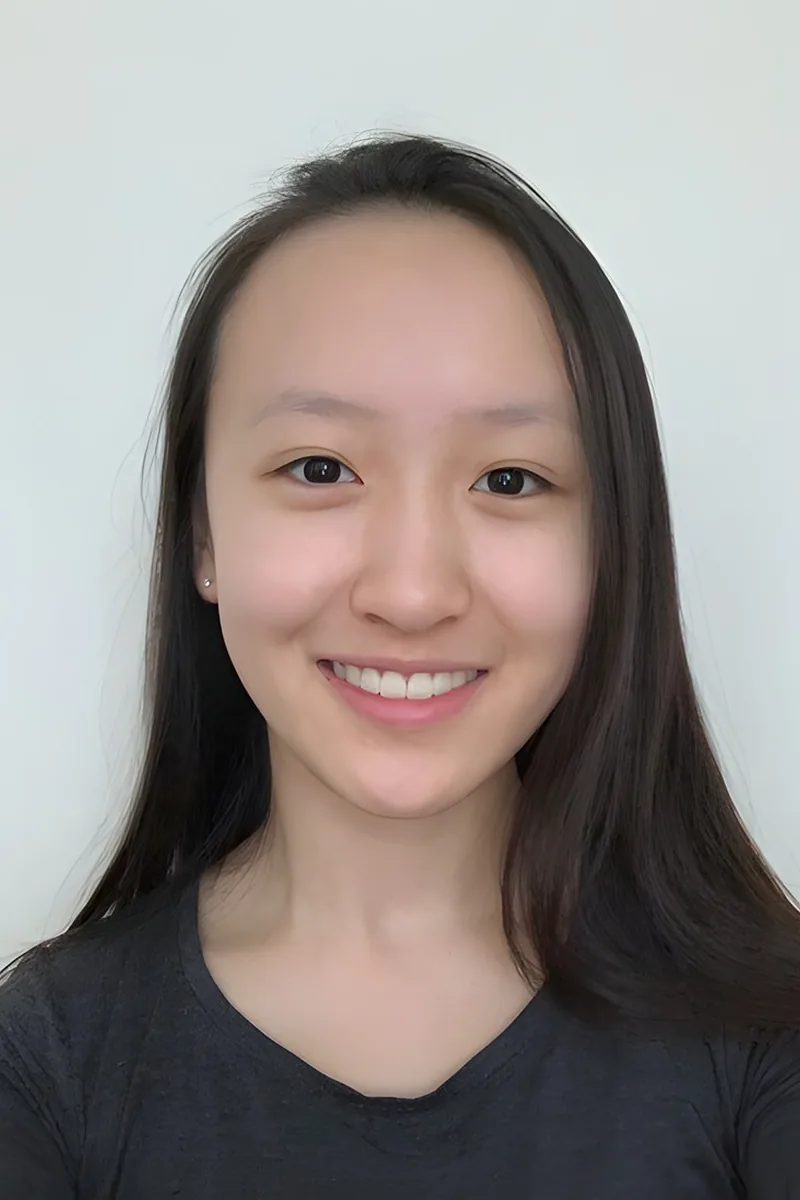
Stanford's economics curriculum leans heavily on data analysis and programming — skills that map directly onto AP CSP's units on data representation, algorithms, and computational thinking. Julia applies that quantitative training to demystify pseudocode logic and the Create Task's written responses, where clearly explaining your program matters as much as building it. Rated 4.8 by students.
Nicholas codes in Java, Python, JavaScript, C#, and HTML/CSS daily — so when AP CSP asks students to reason about algorithms or data representation in pseudocode, he can instantly translate those abstractions into real programming scenarios that make the logic click. His Penn State CS degree also means he understands the networking and cybersecurity concepts woven through the course at a technical level most high schoolers never see. Rated 5.0 by students.
John's CS degree plus years coding in Java, C++, and SQL means he can ground AP CSP's more abstract units — like how the internet actually moves data or why abstraction matters in program design — in real programming experience. He also brings a finance MBA perspective to the data analysis and societal impact questions, giving students a practical lens that makes exam responses sharper and more specific.
Currently studying Computer Science at UCLA's Engineering School with a software engineering internship at Adobe under his belt, David knows how the abstractions taught in AP CSP — algorithms, data representation, internet protocols — actually play out in production code. He uses that industry context to make pseudocode tracing and the Create Task feel purposeful rather than academic. Rated 4.8 by students.
Susanna codes in Java, Python, and MATLAB — but for AP CSP, she shifts gears from syntax to the bigger questions: how does data move across the internet, why does abstraction matter, and what makes an algorithm efficient? Her physics training at UC Berkeley means she's used to translating messy real-world problems into clean logical models, which is exactly the skill the Create Task and exam reward.
I'm a professional software engineer at a top tech company in New York City. I have a strong passion for software development, most notably in the areas of full-stack web development, iOS development, Artificial intelligence, large scale distributed systems, and micro services.
Mathematics trains you to think in abstractions — which is exactly what AP CSP's Big Ideas demand when students encounter data representation, algorithmic logic, or internet protocols for the first time. Nikhil's math background at NYU gives him a natural framework for making pseudocode tracing and binary concepts click, especially for students who think numerically but haven't written much code. Rated 4.8 by students.
I am a sophomore at Columbia University, studying political science and philosophy. I often like to joke that teaching runs in my blood I come from a family of teachers who instilled in me the passion to help others learn. Since I could grasp concepts I learned in school, I've always gone out of my way to help my fellow classmate. As I got older, that became formalized tutoring through school organizations and I eventually worked for the New York City Department of Education. There, I helped students with their standardized testing for the state assessments and the SAT. I love teaching math because I feel it's the subject where I can gauge the strength of my students best. Math is such a versatile (though widely-hated) subject, where every unique learning style can always result in the same answer. I also get the most freedom when it comes to designing questions to help students grow and practicing alongside them easily the most fun part of a tutoring session with me. I'm never shy when it comes to tutoring anything else, though, whether it be any sort of history, literature, or government-related topic. My goal as a tutor is not all about teaching anything new to my students, but instead drawing out the skills they already have.
Before teaching AP CSP concepts, Deeptha spent years as a TA for courses ranging from Introduction to Computation in Python to Automata and Formal Languages — meaning she's watched hundreds of students encounter computational thinking for the first time and knows exactly where confusion sets in. She uses that experience to break down the course's Big Ideas around the internet, data, and global impact into concrete examples students can actually write about on the exam.
Kyle knows six-plus programming languages — Python, Java, C++, JavaScript, C, and assembly — which means when AP CSP's exam asks students to trace pseudocode or reason about abstraction, he can pull up a real example in whatever language makes the concept clearest. He also walks students through the Create Task from initial brainstorm to written response, making sure every rubric point is addressed. Rated 5.0 by students.
Shlomo codes in Java and C++ and has tutored algorithms at the college level, so he can ground AP CSP's pseudocode and algorithmic reasoning questions in actual programming logic rather than hand-wavy definitions. His political science training also sharpens the kind of structured argumentation the Create Task's written responses demand — explaining computational decisions clearly and hitting every rubric point.
AP CSP covers a mile-wide range — from binary and abstraction to the impact of computing on society — and the Create Task alone can make or break a student's score. Serina's computer science major at Yale means she can demystify concepts like data compression, algorithms, and the internet protocol stack while coaching students to write clean, well-documented code for their performance tasks.
Nihar's math and statistics degree means the data analysis and algorithmic reasoning threads in AP CSP come naturally — he can explain how sorting algorithms compare or why a particular data compression method loses information, grounding it in the quantitative thinking most students skip over. His programming experience across Java, JavaScript, SQL, and HTML also lets him translate pseudocode exam questions into real code when a student needs to see the logic in action.
Ronit studies computer science at Yale and knows AP CSP's curriculum from the student side — which Big Ideas actually trip people up on the multiple-choice and where the Create Task rubric quietly punishes vague written responses. He digs into the explanatory writing piece that most students underestimate, teaching how to describe an algorithm's purpose and trace through pseudocode with the precision the exam expects. Rated 5.0 by students.
Bryan codes in Java, C++, Python, and JavaScript daily as a CS major at Penn, which means the programming and algorithm design portions of AP CSP come naturally — but he's equally sharp on the conceptual side, like explaining how data travels across the internet or why abstraction matters in system design. He scored a 35 ACT and holds a 5.0 tutoring rating, and he's particularly effective at coaching students through the written response component of the Create Task, where clear technical communication counts as much as the code itself.
Cognitive science training at Stanford gave David an unusual lens for AP CSP — he studied how humans process information before studying how computers do, which means he can explain abstraction, algorithms, and data representation in terms that actually click. His experience teaching web and app development to high schoolers abroad sharpened his ability to walk students through the Create Task from planning to polished written response.
Joshua scored a 5 on the AP Computer Science A exam, which means the Principles course's pseudocode and algorithm questions draw on knowledge he's already internalized at a deeper level. He teaches the Create Task as a scaled-down version of real software development — planning, building, and documenting — using his hands-on experience in Java, Python, and JavaScript to show students what clean, explainable code actually looks like.
I am a recent graduate with a master's in electrical engineering from Case Western Reserve University. I won the Bill and Melinda Gates Millennium Scholarship which covers full tuition up to Ph.D. I was on the Dean's List for three consecutive years. Additionally, I won the OZY Media Genius Award in 2015 to work on high-temperature superconductors. I currently work as a Technology Analyst at Accenture. I am also seriously considering whether I should go for a Ph.D. or not.
Lance studied both theoretical mathematics and computer science as an undergraduate before entering medical school, which means he's written real code in Java, C, and SQL — not just traced pseudocode on a worksheet. That practical depth lets him teach AP CSP's algorithmic thinking and abstraction concepts through actual programming logic, giving students a clearer mental model when they hit the Create Task or encounter unfamiliar algorithm-tracing questions on the exam.
Cindy doesn't come from a traditional CS background, but her 36 ACT and analytical training as a Harvard English student give her a sharp edge on AP CSP's most underestimated challenge: the written responses. The Create Task and exam both reward students who can explain computational ideas — abstraction, algorithms, data patterns — in clear, precise language, and that's exactly the skill set she brings to every session.
I'm always up for the challenge of changing my methods of instruction and breaking down topics to foster a deeper understanding of a subject. On a different note, I generally spend my spare time playing lacrosse or running outdoors when possible. I also play the violin with a school quartet, and teach lessons to beginning students working through the Suzuki program.
Having tutored everything from basic programming constructs to finite automata and computational theory, Andrew brings unusual depth to a course most students treat as surface-level. He digs into the algorithmic thinking and pseudocode reasoning behind AP CSP's exam questions, showing students how concepts like abstraction and data representation connect to the real CS pipeline he studied in his degree. Rated 5.0 by students.
With a strong background in STEM education and administration, I am passionate about helping students achieve academic success through personalized learning. My experience as a high school STEM teacher has allowed me to guide students in subjects such as artificial intelligence, machine learning, renewable energy technology, supply chain management, and manufacturing systems. Additionally, my administrative expertise has honed my ability to provide structured and efficient support to learners of all levels. I have earned certifications from the Massachusetts Institute of Technology, International Business Machines (IBM), and the New York Institute of Finance, dedicating years to making complex concepts more engaging and accessible. My tutoring style is adaptive, ensuring that each student's unique learning needs are met with patience and clarity. I believe in creating a supportive learning environment where students feel confident in tackling challenges and mastering new skills. While I tutor a broad range of subjects, I am particularly passionate about STEM-related fields, as they shape the future of technology and innovation. Beyond academics, I enjoy exploring advancements in artificial intelligence, renewable energy solutions, and automotive technology. My goal is to inspire curiosity, critical thinking, and a lifelong love of learning in every student I work with.
Matthew codes in Java, C++, Python, and JavaScript — so when AP CSP asks students to reason about algorithms or explain how a program works in pseudocode, he can ground those abstractions in actual programming logic most students haven't seen yet. His Harvard math and CS coursework also means he's sharp on the data analysis and binary representation questions that trip up students who only studied the vocabulary. Rated 4.9 by students.
Studying neuroscience at Rice means Brett regularly writes code to analyze brain imaging data and model biological systems — practical computing experience that maps directly onto AP CSP's emphasis on data analysis, algorithms, and the real-world impact of technology. He teaches the pseudocode logic and abstraction concepts the exam tests by grounding them in problems students can actually picture. Rated 5.0 by students.
Testimonials
Because the right AP Computer Science Principles tutor makes all the difference.
Average Session Rating – Based on 3.4M Learner Ratings
Nearby AP Computer Science Principles Tutors
Other Yonkers Tutors
Related Technology and Coding Tutors in Yonkers
Frequently Asked Questions
Varsity Tutors matches Yonkers students with expert AP Computer Science Principles tutors for 1-on-1 instruction. We pair each student with a tutor based on their specific needs, learning style, and goals.
Whether you need homework help, exam prep, or want to get ahead, our AP Computer Science Principles tutors are ready to help.
Common challenges include gaps from earlier material, difficulty with specific concepts, and trouble applying learning to new problems. These issues can snowball quickly in AP Computer Science Principles.
A tutor identifies where you're stuck, fills in gaps, and provides targeted practice. The 1-on-1 format means you get help exactly where you need it.
Tutors work with your student's actual coursework—homework assignments, class notes, and upcoming tests. This keeps tutoring directly relevant to what's happening in the classroom.
When you share information about your student's school and curriculum, we can match you with a tutor who has relevant experience.
All tutors complete background checks, credential verification, and teaching evaluation. Many of our AP Computer Science Principles tutors hold advanced degrees or have years of teaching experience.
You can review tutor profiles to find someone with the right background for your student's level and needs.
Many students see improved grades within a few weeks, along with better understanding of AP Computer Science Principles concepts and more confidence tackling challenging material.
Tutors track progress and adjust their approach to ensure continued improvement.
Most students benefit from 1-2 sessions per week. More frequent sessions help if your student is significantly behind or has an important exam coming up.
Your tutor can recommend a schedule based on your student's specific situation and goals.
Tutoring is purchased in packages of hours, with rates varying by tutor experience. Varsity Tutors offers several options to fit different budgets and needs.
You can discuss pricing during your consultation to find what works best.
Your tutor will assess where your student is, discuss goals, and start working on priority areas. Most students bring current homework or upcoming test material to focus on.
By the end, you'll have a clear sense of how the tutor can help and a plan for moving forward.
Let’s find your perfect tutor
Answer a few quick questions. We’ll recommend the right plan and match you with a top 5% tutor.