Award-Winning Organic Chemistry Tutors
serving Yonkers, NY
Organic Chemistry
Tutors in Yonkers
Private 1-on-1 tutoring, weekly live classes for academic support, test prep & enrichment, practice tests and diagnostics, and more to elevate grades and test scores.
Based on 3.4M Learner Ratings
UniversitiesSchools & Universities
DeliveredHours Delivered
ProficiencyGrowth in Proficiency
Who needs tutoring?
No obligation. Takes ~1 minute.
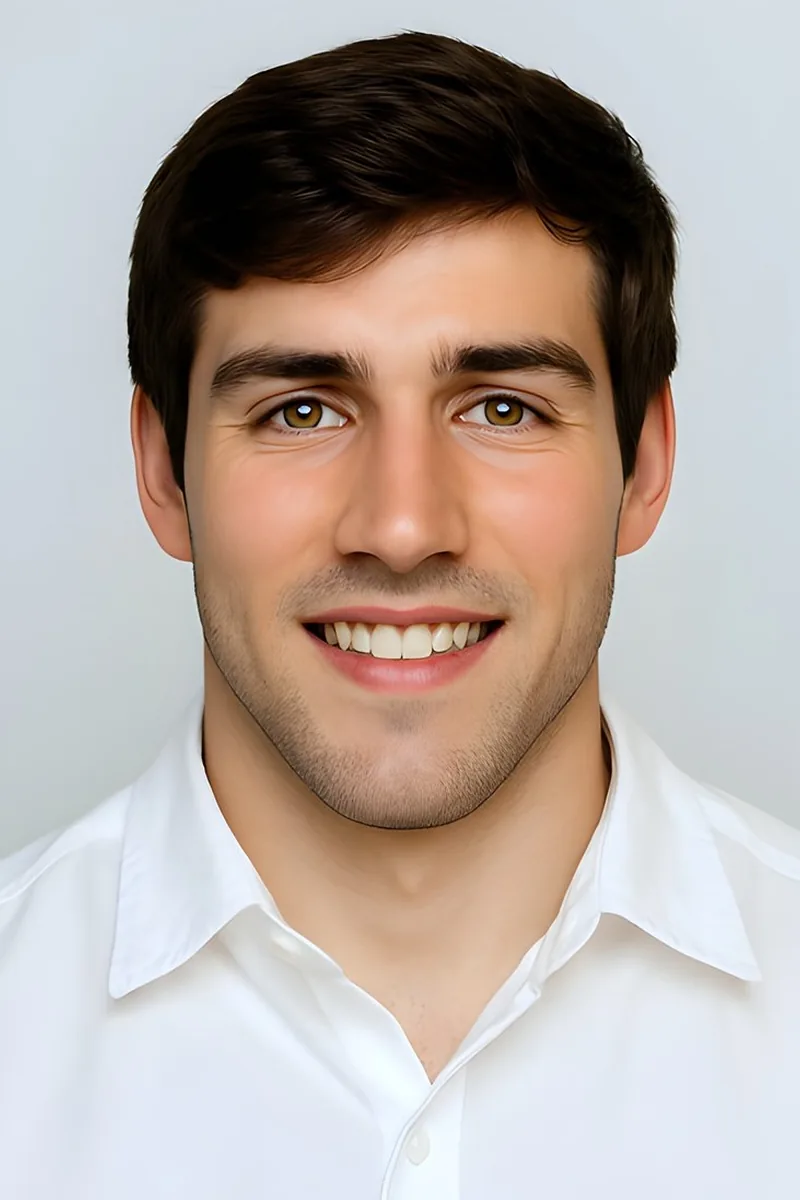
Studying chemistry at Harvard while preparing for Columbia Medical School means James has worked through organic chemistry from both the academic and pre-med sides — understanding mechanisms deeply enough to satisfy a chemistry major, and efficiently enough to apply them in biochemistry and pharmacology contexts. He's particularly strong at teaching students how to predict reaction outcomes by analyzing charge stability and leaving group trends rather than treating each transformation as a new thing to memorize. Rated 4.9 by students.
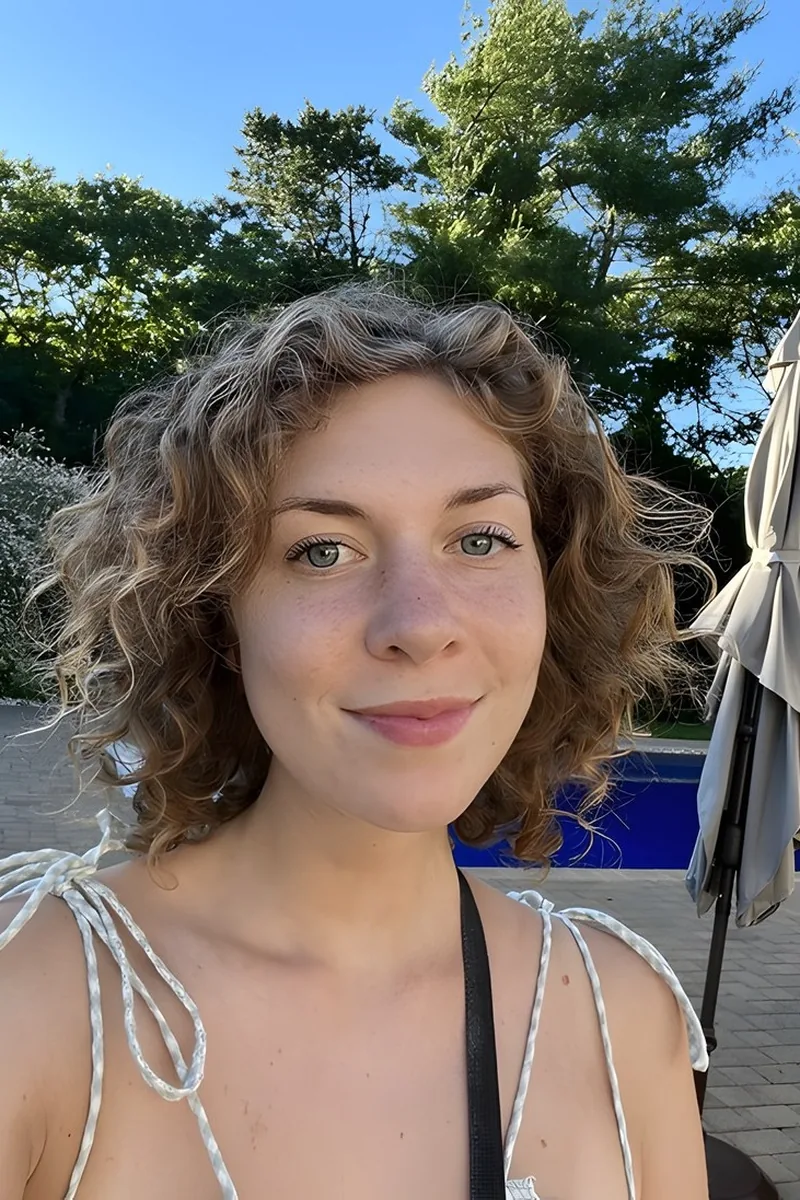
Having earned a chemistry degree from Yale, Zosia spent years immersed in the subject well past the introductory orgo sequence — which means she can contextualize tricky topics like electrophilic aromatic substitution and acyl chemistry within the broader landscape of how molecules actually behave. She walks students through spectral analysis and multi-step synthesis by building from first principles of electronegativity and sterics, so each new reaction type feels like an extension of what they already know rather than a fresh page to memorize. Rated 4.9 by students.
Reaction mechanisms are the language of organic chemistry, and Josef teaches students to read them — arrow pushing, stereochemistry, and functional group reactivity — rather than memorize hundreds of individual reactions. His biochemistry focus at Cornell means he can connect orgo concepts like nucleophilic substitution and carbonyl chemistry directly to biological molecules students will encounter later.
Most organic chemistry frustration comes from trying to memorize hundreds of reactions instead of recognizing the handful of electronic patterns — nucleophilic attack, leaving group ability, steric effects — that drive all of them. Garrett teaches students to read arrow-pushing mechanisms as stories about electron movement, which makes predicting products and regiochemistry intuitive. His approach turns reaction maps from overwhelming charts into logical flowcharts.
Reaction mechanisms are the language of organic chemistry, and David treats them that way — once a student can read electron flow through curved arrows, predicting products for substitution, elimination, and addition reactions becomes systematic rather than overwhelming. His Yale neuroscience training required two semesters of organic chemistry, and he still uses those fundamentals daily in his bioethics graduate work.
Preparing for medical school means Benjamin ground through organic chemistry with the kind of intensity that only MCAT stakes demand — reaction mechanisms, carbonyl chemistry, and spectroscopy all studied until the logic behind each transformation became second nature. His evolutionary anthropology background at Duke also gives him a knack for seeing patterns across complex systems, which is exactly the skill that separates students who struggle with synthesis problems from those who can map a retrosynthetic pathway confidently. Rated 5.0 by students.
Four years of tutoring organic chemistry at Yale — while simultaneously doing pre-med coursework — gave Marcus a sharp sense of where students get stuck, particularly with carbonyl reactivity and multi-step synthesis planning. His current research at the Hospital for Special Surgery keeps him actively applying these concepts, so he teaches functional group transformations as interconnected tools rather than an isolated reaction catalog.
Daniel's PhD work in genetics and neuroscience at Rockefeller means he uses organic chemistry daily — understanding how small molecules interact with proteins, how drug candidates are designed, and why stereochemistry matters at the molecular level. That real-world context turns topics like carbonyl reactivity and functional group transformations into something students can anchor to actual science, not just exam prep.
Reaction mechanisms are the core of organic chemistry, and most students struggle because they try to memorize arrow-pushing patterns instead of understanding why electrons move where they do. Jamie has tutored organic chemistry extensively alongside his pre-med and medical coursework, and he teaches students to read a mechanism the way you'd read a sentence — identifying the nucleophile, the electrophile, and the driving force before ever drawing an arrow.
Reaction mechanisms are the language of organic chemistry, and Sourav reads them the way a musician reads sheet music — fluently and from experience. With a Ph.D. in chemistry and a decade of teaching at the university level, he unpacks arrow-pushing, stereochemistry, and synthesis design by connecting each new reaction to patterns students have already seen, so the material builds instead of piling up.
As a chemistry major at UB working toward both his bachelor's and a master's in education, James has spent serious time with organic chemistry from the teaching side — figuring out not just how mechanisms work but how to explain them clearly. He breaks down topics like stereochemistry and functional group transformations by connecting new material to general chemistry concepts students already know, building each reaction class into something they can reason through on an exam.
Currently studying chemistry at Carnegie Mellon, Alex is immersed in organic chemistry coursework right now — which means he knows exactly which concepts are tripping students up this semester, from stereochemistry assignments to multi-step synthesis problems. His 4.8 rating speaks to an approach that prioritizes building intuition about why electrons move where they do, not just drilling practice sets.
Susan's biology concentration at NYU means she first tackled organic chemistry as the molecular foundation underneath everything from metabolic cycles to pharmacology — so she teaches arrow-pushing and functional group behavior with an eye toward why these reactions show up again in biochemistry and beyond. Her approach to multi-step synthesis problems starts with getting students to recognize the reactive sites on a molecule before worrying about memorizing named reactions, which builds the kind of chemical intuition that transfers to unfamiliar exam questions.
Thomas earned his biochemistry and molecular biology degree alongside a master's in biology, which means he spent years working through the organic chemistry that underpins enzyme catalysis, metabolic pathways, and drug interactions. That biochemical context gives him a practical angle on topics like carbonyl chemistry and stereoselectivity — he can explain why a particular reaction matters, not just how to draw the arrows. Rated 4.8 by students.
Reaction mechanisms are the backbone of organic chemistry, and the difference between struggling and succeeding often comes down to whether a student can track electron movement through each arrow-pushing step. Shin approaches orgo by connecting functional group reactivity to the underlying principles — electronegativity, sterics, resonance — so that predicting products becomes logical rather than an exercise in memorization.
Most orgo students try to memorize every reaction individually — Zarrin teaches them to see the recurring logic instead, tracing how electron density and functional group behavior predict outcomes across substitution, elimination, and carbonyl chemistry. Her neuroscience degree at Mount Holyoke meant she had to master organic chemistry as the molecular foundation for understanding how drugs, neurotransmitters, and signaling molecules actually work, which gives her a concrete hook for concepts that otherwise feel abstract. Rated 4.9 by students.
David tutored college students in organic chemistry while at Columbia, where his biochemistry coursework demanded fluency with reaction mechanisms, stereochemistry, and retrosynthetic analysis. He teaches students to recognize electron-pushing patterns across reaction families — nucleophilic substitution, elimination, carbonyl additions — so that new reactions feel like variations on familiar themes instead of isolated facts to memorize. That pattern-recognition approach is what turns orgo from overwhelming to manageable.
Reaction mechanisms are the language of organic chemistry, and Meghna speaks it fluently after years of tutoring orgo to both high school and college students. She walks through arrow-pushing, stereochemistry, and functional group transformations step by step, building the pattern recognition that turns a seemingly endless list of reactions into a manageable set of principles.
I am a current senior biology-health student at Grove City College, hoping to become a Physician Assistant. I love helping people learn more about subjects that I find interesting and am passionate about like math, biology, and chemistry. I have taken math courses through Calculus III, chemistry courses from General Chemistry I through Organic Chemistry I, and biology courses from General Biology I through Anatomy and Physiology. I was a TA for a genetics course and am familiar with courses like cell biology, immunology, and the biology of cancer.
Reaction mechanisms are the language of organic chemistry, and Matt learned to speak it fluently during his molecular biology concentration at Cornell, where understanding nucleophilic substitutions and carbonyl additions was essential lab knowledge. He teaches students to recognize electron-flow patterns across reaction types so that predicting products becomes intuitive instead of overwhelming.
Reaction mechanisms are the language of organic chemistry, and Andrew teaches students to read them fluently — identifying nucleophiles, predicting leaving groups, and tracking electron movement through arrow-pushing. Rather than treating each reaction type as an isolated thing to memorize, he shows how a handful of core principles (electronegativity, sterics, resonance stabilization) explain most of what happens across substitution, elimination, and addition reactions.
My name is Nim. I graduated cum laude and departmental honors with a Bachelor's degree in Chemistry, and a minor in Writing &Rhetoric. In college, I realized that certain classes can be an obstacle for students as there are not enough of a friendly environment for them to express their concerns. For my tutoring approach, I first let students know that it is okay to make mistakes and that practice can help you improve progressively. I try to allow students express concerns they have regarding to the material presented from class and then we directly approach the lesson by having an understanding of what the student does or does not know. After the lesson, I would review the points that we learned and having a goal of students practicing material on their own. The method can be adjusted based on student's individual needs. I have a year experience in teaching organic chemistry and physical chemistry in college. I worked directly with any students who needed additional assistance, but also focus on one-on-one tutoring. These were the students who needed extra help, so I work with them during class to make sure they didn't fall behind and clarify questions they might have. I held review sessions in Organic Chemistry, where I choose questions to review and occasionally teach important points to understand in a topic. I want to benefit the students I work with as much as possible, therefore I welcome any feedback from the students can provide. I am easy to reach and will always provide fast responses. Feel free to contact me with any additional questions or to schedule a lesson.
Reaction mechanisms in organic chemistry demand a kind of visual storytelling — tracking electron flow through arrow-pushing, predicting products from stereochemistry, and recognizing functional group behavior across dozens of reaction types. Aman brings a medical student's perspective to orgo, connecting synthesis pathways and biomolecule reactivity to the biochemistry he's actively studying in his coursework.
Reaction mechanisms are the heart of organic chemistry, and Matthew treats them like stories: each arrow push has a reason rooted in electronegativity, sterics, or leaving-group ability. Having taken multiple chemistry courses through his University of Michigan program, he picked up pattern-recognition shortcuts for synthesis problems that save students hours of frustration. His 4.9 rating speaks to how well that approach lands.
Reaction mechanisms in organic chemistry are essentially stories — each arrow push has a reason, and learning to read that logic turns a seemingly infinite number of reactions into a manageable set of patterns. Ben is a pre-dental student at the University of Rochester who recently completed organic chemistry himself, so he knows exactly which nucleophilic substitutions, eliminations, and carbonyl additions tend to stump people. He walks through each mechanism step by step until the electron flow feels intuitive.
Reaction mechanisms are the language of organic chemistry, and most students struggle not because the material is impossibly hard but because they try to memorize arrows instead of understanding electron behavior. Marcos tackles nucleophilic substitutions, carbonyl chemistry, and stereochemistry by teaching the underlying logic — why a reaction proceeds one way and not another — drawing on the same mechanistic thinking he uses in biochemistry and pharmacology.
Reaction mechanisms are the language of organic chemistry, and Zachary speaks it fluently after years of pharmaceutical coursework built around drug synthesis and molecular design. He teaches students to read electron-pushing arrows like a story — nucleophile attacks electrophile, leaving group departs, stereochemistry follows — so that predicting products becomes intuitive rather than a memorization exercise.
Reaction mechanisms in organic chemistry reward a specific kind of thinking — tracking electron flow, recognizing nucleophilic versus electrophilic sites, and predicting stereochemical outcomes step by step. Gail's medical sciences coursework made her fluent in the biochemically relevant reactions (carbonyl chemistry, substitution, elimination) that dominate both orgo exams and MCAT prep. She teaches students to read a mechanism like a story with cause and effect, not a sequence to memorize.
I am patient and collaborative. I work with my students to help them come to the answers on their own, and I find creative and fun ways for students to think about the material in a new light.
I am taking pre-requisite courses to be eligible for medical school. I enjoy tutoring Science as well as Math and especially enjoy helping students overcome anxieties and fears they have associated with these subjects. In my spare time I enjoy running, biking, and swimming as well as baking.
I am an incoming medical student at Albert Einstein College of Medicine who graduated with honors from Johns Hopkins University. My degree is in Public Health with a Biology concentration, but I also studied two full semesters of General Chemistry, Organic Chemistry, and Physics. During my time at Hopkins, I developed a passion for the sciences and, in turn, grew to enjoy teaching others about their principles. As someone who had to balance a rigorous academic workload with being captain of the varsity football team and a fraternity member, I understand the academic obstacles students face. It is my hope that I can use my background and experiences to help students reach their full potential! I am prepared to tutor for the MCAT, AP Physics, Chemistry, Biology, and Epidemiology. Please feel free to contact me with any questions.
Reaction mechanisms are the heart of organic chemistry, and they only make sense when a student can track electron movement and predict how functional groups behave. Malcolm is studying biochemistry and cell biology at Rice, where organic chemistry is foundational — he knows which arrow-pushing patterns show up repeatedly and teaches students to recognize them instead of memorizing hundreds of individual reactions.
Cornell's biology curriculum threw Raphael into organic chemistry as the bridge between general chemistry and the biochemistry he needed for his pre-med track — meaning he learned reaction mechanisms through the lens of biological relevance, not just isolated transformations on an exam. He tackles arrow-pushing and functional group reactivity by zeroing in on the "why" behind electron movement, building each mechanism step from nucleophile-electrophile logic so students can reason through unfamiliar problems on their own. Holds a 5.0 rating.
I am a freshman at Vanderbilt University studying biochemistry and involved in analytical chemistry research. Despite my studies being very science oriented, I also enjoy studying English and the humanities. I'd be happy to tutor you in any of these areas!
Reaction mechanisms, stereochemistry, and functional group transformations all require a kind of visual logic that's unlike anything in general chemistry. Greg's chemical engineering background at Vanderbilt gave him deep exposure to organic reaction pathways, and he teaches students to trace electron movement step by step so they can predict products instead of relying on memorization.
Reaction mechanisms are the language of organic chemistry, and Amin earned an entire master's degree becoming fluent in them. He teaches students to read electron flow the way you'd read a sentence — identifying nucleophiles, leaving groups, and stereoelectronic effects so that predicting products becomes a reasoning exercise, not a memorization marathon. Rated 4.5 by students.
Jonathan's human biology degree and pre-med track at Cornell meant organic chemistry wasn't just a prerequisite — it was the course that connected molecular structure to everything he'd later study in physiology and biochemistry. He tackles synthesis problems and spectroscopy interpretation by linking functional group behavior back to biological relevance, which gives students a reason to care about each mechanism. Rated 4.9 by students.
Reaction mechanisms are the backbone of organic chemistry, and Natasha teaches them the way she learned them in her biomolecular engineering program — by tracing electron movement step by step until the logic feels inevitable rather than arbitrary. She digs into arrow-pushing, stereochemistry, and functional group reactivity by asking students to predict products before revealing answers, building real intuition for how molecules behave.
Biomedical engineering at Johns Hopkins means Nicholas encounters organic chemistry where it intersects with real applications — polymer biomaterials, drug delivery systems, and the functional group chemistry that governs how molecules interact with biological tissue. He teaches reaction types by grounding them in that engineering context, turning abstract arrow-pushing into something students can visualize and reason through. Rated 4.8 by students.
Having completed both semesters of organic chemistry at the University of Michigan — on top of AP Chemistry before that — Ajay knows exactly where students get stuck, whether it's arrow-pushing in reaction mechanisms or keeping substitution and elimination pathways straight. He teaches students to recognize electron behavior patterns so new reactions feel predictable instead of random.
Testimonials
Because the right Organic Chemistry tutor makes all the difference.
Average Session Rating – Based on 3.4M Learner Ratings
Practice Organic Chemistry
Free practice tests, flashcards, and AI tutoring for Organic Chemistry
Nearby Organic Chemistry Tutors
Other Yonkers Tutors
Related Science Tutors in Yonkers
Frequently Asked Questions
Varsity Tutors matches Yonkers students with expert Organic Chemistry tutors for 1-on-1 instruction. We pair each student with a tutor based on their specific needs, learning style, and goals.
Whether you need homework help, exam prep, or want to get ahead, our Organic Chemistry tutors are ready to help.
Common challenges include gaps from earlier material, difficulty with specific concepts, and trouble applying learning to new problems. These issues can snowball quickly in Organic Chemistry.
A tutor identifies where you're stuck, fills in gaps, and provides targeted practice. The 1-on-1 format means you get help exactly where you need it.
Tutors work with your student's actual coursework—homework assignments, class notes, and upcoming tests. This keeps tutoring directly relevant to what's happening in the classroom.
When you share information about your student's school and curriculum, we can match you with a tutor who has relevant experience.
All tutors complete background checks, credential verification, and teaching evaluation. Many of our Organic Chemistry tutors hold advanced degrees or have years of teaching experience.
You can review tutor profiles to find someone with the right background for your student's level and needs.
Many students see improved grades within a few weeks, along with better understanding of Organic Chemistry concepts and more confidence tackling challenging material.
Tutors track progress and adjust their approach to ensure continued improvement.
Most students benefit from 1-2 sessions per week. More frequent sessions help if your student is significantly behind or has an important exam coming up.
Your tutor can recommend a schedule based on your student's specific situation and goals.
Tutoring is purchased in packages of hours, with rates varying by tutor experience. Varsity Tutors offers several options to fit different budgets and needs.
You can discuss pricing during your consultation to find what works best.
Your tutor will assess where your student is, discuss goals, and start working on priority areas. Most students bring current homework or upcoming test material to focus on.
By the end, you'll have a clear sense of how the tutor can help and a plan for moving forward.
Let’s find your perfect tutor
Answer a few quick questions. We’ll recommend the right plan and match you with a top 5% tutor.